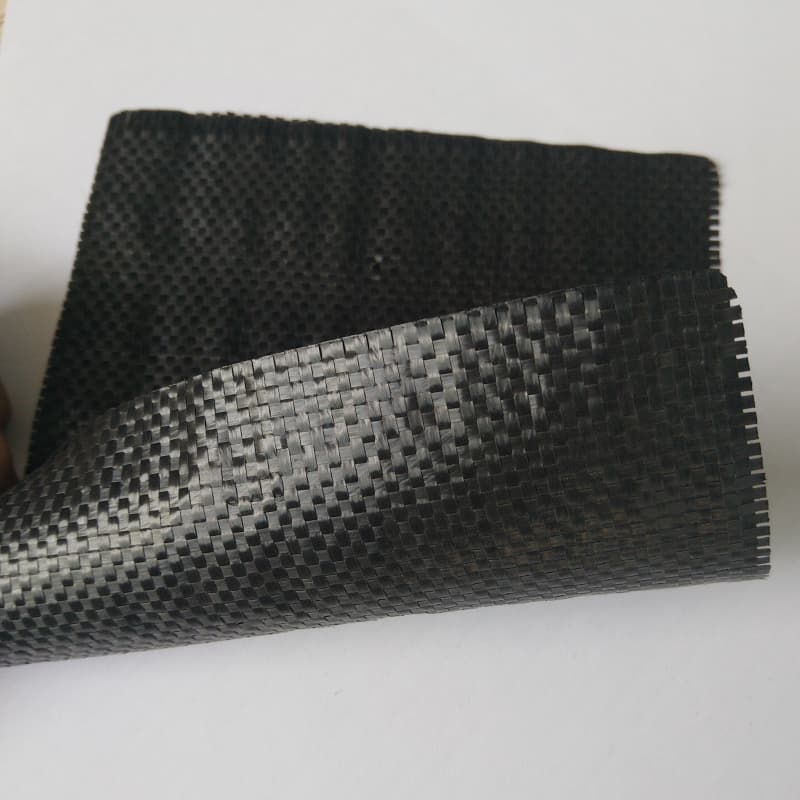
Walk onto any heavy civil jobsite where the ground is soft and you will probably see rolls of black fabric waiting to be unrolled. Chances are good that some of those rolls are High-Strength Flat Wire Woven Geotextile. The name tells you what matters: it is woven, not needled; it uses flat wires, not round filaments; and strength is the whole point. Engineers reach for this stuff when the soil alone cannot handle the load. Maybe it is a road built over swampy ground. Maybe it is a retaining wall holding back a hillside. Whatever the case, the geotextile goes in between layers of soil or aggregate to do jobs that steel and concrete used to handle. And unlike those heavier materials, this one comes in rolls, weighs a fraction as much, and will not rust or rot underground. The basic idea has been around for decades, but modern polymer science and weaving technology have pushed performance to where you can now get tensile strengths over 100 kN/m from a fabric thinner than a t-shirt.
The Flat Wire Difference
You might wonder why flat wires instead of round ones. Good question. When you extrude polymer into flat tapes and then stretch them, the molecular alignment creates something much stronger per unit weight than round fibers. Those flat wires also lay together more tightly during weaving, leaving smaller openings between them. That matters for two reasons. First, smaller openings mean better soil retention—fine particles stay put instead of washing through. Second, the flat surfaces distribute stress more evenly across the fabric when loads hit it. This Woven Geotextile ends up with what engineers call a high modulus, which is just a fancy way of saying it resists stretching. In practice, that means when a heavy truck drives over a road built with this fabric underneath, the ground barely moves. The load spreads out instead of punching through. Some contractors I have talked to say they cut aggregate thickness by nearly half after switching to high-strength woven materials. The numbers back them up.
Breaking Down the Technicals
Let's get specific about what this Geofabric actually delivers in terms of numbers. Tensile strength ranges vary by grade, but typical offerings start around 20 kN/m for light reinforcement and go up past 100 kN/m for heavy jobs like landfill bases or railway stabilization. Elongation at break usually stays under 20%, and at working loads it is often below 5%. That low elongation is crucial because reinforcement needs to engage immediately—if the fabric stretches too much before it grabs the load, the soil has already moved. Tear resistance and puncture resistance also matter because installation is rough. Dozer tracks, dumped rock, sharp edges—the fabric has to survive all that and still perform for decades. UV stabilizers in the polymer mean it can sit on site for a few weeks before burial without degrading. Apparent opening size typically runs from 0.15 to 0.60 mm, which holds most granular soils while letting water pass through. Permittivity numbers fall in the range where drainage happens but fines stay trapped.
Where You Will See It Installed
Application: Road Construction
Soft subgrades are everywhere. Build a road directly on top and the aggregate just sinks in. Place a layer of High-Strength Flat Wire Woven Geotextile between them and the aggregate floats on the fabric while the fabric spreads the load across the weak soil underneath. Works the same for railways under ballast.
Application: Retaining Walls
MSE walls depend on reinforcement layers extending back into the fill. Each layer of this Woven Geotextile wraps around soil and creates a stable mass that holds together against overturning. The low creep of flat wire construction means the wall face stays vertical for the long haul.
Application: Landfills
Bottom liners need protection. Sharp objects in the subgrade can puncture geomembranes if nothing sits between them. A high-strength woven geotextile provides that cushion plus reinforcement for weak foundation soils. Same goes for final covers on top of closed cells.
Application: Hydraulic Works
Riprap on riverbanks or shorelines tends to scour out the soil underneath unless you put a filter layer down first. This Geofabric holds the bank together while water flows through the rock above. Wave action and currents lose their power to erode.
Application: Industrial Pavements
Container yards and port facilities see point loads that crush ordinary pavements. Forklifts, stacked containers, heavy equipment—all of it bears down on small areas. Reinforcement with high-strength woven fabric prevents shear failure and keeps surfaces drivable.
Installation Realities
Theory is one thing; getting it right on site is another. The ground needs clearing of stumps and sharp rocks before anything goes down. Unroll the fabric with the grain oriented the right way—usually perpendicular to the direction of expected stress. Overlaps between rolls matter: 0.3 meters for firm ground, 0.5 meters or more where settlement is expected. Some specs require sewing the seams on critical walls. Cover material should come from the edge forward, not driven directly onto exposed fabric. Minimum cover thickness depends on aggregate size but 150 mm is a safe starting point. On slopes, anchor the top before backfilling or the whole thing slides down. And for God's sake, keep the rolls covered until use if they sit on site for weeks. UV exposure limits exist for a reason.
Packaging and Shipping Details
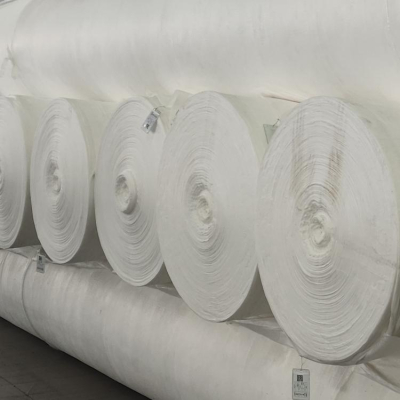
Rolls come wound on heavy cores—steel or heavy cardboard depending on what survives shipping better. Each roll gets a polyethylene sleeve to keep moisture out and an outer wrap of woven material to prevent forklift damage. Labels show grade, length, width, and batch numbers so crews can verify they have the right product. Container loading uses bracing to stop rolls shifting during ocean transit. For large projects, we coordinate multiple containers to arrive just in time for each phase. Storage on site should be raised off the ground on timbers or pallets, covered if possible, and away from standing water. Nobody wants to unroll a fabric that sat in a puddle for three weeks before installation.
Quality Control and Manufacturing
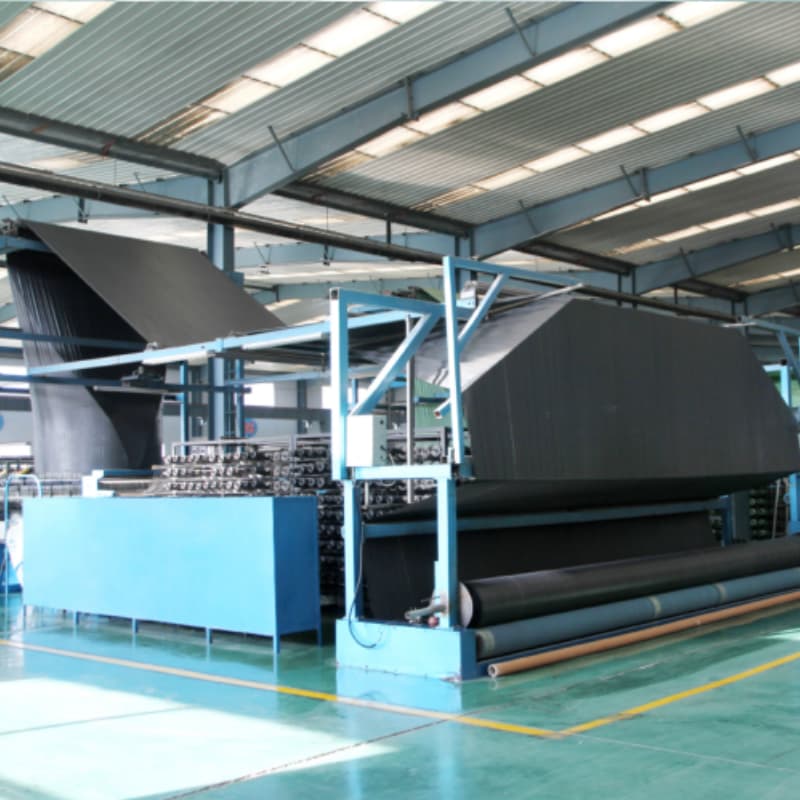
Producing consistent High-Strength Flat Wire Woven Geotextile takes more than just running looms. Raw polymer gets tested before extrusion. During weaving, sensors monitor tension and pick counts continuously. Finished rolls go through tensile testing to verify strength matches the spec sheet. Random samples get checked for UV resistance, chemical durability, and permeability. Third-party audits from labs like SGS or BTTG verify our in-house numbers. CE marking is available for European projects. The manufacturing facility holds ISO 9001 certification and has for years. Engineers who specify this material can pull up test reports online or request certified values for their specific batch numbers. No guesswork, no assumptions—just data.
Comparing Options
Sometimes people ask how this differs from products like BIDIM or other non-wovens. Fair question. BIDIM and similar needle-punched geotextiles are designed primarily for filtration and separation. They have a fuzzy, felt-like texture and high permeability. Water flows through them easily while soil stays put. But they lack the tensile capacity for heavy reinforcement because the fibers are randomly oriented and not under tension. This High-Strength Flat Wire Woven Geotextile is the opposite. It sacrifices some permeability—though still enough for most drainage needs—to gain high load capacity in specific directions. Think of it as comparing a filter fabric to a reinforcing fabric. Sometimes projects need both, which is why composites exist. But when the primary concern is stopping soil from moving under load, woven is the answer.
Frequently Asked Questions
Q: How long will this last underground?
A: Properly covered, fifty years is conservative. Polypropylene and polyester resist biological attack and common soil chemicals. The material includes antioxidants and UV stabilizers to handle storage and installation. Most permanent works specify a 50-year design life and this product meets or exceeds that.
Q: Can I get custom roll sizes?
A: Yes. Tensile strength can be adjusted by changing yarn denier or weave density. Roll lengths and widths can be tailored to project needs. Custom widths up to 8 meters are possible. Lead times vary depending on the customization level but we work with project schedules.
Q: What about overlapping requirements?
A: Standard overlap is 300 mm for firm subgrades. For very soft ground or high-load areas, increase to 500 mm or more. Some specifications require sewing overlaps on critical MSE walls. Always follow the project geotechnical report recommendations.
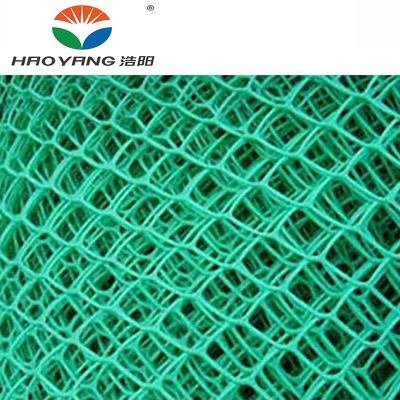
A: Not exactly. Geogrids have open apertures for soil interlock and are often made by stretching punched sheets. This Woven Geotextile has continuous fabric construction with smaller openings. Both provide reinforcement but through slightly different mechanisms. Geogrids excel with coarse aggregates; woven geotextiles work better with finer soils and provide separation functions that geogrids cannot.
Q: How do I know what strength grade I need?
A: That comes from stability analysis considering wall height, soil properties, surcharge loads, and settlement tolerances. Our technical team can review calculations or run preliminary checks if you share project parameters. For roads, empirical methods based on subgrade CBR provide guidance. When in doubt, conservative selection costs less than failure.
Q: Does water flow through it?
A: Yes, but slower than non-wovens. Permittivity ranges from 0.05 to 0.2 sec⁻¹ depending on grade. That is enough to prevent pore pressure buildup in most applications. For high-flow situations like drainage trenches, a non-woven filter layer might be added.