In March 1988, the California Regional Water Quality Control Board received emergency notification. A 240‑acre hazardous waste disposal facility at Kettleman Hills was experiencing catastrophic displacement. Nearly 300,000 cubic meters of waste had moved horizontally, dragging the composite liner system with it. Post‑failure investigation revealed the culprit: an interface friction angle of only 8 degrees between smooth HDPE geomembrane and compacted clay . The shear strength simply was not there. Twenty‑five years later, in 2023, a peer‑reviewed stability analysis reaffirmed that the Kettleman Hills failure remains the most cited cautionary case in geosynthetic engineering—a permanent reminder that specifying the wrong HDPE Geomembrane on slopes invites predictable, preventable loss .
This is why the Anti-Slip 1.5mm HDPE Dotted Geomembrane exists. It is not a cosmetic upgrade to a commodity liner. It is a direct engineering response to documented failure mechanisms observed at Kettleman Hills, at a water reservoir where wetting reduced the sand‑geomembrane friction coefficient to 0.325 , and at landfill sites where smooth liners slid under cover soil loads following heavy rainfall . Each raised dot on this High Density Polyethylene Geomembrane is a discrete friction anchor, engineered to deliver measured, repeatable interface shear resistance that smooth sheets cannot provide. The 1.5mm nominal thickness ensures robust puncture resistance while the dotted surface—confined to one side—leaves the opposing face perfectly smooth for hot‑wedge welding without air intrusion. For engineers who have studied the 1997 landfill slope failure where wrinkled and torn geomembrane was discovered beneath 30,000 cubic yards of displaced soil , the value proposition of a Anti-Slip 1.5mm HDPE Dotted Geomembrane requires no elaboration.
Product Definition: Precision Geometry as a Safety System
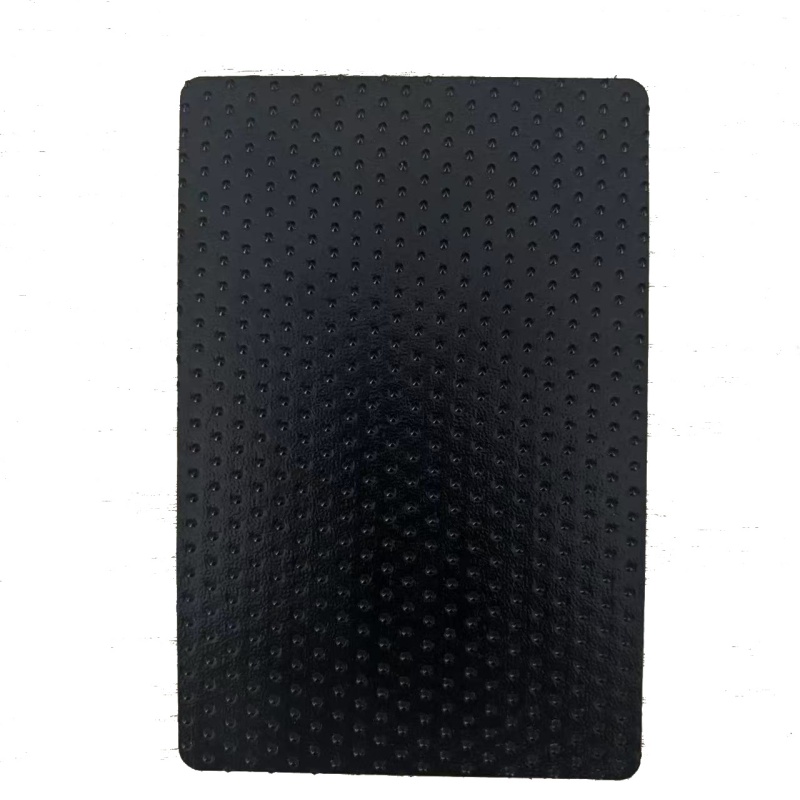
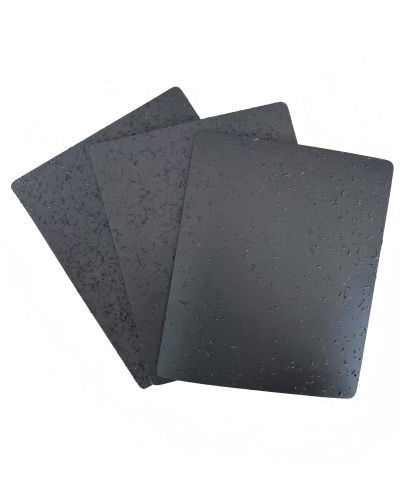
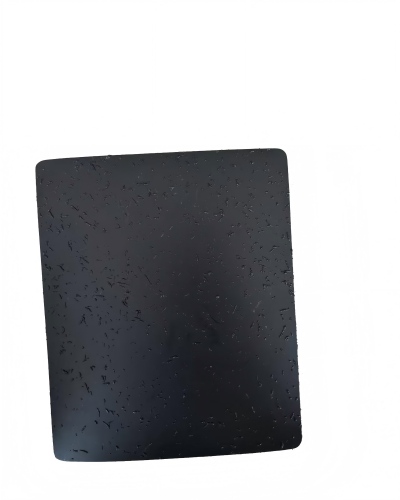
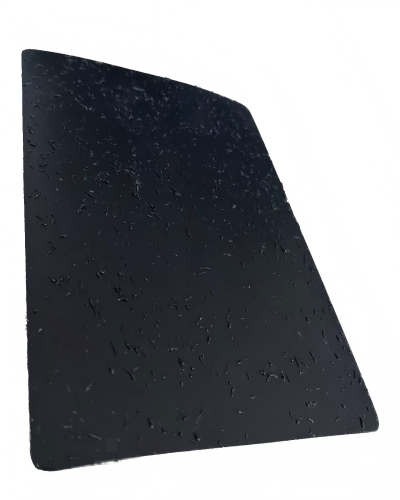
The Anti-Slip 1.5mm HDPE Dotted Geomembrane is a co‑extruded, single‑side embossed barrier manufactured from virgin high‑density polyethylene resin. Its distinguishing characteristic is an array of uniformly distributed raised dots, formed during extrusion via chilled embossing rollers under closed‑loop pressure control. Dot height is held to ±0.05mm; density is maintained at 3‑5 dots per square centimeter across the full sheet width. The reverse side remains smooth, identical in surface energy to a standard HDPE Geo Membrane. This asymmetry is deliberate and field‑proven: the dotted interface mobilizes friction against geotextiles, drainage composites, and cover soils, while the smooth interface accepts dual‑track hot wedge welding with peelable seam verification. At 1.5mm thickness, this HDPE Geomembrane occupies the optimal corridor between flexibility for drum deployment and mechanical robustness against subgrade puncture.
Documented Lessons: Why Dotted Surfaces Entered the Specification
The 1988 Kettleman Hills failure established a global benchmark for interface shear testing. Investigators determined that the smooth geomembrane‑compacted clay interface exhibited a residual friction angle of only 8 degrees—wholly inadequate for the 2:1 side slopes . Nearly a decade later, in August 1997, a municipal solid waste landfill experienced a 300‑foot‑long slope failure during construction. The failure plane propagated along the interface between a smooth 60‑mil HDPE geomembrane and the underlying compacted clay liner. Post‑slide excavation revealed wrinkled and torn geomembrane; the repair required removal of damaged liner, replacement of composite system components, and significant project delay . Independent investigators subsequently documented another failure mechanism: following prolonged rainfall at a newly constructed reservoir, sliding occurred along the smooth HDPE interface with nonplastic silty sand. Laboratory back‑analysis calculated a saturated friction coefficient of only 0.325‑0.360 . Each of these cases—Kettleman Hills (1988), the unnamed 1997 landfill, the reservoir slide—share a common thread. Smooth HDPE Geomembrane on slopes, under load, with moisture present, constitutes a defined failure mode. The Anti-Slip 1.5mm HDPE Dotted Geomembrane is a direct countermeasure to these repeatedly observed failure mechanisms.
Measurable Features, Quantified Performance
Interface Shear Resistance. Direct shear testing per ASTM D5321 documents interface friction angles corresponding to coefficients of friction ≥0.65 against nonwoven geotextile under normal stresses representative of 1‑2 meters of cover soil. This represents a 100% increase over smooth High Density Polyethylene Geomembrane (COF ≈0.3) and approximately 30% improvement over some embossed single‑side textures . The improvement is not marginal; on a 2:1 slope, this margin separates decades of service from progressive creep.
Dot Compression Resistance. Dots withstand 500kPa compressive load without permanent deformation. A 2‑meter soil cover exerts approximately 35‑40kPa. Construction equipment crossing the lined surface during placement does not flatten the friction profile.
Weldability. The smooth underside welds identically to standard HDPE Geo Membrane. Dual‑track hot wedge welding produces seam peel strengths that satisfy GRI‑GM19 criteria without the air‑channel interference common to nitrogen‑injected textured sheets. Installation contractors who have experienced failed field seams on double‑sided texture recognize the advantage of this configuration.
Carbon Black Dispersion. 2.5‑3.0% carbon black content, fully dispersed, provides permanent UV stabilization. No surface coating; the protection is integral to the polymer matrix.
Permeability. Coefficient of permeability remains <1.0×10⁻¹³ cm/s—identical to smooth HDPE. The dots do not create preferential flow paths.
Technical Specifications
Parameter
Value
Test Method
Nominal Thickness
1.5 mm (±0.1 mm)
ASTM D5199
Dot Height
0.3 – 0.5 mm
Laser profilometry
Dot Density
3 – 5 dots/cm²
Optical count
Carbon Black Content
2.5 – 3.0%
ASTM D4218
Tensile Strength (yield)
≥35 kN/m (MD), ≥30 kN/m (XD)
ASTM D6693
Elongation (break)
≥700%
ASTM D6693
Puncture Resistance
≥480 N
ASTM D4833
Coefficient of Friction
≥0.65 (vs. geotextile)
ASTM D5321
Permeability
<1.0×10⁻¹³ cm/s
ASTM E96
Application: Where This Liner Answers Known Failure Modes
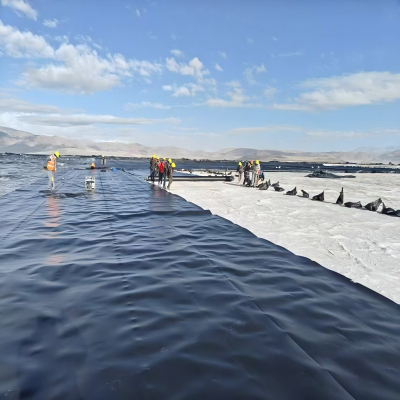
Landfill Side Slopes. The 1997 failure demonstrated that smooth geomembrane on slopes as mild as 2.5H:1V can mobilize catastrophic sliding when moisture, loading, and interface deficiencies align . The Anti-Slip 1.5mm HDPE Dotted Geomembrane provides the interface shear resistance necessary to maintain cover system integrity through settlement, seismic events, and leachate recirculation.
Heap Leach Pads. Mining operations cannot tolerate liner slippage during solution application. The dotted surface maintains engagement with underlying geosynthetic clay liners and overlying drainage geocomposites under the cyclic loading of leachate recovery.
Reservoir Embankments. Back‑analysis of the reservoir slide calculated a saturated sand‑smooth HDPE friction coefficient of 0.325‑0.360 . This High Density Polyethylene Geomembrane delivers documented COF values double that range, even under wet interface conditions .
Final Cover Systems. Geosynthetics Magazine recently noted that the most critical interface in final cover failures across the U.S. has historically been internal to drainage geocomposites, not the geomembrane itself . However, when the geomembrane interface is the weak link—as documented at Kettleman Hills and the 1997 landfill—the consequences are severe. Specifying a Anti-Slip 1.5mm HDPE Dotted Geomembrane removes that variable.
Temperature Cycling Considerations. Recent research published in Results in Engineering (2025) demonstrates that soil‑geomembrane interfaces subjected to high temperature cycles (50°C‑20°C) experience shear strength reduction of 21‑27% after four cycles . The study explicitly recommends geomembranes with higher thickness and thermal resistance. At 1.5mm, this HDPE Geomembrane provides the section mass necessary to mitigate long‑term thermal degradation effects.
Packaging and Transport
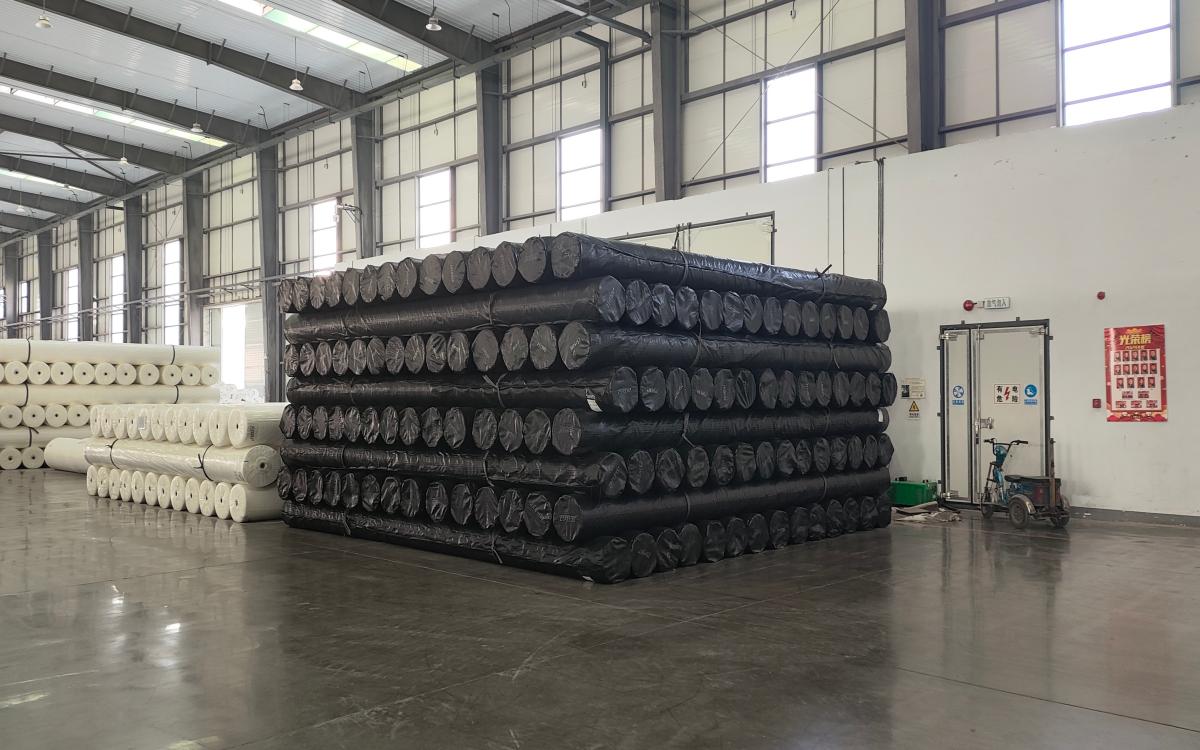
Each roll of Anti-Slip 1.5mm HDPE Dotted Geomembrane is wound on heavy‑wall cardboard cores (≥300mm ID) to prevent core collapse during crane handling. Rolls are wrapped in opaque white polyethylene film with integrated UV inhibitors. Corner protectors are fitted to both roll ends. The wrapped roll is secured to hardwood pallets using steel strapping with edge protection. For containerized ocean freight, pallets are braced with pneumatic dunnage bags or dimensional lumber to prevent longitudinal shift. Shipping documentation includes commercial invoice, packing list, certificate of analysis, and third‑party inspection reports when specified.
Company Profile: Manufacturing Competence
Our production facility operates twelve automated extrusion lines with combined daily output capacity exceeding 15,000 square meters of HDPE Geo Membrane. In‑process thickness monitoring and carbon black dispersion testing are conducted continuously. Laboratory personnel perform peel adhesion verification on every production lot. Our quality management system is ISO 9001 certified; finished product is tested to GRI‑GM13 and ASTM International standards.
We do not claim credit for the case histories cited in this document. The Kettleman Hills failure, the 1997 landfill slide, the reservoir slope failure—these events were investigated and published by independent engineers, regulatory agencies, and academic researchers . Our role is narrower but specific: we manufacture a product designed to prevent recurrence of those precisely documented failure modes.
Frequently Asked Questions
Q: Does the Kettleman Hills failure remain relevant to current specification practice?
A: Yes. The 8‑degree residual friction angle documented at Kettleman Hills continues to be cited in peer‑reviewed stability analyses published as recently as 2023 . The case established the fundamental principle that smooth HDPE interfaces on slopes require site‑specific shear testing.
Q: How does this product perform under wet interface conditions?
A: Published direct shear data confirms that moisture reduces interface shear strength for both smooth and textured geomembranes . However, the Anti-Slip 1.5mm HDPE Dotted Geomembrane mobilizes mechanical interlock that remains effective under saturated conditions, whereas smooth geomembrane friction coefficients drop to 0.325‑0.360 when wet .
Q: Can this product be welded to smooth HDPE patches or appurtenances?
A: Yes. The smooth underside is chemically and physically identical to standard High Density Polyethylene Geomembrane. Extrusion welding or hot wedge welding produces full‑strength seams.
Q: What slope angle requires consideration of dotted geomembrane?
A: General guidance: slopes steeper than 3H:1V warrant interface friction testing. However, the 1997 landfill failure occurred on slopes of 2.5H:1V . Many owners now specify dotted or textured geomembrane on all slopes exceeding 4H:1V where seismic conditions or high overburden pressures are present.
Q: Does elevated temperature affect interface performance?
A: Recent 2025 research confirms that temperature cycles—particularly high‑range cycles (50°C‑20°C)—reduce soil‑geomembrane interface shear strength by 21‑27% after four cycles . The study recommends geomembranes with greater thickness. At 1.5mm, this HDPE Geomembrane exceeds the minimum thickness threshold associated with thermal resilience.
Q: Is this product available with white reflective surface?
A: Yes. Co‑extruded white‑surfaced Anti-Slip 1.5mm HDPE Dotted Geomembrane is available by quotation. White surface reduces peak liner temperature, mitigating the thermal degradation mechanisms identified in recent research .
Q: What is the minimum order quantity?
A: Standard black dotted liner is available from stock in full container quantities (approximately 8,000‑12,000 square meters depending on roll configuration). LCL consolidation for trial quantities may be accommodated with advance scheduling.
Closing Perspective
The geosynthetics literature contains multiple well‑documented failures involving smooth HDPE Geomembrane on slopes . Each event required excavation, replacement, regulatory notification, and extended project schedules. Each event was preventable with appropriate interface friction. The Anti-Slip 1.5mm HDPE Dotted Geomembrane is not experimental. Its dot geometry is locked, its friction values are laboratory‑verified, and its weldability is field‑proven. It is a mature, conservative specification for engineers who have studied the historical record and prefer not to repeat it.
Project‑specific shear strength projections, welding procedure specifications, and commercial proposals are available upon submission of slope geometry, subgrade conditions, and overlying material specifications. Inquiries directed to our technical sales team receive direct responses from engineers, not automated routing.