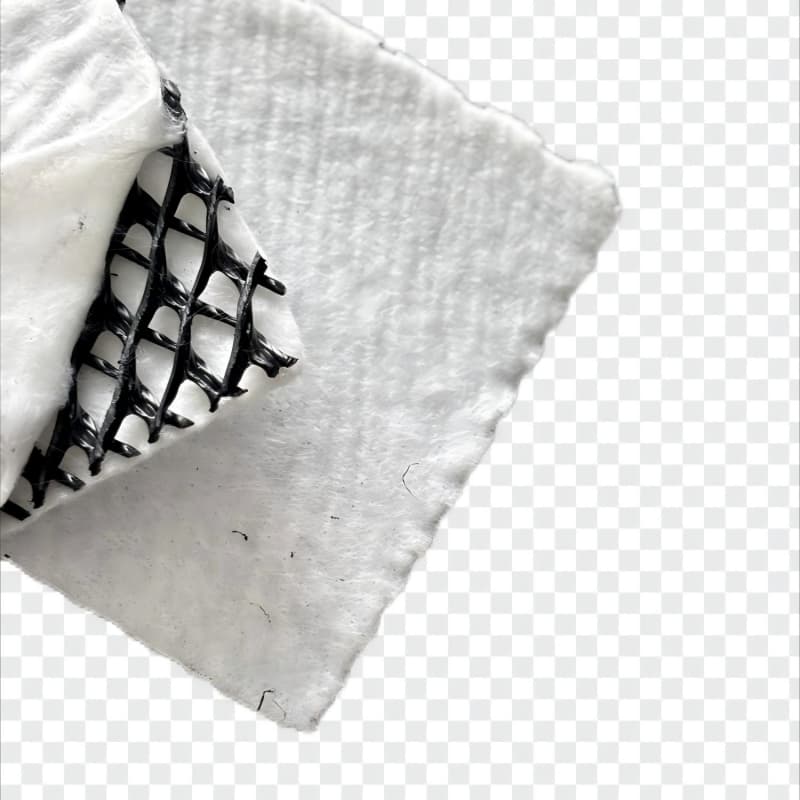
Effective water management remains one of the most persistent challenges in civil engineering and construction. Hydrostatic pressure buildup behind retaining walls, leachate accumulation in landfills, and groundwater infiltration beneath highway pavements all threaten structural integrity and long-term performance. The 3D Composite Drainage Net represents a sophisticated response to these challenges—a manufactured drainage system that combines high-strength polymer geonet cores with bonded nonwoven geotextiles to create a unified "filtration-drainage-protection" solution . Unlike traditional aggregate drainage layers that require significant thickness and remain vulnerable to clogging, this advanced material achieves superior hydraulic performance in a profile typically measuring just 5 to 8 millimeters thick . The three-dimensional structure, featuring intersecting ribs arranged at precise angles, creates permanent flow channels that maintain transmissivity even under extreme compressive loads exceeding 2000 kPa . Engineers specifying the 3D Composite Drainage Net gain predictable, laboratory-verified performance that eliminates the variables inherent in granular drainage systems. From landfill leachate collection to tunnel waterproofing, from highway edge drains to green roof assemblies, this technology has fundamentally changed how engineers approach subsurface water control.
Product Features
Triplanar Geonet Core Architecture
The foundation of the 3D Composite Drainage Net lies in its extruded HDPE geonet core. Unlike simpler biplanar configurations, the triplanar design incorporates three layers of intersecting ribs—a thick vertical central rib with inclined upper and lower ribs that together form an efficient drainage channel network . These ribs are arranged at specific distances and angles to create a true three-dimensional space structure. The middle rib possesses greater rigidity, forming rectangular drainage channels that resist deformation under load, while the crossed upper and lower ribs provide essential support that prevents the bonded geotextile from intruding into the flow paths . This architectural precision ensures that hydraulic performance remains consistent throughout the structure's service life.
Dual-Side Geotextile Integration
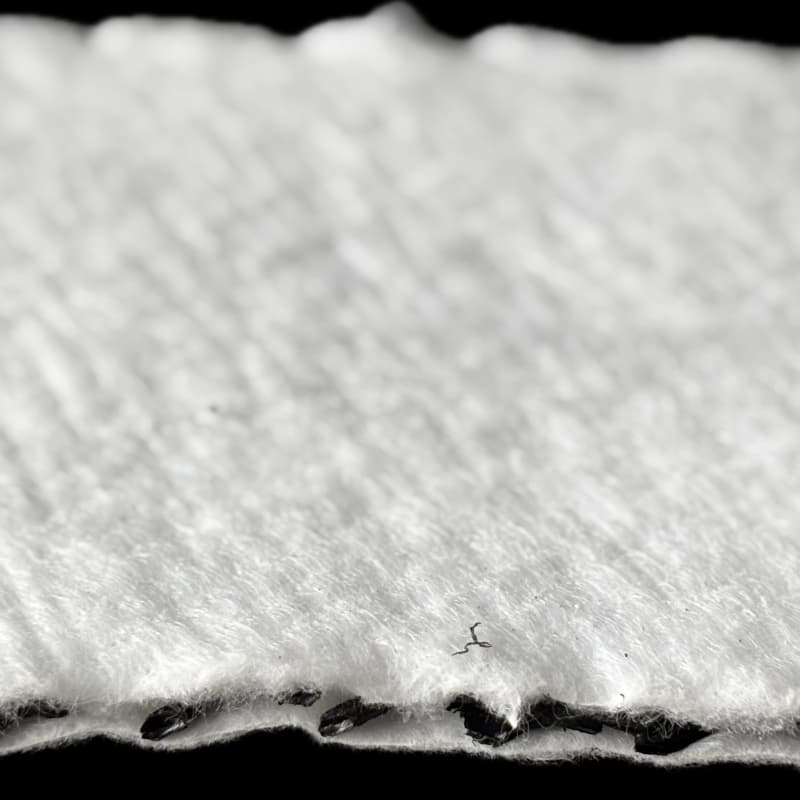
High-quality 3D Composite Drainage Net products feature needle-punched nonwoven geotextiles thermally or adhesively bonded to both surfaces of the geonet core . These geotextiles, typically manufactured from continuous polypropylene or polyester filaments with unit weights ranging from 200 to 400 g/m², serve critical filtration functions . They permit unimpeded water passage while reliably retaining soil particles, preventing the migration of fines that would otherwise accumulate within the drainage channels and compromise long-term performance. The bonding process creates a permanent composite structure that withstands installation stresses and decades of underground service without delamination .
Material Composition and Durability
Virgin high-density polyethylene (HDPE) serves as the primary raw material for the geonet core, selected for its exceptional mechanical properties, chemical resistance, and environmental stability . The HDPE formulation incorporates approximately 2% carbon black, providing essential UV stabilization that protects the material during construction exposure . This composition ensures the 3D Composite Drainage Net resists degradation from acids, alkalis, biological attack, and the aggressive chemical environments encountered in landfills and industrial applications .
Product Advantages
Superior Hydraulic Performance Under Load
The most significant advantage of the 3D Composite Drainage Net lies in its ability to maintain drainage capacity under conditions that would render aggregate systems ineffective. Laboratory testing demonstrates that these materials achieve hydraulic transmissivity values ranging from 2.8×10⁻³ to 5.0×10⁻³ m²/s under confining pressures, with flow rates equivalent to approximately one meter of gravel drainage . The three-dimensional structure resists compression creep, and the crossed rib arrangement prevents the "geotextile intrusion" phenomenon that can block flow channels in simpler geometries .
Space Efficiency and Economic Benefits
By replacing 300 to 500 millimeters of granular drainage material with a 5 to 8 millimeter geocomposite, the 3D Composite Drainage Net delivers dramatic space savings . In landfill applications, this translates directly to increased waste capacity and extended facility life. In building excavations, it means reduced digging, less imported fill, and faster construction schedules. The lightweight rolls eliminate the need for heavy equipment mobilization, reduce truck traffic, and simplify logistics—particularly valuable on remote sites or projects with restricted access .
Long-Term Reliability and Clog Resistance
The integrated filtration system of the Composite Drainage System prevents the gradual accumulation of fines that inevitably compromises granular drains. The nonwoven geotextile components retain soil particles at the interface while passing water freely, ensuring that the drainage core remains clean throughout the structure's design life . This permanent clog resistance eliminates maintenance requirements and provides engineers with confidence that specified performance will persist for decades.
Chemical and Environmental Resistance
HDPE exhibits exceptional resistance to the chemical and biological agents typically encountered in civil engineering environments. The 3D Composite Drainage Net withstands exposure to landfill leachate, industrial wastewater, and aggressive soil chemistries without degradation . This durability proves essential in applications such as mining, contaminated site remediation, and hazardous waste containment, where material failure could have serious environmental consequences.
Construction Efficiency
Installation proceeds rapidly compared to granular alternatives. Rolls deploy quickly across prepared surfaces, overlaps connect with simple detailing, and backfilling can commence immediately . On steep slopes where aggregate placement proves difficult or impossible, the geocomposite can be anchored and installed with confidence, maintaining intimate contact with the underlying surface and providing immediate drainage functionality.
Product Parameters
Standard Specifications
Parameter
Test Method
Typical Values
Core Thickness
ASTM D5199
5.0 mm - 9.0 mm
Density
ASTM D1505
0.94 g/cm³
Carbon Black Content
ASTM D1603
2.0%
Tensile Strength (MD)
ASTM D7199
8 - 16 kN/m
Hydraulic Transmissivity
ASTM D4716
2.8×10⁻³ - 5.0×10⁻³ m²/s
Puncture Resistance
ASTM D7005
0.17 kN/m
Geotextile Unit Weight
ASTM D5261
200 - 400 g/m²
Roll Width
-
2.0 m - 6.0 m
Roll Length
-
30 m - 100 m
Grade Selection Guide
Grade
Thickness
Transmissivity
Typical Applications
NLDG 50/D200
5.0 mm
2.8×10⁻³ m²/s
General drainage, retaining walls
NLDG 63/D200
6.3 mm
2.8×10⁻³ m²/s
Highway subgrade drainage
NLDG 70/D200
7.0 mm
3.2×10⁻³ m²/s
Landfill leachate collection
NLDG 80/D200
8.0 mm
4.0×10⁻³ m²/s
Tunnel drainage, high-load applications
NLDG 90/D200
9.0 mm
5.0×10⁻³ m²/s
Extreme load conditions, deep landfills
Specifications based on industry standards and manufacturer data
Product Applications
Landfill Engineering
The 3D Drainage Network for Landfills represents one of the most critical applications of this technology. In municipal solid waste facilities, the material serves multiple functions within the composite liner system . As a leachate collection and drainage layer above the primary geomembrane, it collects decomposing waste liquids and conveys them to extraction points, preventing leachate mounting that could compromise liner integrity. Within leak detection systems, it provides rapid response to any liner breach. Beneath final caps, it collects percolating rainfall and directs it to collection drains, minimizing infiltration into the closed waste mass .
Real-world projects demonstrate the material's effectiveness. The Jingbian County Urban Domestic Garbage Landfill Project utilized a composite lining system incorporating the 3D Composite Drainage Net to effectively direct, drain, and collect leachate, preventing contamination of surface water, groundwater, and soil . The project achieved significant environmental benefits while reducing the drainage layer thickness and increasing the landfill's effective capacity.
Transportation Infrastructure
Highway and railway engineers specify the 3D Composite Drainage Net for numerous applications. Beneath pavement sections, it intercepts groundwater before it can soften subgrades or contribute to frost heave. Behind retaining walls and bridge abutments, it relieves pore water pressure that would otherwise compromise structural stability . Along roadway edges, it captures subsurface flow and directs it to collection points, extending pavement life and reducing maintenance requirements. The material's ability to withstand dynamic traffic loading while maintaining flow capacity proves essential for transportation corridors.
Tunnel and Underground Construction
In tunnel engineering, the 3D Composite Drainage Net installs between primary shotcrete linings and cast-in-place concrete final linings . This configuration collects groundwater seepage and directs it to sump pumps or drainage systems, preventing hydrostatic pressure development that could damage the finished structure. The geocomposite's thin profile preserves valuable tunnel clearance while providing reliable drainage performance.
When installed in contact with geomembranes in reservoirs, ponds, and canal linings, the 3D Composite Drainage Net provides essential protection. It collects any seepage or groundwater reaching the liner surface, conveying it to collection points and preventing hydrostatic uplift that could stress or puncture the impermeable barrier . The geotextile component additionally protects the liner from puncture by overlying materials, extending the service life of the containment system.
Building Construction
Below-grade walls receive the geocomposite against waterproofing membranes, providing a drainage path for groundwater to reach foundation drains without building hydrostatic pressure against the structure. Plaza decks and green roofs incorporate the material to drain excess irrigation water and prevent ponding that could compromise waterproofing or stress plantings .
Packaging and Transportation
Roll Specifications
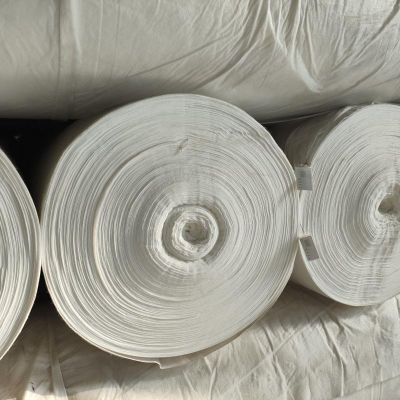
3D Composite Drainage Net products are wound onto heavy-duty cores—typically fiberboard for standard rolls or steel cores for heavier grades—with controlled tension that prevents telescoping or edge damage during transit . The outer wrap consists of woven polypropylene fabric or opaque polyethylene film, providing protection from moisture, UV exposure, and mechanical abrasion during handling and storage .
Standard roll widths range from 2.0 to 6.0 meters, with lengths from 30 to 100 meters depending on product thickness and weight . Narrower widths facilitate handling on steep slopes or confined areas, while wider rolls accelerate deployment across large, accessible areas. Custom dimensions are available from manufacturers for project-specific requirements.
Storage Recommendations
Upon jobsite arrival, rolls should be stored on level, well-drained ground, elevated slightly to prevent standing water contact. If extended storage precedes installation, covering the rolls with opaque tarps prevents UV degradation, though most projects schedule delivery to coincide with installation to minimize storage requirements .
Company Strength and Capabilities
Manufacturing Excellence
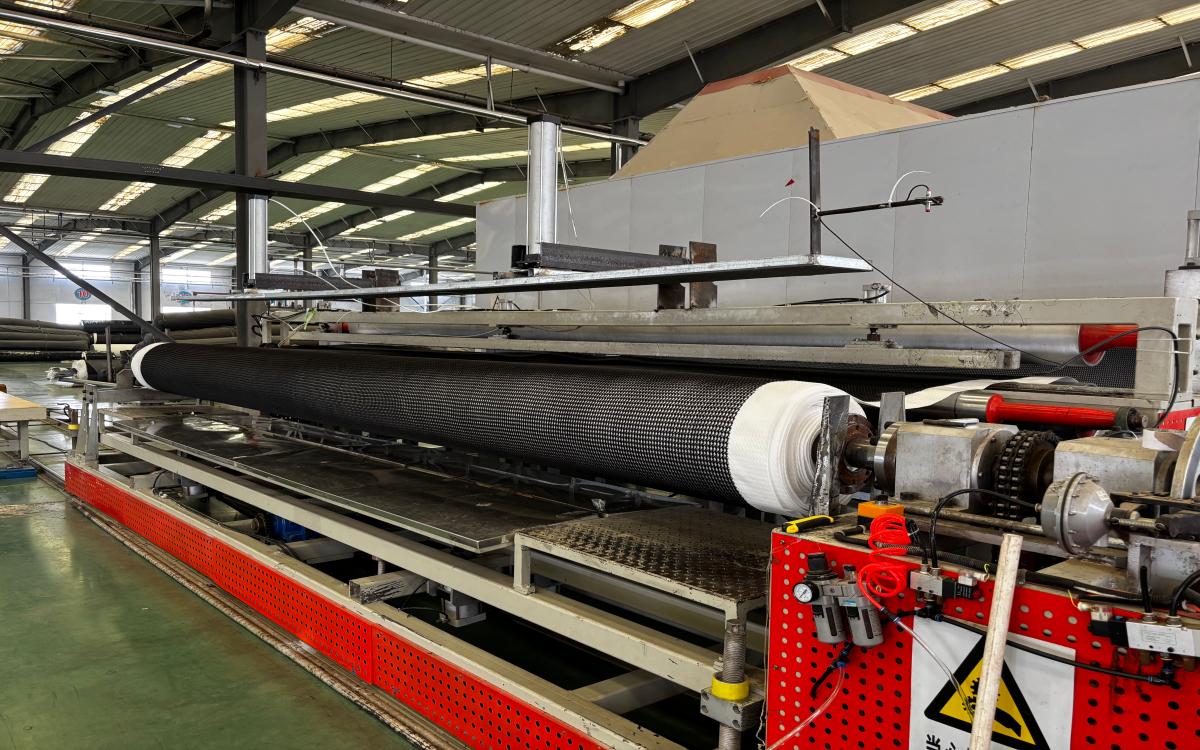
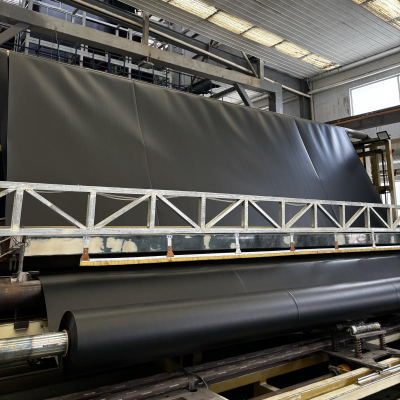
Leading manufacturers of 3D Composite Drainage Net products operate state-of-the-art production facilities equipped with advanced extrusion lines and precision lamination equipment . Continuous online monitoring ensures tight thickness tolerances and consistent product quality. Multiple heating zones in lamination equipment guarantee uniform bond strength between geonet core and geotextile components across the entire sheet width.
Quality Assurance
Comprehensive quality control laboratories verify every property that matters to project performance . Raw materials undergo testing upon receipt, confirming resin purity and specifications before production. During manufacturing, samples are pulled at regular intervals for physical testing—thickness, density, tensile strength, and geotextile bond strength. Hydraulic testing confirms transmissivity under simulated service loads, with equipment capable of applying confining pressures matching actual field conditions.
Reputable manufacturers maintain ISO 9001 quality management certification, with third-party auditors verifying quality system compliance annually . Additional certifications may include CRCC for railway applications, national industrial production licenses, and SGS or BV verification for international projects .
Technical Support
Experienced engineering teams assist project designers during the specification phase, helping select appropriate product grades and develop installation details that ensure successful outcomes . Field representatives are available to visit jobsites for complex applications involving steep slopes, unusual soil conditions, or critical performance requirements. This technical support extends from initial material selection through construction completion.
Global Reach
Established manufacturers serve projects worldwide, with export experience spanning North America, South America, Europe, Australia, the Middle East, and Southeast Asia . This international exposure provides valuable insights into diverse regulatory requirements, climatic conditions, and construction practices, informing product development and technical support capabilities.
Frequently Asked Questions
Q: How does the 3D Composite Drainage Net compare to traditional gravel drainage layers?
A: The 3D Composite Drainage Net provides equivalent or superior drainage capacity in a 5-9mm thickness compared to 300-500mm of gravel . Installation completes in days rather than weeks, performance is laboratory-verified rather than variable, and the bonded geotextile prevents the long-term clogging that inevitably affects aggregate systems. The material maintains hydraulic transmissivity under loads up to 3000 kPa, while gravel drains compress and lose capacity under similar conditions .
Q: What loads can the material withstand without losing drainage capacity?
A: Standard grades maintain hydraulic transmissivity under confining pressures of 2000-3000 kPa, representing waste or soil cover exceeding 100 feet . The triplanar geometry distributes loads across multiple rib intersections, preventing point loading that could collapse flow channels. Laboratory testing under ASTM D4716 provides specific performance data for each product grade under increasing confinement.
Q: Can the 3D Composite Drainage Net prevent clogging in fine soil conditions?
A: Yes. The bonded nonwoven geotextile components are engineered with specific pore sizes that retain soil particles while passing water freely . This filtration function prevents fines from ever reaching the drainage core, eliminating the gradual clogging that plagues granular systems. The crossed rib structure additionally prevents geotextile intrusion into flow channels, maintaining open paths for water transmission .
Q: What quality certifications should specifiers look for?
A: Reputable manufacturers maintain ISO 9001 quality management certification, with products tested to ASTM standards including D4716 for transmissivity, D5199 for thickness, and D1505 for density . Third-party verification through organizations such as SGS or BV provides additional assurance. For specific applications, certifications such as CRCC for railway projects may be required .
Q: How is installation quality verified?
A: Quality assurance typically includes documentation of roll numbers, installation locations, and photographs of critical connections before backfilling. Overlap dimensions should be verified against engineering specifications, and intimate contact with underlying surfaces should be confirmed. Localized damage can be repaired with patches extending 300mm beyond the damaged area, matching original material thickness and maintaining continuous drainage paths.
Q: What is the typical service life of 3D Composite Drainage Net?
A: HDPE geosynthetics have demonstrated service lives exceeding 50 years in actual installations, with laboratory projections suggesting hundreds of years under normal conditions . The carbon black stabilizer prevents UV degradation during construction exposure. Once buried, the material encounters nothing that attacks polyethylene—bacteria do not consume it, chemicals do not dissolve it, and soil acids do not corrode it. The nonwoven geotextile components share similar durability when manufactured from polymers designed for long-term soil contact.
Conclusion: Engineering Confidence Through Advanced Drainage Technology
The 3D Composite Drainage Net represents a fundamental advancement in subsurface water management. By replacing thick, variable granular layers with thin, manufactured composites of verified performance, engineers gain predictable results that laboratory testing confirms and field experience validates. The triplanar geometry maintains open flow channels under extreme loads. The bonded geotextiles provide permanent filtration that prevents the long-term clogging inevitable in aggregate systems. The HDPE construction resists chemical attack and environmental degradation for decades of reliable service.
From landfill leachate collection to highway subgrade drainage, from tunnel waterproofing to green roof assemblies, this technology has proven its value across the full spectrum of civil engineering applications. For specifiers seeking drainage solutions that eliminate variables, reduce construction time, and guarantee long-term performance, the evidence supports one conclusion: the 3D Composite Drainage Net represents not merely an alternative to conventional methods, but a fundamental improvement in drainage engineering.
Professional Consultation and Technical Support
Our engineering team assists with product selection, specification development, and installation guidance for projects worldwide. We provide technical data sheets, design calculations, and sample materials for project-specific evaluation.
Contact our geosynthetics specialists:
Request product samples for laboratory testing
Obtain project-specific design recommendations
Schedule technical presentations for your engineering team
Receive installation support for critical applications