
Think You Know Nonwoven Geotextiles? Think Again: The Unseen Force Reshaping Our World
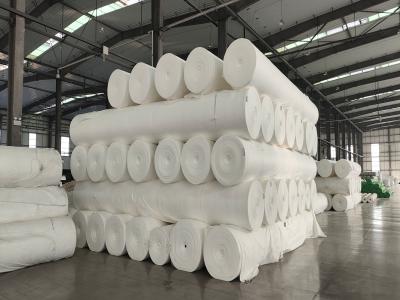
Let’s get real. We pour concrete, erect steel, and marvel at the massive machines—that’s the flashy side of construction. But what about the unseen hero that prevents the whole show from sinking into the mud? I’m talking about nonwoven geotextile. Forget the image of a simple blanket; this is a precision-engineered, polymer-based powerhouse. On my own projects over the years, I’ve seen how this material moves from a line-item on a spec sheet to the most crucial problem-solver on site. Today, I want to peel back the layers and show you three game-changing ways this fabric isn’t just used, but is fundamentally transforming how we build.
 |  |  |
1. The Ground’s Best Friend: Separation and Stability You Can Trust
Picture this: you’ve got a site with decent topsoil over a layer of soft, unstable clay. You need to build a haul road for trucks. Dumping aggregate directly is like throwing money into a quicksand pit—the rock will just push down and vanish. This is the classic “pumping” failure. The fix? A robust roll of nonwoven geotextile. We roll it out over the prepared subgrade. Instantly, it creates a clean, strong separation layer. The aggregate stays up top, doing its job, while the weak soil stays put below. It’s a simple concept with profound results.
But here’s the kicker—it doesn’t just separate; it reinforces. The chaotic, needle-punched matrix of fibers (often high-tenacity Geotextile Polyester) locks together, creating a composite material with the soil. It spreads out point loads, reducing rutting. For a huge number of access roads, pad sites, and basic separation tasks, a reliable Geotextile 200g product is the go-to. It’s the workhorse weight—thick enough to be tough during installation, yet cost-effective for large areas. I’ve spec’d miles of this stuff, and the difference in long-term performance, versus skipping it, is night and day. That’s the quiet power of a proper nonwoven geotextile.
2. Water Whisperer: Masterful Filtration and Subsurface Plumbing
Okay, “drainage” sounds boring. But failed drainage? That’s a nightmare of saturated foundations, cracked walls, and eroded slopes. The genius of nonwoven geotextile in water management isn’t just about letting water through; it’s about controlled permeability. Its job is to be a gatekeeper: let the water pass, but hold the soil back. Let me give you a real-world example: a retaining wall drainage blanket.
Behind every good retaining wall is a drain pipe surrounded by clean gravel. Without a filter, fine soil particles migrate into the gravel, slowly clogging it up. Within a few years, water pressure builds up behind the wall, leading to cracks or even failure. We wrap that gravel envelope in a nonwoven geotextile. Now, water seeps in freely, but the soil is retained. The system works for the design life of the structure. This same principle is gold for French drains, sports field drainage, and even around building foundations. And when you need a predictable, consistent filter, a tested Geotextile 200g fabric is often the perfect specification. In more aggressive chemical environments—say, near certain industrial sites or acidic soils—upgrading to a specific Geotextile Polyester formulation adds crucial long-term resistance. This fabric isn’t a passive layer; it’s an active, critical component of the hydraulic system.
3. The Eco-Warrior: Protection and Remediation No One Sees
This is where it gets really interesting. Beyond traditional civil work, nonwoven geotextile has become a star in environmental engineering. Take modern landfill caps and liners. It’s a brutal environment. The primary geomembrane liner (a thick plastic sheet) is vulnerable to puncture from the aggregate or waste below. Enter the nonwoven geotextile as a protective cushion. We install it directly against the liner. Its dense, fibrous mat absorbs impact and distributes point loads, preventing holes. Simultaneously, in the leachate collection layer above the liner, it acts as a filter, preventing fine particles from clogging the drainage network. It’s doing two critical jobs at once.
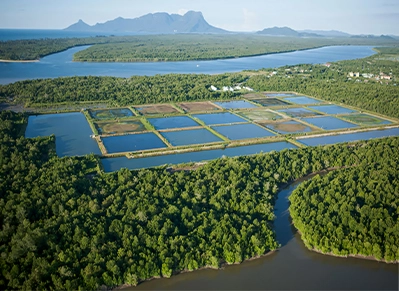
But it goes further. In coastal restoration, we use it to create “living shorelines.” Rolls of nonwoven geotextile are installed to form containment tubes or blankets along eroding banks. They immediately stabilize the soil, then we fill them with sand and plant native vegetation right through them. The fabric holds everything in place long enough for the root systems to take over, creating a permanent, natural barrier. For these tough, wet, long-term applications, the UV stability and rot-proof nature of Geotextile Polyester are non-negotiable. We’re using a synthetic to foster a natural solution—that’s smart engineering.
Wrapping It Up: It’s All About Smart Specification
So, what’s the takeaway? Calling it “fabric” almost does it a disservice. A high-quality nonwoven geotextile is a multifunctional geosynthetic. It’s your insurance policy against separation failure, your guarantee for lasting drainage, and your protective shield in harsh environments. The key is matching the right product to the job. Is it a simple separation task? A standard Geotextile 200g might be perfect. Need extreme chemical resistance and long-term durability in a containment facility? That’s where a premium Geotextile Polyester comes in. By understanding its full range of superpowers—not just one—we can specify this material to build smarter, more resilient, and more sustainable projects. It truly is the unseen force holding a lot more together than you might think.