
Grain Buds(Xiaoman)|Everything thrives yet not to the full; life's small gains bring quiet joy.
As China marks Xiaoman, the traditional solar term signifying "grain buds fill" that falls between May 20-22 annually, the geosynthetics industry finds profound connections between this ancient agricultural wisdom and modern engineering solutions.

Xiaoman, meaning "small fullness" in Chinese, represents a critical growth stage when wheat grains become plump yet remain unripe - a concept that perfectly parallels the geosynthetics sector's approach to sustainable infrastructure development. Just as farmers carefully monitor crop maturation during this solar term, engineers utilize geosynthetic materials to create balanced solutions that provide structural support while maintaining environmental harmony.
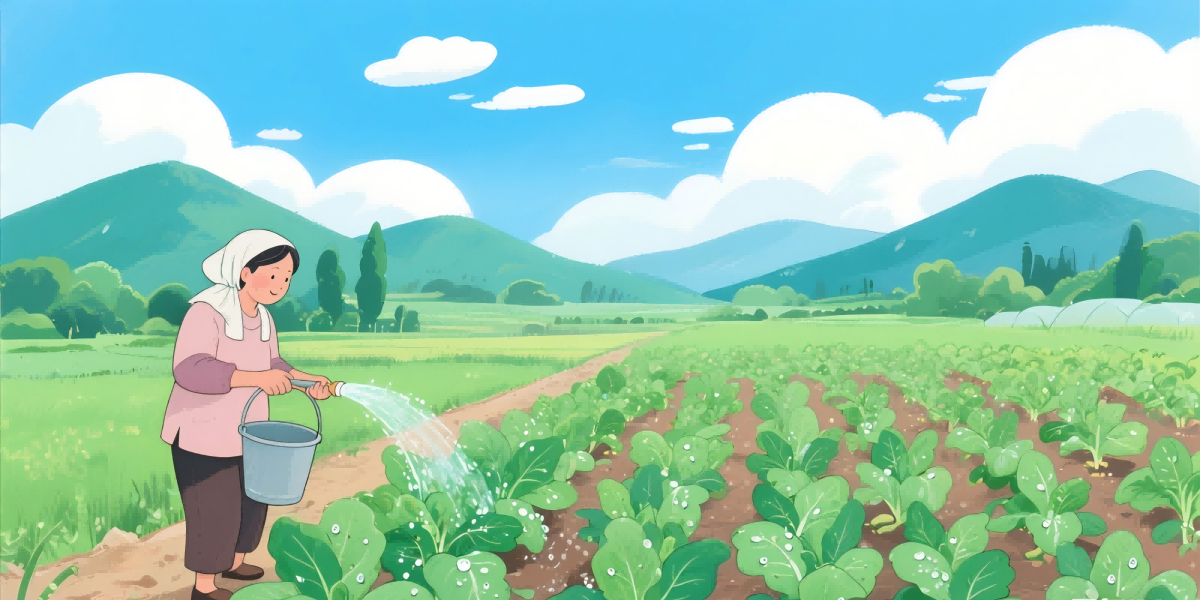
The solar term's regional characteristics mirror key geosynthetic applications:
In southern China where Xiaoman heralds the rainy season, geomembranes and drainage geocomposites play vital roles in managing increased precipitation, much like traditional water management systems. These materials prevent flooding while allowing controlled water retention - embodying the Xiaoman principle of maintaining optimal moisture levels.
Northern regions interpret Xiaoman differently, focusing on wheat reaching 80% maturity. This "partial fullness" philosophy informs the geosynthetics industry's development of reinforced yet permeable materials for soil stabilization. Geogrids used in roadway construction exemplify this balance, providing necessary support while allowing natural processes to continue.
"Xiaoman teaches us that true maturity lies in knowing when to hold back," noted Professor Zhang Liang of Tsinghua University's Civil Engineering Department. "Our smart geosynthetics now incorporate this wisdom through adaptive technologies that respond to environmental conditions - strong enough to protect, yet flexible enough to accommodate natural changes."

The solar term's three pentads (five-day periods) offer additional technical insights:
1. The flourishing of bitter herbs corresponds to geotextiles filtering systems that, like these plants, help purify and regulate
2. The withering of delicate grasses mirrors how geosynthetics selectively reinforce while allowing natural drainage
3. The wheat's near-ripening stage reflects the gradual, engineered approach of geosynthetic-reinforced slopes
Modern applications demonstrate this traditional wisdom in action:
1. Coastal protection systems using geotubes that "give slightly" like mature wheat stalks bending in wind
2. Landfill caps designed with the "80% principle" - secure yet adaptable to ground movement
3. Erosion control products that stabilize slopes while permitting vegetation growth
As climate patterns become more variable, Xiaoman's emphasis on observing subtle natural changes gains new relevance. The geosynthetics industry is responding with innovations like:
1. Rainfall-responsive drainage composites
2. Temperature-adaptive reinforcement meshes
3. Phase-change materials that regulate soil temperature

This solar term's enduring legacy continues to guide infrastructure development that respects nature's rhythms while meeting modern needs - a balance perfectly embodied in today's advanced geosynthetic solutions.