Go look at a garden drainage job that failed. Nine times out of ten the pipe is fine. The gravel is fine. What failed is the wrapping, or the lack of it. Non Woven Geotextile Felt Fabric exists to solve that specific problem, and it does it well enough that most of the time nobody thinks about it again. That is the point.
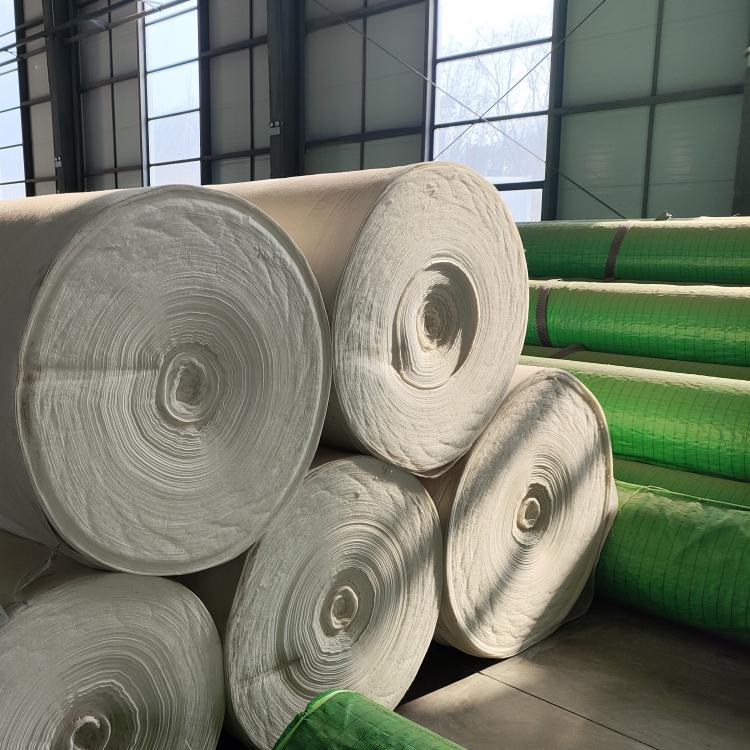
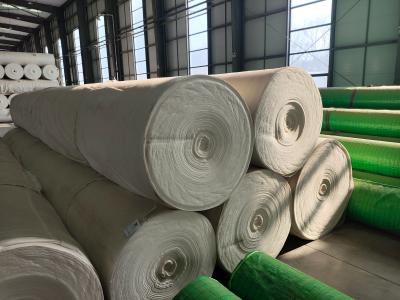
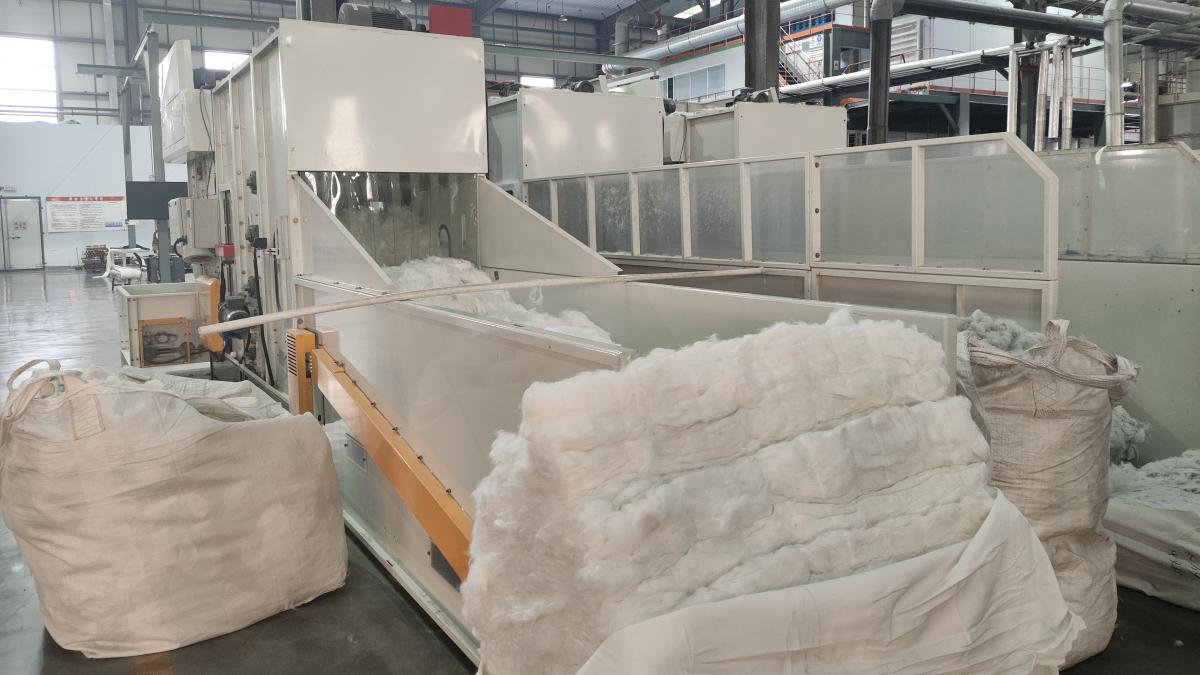
This is a needle-punched polypropylene felt. Fibres get punched through a web by barbed needles until they tangle into a mat. No glue. The mat is the filter. Water goes through the thickness, particles lodge inside it, and the flow path stays open. At Geotextile 110g m2 you get the light version, which is what most landscaping and garden drainage actually calls for.
A note on weight, because people get this wrong
Buyers see 110 g/m² and assume it is the cheap option. It is the cheap option, but that is not why it works. It works because a garden drain does not need 400 g/m² of anything. Specifying heavy fabric for a raised bed liner is not caution, it is waste. The Geotextile Felt Fabric at this weight does the filtration job perfectly well, and it costs less, and it is light enough that one person can carry a roll across a yard without help.
Where it stops working is under vehicle traffic or sharp angular rock. That is not a defect. That is a different product.
The clogging question
Hohai University ran filtration tests on nonwoven geotextiles under dike piping conditions. A nonwoven with a 0.103 mm equivalent pore size held a gradient ratio under 3 and passed 260 mL/min. Woven samples in the same test lost 42 percent of flow. The reason is depth filtration. A Non Woven Geotextile Felt Fabric lets particles penetrate and settle inside the mat. Woven fabric stops them at the surface, they pack down, and the cake seals the openings.
That is why the felt keeps draining after a season of silt-laden water. It is also why you should not expect it to look clean when you dig it up. It will be full of dirt. That is the fabric doing its job.
Mining, briefly
Mining studies have reported hauler speed gains near 40 percent and maintenance reductions above 85 percent where geotextile separation was used in haul roads. Those numbers come from heavy reinforcement grades, not from 110 g/m². Worth saying plainly, because the Mine Nonwoven Geotextile category gets used loosely in marketing. At the light end, mine use is limited to basic particle retention in low-load filtration. Anything involving liner cushioning or leach pad flow needs a heavier specification.
A tailings buttressing project in Free State, South Africa, combined non-woven geotextile pipe wrapping with separator and filter layers between tailings and rockfill. Post-construction checks found both still working. Note the combination: the same material family doing filtration and separation in the same structure.
Parameters
Item
Value
Material
Polypropylene, needle-punched
Mass
110 g/m² (other weights available)
Thickness
0.8–1.0 mm
Tensile
3.5–4.5 kN/m
CBR puncture
0.3–0.5 kN
O90
0.10–0.20 mm
Permeability
High
UV
Stabilised, temporary
Widths 1–6 m.
Rolls 50 or 100 m.
Where it goes
Weed barrier under mulch and stone. The Non Woven Geotextile Felt Fabric blocks light, passes air and water, and does not suffocate the soil the way sheet plastic does.
Light drainage trenches. Wrap the pipe and gravel with Geotextile Felt Fabric. Garden and residential flows, not highway outfalls.
Separation under paths and patios. Keeps subgrade out of the base course.
Gentle slope erosion control. Holds topsoil while grass takes.
Raised bed lining. Inert, safe for vegetables, separates native soil from imported mix.
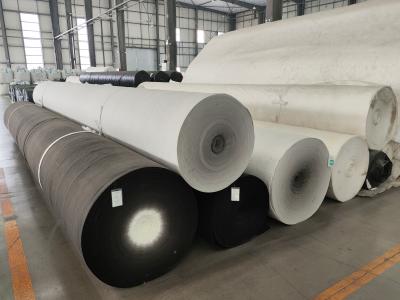
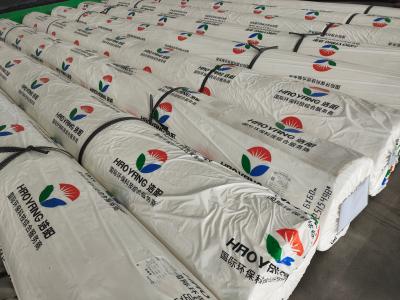
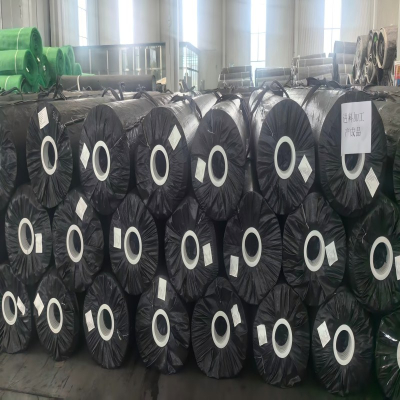
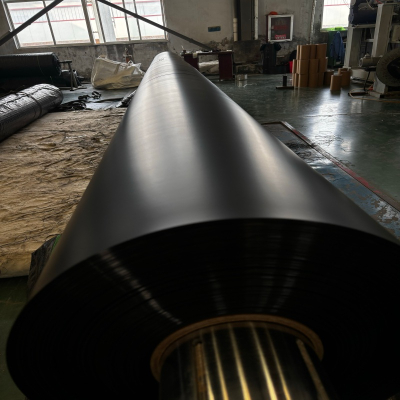
Rolls come wrapped in film with an outer woven bag. Standard widths 1 to 6 metres, lengths 50 or 100 metres. The 110 g/m² rolls handle easily by one person. For export, the low weight means a lot of square metres fit in a 20-foot container, which brings freight cost per square metre down. Store on pallets, off the ground, out of standing water and direct sun.
About production
Continuous needle-punch lines, ISO 9001 systems, virgin polypropylene from major suppliers. Labs test mass, thickness, tensile, puncture, and opening size per batch. Third-party verification available if the project requires it. Technical support helps with weight selection and specification matching.
Questions that come up
What does 110 g/m² mean? Mass per unit area. The Geotextile 110g m2 grade is the light fabric for filtration and separation at modest load.
Under a driveway? Paths and light garden use, yes. Vehicle traffic, go 200 g/m² or heavier.
Versus woven? Nonwoven filters and drains better. Woven has more tensile strength. For drainage work the Non Woven Geotextile Felt Fabric is usually correct.
Safe for vegetables? Yes. Polypropylene is inert.
Overlap? 300–500 mm. On slopes, upper roll over lower.
Sun exposure? Several weeks. Cover within a month.
Underground life? Decades, given proper cover.
Mine Nonwoven Geotextile use? Light filtration only. Liner protection and high-load drainage need heavier grades.
Contact your supplier for roll dimensions, batch test reports, and weight recommendations.