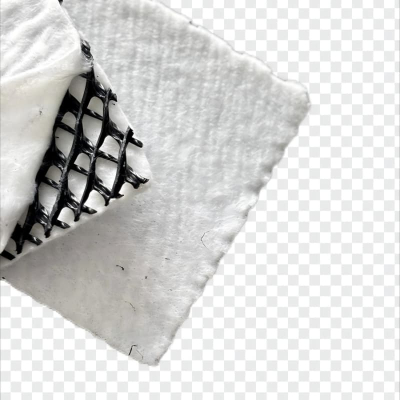
Most drainage and separation jobs can be handled with polypropylene. It costs less, and for landscaping, light access roads, and short-term works, it does the job. But some projects cannot accept the slow stretch that PP develops under permanent load. Retaining walls. Landfill cushions. Heap leach pads. That is where the Polyester Geotextile 300g comes in. It is a Non Woven Needle Punched Geotextile made from virgin PET fibres, mechanically entangled without glue or heat bonding. Water passes through the random voids. Soil particles stay behind. The Polyester Geotextile 300g sits at a practical mid-weight, strong enough for road base reinforcement, liner cushioning, and mine filtration, yet light enough to handle without a crane.
Product Features
Non Woven Needle Punched Geotextile build. The Polyester Geotextile 300g relies on mechanical entanglement, not heat bonding. It stays flexible, drops into trenches, and follows uneven subgrade without bridging.
High tensile strength. Breaking strength reaches 15 kN/m or more in both directions, exceeding standard PP grades at the same weight.
Creep resistance. Polyester does not stretch gradually under sustained load the way PP can. The Geotextile 300 g keeps its dimensions over decades of service.
Puncture resistance of 2.5 kN and above. Angular aggregate stays on top. This prevents liner damage in landfill and mining work.
Depth filtration. Particles are trapped across the fabric thickness. Woven alternatives blind at the surface. The Polyester Geotextile 300g keeps draining because clogging builds gradually.
Chemical resistance. PET handles hydrocarbons, acids, and alkaline solutions found in mining and industrial settings. The Mine Nonwoven Geotextile version resists leachate and process solutions.
UV stabilised. Several weeks of sunlight tolerance during installation.
Product Advantages
Higher strength than PP at the same weight. The Polyester Geotextile 300g delivers tensile values that PP only reaches at heavier weights. Same protection with less material, or better performance at the same cost.
No creep under permanent load. PP can elongate slowly under constant tension. Polyester holds its shape. For retaining wall drainage, embankment reinforcement, and landfill liner cushioning, that stability prevents long-term deformation.
Proven in mining and containment. As a Mine Nonwoven Geotextile, the Polyester Geotextile 300g filters solution, retains fine particles, and cushions geomembranes against puncture. The Mine Geotextile chemistry handles conditions that would weaken PP.
Decades of buried service. Once covered, the Polyester Geotextile 300g stays intact for 50 years or more. No UV, stable temperatures, no biological breakdown.
One weight, many applications. Road separation, wall drainage, liner cushioning, mining filtration, slope reinforcement. Stock one roll instead of several.
Research and Case Evidence
The creep gap between PET and PP shows up in published research and field monitoring, not just in sales language.
A study in Geotextiles and Geomembranes tracked 300 g/m² nonwoven samples under sustained load for 10,000 hours. PET retained over 90% of initial tensile strength with elongation under 10%. PP at the same weight showed elongation above 20% and strength retention below 75%. For retaining wall drainage and embankment work, where the fabric sits under constant pressure for decades, that difference decides whether the system keeps working or slowly deforms.
A municipal landfill in northern Europe installed Polyester Geotextile 300g as a cushion above the HDPE liner in 2008. Inspections at year five and year twelve found no puncture damage and no measurable creep deformation. An earlier cell at the same site used PP fabric and showed visible elongation and localised thinning after eight years.
A heap leach operation in Chile ran a side-by-side trial on two pads. One used PP fabric, the other Mine Nonwoven Geotextile in PET. After four leach cycles with acidic solution at pH 2.5, the PP fabric showed roughly 15% strength loss. The Polyester Geotextile 300g showed no measurable change. The operation standardised on PET for future pad construction.
Research from the Indian Institute of Technology on coastal protection found that 300 g/m² PET nonwovens maintained filtration and structural integrity after five years of tidal exposure. PP alternatives in the same installation showed biological clogging and reduced permeability. The Non Woven Needle Punched Geotextile in PET proved sufficient for the filtration and separation demands of the project.
Product Parameters
Parameter
Test MethodValue
Test MethodValue
Material
—
100% Polyester (PET)
Mass per Unit Area
ASTM D5261
300 g/m² ±6%
Thickness
ASTM D5199
2.2 – 2.5 mm
Tensile Strength MD/CD
ASTM D4595
≥ 15 kN/m
Elongation at Break
ASTM D4595
40 – 70%
CBR Puncture
ASTM D6241
≥ 2.5 kN
Trapezoidal Tear
ASTM D4533
≥ 0.40 kN
Apparent Opening Size
ASTM D4751
0.07 – 0.20 mm
Permittivity
ASTM D4491
0.9 – 1.6 sec⁻¹
UV Resistance
ASTM D4355
≥ 70% retained
Roll widths span 1 to 6 metres. Standard lengths are 50 or 100 metres. Custom sizes available.
Product Applications
Road base separation and reinforcement. The Polyester Geotextile 300g sits between soft subgrade and aggregate base. It stops mixing and adds tensile reinforcement. Pavement holds its design thickness and load capacity.
Retaining wall drainage. Against the wall face, the Geotextile 300 g lets water reach weep holes while holding soil back. PET creep resistance means the fabric does not deform under constant backfill pressure.
Landfill liner protection. Geomembranes need a cushion against drainage stone. The Polyester Geotextile 300g absorbs point loads and filters leachate. It handles aggressive leachate chemistry.
Mining heap leach pads. The Mine Nonwoven Geotextile filters solution and retains fine particles. It protects the liner from ore puncture. Acidic and alkaline solutions do not affect the Mine Geotextile structure.
Railway ballast protection. Fine subgrade soils stay out of the ballast. Drainage keeps working. Track geometry holds.
Slope erosion control. The Polyester Geotextile 300g brings dimensional stability for slope reinforcement. It holds soil while vegetation establishes.
Pond and canal lining cushion. Under HDPE or PVC liners, the Geotextile 300 g acts as a puncture barrier. Sharp stones cannot reach the membrane.
Temporary haul road reinforcement. For seasonal access roads, the Polyester Geotextile 300g provides separation and strength with better creep resistance than PP under repeated loading.
Packaging and Transportation
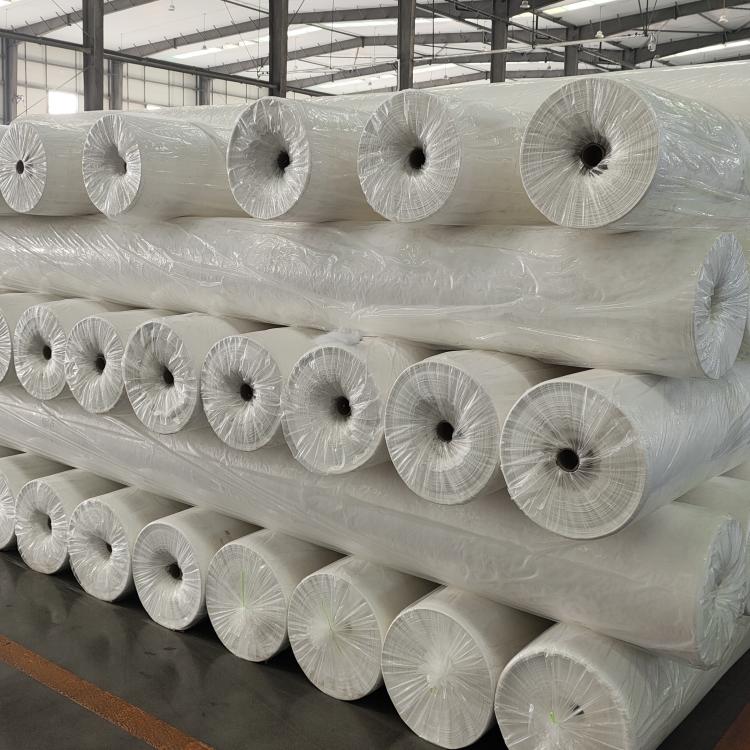
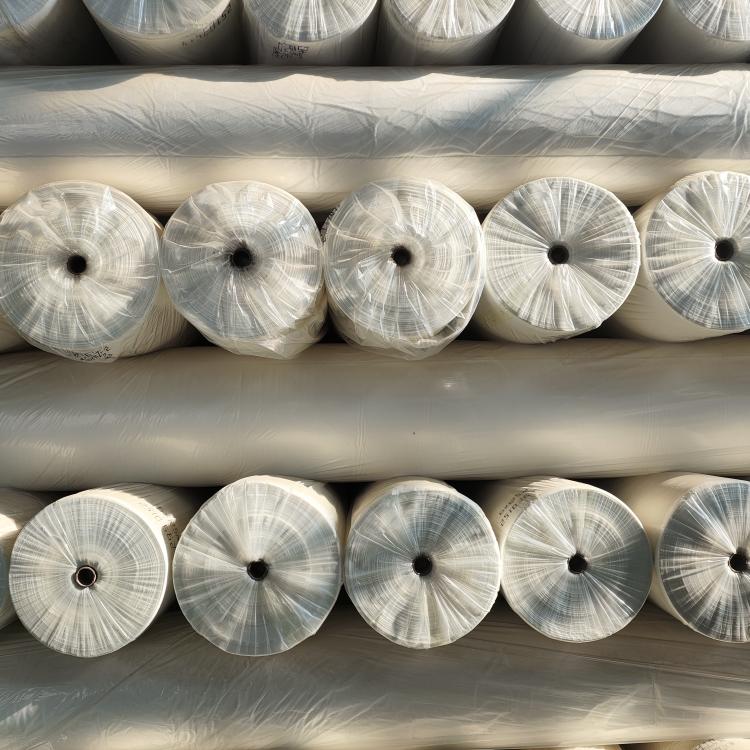
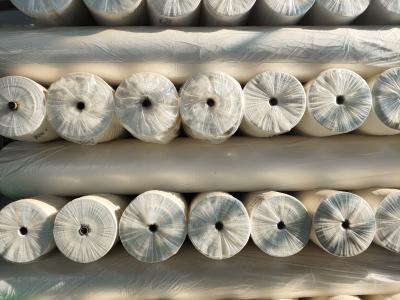
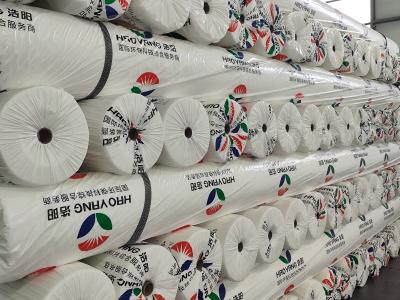
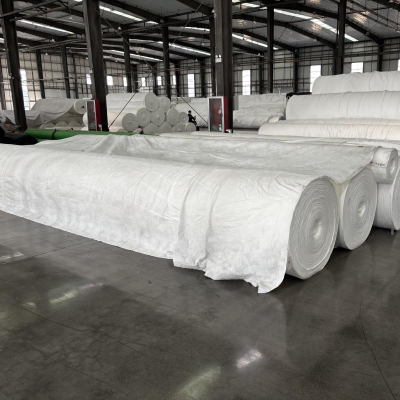
Rolls come in 1 to 6 metre widths. Four-metre rolls are common for road and mining work. Lengths are 50 or 100 metres. A 4x50 metre roll weighs roughly 60 kilograms, so forklifts or two-person teams are typical.
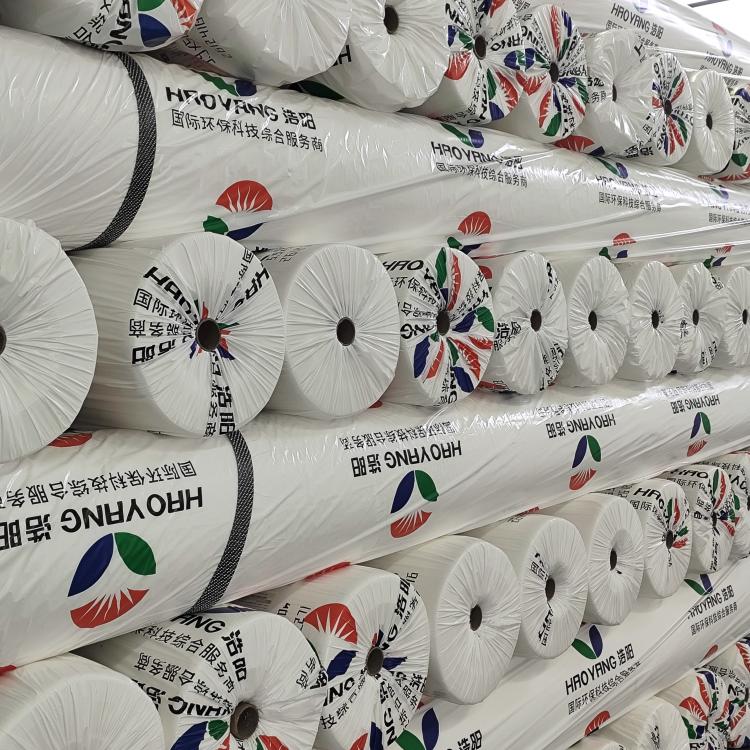
Each roll winds onto a cardboard core and gets wrapped in polyethylene film or woven PP bags. Straps secure the wrap and create lifting points. Labels list weight, dimensions, lot numbers, and material type.
A 20-foot container holds roughly 3,500 to 5,000 square metres of Polyester Geotextile 300g. Load plans keep container weights legal.
Store rolls on pallets, off the ground. Two to three high is the limit. Keep wrapping on until installation.
Company Strength
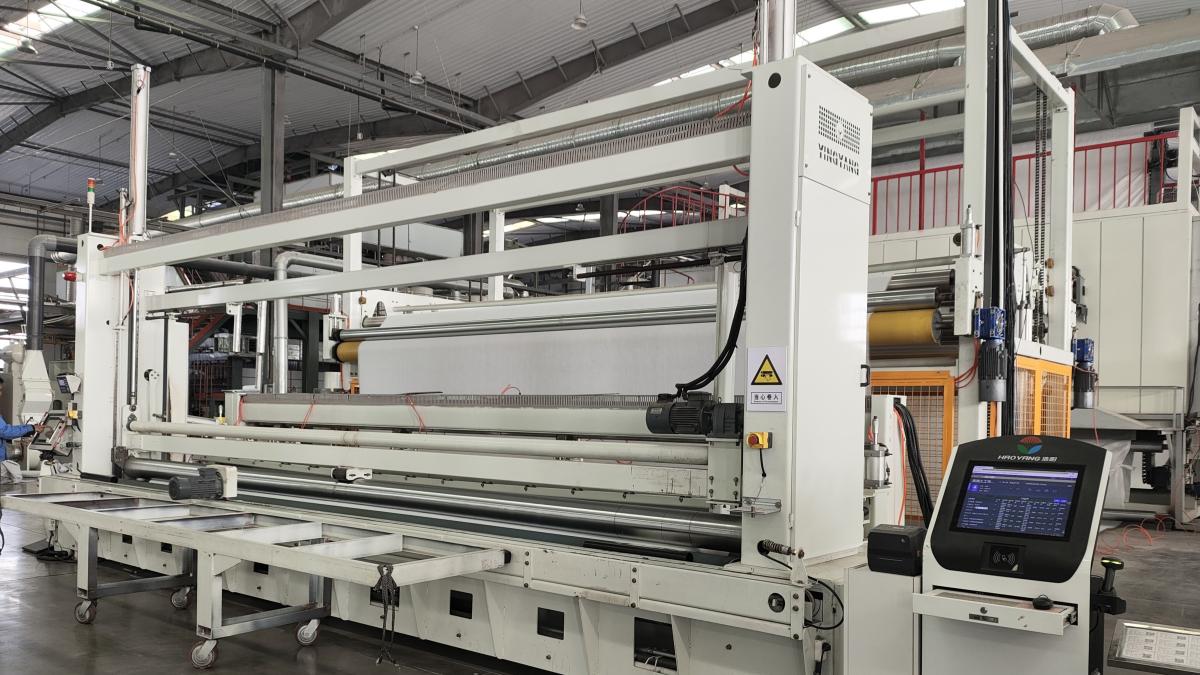
The Non Woven Needle Punched Geotextile production line runs continuously. Daily output keeps supply steady. Virgin PET from major petrochemical suppliers keeps fibre properties consistent from roll to roll. Every batch gets tested for weight, thickness, tensile, puncture, opening size, and flow rate. ISO 9001 and CE certification are standard for established suppliers.
Technical support covers weight selection, PP versus PET choice, and installation questions. Export logistics handle documentation and freight.
FAQ
Q: What does 300 g mean?
A: 300 grams per square metre. The Polyester Geotextile 300g weighs 300 grams per square metre. Mid-weight grade for moderate to demanding work.
Q: Why choose polyester over polypropylene?
A: Mine Geotextile in PET brings higher tensile strength and better creep resistance for permanent loads. PP costs less and handles pH 2 to 13. Mining, landfill, and long-term structural applications often favor PET.
Q: How does it compare to 200 g or 400 g?
A: The Geotextile 300 g beats 200 g on strength but costs less and handles easier than 400 g. It sits in the practical middle.
Q: Is this suitable as a Mine Nonwoven Geotextile?
A: Yes. The Mine Nonwoven Geotextile in 300 g weight serves heap leach pads and tailings storage, filtering solution and cushioning geomembranes from puncture.
Q: Can equipment drive on it?
A: The Polyester Geotextile 300g survives moderate traffic with breaking strength around 15 kN/m. Place cover promptly.
Q: How much overlap between rolls?
A: 300 to 500 mm for separation. 500 to 750 mm for critical filtration or liner protection. On slopes, upper roll over lower.
Q: How long in the sun?
A: Several weeks. UV stabilisers help, but cover the Polyester Geotextile 300g within a month.
Q: How long underground?
A: 50 years or more. No UV, stable temperatures, no biological breakdown. The Mine Geotextile resists creep even longer under permanent load.
Q: Can it be used under pond liners?
A: Yes. The Geotextile 300 g works as a cushion layer beneath HDPE or PVC liners, preventing punctures from sharp subgrade materials.
Q: Is it suitable for temporary roads?
A: Yes. For seasonal haul roads, the Polyester Geotextile 300g provides separation and strength at a reasonable cost, with better creep resistance than PP under repeated loading.
For road construction, retaining walls, drainage, landfill, and mining work, the Polyester Geotextile 300g delivers high tenacity performance where PP falls short. Contact your supplier for material type, width, and length options.