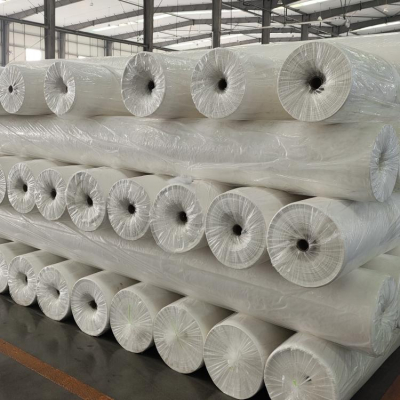
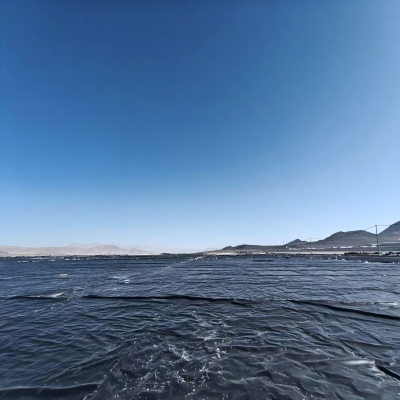
Woven Geo Fabric: What Project Engineers Discover When Soft Ground Pushes Back
Meta Title: Woven Geo Fabric: Reinforcement Guide for Infrastructure
Meta Description: Practical guidance on Woven Geo Fabric selection for road construction, embankment reinforcement, and soil stabilization. Market data and procurement insights.
In the late 1990s, a highway project in the Netherlands ran into a problem that had defeated engineers for generations. The planned route crossed a stretch of deep peat—ground so compressible that building anything heavier than a footpath seemed unrealistic. The solution, documented years later in a peer-reviewed journal, used Woven Geo Fabric as basal reinforcement . The embankment reached 6.1 meters in height. The peat beneath extended 7.6 meters deep. Water content in that peat measured between 445 and 785 percent .
The embankment held. Woven Geotextile reinforcement made possible what conventional methods could not. But the study that followed carried a warning: simplified design methods often misled. Field behavior did not always match predictions. Getting it right required understanding that not every Woven Geo Fabric product performs the same way.
For procurement professionals and civil engineers, this story captures a basic truth. Woven geotextiles offer capabilities no other material can match—but only when specified and sourced with care.
 |  |  |
How Demand for Woven Geotextiles Varies by Region
Talk with geotextile buyers across different parts of the world, and patterns emerge in how Woven Geo Fabric is used and what worries people when they buy it.
In Southeast Asia, where new roads and ports cross river deltas underlain by soft clay, Woven Geotextile is specified mainly for basal reinforcement. The objective is straightforward: keep embankments stable when the ground beneath wants to squeeze sideways under load. Buyers in this region have learned to examine tensile strength claims carefully. Fabric that stretches too much defeats the purpose.
In North America, public infrastructure funding comes with paperwork. When Woven Geotextile goes into a project financed by federal money, sourcing must be documented. Material must meet ASTM standards. Testing records must be available. This has pushed demand toward manufacturers who can trace each roll back to production records.
In the Middle East, where summer temperatures regularly exceed 45 degrees Celsius and groundwater often carries high salt concentrations, buyers focus on long-term durability. They want to know how a Woven Geotextile will perform after years in conditions that accelerate polymer aging. Standard test data is not enough—they ask for field references from similar climates.
These regional differences matter because they affect what questions buyers should ask before placing orders.
What Woven Geotextiles Actually Do in the Ground
To understand what separates a good Woven Geo Fabric from a poor one, consider what these materials do once buried.
A Woven Geotextile in a road or embankment has one main job: provide tensile strength where soil has none. Soil handles compression well. It handles tension poorly. When you build a road over soft ground, the weight of fill pushes down and sideways. Without reinforcement, the soil beneath squashes and spreads. The pavement above cracks and settles.
Embedding Woven Geotextile within the soil introduces tension capacity. The fabric resists sideways spreading. It keeps fill in place. It spreads loads across a wider area. This is what makes construction possible on ground that would otherwise be unusable.
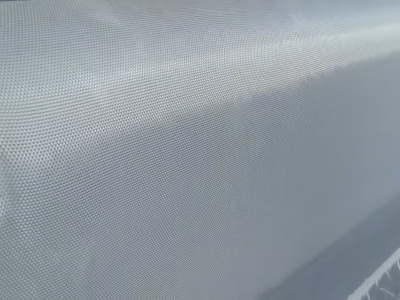
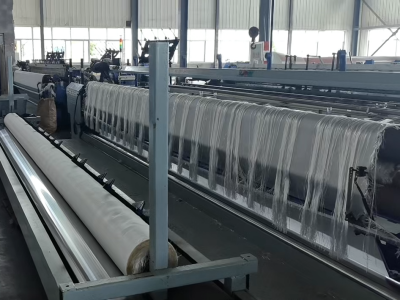
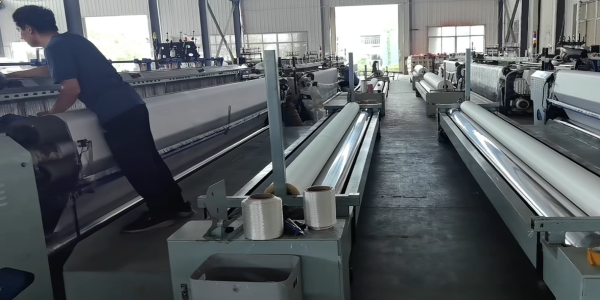
The weaving process determines how well the fabric performs this job. Yarns—usually polypropylene or polyester—are interlaced in a regular pattern. The resulting fabric has high tensile strength and low elongation. A good Woven Geotextile for embankment reinforcement might show tensile strength above 50 kN/m and elongation below 15 percent . Low elongation matters because if the fabric stretches too much before taking load, the ground has already deformed beyond acceptable limits.
But tensile strength alone does not tell the whole story. The Duqm road project in Oman, where Woven Geo Fabric helped build over unstable Sabkha soil, showed that proper specification requires attention to multiple properties. The fabric had to provide enough tensile resistance to stabilize the embankment while working alongside nonwoven geotextiles for filtration and geogrids for added stability . The complete system, checked through finite element modeling, succeeded where conventional methods would have failed.
What Geotextile 200 GSM Actually Tells You
Specifications often call for Geotextile 200 gsm. The number refers to fabric weight—200 grams per square meter. But weight alone tells you almost nothing about how the fabric will perform.
A Geotextile 200 gsm product from a manufacturer with good quality control will have consistent yarn spacing, uniform polymer distribution, and verified tensile properties. The same weight fabric from a supplier focused on hitting a low price may use lower-grade polymer, inconsistent weaving tension, or thinner yarns that reduce effective strength.
When a project calls for Geotextile 200 gsm, experienced buyers look beyond the weight number. They ask for certified test data on tensile strength, elongation, tear resistance, and apparent opening size. They check that the reported values meet what the project actually requires, not just the minimums for that weight class.
For separation applications—keeping subgrade soil from mixing with aggregate—Geotextile 200 gsm can be appropriate. For reinforcement applications requiring high tensile strength, heavier grades are typically necessary. The right choice depends on site conditions, not a standard weight recommendation.
What Buyers Check After Learning the Hard Way
Procurement professionals who have dealt with failed geotextile installations tend to ask the same questions when evaluating new suppliers.
First, they ask for tensile test data from multiple production lots. A single test result tells you little. Consistent results across lots tell you the manufacturer controls their process. They look for low variation in tensile strength, elongation, and tear resistance.
Second, they request references from projects with similar conditions. A Woven Geo Fabric that worked well in a highway job in Germany may not be right for a port facility in Indonesia. Suppliers who can point to successful installations in comparable environments provide more confidence than those offering only standard data sheets.
Third, they verify that the Woven Geotextile being offered matches the certification requirements for their region. In Europe, CE marking requires demonstrated performance for intended uses. In North America, ASTM standards are the benchmark. A supplier who understands these regional differences and provides the right documentation is worth more than one offering a single product for every market.
Fourth, they check the supplier's ability to deliver consistent quality across large orders. For big projects, variability between production lots creates real problems. If rolls from different batches have different tensile properties, designers cannot rely on the reinforcement performing as modeled. Buyers who have learned this now ask for assurance that the Woven Geo Fabric for their whole project will come from controlled runs with minimal variation.
What the Peat Embankment Study Showed
The Netherlands peat embankment study, published in Geotextiles and Geomembranes, documented what happened when engineers built on ground that most would have avoided. Two different Woven Geotextile products were used across different sections. One was a polypropylene monofilament fabric. The other was a stronger twisted slit-film fabric.
Over the less compressible section, with 1.37 meters of fill, the geotextile showed only 1 percent strain. Over the more compressible section, with 6.1 meters of fill, the stronger fabric showed 3 percent strain at Stage I and accommodated settlements approaching 4.6 meters by Stage II . The reinforcement worked.
But the study also showed that simplified design procedures did not always predict field behavior accurately. The researchers concluded that these procedures should be viewed with considerable caution when designing reinforced embankments on highly compressible foundations .
For procurement professionals, this finding carries an important lesson: material selection for Woven Geotextile reinforcement cannot be reduced to a simple formula. Site conditions matter. The interaction between fabric and soil matters. Manufacturing consistency matters. Getting it right requires attention to detail at every stage.
Questions Worth Asking Before You Specify
Q1: We are building a road over soft clay. What should we look for in a woven geotextile?
Look for Woven Geo Fabric with high tensile strength and low elongation. The fabric needs to resist the lateral spreading that occurs when fill is placed over soft ground. Typical reinforcement grades have tensile strength exceeding 50 kN/m and elongation below 15 percent. Also verify puncture resistance—if the fabric tears during installation, it cannot provide reinforcement.
Q2: How do we select between polypropylene and polyester woven geotextiles?
Polypropylene is more common and generally more cost-effective. It offers excellent chemical resistance and performs well in most soil conditions. Polyester has better creep resistance under sustained load and higher tensile strength at equivalent weight. If your project involves long-term sustained loading or very high tensile demands, polyester may be the better choice.
Q3: What does Geotextile 200 gsm actually guarantee?
Weight alone guarantees nothing. Geotextile 200 gsm tells you the fabric weighs 200 grams per square meter, but two fabrics with identical weight can have very different tensile strength, puncture resistance, and durability. Always request certified test data for the properties that matter to your application—tensile strength for reinforcement, puncture resistance for survivability, apparent opening size for filtration.
Q4: How do we make sure delivered material matches what we specified?
Request Mill Test Reports for each production lot. Compare the reported values to your specification requirements. For critical projects, consider independent testing of samples from delivered rolls. Do a visual check for consistent appearance, no damage, and proper labeling. Some buyers now require QR code tracking that links each roll to its production data.
Q5: What does the research say about designing with woven geotextiles on weak ground?
The peat embankment study showed that Woven Geotextile reinforcement enables construction on deposits previously considered unsuitable. But it also showed that simplified design procedures may not capture field behavior accurately. Work with engineers who understand soil-structure interaction, and rely on suppliers who can provide documented performance data from similar applications.
Moving from Price Shopping to Technical Partnership
The projects that go smoothest treat geotextile specification as an engineering decision, not a purchasing exercise. They bring geotechnical engineers into the conversation early, select materials based on site-specific conditions, and verify performance through appropriate testing.
Suppliers who understand this approach set themselves apart by offering technical support, not just price quotes. They have engineers who can review soil reports, recommend appropriate Woven Geo Fabric products, and explain why. They maintain test labs and make the data available. They document their quality systems and share that documentation with buyers.
For procurement professionals, shifting from transactional buying to technical partnership means asking different questions. Instead of "What is your price for Geotextile 200 gsm?" the better question is "What does our project actually need, and can you help us figure that out?"
Before you send out your next tender for geotextile materials, try a different approach. Send your project's geotechnical information and application requirements to our technical team. We will give you a no-obligation analysis of what Woven Geo Fabric makes sense for your specific conditions, including certified performance data and references from similar installations.