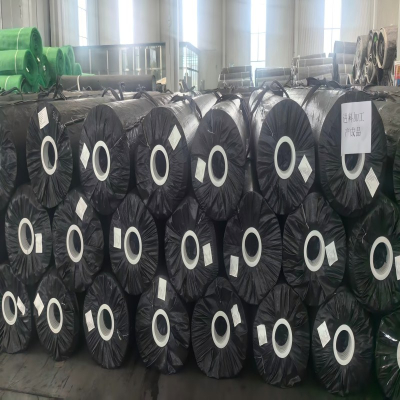
What the Beyondie Potash Project Shows About 1.0mm Liner
Most liner specifications get written in an office. The real test happens in the field, under conditions nobody fully anticipated. The Beyondie sulphate of potash project in Western Australia offers one of the clearer public records of how 1.0mm HDPE geomembrane performs when the stakes are high. Kalium Lakes Limited built evaporation ponds covering roughly 4 square kilometres, lined with 1.0mm HDPE geomembrane from Solmax, to recover potash from hypersaline brine . That thickness is the same specification as HDPE Geomembrana 40 Mils. The liner had to resist concentrated brine, high UV exposure, and extreme temperatures over an anticipated mine life of 30 to 50 years . Installation finished in 2020. First product shipped in Q3 2021.
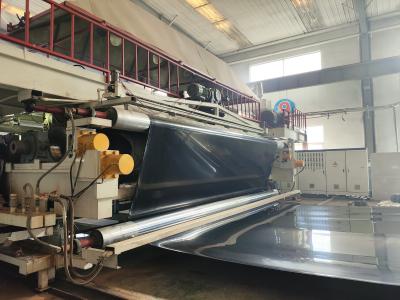 | 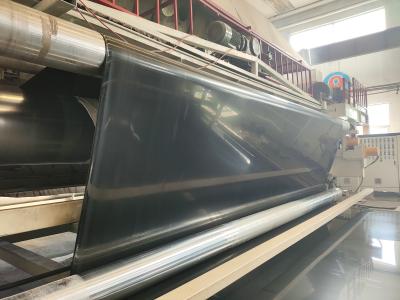 | 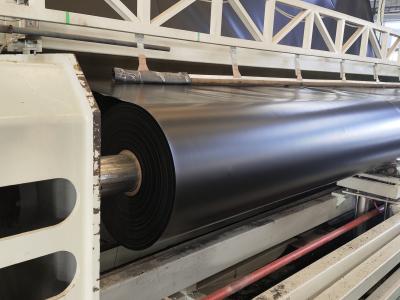 |
Forty mil means 1.0mm. Virgin HDPE. Carbon black at 2.0-3.0%. Density at 0.940 g/cm³ or above. Permeability below 1.0×10⁻¹³ cm/s. Standard properties across the HDPE range.
Puncture resistance at this thickness lands near 320 N per ASTM D4833. Thirty mil gives roughly 240 N. Sixty mil gives 480 N. Those numbers decide whether a subgrade needs a geotextile cushion. On clean compacted clay, the Geomembrana 40 Mils does not require one. On angular gravel, it does.
What did the Beyondie project actually demonstrate? For one, the cost argument. Kalium Lakes’ chief development officer stated publicly that liner supply and installation represented less than 7% of total project capital cost, but delivered more than 15% improvement in process recovery . That is the economic case for 1.0mm-class liner in a demanding application: modest capital outlay, outsized operational return.
Two, the chemistry argument. The brine at Beyondie is hypersaline. The liner had to maintain chemical resistance while staying structurally intact under Australian sun. Solmax supplied GSE HD geomembrane manufactured in Malaysia, installed by local contractors . The material performed as specified through commissioning and into production.
Three, the logistics argument. Remote sites do not get liner delivered overnight. Beyondie required large volumes shipped from overseas production facilities to Western Australia, then installed against tight construction timelines . The HDPE Geomembrana 40 Mils is widely stocked by HDPE Liner Manufacturers precisely because it is the most specified thickness. Availability matters when schedules slip.
A separate Brazilian study offers a caution rather than a success story. Researchers exhumed 0.8mm HDPE geomembranes from shrimp farming ponds in northeast Brazil after service . The evaluation examined material degradation under actual field conditions. The takeaway is not that HDPE fails. It is that field conditions vary, and exhumed-sample data is the only honest measure of long-term performance. A Geomembrana 40 Mils specified for a pond in Southeast Asia faces different stressors than one in Western Australia.
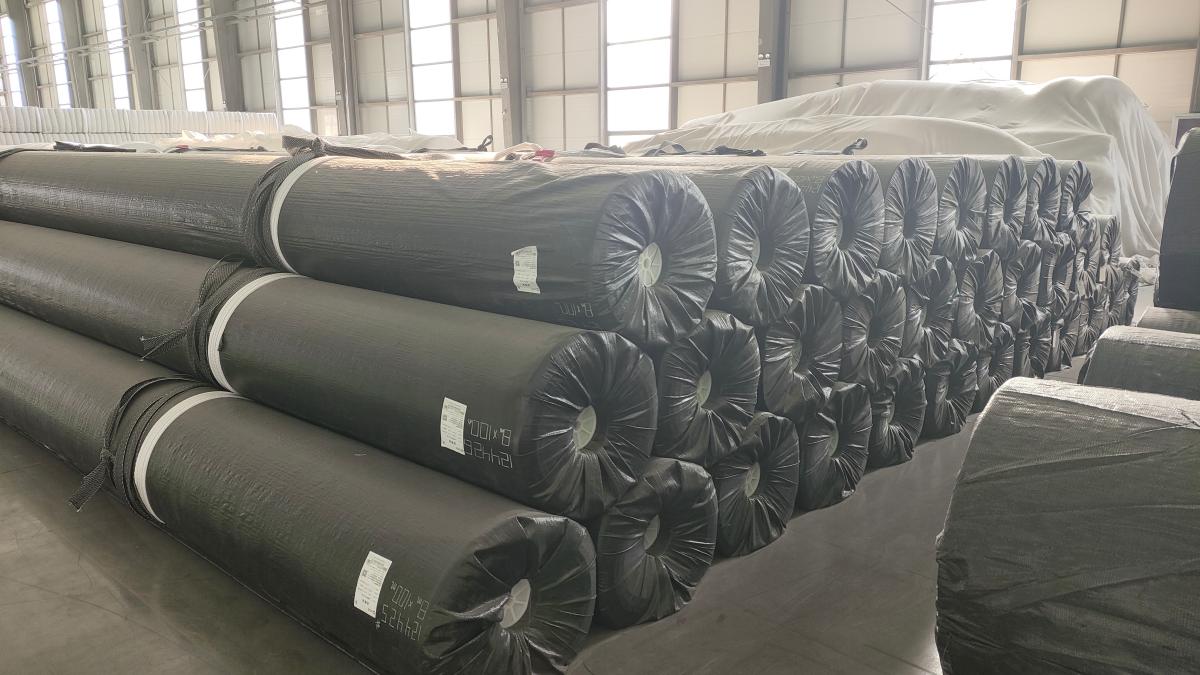
What should buyers ask HDPE Liner Manufacturers before ordering? Lot-specific certificates of analysis, not generic spec sheets. Confirmation that the resin is virgin, not blended with regrind. Stress crack resistance data above 300 hours per ASTM D5397. The HDPE Liner Material that lasts is the material that started as prime resin.
Seams decide whether any of this matters. A sheet with perfect properties and a bad weld is a leak waiting for a monitoring well to find it. Hot wedge welding on the smooth surface of the HDPE Geomembrana 40 Mils produces consistent bonds because there is no texture trapping air under the bead. Peel and shear testing on sample seams. Vacuum box or spark testing on production seams. The Beyondie installation used local contractors working with established welding protocols . That is how large pond networks get commissioned without leak stories.
Forty mil is not the answer for primary landfill base liners. It is not the answer for heap leach pads over sharp ore. The Beyondie project used it for evaporation ponds holding brine. That is the application class where 1.0mm liner belongs: contained liquids, prepared subgrades, long service life, and chemistry that HDPE can handle.
The HDPE Geomembrana 40 Mils is not remarkable. It is the thickness that most projects actually need, proven where the conditions match. The Beyondie potash ponds are one public record of that performance. Buyers evaluating HDPE Liner Manufacturers should ask for comparable references before committing.