The Ultimate 2026 Technical Audit on Net For Drainage: Market Growth, Cost Analysis, and Breakthroughs in Geocomposite Engineering
The global demand for efficient water management in civil engineering has never been more critical. With the Net For Drainage market projected to surge from $17.08 billion in 2026 to $27.64 billion by 2033 (at a 6.2% CAGR), infrastructure developers are pivoting away from traditional gravel layers toward advanced geosynthetic solutions . This article provides a comprehensive technical and commercial overview of Drainage Nets, analyzing production innovations, cost variables, and global case studies that define the industry in 2026.
The Evolution of Net For Drainage in Modern Infrastructure
Drainage Nets, also known as geonets or composite drainage geocomposites, have transitioned from niche products to essential components in environmental engineering. Unlike traditional aggregate drains that are prone to clogging and require extensive excavation, modern Net For Drainage systems utilize a three-dimensional polymeric core.
Recent technological breakthroughs, particularly in tri-planar rib structures, have increased hydraulic transmissivity by up to 40% compared to standard bi-planar designs. As environmental regulations tighten—specifically regarding landfill leachate management (EPA Title 40 CFR Part 258) and highway runoff (DIBt M R-2)—the specification of certified Drainage Nets has become mandatory in jurisdictions like the EU and North America.
Technical Specifications Driving the Market
The efficacy of a Net For Drainage lies in its ability to maintain flow under extreme compressive loads. High-Density Polyethylene (HDPE) remains the gold standard for raw materials, comprising approximately 85% of the market share .
Compressive Strength: Modern HDPE nets offer 500 to 1,500 kPa resistance (ASTM D1621), ensuring structural integrity under heavy machinery or deep soil overburden.
Transmissivity: Rates range from 2.8×10⁻³ to 5×10⁻³ m³/s (ASTM D4716), which is scientifically proven to be 50% more efficient than a 12-inch layer of clean gravel.
Chemical Resistance: With a pH tolerance of 1–14, these nets are immune to acidic leachate and hydrocarbon contamination, ensuring a design life of 50–100 years.
Breaking Down the Cost Of Drainage Nets in 2026
For procurement specialists, the Cost Of Drainage Nets remains the primary variable in project budgeting. As of Q2 2026, raw material pricing ranges from $0.15 to $1.00 per square foot ($1.61–$10.76 per m²), with fully installed systems averaging $0.35 to $1.50 per square foot . This price volatility is largely attributed to resin price fluctuations (crude oil derivatives), which have seen a 5-7% increase since 2024.
 |  |  |
Pricing Matrix by Material and Application
Understanding the Cost Of Drainage Nets requires analyzing the specific geotextile configuration:
| Type | Core Thickness | Price Range (USD/ft²) | Primary Application |
| Standard HDPE Geonet | 5mm – 7mm | $0.20 – $0.50 | Highway subgrades, retaining walls |
| Tri-Planar Heavy Duty | 8mm – 10mm | $0.60 – $1.00 | Landfill leachate collection, mining |
| Composite (Double-sided) | 6mm – 9mm | $0.40 – $0.85 | Tunnel drainage, green roofs |
Economic Insight: While the upfront Cost Of Drainage Nets might seem comparable to gravel in small projects, a lifecycle cost analysis (LCCA) reveals that Drainage Nets reduce aggregate usage by 30-50% and cut installation labor by 60%, offering a 15-25% ROI improvement over 50 years .
Manufacturing Breakthroughs: The Continuous Processing Revolution
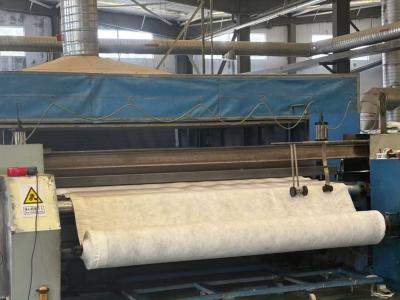
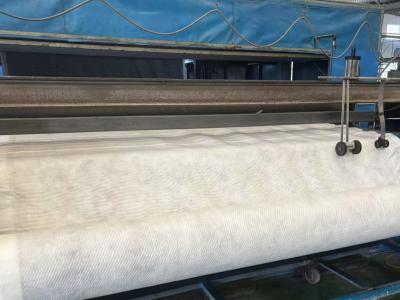
The quality of a Net For Drainage is determined at the extrusion stage. Recent patents (e.g., CN110978544B) have introduced continuous processing technologies that solve historical issues of poor bonding accuracy between the net core and geotextile fabric .
The Production Workflow
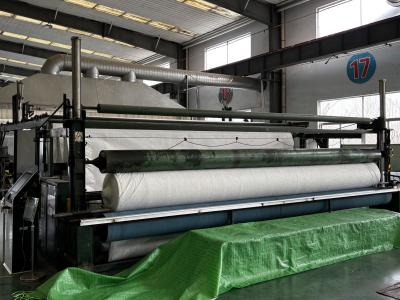
Modern manufacturing integrates a "one-step" lamination process:
Extrusion: HDPE or PP polymers are melted and extruded into a specific rib pattern (H-shaped or three-rib structures) using specialized dies .
Bonding: Non-woven polypropylene geotextiles (200–500 g/m²) are thermally bonded to the core. Advanced lines utilize synchronized drive systems to prevent "empty travel," ensuring the fabric does not wrinkle under high-speed output.
Finishing: Rolls are cut to widths ranging from 2m to 6.7m to minimize field seams.
This automated process results in a Drainage Net with 99% defect-free adhesion, crucial for maintaining flow rates under hydraulic gradients.
Global Case Studies and Sustainability Trends
Real-world applications validate the performance of Net For Drainage systems. In 2025, a major infrastructure project in Kenya utilized 20,000 m² of 8mm HDPE geonets for roadway subgrade stabilization, resulting in a 40% increase in stability and an 80% reduction in frost heave incidents compared to traditional methods .
Furthermore, sustainability is driving demand. The use of Drainage Nets contributes to LEED v4.1 credits by reducing the need for virgin aggregate extraction. Some manufacturers now incorporate up to 25% post-industrial recycled (PIR) HDPE into their nets without compromising tensile strength (ASTM D7199), lowering the carbon footprint of stormwater management systems by an estimated 15-20%.
Frequently Asked Questions (FAQs)
Q1: How does the Cost Of Drainage Nets compare to traditional gravel drains?
While the material cost per square foot may be higher for Drainage Nets, the Cost Of Drainage Nets systems is generally 30-50% lower when factoring in excavation, transportation, and labor. Gravel requires 12-18 inches of depth, whereas a geocomposite achieves higher flow at only 0.25 inches thick.
Q2: Can Drainage Nets be used in high-temperature or chemical environments?
Yes. HDPE-based Drainage Nets are rated for continuous use in temperatures ranging from -60°C to 60°C. They offer exceptional chemical resistance to sulfates, chlorides, and leachate fluids found in landfills, as per EPA 9090 compatibility standards .
Q3: How are Drainage Nets installed on slopes?
Installation is roll-based and requires no heavy machinery. For slopes steeper than 2H:1V, contractors should anchor the rolls in a "staggered" pattern and overlap edges by 3-6 inches. The lightweight nature (0.5-1.5 kg/m²) prevents the "sliding" failures common with soil-based drainage layers.
Q4: What is the lifespan of a standard Drainage Net?
When manufactured with 2% carbon black for UV resistance (ASTM D1603) and installed in a buried or covered environment, HDPE Drainage Nets have a proven lifespan of 50 to 100 years. They are resistant to biological degradation and most soil chemicals.
Conclusion & Strategic Sourcing
The shift toward engineered Net For Drainage solutions is no longer a luxury but a necessity for competitive infrastructure development. By prioritizing high-transmissivity HDPE cores and certified lamination processes, engineering firms can mitigate hydraulic risks while slashing long-term OpEx.
Ready to optimize your next project?
Do not leave your drainage to chance. Whether you need a Tri-Planar Net For Drainage for a landfill cap or a cost-effective bi-planar solution for agricultural drainage, verified suppliers (ISO 9001:2015) like BPM Geosynthetics, Geosincere, and Tinhy offer customized roll sizes to reduce on-site waste.
[Action Call] Request a Quotation Today
Submit your project specs (area, load requirements, and soil type) to receive a bespoke pricing sheet on Cost Of Drainage Nets within 24 hours. Ensure compliance with ASTM D4716 and save up to 25% on your earthworks budget.