Smooth Geomembrane 2026: Technical Specifications, Applications, and Global Sourcing Guide
Introduction: The Essential Role of Smooth Geomembrane in Modern Containment
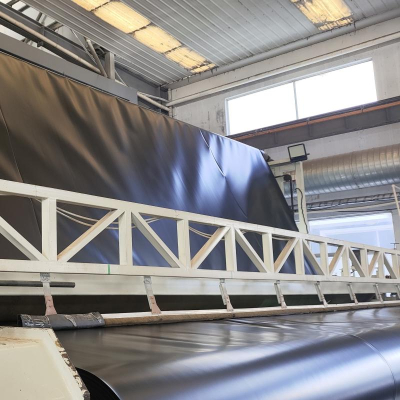
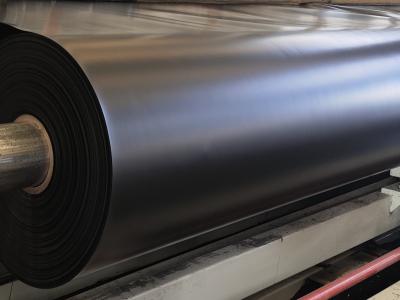
Across landfill base liners, water reservoirs, aquaculture ponds, and industrial containment facilities, Smooth Geomembrane has established itself as a fundamental material for reliable fluid control. Unlike textured alternatives, smooth variants offer distinct advantages: superior weldability, uniform thickness distribution, and lower material costs for applications where slope stability is not the primary concern.
The global geomembrane market continues its steady expansion, valued at approximately USD 2.89 billion in 2026, with projections reaching USD 4.62 billion by 2034, representing a compound annual growth rate of 6.8 percent . Within this market, Smooth Geomembrane accounts for a substantial share, particularly in flat or gently sloped containment applications where installation efficiency and cost-effectiveness drive procurement decisions.
This report examines the Smooth Geomembrane market in 2026, providing technical specifications, application case studies, selection guidance for HDPE Geomembrane Suppliers, and procurement best practices for industrial buyers worldwide.
 |  |  |
Market Context: Size, Growth, and Regional Dynamics
Current Market Valuation and Growth Projections
The high-density polyethylene geomembrane market, which includes both smooth and textured variants, grew from USD 1.89 billion in 2026 to projected USD 2.51 billion by 2030, a CAGR of 7.4 percent . Smooth Geomembrane products represent approximately 55 to 65 percent of this market, making them the most widely specified geomembrane type globally.
Regional market shares are distributed as follows:
| Region | Market Share | Key Characteristics |
| North America | 35% | Strict ASTM compliance, mature QA culture |
| Asia-Pacific | 30% | Fastest-growing, competitive manufacturing |
| Europe | 25% | CE certification, sustainability focus |
| Middle East & Africa | 10% | High UV specifications, import logistics |
Primary Market Drivers
Water Infrastructure Investment
Water scarcity affects billions globally, accelerating reservoir construction and canal rehabilitation programs. Smooth Geomembrane enables water conservation of up to 85 percent compared to unlined earthen basins, making it essential in water-stressed regions .
Aquaculture Expansion
Global seafood demand continues rising, driving expansion of fish and shrimp farming operations. Aquaculture ponds rely on HDPE Impermeable Membrane systems to prevent seepage, maintain water quality, and improve harvest yields. Lined ponds deliver water savings of 70 to 90 percent and stocking density increases of 30 to 150 percent .
Regulatory Compliance
Environmental agencies in North America, Europe, and parts of Asia are raising minimum liner standards. Materials that passed inspection a decade ago now fail. For owners, the choice is simple: install certified Geomembrane Sheet products or risk permit denial, fines, and long-term liability.
Technical Specifications for Smooth Geomembrane
Material Composition and Properties
Specification-grade Smooth Geomembrane is manufactured from virgin high-density polyethylene resin with controlled density between 0.94 and 0.96 grams per cubic centimeter. The additive package includes:
1.Carbon black (2.0 to 3.0 percent) for UV stabilization
2.Antioxidants to suppress thermal oxidation during processing and service life
3.Process aids to ensure uniform sheet formation
Industry standards reference GRI-GM13 or ASTM D7465. Critical performance parameters for Smooth Geomembrane include:
| Property | 1.0mm Requirement | 1.5mm Requirement | 2.0mm Requirement |
| Thickness tolerance | ±5% | ±5% | ±5% |
| Density (min) | 0.94 g/cm³ | 0.94 g/cm³ | 0.94 g/cm³ |
| Tensile strength at yield | ≥ 20 kN/m | ≥ 22 kN/m | ≥ 29 kN/m |
| Elongation at break | ≥ 700% | ≥ 700% | ≥ 700% |
| Puncture resistance | ≥ 320 N | ≥ 480 N | ≥ 640 N |
| Carbon black content | 2.0–3.0% | 2.0–3.0% | 2.0–3.0% |
| Permeability coefficient | ≤ 1×10⁻¹¹ cm/s | ≤ 1×10⁻¹¹ cm/s | ≤ 1×10⁻¹¹ cm/s |
| Stress crack resistance | ≥ 300 hours | ≥ 300 hours | ≥ 1,000 hours |
Material meeting these thresholds delivers 99.9 percent containment efficiency and, when properly installed, service life of 20 to 50 years for exposed applications and 50 to 100+ years when covered .
Manufacturing Process
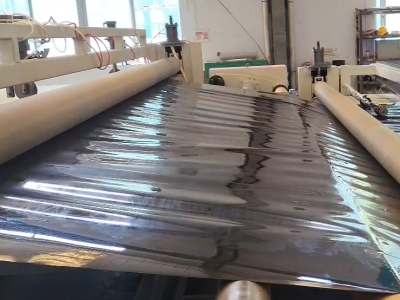
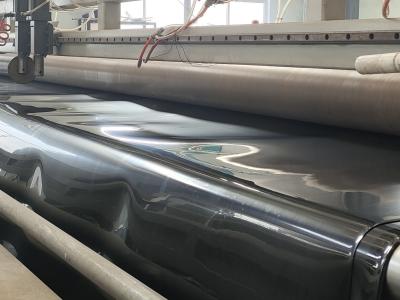
Smooth Geomembrane is manufactured through flat die extrusion or blown film extrusion. The production workflow follows standardized procedures:
1.Raw material compounding: Virgin HDPE resin combined with carbon black masterbatch and antioxidants using automated gravimetric blending
2.Drying and conditioning: Maintaining moisture below technical thresholds
3.Extrusion: Multi-zone heating systems controlled between 200–240°C
4.Sheet forming: Precision calendering for thickness control with continuous monitoring
5.Cooling: Chill rolls stabilize sheet thickness and surface finish
6.Quality inspection: Online spark testing, tensile sampling, and carbon black dispersion testing
7.Final winding: Tension-controlled automatic roll systems
Smooth Geomembrane offers superior weldability compared to textured variants. The uniform surface allows for consistent thermal fusion welding, producing seams that achieve 90 to 95 percent of parent sheet strength .
Advantages of Smooth Geomembrane
Superior Weldability
The flat, uniform surface of Smooth Geomembrane enables consistent thermal fusion welding. Hot wedge welding creates continuous bonds with minimal risk of voids or weak spots, reducing installation time and QA/QC costs .
Lower Material Cost
Smooth Geomembrane typically costs 20 to 40 percent less than textured alternatives of equivalent thickness. For large-scale projects covering hundreds of thousands of square meters, this difference translates into significant budget savings .
Easier Deployment
The smooth surface reduces friction during deployment, allowing panels to be unrolled and positioned with less equipment and labor. This characteristic is particularly valuable in remote project locations with limited access.
Consistent Thickness
The manufacturing process for Smooth Geomembrane achieves tighter thickness tolerances than textured products, ensuring uniform mechanical properties across the entire sheet.
Limitations of Smooth Geomembrane
Lower Friction Performance
The primary limitation of Smooth Geomembrane is its low interface friction angle. A Korean research study found that textured geomembrane exhibited approximately 3 times higher friction characteristics than smooth geomembrane on slopes .
Slope Stability Concerns
For applications with slopes exceeding 3H:1V (approximately 18 degrees) , Smooth Geomembrane may not provide adequate resistance to sliding forces. In such cases, textured variants or a combination of smooth base and textured slopes is recommended .
International Case Studies
ITY Gold Mine Tailings Storage Facility, Côte d'Ivoire
Endeavour Mining Corporation's ITY gold mine in Côte d'Ivoire has produced more than 1.2 million ounces of gold over 20-plus years of operation . The tailings storage facility (TSF) project, commencing in November 2018, involved construction of a TSF lined with a geosynthetic barrier made from 1.5 mm thick GSE HD smooth geomembrane.
The facility has a planned impoundment volume of 30.4 Mt (23 Mm³) over five years. The TSF was designed with underdrainage and a Leakage Collection and Recovery System (LCRS) .
Key challenges and outcomes:
1.Work needed to be carried out during the short dry season between December and April
2.Solmax and installation partner Yesti had a 120-day window to complete the project
3.Smooth geomembrane formed the critical containment component, with single-sided textured liner on slopes
4.Peak installation reached 20,000 m² per day
5.Project completed ahead of schedule in 94 days
The tailings storage facilities conform to GRI-GM13 and GRI-GM19 specifications, German DVS 2225-4 standards, Australian National Committee on Large Dams (ANCOLD 2012), and local guidelines .
Karma Gold Mine Heap Leach Project, Burkina Faso
Solmax implemented its cost reduction program (CRP) for a heap leach gold mining project in Burkina Faso, West Africa. The project supplied GSE HD smooth white reflective geomembrane covering over 742,000 m² .
The design specification required a composite liner on a compacted sub-base. Initially specified as 1.5 mm thick GSE HD, Solmax's CRP evaluated whether a thinner geomembrane would perform adequately.
High-pressure hydrostatic puncture tests following ASTM D5514-12 were performed on specimens from both 1.5 mm and 1.0 mm HDPE geomembranes. A maximum pressure of 1000 kPa was applied for 100 hours per specimen. Results showed comparable performance between both thicknesses .
Outcome: The specified thickness was reduced from 1.5 mm to 1.0 mm, achieving approximately 33 percent cost savings without compromising performance. Additionally, white reflective geomembranes were used for exposed applications such as stormwater and detox ponds, reflecting UV light and preventing excessive temperature rise .
Smooth-Edge Technology Innovation
Raven Industries introduced smooth-edge technology for textured geomembranes, creating high-quality smooth surface edges on textured products . This innovation increases thermal fusion welding surface and weld integrity for single- and double-sided textured products in thicknesses of 30–80 mil (0.75–2 mm) .
The technology was accomplished in just over 12 months, featuring a 66-inch extrusion die body weighing over 10,000 pounds. Annual output capacity reaches 16 million pounds of multilayer geomembrane. Raven's HydraLine products are manufactured under ISO 9001 certification and tested in an accredited GAI-LAP laboratory to meet GRI-GM13 and GM17 standards, with a 20-year manufacturer warranty .
This innovation benefits buyers of Geomembrane Sheet products by improving weld quality at the interface between smooth and textured sections, reducing installation labor and enhancing long-term seam performance.
Research on Seam Testing Discrepancies
A 2024 paper published in E3S Web of Conferences examined a common problem in geomembrane installation: situations where on-site trial welds fail while destructive seam tests pass when sent to third-party laboratories . This discrepancy can create significant challenges for HDPE Geomembrane Suppliers and installation contractors.
The research, conducted by experts from AGRU America, Chesapeake Containment Systems, and the Geosynthetic Institute, provides practical approaches to understanding why field and laboratory test results sometimes differ. Variables between these two testing scenarios are numerous and often difficult to identify .
For buyers of Smooth Geomembrane, this research underscores the importance of:
1.Engaging certified installation crews
2.Requiring both field and laboratory testing documentation
3.Working with HDPE Geomembrane Suppliers who provide welding parameter guidelines
4.Understanding that proper seam quality requires controlled conditions
Applications of Smooth Geomembrane
Landfill Base Liners
Municipal solid waste landfills specify 1.5 mm to 2.0 mm Smooth Geomembrane for primary base liners where slopes are minimal. The smooth surface provides excellent weldability, allowing for rapid installation over large areas. Conductive variants enabling electrical leak location surveys are increasingly mandated by regulators .
Water Reservoirs and Canals
Potable water reservoirs require HDPE Impermeable Membrane certified to NSF/ANSI 61 for drinking water contact. 1.0 mm to 1.5 mm smooth HDPE provides reliable water retention while withstanding UV exposure. White reflective geomembranes, as used in the Burkina Faso project, reduce maximum liner temperature by 10–15°C .
Aquaculture Ponds
Fish and shrimp farming operations specify 0.5 mm to 1.0 mm Smooth Geomembrane with non-toxic formulations to prevent bioaccumulation in harvested species. The smooth surface facilitates cleaning and harvesting while preventing pathogen harborage common in earthen ponds. Lined ponds deliver feed conversion improvements of 10 to 30 percent and disease pressure reduction of 40 to 80 percent .
Industrial Containment Ponds
Chemical manufacturing facilities and wastewater treatment plants require robust containment for hazardous by-products. For these applications, 1.5 mm to 2.0 mm Smooth Geomembrane with documented chemical compatibility is essential. The smooth surface allows for consistent welding across large pond bottoms .
Installation and Quality Assurance
Subgrade Preparation
The subgrade to be lined must be smooth and free of all rocks and stones greater than 12 mm diameter, sticks, and sharp objects. The surface should provide a smooth, flat, firm, unyielding foundation for the Geomembrane Sheet .
Seaming Requirements
Dual-track thermal fusion welding is the preferred method for Smooth Geomembrane . Seam area must be free of moisture, dust, and debris before welding. Key welding parameters affecting seam quality include:
1.Welding temperature
2.Welding speed
3.Welding pressure
4.Ambient conditions
Proper welding of geomembrane liners should not cause a reduction in tensile strength across the weld, as the welded sheets are expected to perform as a single Geomembrane Sheet .
Testing Protocols
Non-destructive testing: Entire seam length tested via air pressure, vacuum box, or spark testing
Destructive sampling: Minimum one sample per 300 meters of seam length
Trial welds: Required at start of each shift and after every four hours of continuous seaming
Selecting HDPE Geomembrane Suppliers
What to Look For
When evaluating HDPE Geomembrane Suppliers, buyers should verify:
Certifications: GRI-GM13 or ASTM D7465 certification with lot-specific Mill Test Reports. Leading manufacturers include Solmax, GSE Environmental, AGRU, NAUE, and Raven .
Testing Capabilities: Suppliers with GAI/LAP certified laboratories provide documented quality assurance. Raven's HydraLine products are tested in an accredited GAI-LAP laboratory .
Technical Support: Suppliers should offer welding guidelines, installation training, and field support. Solmax's cost reduction program demonstrates commitment to optimizing material selection for specific applications .
Material Traceability: Each production lot must have documented test results for thickness, tensile strength, puncture resistance, carbon black content, and oxidative induction time .
Warranty: Industry-standard warranty is 20 years against manufacturing defects. Raven offers a 20-year manufacturer warranty for long-term protection from thermal oxidation and UV degradation .
Frequently Asked Questions
Q1: When should I choose Smooth Geomembrane over textured geomembrane?
Choose Smooth Geomembrane for applications with slopes less than 3H:1V (approximately 18 degrees) , where installation efficiency and lower material cost are priorities. Typical applications include landfill base liners, aquaculture pond bottoms, water reservoir floors, and industrial containment basins . For slopes exceeding this gradient, textured geomembrane or a combination approach (smooth base, textured slopes) is recommended.
Q2: What is the typical service life of Smooth Geomembrane?
Properly manufactured and installed HDPE Impermeable Membrane demonstrates service life of 20 to 50 years for exposed applications and 50 to 100+ years when covered . The ITY gold mine TSF project, installed with 1.5 mm smooth geomembrane, is designed for long-term performance under demanding mining conditions .
Q3: How do I verify quality when selecting HDPE Geomembrane Suppliers?
Request current GRI-GM13 or ASTM D7465 certification and lot-specific Mill Test Reports. Compare reported values for tensile strength, puncture resistance, carbon black content, and oxidative induction time against standard requirements. For critical projects, request material samples for independent laboratory testing .
Q4: What is the difference between smooth and textured geomembrane in terms of friction performance?
Research shows that textured geomembrane exhibits approximately 3 times higher friction characteristics than Smooth Geomembrane . This difference is critical for slope stability. For flat applications, smooth geomembrane's lower friction is acceptable; for slopes, the higher friction of textured geomembrane provides essential safety margins.
Q5: What welding method is recommended for Smooth Geomembrane?
Dual-track thermal fusion welding is the preferred method . The smooth surface allows for consistent welding without the irregularities that can affect textured geomembrane seams. Proper welding parameters—temperature, speed, pressure, and environmental conditions—are critical for achieving seam strength of 90 to 95 percent of parent sheet material.
Conclusion: Verified Specifications Over Apparent Savings
The global Smooth Geomembrane market offers abundant supply at competitive price levels. The risk for buyers is accepting material that appears similar to certified products but lacks the documented properties required for decades of service.
Real-world projects demonstrate that success depends on verified performance: the ITY gold mine TSF required 1.5 mm smooth geomembrane with GRI-GM13 certification ; the Burkina Faso heap leach project achieved 33 percent cost savings through performance-based material evaluation ; the research on seam testing discrepancies underscores the importance of qualified installation and proper QA/QC .
Professional buyers reduce risk through three actions:
1.Write specifications referencing recognized international standards (GRI-GM13, ASTM D7465)
2.Verify conformance through independent testing and lot-specific Mill Test Reports before shipment
3.Select HDPE Geomembrane Suppliers who provide comprehensive test data, material traceability, and documented project references
The most cost-effective Geomembrane Sheet is not the one with the lowest initial price, but the one that delivers verified performance throughout the project's design life.
Procurement Resource: Our Smooth Geomembrane Technical Specification Template and Supplier Audit Checklist are available without charge. These documents reflect field experience across landfill, water infrastructure, aquaculture, and industrial containment projects worldwide.
Contact our technical sales engineering team for a specification review, to request lot-specific Mill Test Reports, or to discuss project-specific requirements for your current inquiry.