Smooth Geomembrane 2026–2032: Market Analysis, Technical Specifications, and Global Sourcing
Introduction: Why Smooth Geomembrane Dominates Flat Containment
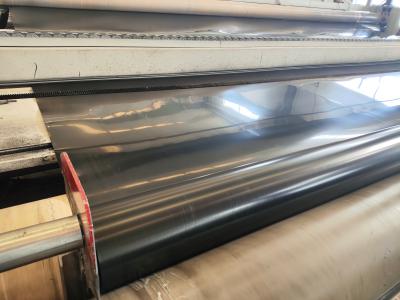
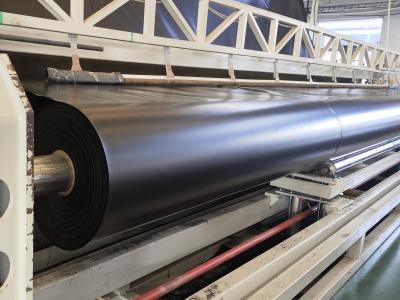
Across landfill base liners, water reservoirs, aquaculture ponds, and secondary containment facilities, Smooth Geomembrane has become the standard choice for reliable fluid control. Unlike textured variants, smooth liners offer distinct advantages: superior weldability, uniform thickness distribution, and lower material costs for applications where slope stability is not the primary concern.
The global geomembrane market continues its steady expansion, valued at approximately USD 2.73 billion in 2025, growing at a 5.88% CAGR toward USD 3.63 billion by 2030 . Within this market, Smooth Geomembrane products represent a substantial share, particularly in flat or gently sloped containment applications where installation efficiency and cost-effectiveness drive procurement decisions.
This report examines the Smooth Geomembrane market in 2026, providing technical specifications, a real case study from an Idaho phosphate mine, and guidance on evaluating HDPE Liner Manufacturers and Mine HDPE Liner suppliers.
 |  |  |
Market Overview — Pricing, Drivers, and Regional Patterns
What Smooth Geomembrane Costs in 2026
As of 2026, global bulk pricing for Smooth Geomembrane ranges from USD 0.80 to USD 3.50 per square meter, depending on thickness, certification requirements, and regional sourcing . Thinner products (0.5–0.75 mm) fall at the lower end of this range, while 2.0 mm smooth sheets command premium pricing.
| Thickness | Typical Price Range (USD/m²) | Typical Applications |
| 0.5–0.75 mm | $0.80 – $1.50 | Aquaculture, secondary containment |
| 1.0–1.5 mm | $1.30 – $2.30 | Landfill liners, reservoirs, canals |
| 2.0 mm | $2.00 – $3.50 | Mining heap leach, hazardous waste |
Regional price variations reflect differences in manufacturing capacity, labor costs, and regulatory requirements. Asia-Pacific offers the most competitive pricing due to large-scale production clusters, while North American and European products carry premiums for GRI-GM13 compliance and third-party quality assurance .
What Is Driving Demand for Smooth Geomembrane
Mining Sector Expansion — The mining industry remains a primary consumer of Mine HDPE Liner products for heap leach pads, tailings storage facilities, and process solution ponds. A recent Idaho phosphate mine project used over 1 million square feet of smooth HDPE liner across five applications, including three ponds, an ore stockpile pad, and a rejects loadout area . The remote location, high elevation (6,500 feet), and challenging terrain demonstrated the material's adaptability to harsh conditions.
Water Infrastructure Investment — Water scarcity affects billions globally, accelerating reservoir and canal construction. Smooth Geomembrane enables water conservation of up to 95–99.9% compared to unlined earthen basins, reducing evaporation losses by 14–20% versus open water surfaces .
Regulatory Compliance — Environmental agencies worldwide continue raising minimum liner standards. GRI-GM13 compliant Smooth Geomembrane meets these requirements, providing documented performance for landfill, mining, and industrial containment permits.
Technical Specifications for Smooth Geomembrane
Material Composition and Manufacturing
A specification-grade Smooth Geomembrane is manufactured from virgin high-density polyethylene resin with density controlled between 0.940 and 0.96 g/cm³ . The additive package includes:
1.Carbon black (2.0–3.0%) for UV stabilization and long-term weathering resistance
2.Antioxidants to suppress thermal oxidation during processing and service life
3.Process aids to ensure uniform sheet formation and weldability
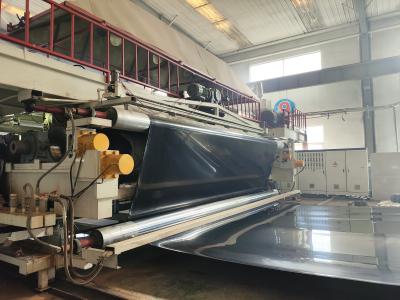
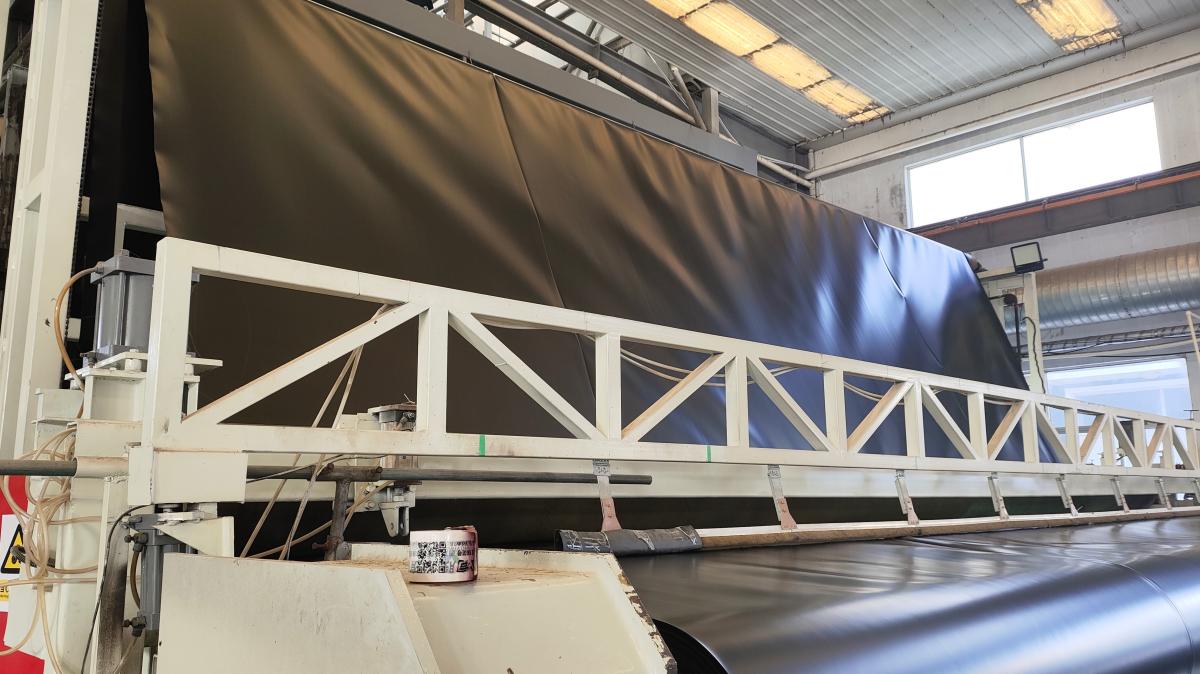
Most manufacturers use three-layer co-extrusion technology. Raw materials are processed at approximately 200°C and extruded through a die, with automatic thickness control systems maintaining dimensional tolerances within ±5% across the full roll width . Roll widths up to 7–12 meters are available, with larger widths reducing field seaming requirements by 15–25% .
Key Performance Parameters (GRI-GM13)
To meet GRI-GM13 standards, a Smooth Geomembrane must achieve the following minimum properties :
| Thickness | 0.75mm | 1.0mm | 1.5mm | 2.0mm | Test Method |
| Density (min) | 0.940 g/cm³ | 0.940 g/cm³ | 0.940 g/cm³ | 0.940 g/cm³ | ASTM D1505 |
| Tensile Yield (MD) | 11 kN/m | 15 kN/m | 22 kN/m | 29 kN/m | ASTM D6693 |
| Tensile Yield (TD) | 11 kN/m | 15 kN/m | 22 kN/m | 25 kN/m | ASTM D6693 |
| Puncture Resistance | 240 N | 320 N | 480 N | 640 N | ASTM D4833 |
| Tear Resistance | 93 N | 125 N | 187 N | 249 N | ASTM D1004 |
| Carbon Black Content | 2.0–3.0% | 2.0–3.0% | 2.0–3.0% | 2.0–3.0% | ASTM D4218 |
| Stress Crack Resistance | ≥300 hrs | ≥300 hrs | ≥300 hrs | ≥300 hrs | ASTM D5397 |
| Std-OIT | ≥100 min | ≥100 min | ≥100 min | ≥100 min | ASTM D3895 |
A Smooth Geomembrane meeting these thresholds delivers 99.9% containment efficiency and, when properly installed and covered, a service life of 50–100+ years for buried applications or 20–50 years for exposed installations .
Why Smooth Geomembrane Is Preferred for Flat Applications
Compared to textured geomembranes, Smooth Geomembrane offers several practical advantages:
Superior Weldability — The uniform surface enables consistent thermal fusion welding, producing seams that achieve 90–95% of parent sheet strength with fewer defects. This reduces installation time and QA/QC costs.
Lower Material Cost — Smooth liners cost 20–40% less than textured alternatives of equivalent thickness, translating into significant budget savings for large-scale projects .
Easier Deployment — Reduced friction during deployment allows panels to be unrolled and positioned with less equipment and labor. This characteristic is particularly valuable in remote project locations.
For slopes exceeding 3H:1V (approximately 18 degrees) , textured geomembranes are recommended. But for flat applications—landfill bases, pond bottoms, canal linings, and reservoir floors—Smooth Geomembrane is the most cost-effective choice.
Case Study — Idaho Phosphate Mine (2024–2025)
Project Overview
A large-scale phosphate mine in Idaho required lining for multiple containment applications. Phosphate is one of three primary ingredients essential for crop growth, and the client has supplied high-quality phosphate fertilizer to farmers across North America for over four decades . The project was designed to enable continued agricultural supply while protecting the surrounding environment from potential contamination.
What They Used
The project used AGRU 60 Mil HDPE DS Black liner — a 1.5 mm Mine HDPE Liner manufactured to GRI-GM13 standards . Total installation exceeded 1 million square feet across:
Three containment ponds
One ore stockpile pad
One rejects loadout area, including pipe boots
Installation Challenges
The site presented significant challenges:
High Elevation — The 6,500-foot elevation required careful planning for equipment performance and crew acclimatization.
Remote Location — No cell signal on site meant superintendents had to plan thoroughly, ensuring every detail was communicated before arrival.
Weather Constraints — Work began in late 2024. Once snow covered the site, the team winterized and demobilized, resuming in 2025 to complete the project.
Rugged Terrain — The challenging landscape required experienced crews and specialized deployment techniques.
Results
Despite the rotation of superintendents and harsh conditions, the project was completed with zero safety incidents . The Smooth Geomembrane installation provides long-term environmental protection for the phosphate mining operation, preventing process solutions from contaminating surrounding soil and water resources.
This project demonstrates that properly specified Smooth Geomembrane — even in demanding mining applications — performs reliably when installed by experienced crews.
Top HDPE Liner Manufacturers — 2026 Ranking
Global Leaders in Smooth Geomembrane Production
The global Smooth Geomembrane market is served by several established HDPE Liner Manufacturers with proven track records in large-scale containment projects. The following ranking is based on production capacity, certifications, project references, and technical leadership .
Solmax (Canada) — Founded in 1977, Solmax is the largest geomembrane manufacturer outside Asia. The company operates over 20 extrusion lines across North America, Europe, and South America, with annual capacity exceeding 200,000 metric tons. Solmax holds approximately 18–20% global market share and has installed geomembranes in over 10,000 projects, including the Chuquicamata mine heap leach pad in Chile (>15 million m²). Certifications include ISO 9001, ISO 14001, GRI-GM13/GM17, CE, and NSF/ANSI 61 .
GSE Environmental (USA, now part of Solmax) — GSE pioneered smooth and textured HDPE geomembranes before merging into Solmax in 2021. Pre-merger capacity reached 150,000 metric tons/year across North America and Europe. The company installed geomembranes in over 8,000 projects, including the Rumpke Landfill in Ohio (>10 million m²). GSE's textured liner portfolio remains a benchmark for steep-slope applications .
Agru America (USA) — Agru produces high-performance HDPE geomembranes with thicknesses up to 4.0 mm and roll widths up to 14 meters—the largest in the industry. Proprietary "MicroSpike" textured surfaces provide superior interface shear strength. Agru has completed over 6,000 projects, including the Oyu Tolgoi mine in Mongolia (>12 million m²) .
NAUE (Germany) — A European leader in composite geomembrane systems, NAUE manufactures Secutex® and Bentofix® products that integrate nonwoven geotextiles with HDPE liners for enhanced puncture protection (>1,500 N CBR puncture strength). NAUE has installed geomembranes in over 5,000 European projects .
The Project Material Co., Ltd. (BPM Geosynthetics, China) — Founded in 2007, BPM produces smooth and textured HDPE liners with thicknesses 0.3–3.0 mm, tensile strength 25–40 MPa, and annual capacity exceeding 150,000 metric tons. BPM has supplied geomembranes to over 4,000 projects across 80+ countries and offers 30–50% lower lead times (4–6 weeks) compared to Western manufacturers .
How to Evaluate HDPE Liner Manufacturers
When selecting among HDPE Liner Manufacturers, verify:
Certifications — GRI-GM13 compliance is the industry standard for containment applications. NSF/ANSI 61 certification is required for potable water contact. All major manufacturers listed above hold ISO 9001 and ISO 14001 .
Material Traceability — 100% virgin resin from reputable suppliers (Dow, ExxonMobil, Borealis). Recycled content has no place in primary Mine HDPE Liner applications.
Testing Capability — GAI-LAP accredited laboratory or third-party validation from SGS, Intertek, or BV .
Project References — Ask for mining or landfill projects that are five years old or older. A liner that looks good on a data sheet may still crack in the field. Time tells the truth.
Warranty — Minimum 20-year manufacturer warranty for Smooth Geomembrane meeting GRI-GM13 standards. Raven offers a 20-year warranty for its HydraLine products .
Installation Best Practices for Smooth Geomembrane
Subgrade Preparation
The foundation must be smooth, free of rocks exceeding 12 mm diameter, sticks, organic matter, and sharp objects. Compaction to ≥95% Proctor density is standard. For rough subgrades, a non-woven geotextile cushion (300–800 g/m²) is recommended .
Seaming Methods
Dual-track thermal fusion welding is the preferred method for Smooth Geomembrane. The seam area must be dry and clean—dust or moisture will compromise weld integrity. Key parameters affecting weld quality :
Welding temperature: 400–500°C (material dependent)
Welding speed: 1.5–3.0 m/min
Welding pressure: appropriate for thickness
For patches and details, extrusion welding is used.
Testing Protocols
Non-destructive testing of every seam via air pressure, vacuum box, or spark testing
Destructive sampling — minimum one sample per 300 meters of seam length
Trial welds required at start of each shift and after every four hours of continuous seaming
The Idaho phosphate mine project demonstrated that rigorous QA/QC during installation is as important as material quality for long-term performance .
Frequently Asked Questions
Q1: What is the typical price for Smooth Geomembrane in 2026?
Bulk pricing for Smooth Geomembrane ranges from USD 0.80 to USD 3.50 per square meter, depending on thickness and certification. The Idaho phosphate mine project used 1.5 mm smooth HDPE at pricing within this range. Volume discounts of 15–30% are available for orders exceeding 50,000 m² .
Q2: How long does a Smooth Geomembrane last?
Properly manufactured and installed Smooth Geomembrane with adequate UV stabilization demonstrates 50–100+ years of service life when covered, and 20–50 years for exposed applications. Carbon black content of 2.0–3.0% provides UV stabilization that prevents embrittlement over decades of service .
Q3: When should I choose Smooth Geomembrane over textured geomembrane?
Choose Smooth Geomembrane for applications with slopes less than 3H:1V (approximately 18 degrees) , where installation efficiency and lower material cost are priorities. Typical applications include landfill base liners, pond bottoms, reservoir floors, and canal linings. For steeper slopes, textured geomembrane is recommended .
Q4: What certifications should I require for Smooth Geomembrane?
Require GRI-GM13 certification with lot-specific Mill Test Reports. Key properties to verify: tensile yield (≥11–29 kN/m depending on thickness), puncture resistance (≥240–640 N), carbon black content (2.0–3.0%), and stress crack resistance (≥300–500 hours). For potable water applications, NSF/ANSI 61 certification is also required .
Q5: Who are the leading HDPE Liner Manufacturers for mining applications?
Leading HDPE Liner Manufacturers for mining applications include Solmax (Canada), Agru America (USA), and GSE Environmental (USA). These companies have extensive project references in heap leach pads and tailings facilities. The Idaho phosphate mine project used AGRU 60 Mil HDPE liner, demonstrating its suitability for demanding mining conditions .
Conclusion: Verified Specifications Over Apparent Savings
The global Smooth Geomembrane market offers abundant supply at competitive price levels. The risk for buyers is not supply failure but specification failure—accepting material that appears similar to certified products but lacks the documented properties required for decades of service.
Real-world projects demonstrate that success depends on verified performance: the Idaho phosphate mine used over 1 million square feet of smooth HDPE liner across five applications, completed with zero safety incidents despite remote, high-elevation conditions . Leading HDPE Liner Manufacturers provide GRI-GM13 certified products with documented traceability and third-party testing .
Professional buyers reduce risk through three actions:
1.Write specifications referencing recognized international standards (GRI-GM13, ASTM D7176)
2.Demand lot-specific Mill Test Reports before any material ships
3.Select HDPE Liner Manufacturers who provide comprehensive test data, material traceability, and documented project references
The most cost-effective Mine HDPE Liner is not the one with the lowest initial price, but the one that delivers verified performance throughout the project's design life.