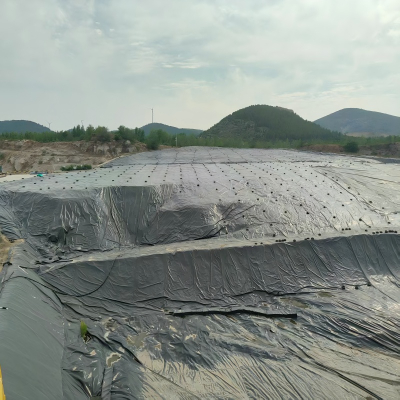
Non Woven Filter Fabric: Engineering Filtration for Critical Infrastructure and Environmental Applications
In an emergency rescue scenario for dike backward erosion piping, researchers from Hohai University conducted experiments using nonwoven and woven geotextiles to simulate real-world conditions. The results were striking: the Non Woven Filter Fabric with an equivalent pore size of 0.103 mm achieved a gradient ratio value of less than 3 and delivered a flow rate of 260 mL/min, while plain woven geotextiles experienced severe clogging with a 42% reduction in flow rate .
This research underscores a fundamental advantage of Nonwoven Geotextile materials: their three-dimensional pore structure provides superior filtration performance compared to woven alternatives. For procurement professionals and civil engineers, understanding Non Woven Filter Fabric means recognizing why these materials are specified for drainage, separation, and filtration applications across road construction, mining operations, and environmental containment.
 |  |  |
How Non Woven Filtiver Fabric Differs from Woven Alternates
Non Woven Filter Fabric is one of the four major filtration media types, alongside woven, paper, and membrane filters. Compared to woven fabrics, nonwovens offer unique technical characteristics including greater permeability, greater specific surface area, controllable pore size distribution, and smaller pore sizes . These properties translate to greater filtration efficiency, lower energy consumption, and better cake discharge properties over woven filtration media .
The manufacturing process for Nonwoven Geotextile materials typically involves needle-punching, where thousands of barbed needles mechanically entangle fibers into a stable three-dimensional structure. Research on needle-punched nonwoven geotextiles has demonstrated that normal stress has a significant effect on filtration performance, with needle-punched nonwovens providing better soil filtration and water permeability compared to heat-bonded alternatives .
For mining applications, Mine Nonwoven Geotextile products serve as filter cloth in heap leach pads and tailings facilities. The chemical resistance of polypropylene (pH 2-13) ensures performance in acidic mining environments, while the fabric maintains flow rates under sustained exposure to process solutions . The use of geotextile in mine haul roads has been shown to increase hauler speed by 39.59% and reduce maintenance frequency by 87.5% .
Research Advances in Non Woven Filtratieon Performanc
Recent studies have significantly advanced our understanding of how Non Woven Filter Fabric performs under various conditions. The Hohai University research revealed that increasing the thickness and pore size of nonwoven geotextiles within a certain range helped enhance their anti-clogging ability . The main mechanism of clogging in nonwoven geotextiles was the deposition of fine particles on their surface, forming a layer of low permeability soil.
A study on filtration compatibility of clay-nonwoven geotextiles used two fabrication techniques and four specifications of nonwoven geotextiles to filter clay . Key parameters that affect filtration performance include:
Apparent Opening Size (O95): Typically ranges from 0.043 mm to 0.103 mm for needle-punched nonwovens
Permeability coefficient: Ranges from 1.33E-3 to 3.11E-2 cm/s depending on fabric type
Thickness: Varies from 0.44 mm to 3.68 mm
The research found that nonwoven geotextiles with larger pore sizes demonstrated better resistance to clogging, while the gradient ratio test proved to be a reliable method for assessing filtration compatibility between soil and geotextile . For Mine Nonwoven Geotextile applications, these findings are particularly relevant, as heap leach pads require consistent filtration performance under sustained exposure to process solutions.
Research has also examined the long-term hydraulic performance of nonwoven filter fabrics. Studies have shown that nonwoven geotextiles maintain their filtration efficiency even after extended periods of use, provided the pore structure is appropriately matched to the soil conditions . This long-term stability makes Nonwoven Geotextile suitable for critical infrastructure projects where maintenance access is limited.
Applications for Non Woven Filter Fabric
Road Construction and Railways
In road applications, Nonwoven Geotextile placed between subgrade and aggregate base prevents intermixing, maintains structural integrity, and extends pavement life. For mining haul roads, geotextile reinforcement has been shown to reduce rolling resistance from 8% to 3%, enabling higher hauler speeds and reducing maintenance frequency .
Mining and Heap Leach Pads
Mine Nonwoven Geotextile products serve as filter cloth in heap leach pads and tailings facilities. The chemical resistance of polypropylene ensures performance in acidic mining environments, while the fabric maintains flow rates under sustained exposure to process solutions. The 200 g/m² weight class with O95 of 0.103 mm has been shown to deliver flow rates of 260 mL/min .
Landfill and Environmental Containment
Nonwoven geotextiles protect geomembranes from puncture in landfill liner systems while providing filtration for leachate collection. The material's chemical stability ensures long-term performance in aggressive environments.
Drainage and Filtration Systems
The porous structure of nonwoven filter fabric provides effective filtration while resisting clogging. Applications include French drains, retaining wall drainage layers, and trench drains.
Manufacturing Process and Quality Control
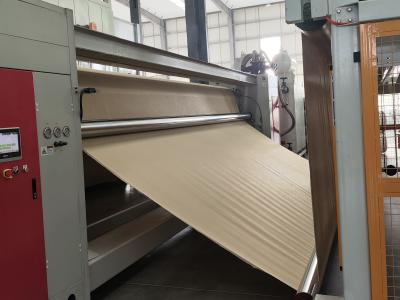
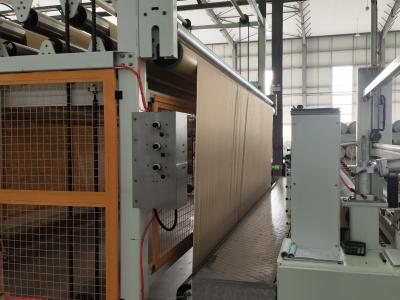
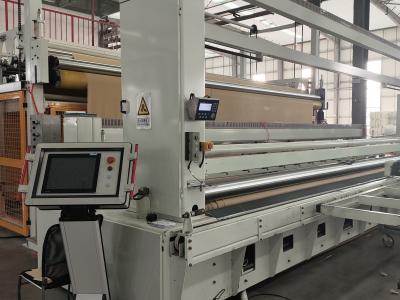
The production of Non Woven Filter Fabric involves several steps that affect final performance characteristics. The needle-punching process, which is the most common method, mechanically entangles fibers to create a three-dimensional structure that provides high permeability and efficient particle retention. Process parameters that affect final product quality include needle density, penetration depth, and web area density.
Quality Nonwoven Geotextile manufacturers implement rigorous quality control measures including raw material verification, in-process monitoring, and final product testing at accredited laboratories. Key tests include grab tensile strength (ASTM D4632), CBR puncture resistance (ASTM D6241), UV resistance (ASTM D4355), permittivity (ASTM D4491), and apparent opening size (ASTM D4751).
What Buyers Should Check Before Ordering
Test Reports
Request Mill Test Reports confirming grab tensile strength, CBR puncture resistance, UV resistance, permittivity, and apparent opening size. Quality Non Woven Filter Fabric should show consistent values across these tests.
Filtration Performance
Verify that the fabric's O95 pore size matches the soil particle size distribution for your application. The gradient ratio test is a reliable method for assessing filtration compatibility.
Chemical Resistance
For mining or landfill applications, confirm the fabric's resistance to the specific chemicals it will encounter. Polypropylene offers excellent resistance across pH 2-13.
Weight Verification
Confirm that delivered fabric meets the specified weight within tolerance. For Mine Nonwoven Geotextile applications, 200 g/m² is a common specification.
Frequently Asked Questions
Q1: What is the difference between nonwoven and woven filter fabric for drainage applications?
Non Woven Filter Fabric offers superior filtration due to its three-dimensional pore structure. Research shows needle-punched nonwoven geotextiles provide better soil filtration and water permeability than woven alternatives . Woven geotextiles experienced a 42% reduction in flow rate due to clogging, making them unsuitable for certain filtration applications .
Q2: What weight grade of Nonwoven Geotextile is suitable for mining applications?
For Mine Nonwoven Geotextile applications, weights typically range from 200 g/m² to 400 g/m² depending on the specific requirements. Research has shown that 200 g/m² nonwoven geotextiles with O95 of 0.103 mm deliver flow rates of 260 mL/min .
Q3: How does clogging affect Non Woven Filter Fabric performance?
Research has shown that the main mechanism of clogging in nonwoven geotextiles is the deposition of fine particles on their surface, forming a layer of low permeability soil. Increasing thickness and pore size within a certain range helps enhance anti-clogging ability .
Q4: Can Non Woven Filter Fabric be used for long-term exposed applications?
Yes, with proper UV stabilization. Quality Nonwoven Geotextile includes carbon black or other UV inhibitors, retaining at least 70% of tensile strength after 500 hours of exposure.
Q5: How should buyers specify Non Woven Filter Fabric for quality assurance?
Specify: needle-punched nonwoven construction from 100% virgin PP or PET fibers with UV stabilizers; minimum weight appropriate to grade; minimum grab tensile strength; CBR puncture resistance; permittivity meeting drainage requirements; and UV resistance of at least 70% strength retention after 500 hours.
Conclusion
Non Woven Filter Fabric delivers the filtration performance, chemical resistance, and mechanical durability that critical infrastructure and mining applications require. From road construction to heap leach pads, this Nonwoven Geotextile has proven its value through research and field performance across diverse applications.
When specifying Non Woven Filter Fabric, verify mechanical properties through Mill Test Reports, confirm chemical resistance for your specific environment, and select the appropriate weight grade for your application.
Need help specifying Non Woven Filter Fabric for your next project? Share your application details with our technical team. We will provide a no-obligation review of appropriate specifications with certified performance data.