Modern Landfill Liner Systems: Engineering, Costs, and How to Choose the Right Supplier Introduction: Why a Reliable Liner System In Landfill Matters
Introduction: Why a Reliable Liner System In Landfill Matters
A landfill is more than a dumping ground. It is a carefully engineered facility designed to keep waste isolated from the environment for decades. At the core of this design sits the Liner System In Landfill – a multi-layer barrier that stops contaminated liquid (leachate) from seeping into the soil and groundwater.
Failures are expensive. A single leak can lead to years of remediation work, legal battles, and fines. That is why owners and engineers spend so much time specifying the right Landfill Liner. They need materials that meet strict regulations, survive harsh conditions, and perform consistently over time.
This guide covers the basics of modern liner systems, looks at real project data, and offers practical tips for working with HDPE Geomembrane Suppliers.
 |  |  |
Market Trends and Why Demand for Landfill Liners Is Growing
A Market Driven by Regulation and Ageing Infrastructure
The global geomembrane market, which includes landfill applications, was worth about $2.89 billion in 2026. Forecasts put it at $4.62 billion by 2034, with waste containment being the single biggest segment.
Two things are pushing this growth. First, many landfills built in the 1980s and 1990s are running out of space or need new liners. Second, environmental rules keep getting tighter. What passed inspection ten years ago may not be acceptable today.
The Cost of a Modern Landfill Cell
Building a new disposal cell is not cheap. Take the Cecil County Central Landfill in Maryland. They recently finished a 12.3-acre cell with a total price tag of $6.6 million. The Liner System In Landfill included a clay subbase, a geosynthetic clay liner, an HDPE geomembrane, a geotextile, and a stone drainage layer. That cell will provide 8 to 10 years of extra capacity.
When you look at those numbers, the material cost of the Landfill Liner itself is only part of the total. Installation, testing, and quality assurance make up a large share of the budget.
Breaking Down a Typical Landfill Liner System
Layers with Specific Jobs
A proper Liner System In Landfill is not a single sheet of plastic. It is a series of layers, each doing a different job:
1.Subgrade (compacted clay or soil): Provides a stable foundation.
2.Geosynthetic Clay Liner (GCL): A layer of bentonite clay between two geotextiles. It swells when wet and seals small punctures.
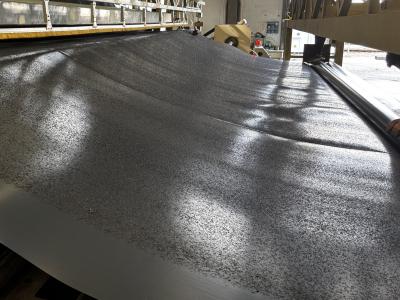
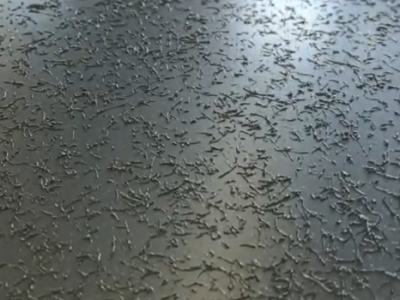
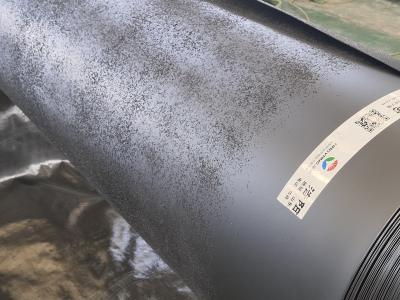
3.HDPE Geomembrane (the primary barrier): This is the main Landfill Liner. Typical thickness is 1.5mm to 2.5mm.
4.Protective Geotextile: A non-woven fabric that stops the drainage stone from puncturing the geomembrane.
5.Drainage Layer (gravel or geonet): Collects leachate and directs it to a sump for removal.
The Bacolod Sanitary Landfill in the Philippines uses a dual-liner system – a GCL plus a 1.5mm HDPE geomembrane. That extra layer of security makes sense for sites near sensitive water resources.
What to Look for in the HDPE Geomembrane
When engineers specify a Landfill Liner, they look at test data, not just price. Key properties for a 1.5mm HDPE geomembrane under GRI-GM13 include:
| Property | Minimum Value | Test Method |
| Density | 0.94 g/cm³ | ASTM D1505 |
| Tensile Strength at Yield | 22 kN/m | ASTM D6693 |
| Puncture Resistance | 480 N | ASTM D4833 |
| Stress Crack Resistance | 300 hours | ASTM D5397 |
| Carbon Black Content | 2.0 – 3.0% | ASTM D4218 |
The 2.0mm version (common for hazardous waste) has higher requirements: 29 kN/m tensile strength and 1,000 hours stress crack resistance. Those numbers matter in the real world. A liner that cracks after a few hundred hours of chemical exposure is not fit for purpose.
Real-World Projects and What They Teach Us
Cecil County Central Landfill (Maryland, USA)
This project won the 2025 CEAM Project of the Year award in the large project category. The Liner System In Landfill included:
24 inches of clay subbase
A GCL
HDPE geomembrane meeting GRI-GM13
A geotextile protection layer
18 inches of stone drainage layer
The consulting firm Barton and Loguidice handled the design. BAI Group, Inc. provided independent construction quality assurance (CQA), while Kinsley Construction did the installation. Total cost: $6.6 million.
The lesson here is about separation of duties. The CQA firm was independent from the contractor. That is standard practice for serious landfill projects.
Bacolod Sanitary Landfill (Philippines)
As the city grew, so did its waste problem. The old dumpsite was not safe. Maccaferri Philippines supplied a dual-liner system – a GCL on the bottom, topped with a 1.5mm HDPE geomembrane. The GCL acts as a self-sealing backup. If the geomembrane gets a small puncture, the bentonite in the GCL swells and plugs the hole.
That combination gives operators peace of mind. The system keeps leachate out of the local soil and water.
A Canadian Landfill (Cold Climate Installation)
A site in Canada used 1.5mm and 2.0mm HDPE geomembrane made to ASTM GM13 standards. Total coverage: 18,000 m². The material had a smooth base and a textured top for slope stability. Installers used hot wedge fusion welding for most seams and extrusion welding for details.
The challenge in Canada is freeze-thaw cycles. The liner has to stay flexible when it gets cold. That means the resin formulation and the carbon black dispersion have to be right. This project worked because the supplier understood the local conditions.
Research on PFAS Permeation (Florida State University)
There is a newer concern in landfill engineering: PFAS chemicals. These compounds do not break down easily, and some versions can move through liners. Researchers at Florida State University are running tests to see how fast volatile PFAS compounds (called FTOHs) pass through HDPE geomembranes and GCLs.
The early work suggests that not all Landfill Liner materials perform the same way against PFAS. This research may lead to tougher standards in the next few years. Buyers should keep an eye on these findings.
How to Pick Reliable HDPE Geomembrane Suppliers
Look Past the Price Sheet
Price matters, but it is not the whole story. A cheap Landfill Liner that fails after ten years is a disaster. Here is what to check when evaluating HDPE Geomembrane Suppliers:
Raw material origin: Ask for documentation showing 100% virgin resin from a known supplier like Dow, ExxonMobil, or Borealis. Recycled resin has no place in a primary Landfill Liner.
Test reports: Do not accept a generic certificate. Demand lot-specific Mill Test Reports with actual numbers for thickness, tensile strength, puncture resistance, carbon black content, and stress crack resistance.
Third-party validation: Reports from accredited labs like SGS, TÜV, or Intertek carry more weight than in-house tests alone.
Factory audit capability: Serious HDPE Geomembrane Suppliers will let you visit their plant or provide a virtual tour. They have nothing to hide.
Warranty: A 20-year manufacturer warranty is standard. If a supplier offers less, ask why.
Track record: Ask for references from landfill projects that are five years old or more. A liner that looks good on a data sheet may still crack in the field. Time tells the truth.
Red Flags to Avoid
Some HDPE Geomembrane Suppliers make promises they cannot keep. Watch out for:
1.Reluctance to provide lot-specific test data
2.Prices that are much lower than the market average without explanation
3.Vague answers about resin sources
4.No third-party certifications (ISO 9001, GRI-GM13)
5.Short or no warranty
Installation and Quality Assurance – Getting It Right in the Field
A good Liner System In Landfill can be ruined by bad installation. Three things matter most:
Subgrade prep: The ground under the liner must be smooth and free of rocks bigger than 12mm. Compaction should hit 95% Proctor density or higher.
Seaming: Dual-track thermal fusion welding is the standard for HDPE geomembranes. The weld area must be clean and dry. Moisture or dust will cause weak spots.
Testing: Every seam gets tested. Non-destructive methods (air pressure, vacuum box) cover 100% of the weld length. Destructive samples are cut every 300 meters and pulled apart in a lab.
The Cecil County project used an independent CQA firm for a reason. You cannot rely on the installer to check their own work.
Frequently Asked Questions
Q1: What is the minimum thickness for a primary Landfill Liner?
For a municipal solid waste landfill under US rules (RCRA Subtitle D), the geomembrane must be at least 1.5mm (60 mil) . Hazardous waste sites (Subtitle C) usually require 2.0mm (80 mil) . The Cecil County cell used a multi-layer system with a clay subbase, GCL, and HDPE geomembrane.
Q2: How long will a Liner System In Landfill last?
A properly built Landfill Liner is designed for 30 to 50 years of service. The HDPE geomembrane itself, once covered, can last longer than 50 years. The antioxidant package and the carbon black content are the keys. The Cecil County cell is expected to handle waste for 8 to 10 years, but the liner system will stay in place and function for decades after that.
Q3: What is the difference between a single and a dual Liner System In Landfill?
A single liner uses one geomembrane with a leachate collection layer above it. A dual liner has two geomembranes with a leak detection layer in between. The Bacolod landfill uses a GCL plus an HDPE geomembrane – a dual approach that adds an extra layer of safety.
Q4: How do I verify the quality of HDPE Geomembrane Suppliers?
Ask for GRI-GM13 certification and lot-specific Mill Test Reports. Check that the resin is 100% virgin from a major supplier. Look for third-party test reports from labs like SGS or Intertek. Ask for landfill project references that are at least five years old. A supplier that cannot provide these things is not worth the risk.
Q5: Are PFAS chemicals changing how we design Landfill Liners?
Yes, this is a developing area. Researchers at Florida State University are testing how fast volatile PFAS compounds move through HDPE geomembranes and GCLs. The results may lead to new requirements for Landfill Liner systems in the next few years. Buyers should stay informed.
Conclusion: Pay for Performance, Not Just a Low Price
The global market has plenty of Landfill Liner options. The challenge is telling good materials from bad ones. Price is a poor guide. A liner that looks fine on a data sheet can crack in the field if the resin is poor or the antioxidant package is weak.
The Cecil County project worked because the owner used an independent CQA firm and insisted on certified materials. The Bacolod landfill chose a dual-liner system for extra security. The Canadian project succeeded because the HDPE Geomembrane Suppliers understood cold-weather installation.
Professional buyers can reduce risk by doing three things:
1.Write specs that reference GRI-GM13 or ASTM D7176
2.Ask for lot-specific test data before any material ships
3.Work with HDPE Geomembrane Suppliers who offer full traceability, third-party test reports, and solid warranties
The cheapest Landfill Liner is rarely the best value. What counts is a liner that does its job for 30 years or more.
Free Resource: We offer a Landfill Liner Specification Template and a Supplier Audit Checklist. Both are based on real project experience across North America, Europe, and Asia.
Get in touch: Our technical team can review your specifications, provide lot-specific Mill Test Reports, or help you find the right Liner System In Landfill for your next project.