Mine Dam Liner: 2026 Market Review, Technical Specifications, and Global Sourcing Guide
Introduction: The Critical Role of Mine Dam Liner in Modern Mining
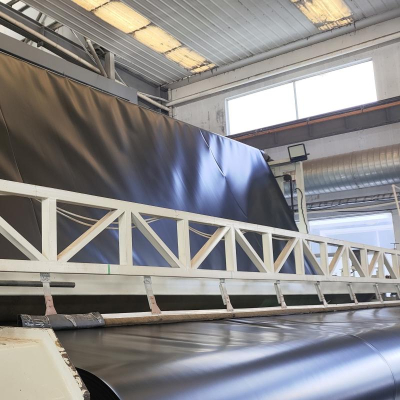
Tailings dams and heap leach pads are among the most environmentally sensitive structures in the mining industry. They hold billions of tonnes of processed material—often containing cyanide, sulfuric acid, or heavy metals—and any failure can have catastrophic environmental and economic consequences. At the heart of modern tailings containment lies the Mine dam liner.
The numbers confirm its importance. The HDPE anti-seepage geomembrane market grew from USD 1.75 billion in 2025 to USD 1.89 billion in 2026 at a CAGR of 7.7%, driven significantly by mining sector expansion . Investment in UK mining and quarrying rose by £1.3 billion ($1.66 billion) in 2025, reflecting a 31.9% year-over-year increase . For every new heap leach pad or tailings storage facility (TSF), a Mine geomembrane is specified.
This report examines the Mine dam liner market in 2026: technical specifications, real-world case studies from gold and phosphate projects, a 9-year academic study on HDPE degradation in high-pH mining environments, and practical guidance on selecting reliable suppliers.
 |  |  |
Market Context — Size, Drivers, and Regional Dynamics
What Is Driving Demand for Mine HDPE Liner?
Mining Activity Growth — The expansion of mining activities is the primary driver of the Mine dam liner market. HDPE anti-seepage geomembranes play a crucial role in mining by preventing leakage of hazardous substances, protecting soil and groundwater, and ensuring environmental safety . The UK investment surge is just one data point; similar patterns appear in Australia, Chile, and West Africa.
Tailings Storage Facility (TSF) Construction — As mines expand and new projects come online, TSFs require reliable Mine HDPE Liner systems. The Boto gold mine in Senegal required over 2.2 million m² of geosynthetics for its TSF, including 2,000,000 m² of 1.5mm HDPE geomembrane . The Umm Wu’al phosphate project in Saudi Arabia required 900,000 m² of double-sided textured HDPE geomembrane for a new tailings pond .
Regulatory Pressure — Stricter environmental regulations are forcing operators to install certified liner systems. The ITY gold mine TSF conforms to GRI-GM13 and GRI-GM19 specifications, German DVS 2225-4 standards, and ANCOLD 2012 guidelines .
Technical Specifications for Mine Dam Liner
Material Composition and Standards
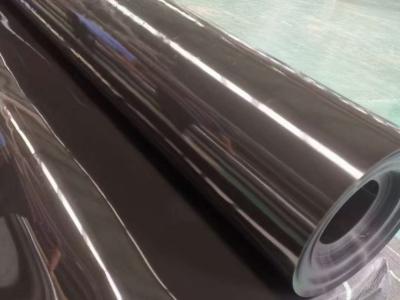
A specification-grade Mine HDPE Liner is manufactured from virgin high-density polyethylene resin with density controlled between 0.940 and 0.960 g/cm³. The additive package includes 2.0–3.0% carbon black for UV stabilization, antioxidants for thermal oxidation resistance, and process aids for uniform sheet formation .
Industry standards reference GRI-GM13 or ASTM D7176. For a Mine geomembrane, minimum properties vary by thickness:
| Thickness | 1.0mm | 1.5mm | 2.0mm |
| Density (min, g/cm³) | 0.940 | 0.940 | 0.940 |
| Tensile Yield (kN/m) | 15 | 22 | 29 |
| Puncture Resistance (N) | 320 | 480 | 640 |
| Stress Crack Resistance (hrs) | 300 | 500 | 500 |
| Carbon Black Content (%) | 2.0–3.0 | 2.0–3.0 | 2.0–3.0 |
Source: GRI-GM13 specifications
For heap leach applications, Chile studies have demonstrated that recent HDPE geomembranes are more resistant and can withstand higher loads without puncture failure . Large-scale puncture tests subjected HDPE geomembrane to loads equivalent to 120–235 meters of overliner material, confirming improved performance .
The Role of Geotextiles in Mine Dam Liner Systems
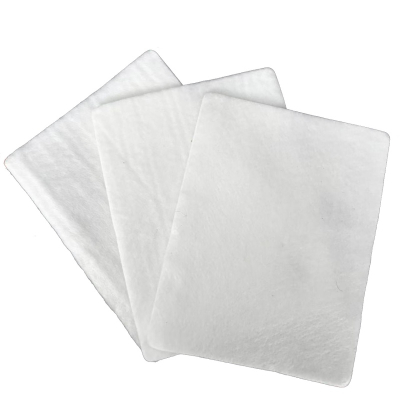
Mine geomembrane systems typically incorporate geotextile protection layers. Geotextiles are placed between the HDPE liner and the ore heap or protective cover, serving as a protective barrier that prevents the liner from being punctured . The Boto mine TSF included 230,000 m² of MIRAFI® P 40 as a protection layer .
Real-World Case Studies
ITY Gold Mine Tailings Storage Facility, Côte d'Ivoire
Endeavour Mining Corporation’s ITY gold mine has produced over 1.2 million ounces of gold during its 20-plus years of operation . The TSF project commenced in November 2018 and involved lining with 1.5mm thick GSE HD smooth geomembrane. The facility has a planned impoundment volume of 30.4 Mt (23 Mm³) over five years .
Key challenges:
Work needed during the short dry season—December to April
120-day installation window
Up to 20,000 m² per day peak installation
Outcome: Project completed ahead of schedule in 94 days. The CIL plant achieved full nameplate capacity two months ahead of schedule . The TSF conforms to GRI-GM13, GRI-GM19, DVS 2225-4, and ANCOLD 2012 standards .
Boto Gold Mine TSF, Senegal
The Boto gold mine, owned by Managem Group, is situated in eastern Senegal . The project extracts 35 million tonnes of rock annually, with a 2.75 Mtpa processing plant and a projected 12-year life producing 160,000 ounces of gold per year .
The challenge: Delivering more than 2.2 million m² of geosynthetics within a six-month window—including 2,000,000 m² of 1.5mm smooth HDPE geomembrane and 230,000 m² of geotextile .
Outcome: Solmax supplied the complete lining system through integrated planning, ensuring materials arrived in the required sequence before seasonal weather constraints .
Umm Wu’al Phosphate Project, Saudi Arabia
The Umm Wu’al Phosphate Project in Saudi Arabia is a large-scale mining and processing operation launched in 2014 by Maaden Phosphate Company . Expansion required a new tailings pond to contain highly toxic by-products of fertilizer production.
Challenges:
Extreme hot climate—requirements for geomembrane flatness and smoothness
900,000 m² of double-sided textured HDPE geomembrane
Strict protocols: 100% flawless material, no leaks or defects permitted
Quality assurance: Two independent inspectors were present in the manufacturing plant 24 hours a day, supervising production, monitoring quality control, and witnessing laboratory testing . Spark testing confirmed no leaks or flaws, with additional samples sent to external laboratories for verification .
Outcome: A fully lined tailings pond capable of safely containing toxic process waste under extreme environmental conditions .
9-Year Study of HDPE Degradation in High-pH Mining
A 2025 study published in Geotextiles and Geomembranes evaluated the degradation of an HDPE geomembrane in heap leaching environments using immersion tests at five temperatures over 9.3 years . The incubation solutions had pH values of 9.5, 11.5, and 13.5, relevant to gold and silver pregnant liquor solutions .
Key findings:
The pH 13.5 solution had the greatest effect on antioxidant depletion and polymer degradation
However, pH 13.5 was the least aggressive for initiating Stage II degradation compared to pH 11.5 and 9.5
Time to nominal failure at 30°C was predicted at 150 years in pH 9.5 and 11.5 solutions, and 140 years in pH 13.5
Assuming good liner design limiting tensile strains, nominal failure in a composite liner configuration exceeds 260 years at 30°C, potentially exceeding 1000 years at 10°C
Implications: Properly specified Mine HDPE Liner can perform for decades—and potentially centuries—in aggressive mining environments when well-designed and installed.
Installation Best Practices for Mine Dam Liner
Subgrade Preparation and Deployment
For Mine dam liner installations, subgrade preparation is critical :
Subgrade must be smooth, free of rocks exceeding 12mm diameter, sticks, and sharp objects
Compaction to ≥95% Proctor density standard
Geotextile protection layer (200–800 g/m²) recommended for rough subgrades
Liner deployment not permitted at ambient temperatures below 32°F or above 104°F
No draging of liner sheets on rough soil subgrade
Field Seaming
Dual-track hot wedge fusion welding for straight seams
Extrusion welding for patches, repairs, and penetration boots
Seam area must be completely free of moisture, dust, and debris
For slopes 4H:1V or steeper, seams oriented parallel to the slope direction
No horizontal seams across the slope unless approved
Testing Protocols
Non-destructive testing of every seam (air pressure, vacuum box, spark testing)
Destructive sampling — one sample per 300 meters of seam
Trial welds at start of each shift and after every four hours of continuous seaming
Seam strength must meet GRI GM19 requirements
Restrictions
No smoking on the liner
No steel-track equipment on the liner
No fueling of equipment on the liner
Vehicles restricted to less than 6 psi wheel contact
Selecting a Supplier for Mine Dam Liner
What to Look For
Certifications — GRI-GM13 and GRI-GM19 compliance. The ITY mine TSF conforms to both specifications .
Project References — Ask for tailings projects that are five years old or older. Solmax has supplied lining systems for Endeavour Mining Corporation’s Houndé, Karma, and ITY gold mines .
Production Capacity — The Boto mine required 2 million m² of HDPE geomembrane within six months . Ensure your supplier can meet your timeline.
Quality Assurance — The Umm Wu’al project had two independent inspectors 24/7 in the manufacturing plant . Reputable suppliers offer similar QA protocols.
Warranty — Minimum 20-year manufacturer warranty for Mine geomembrane meeting GRI-GM13 standards.
Frequently Asked Questions
Q1: What thickness of Mine HDPE Liner is typical for tailings storage facilities?
For TSFs, 1.5mm (60 mil) is the most common specification. The ITY gold mine, Boto mine, and Umm Wu’al phosphate project all used 1.5mm HDPE geomembrane . Thicker 2.0mm liners may be specified for higher-risk applications.
Q2: How long will a Mine dam liner last in aggressive chemical environments?
A 9-year academic study demonstrated that properly specified Mine HDPE Liner can exceed 260 years at 30°C and potentially exceed 1000 years at 10°C in composite liner configurations . Even in aggressive high-pH solutions (pH 13.5), nominal failure is predicted at 140 years at 30°C .
Q3: What is the difference between smooth and textured Mine geomembrane?
Smooth geomembrane offers superior weldability and lower cost for flat areas. Textured geomembrane provides approximately three times higher friction on slopes, improving slope stability. The ITY gold mine TSF used smooth geomembrane on base areas with single-sided textured liner on slopes .
Q4: What standards should a Mine HDPE Liner meet?
Require GRI-GM13 and GRI-GM19 compliance. The ITY gold mine TSF also conforms to German DVS 2225-4 standards and ANCOLD 2012 guidelines .
Conclusion: Verified Specifications Over Apparent Savings
The global market for Mine dam liner offers abundant supply at competitive price levels. The risk for buyers is not supply failure but specification failure—accepting material that appears similar to certified products but lacks the documented properties required for decades of service.
Real-world projects demonstrate that success depends on verified performance:
The ITY gold mine TSF achieved 20,000 m² per day peak installation and 94-day completion
The Boto mine TSF delivered 2.2 million m² before the rainy season
The Umm Wu’al project maintained 24/7 QA inspectors to ensure flawless material
Academic research confirms HDPE geomembrane can last over 1000 years at 10°C
Professional buyers reduce risk through three actions:
Write specifications referencing GRI-GM13, GRI-GM19, and ANCOLD standards
Demand lot-specific Mill Test Reports before any material ships
Select suppliers who provide comprehensive test data, material traceability, and documented project references
The most cost-effective Mine HDPE Liner is not the one with the lowest initial price, but the one that delivers verified performance throughout the project's design life.
Procurement Resource: Our Mine Dam Liner Technical Specification Template and Supplier Audit Checklist are available without charge. These documents reflect field experience across gold, copper, and phosphate mining projects worldwide.
Contact our technical sales engineering team for a specification review, to request lot-specific Mill Test Reports, or to discuss project-specific Mine geomembrane requirements for your next TSF or heap leach inquiry.