Membrane HDPE: 2026 Market Review, Technical Specifications, and Global Sourcing Guide
Introduction: Why Membrane HDPE Is the Industry Standard
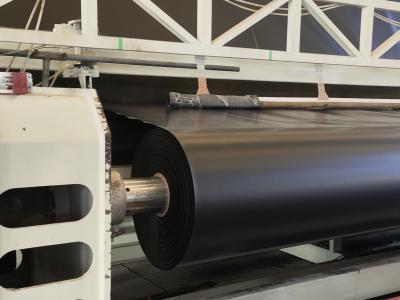
Across landfill engineering, mining operations, and water conservancy, one material has become indispensable for reliable containment: Membrane HDPE. High-density polyethylene geomembranes serve as the primary barrier in environmental containment applications, offering extremely low permeability and outstanding chemical resistance.
The numbers confirm its dominance. The HDPE anti-seepage geomembrane market grew from USD 1.75 billion in 2025 to USD 1.89 billion in 2026, a CAGR of 7.7%, and is projected to reach USD 2.51 billion by 2030. HDPE continues to command 65–75% of the geomembrane market due to its superior balance of cost, performance, and durability.
This report examines the Membrane HDPE market in 2026, providing technical specifications, real-world case studies from Taiwan and Chile, manufacturing insights, and practical guidance on selecting reliable HDPE Membrane Manufacturer partners.
 |  |  |
Market Context — Size, Drivers, and Regional Patterns
Current Market Valuation and Growth Outlook
The Membrane HDPE market is experiencing strong growth driven by several factors. The historic period saw growth from landfill development, expansion of mining activities, rising irrigation infrastructure, and regulatory focus on leakage prevention.
Key growth drivers for the forecast period include:
Sustainable waste management investment — Landfill closures and hazardous waste facilities require certified HDPE Membrane systems
Water conservation projects — Reservoir and canal lining across water-stressed regions
Mining tailings management — Heap leach pads and tailings storage facilities
Infrastructure development in emerging economies — Asia-Pacific leads demand growth
Stricter environmental regulations — EPA Subtitle D and EU Landfill Directive compliance
Major trends include rising use of geomembranes in waste containment projects, growing adoption in mining tailings management, expansion of agricultural water conservation liners, and increasing demand for UV-resistant and durable liners.
Regional Market Characteristics
The Membrane HDPE market shows distinct regional patterns:
Region | Market Characteristics |
North America | Mature QA/QC culture, GRI-GM13 compliance, EPA enforcement |
Asia-Pacific | Fastest-growing, large manufacturing base, China's Shandong Province produces over 70% of 500-micron geomembranes |
Europe | CE marking, sustainability focus, EU Landfill Directive |
Middle East/Africa | High UV exposure, enhanced stabilizers needed |
Manufacturing clusters in Shandong Province have evolved into specialized hubs for engineered polyethylene products, benefiting from integrated supply chains and proximity to export ports.
Technical Specifications for Membrane HDPE
Material Composition and Manufacturing Standards
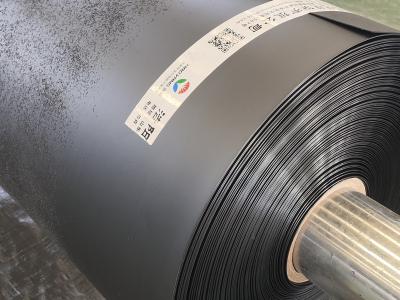
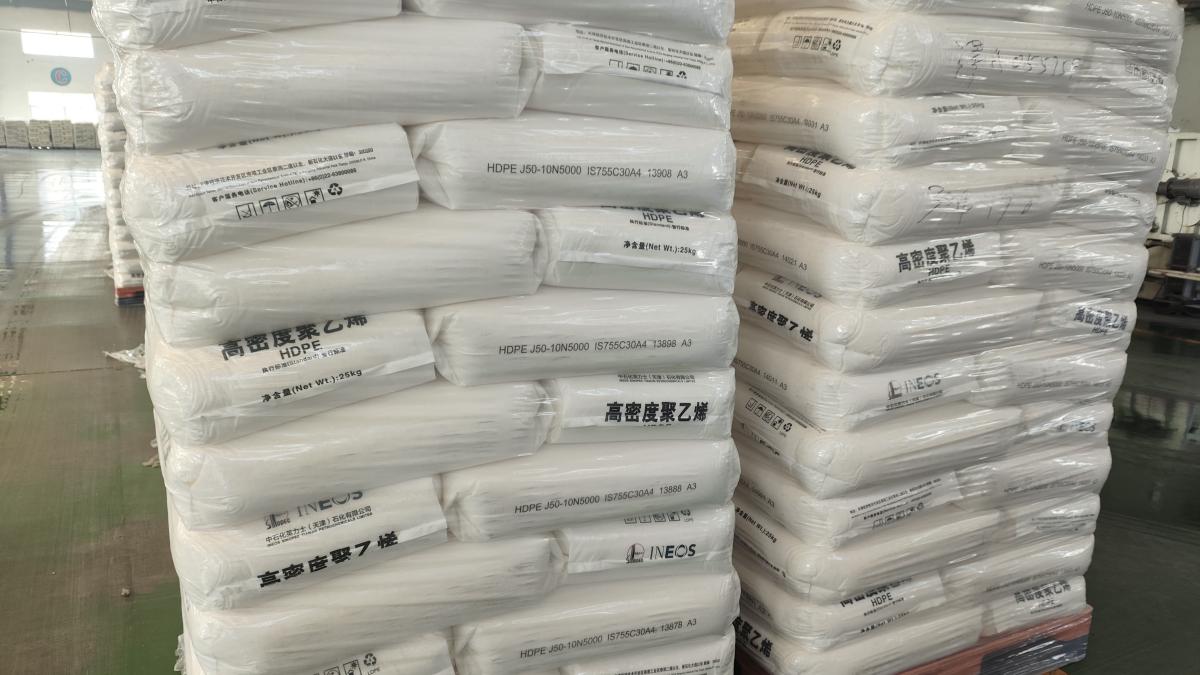
A specification-grade Membrane HDPE is manufactured from virgin high-density polyethylene resin with density controlled between 0.940 and 0.960 g/cm³. The additive package includes:
Carbon black (2.0–3.0%) for UV stabilization and long-term weathering resistance
Antioxidants to suppress thermal oxidation during processing and service life
Process aids to ensure uniform sheet formation
The GRI-GM13 specification, developed by the Geosynthetic Research Institute in 1994 with input from five HDPE resin suppliers and seven geomembrane manufacturers, sets forth minimum properties for HDPE geomembranes in thicknesses from 0.75mm to 3.0mm.
Key performance parameters for Membrane HDPE (GRI-GM13) :
Thickness (mm) | 0.75 | 1.0 | 1.5 | 2.0 | 2.5 | 3.0 |
Density (min, g/cm³) | 0.940 | 0.940 | 0.940 | 0.940 | 0.940 | 0.940 |
Tensile Yield (kN/m) | 11 | 15 | 22 | 29 | 37 | 44 |
Tensile Break (kN/m) | 20 | 27 | 40 | 53 | 67 | 80 |
Puncture Resistance (N) | 250 | 320 | 480 | 640 | 800 | 960 |
Tear Resistance (N) | 100 | 125 | 187 | 249 | 311 | 374 |
Stress Crack Resistance (hrs) | 500 | 500 | 500 | 500 | 500 | 500 |
Carbon Black Content (%) | 2.0–3.0 | 2.0–3.0 | 2.0–3.0 | 2.0–3.0 | 2.0–3.0 | 2.0–3.0 |
Std-OIT (min) | 150 | 150 | 150 | 150 | 150 | 150 |
HP-OIT (min) | 500 | 500 | 500 | 500 | 500 | 500 |
Source: GRI-GM13 specification
GRI-GM13 is unique among geomembrane specifications because it requires long-term performance testing of the antioxidant package — three specific tests challenge the antioxidants that play an essential role in assuring long-term performance.
Manufacturing Process — From Resin to Sheet
The production process for Membrane HDPE involves several critical stages. Research on HDPE geomembrane manufacturing describes a formulation using 95–98% high-density polyethylene resin as the main material, with about 1–6% carbon black, anti-aging agents, antioxidants, ultraviolet absorbers, and stabilizers.
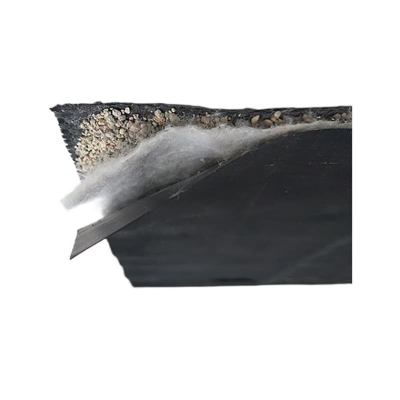
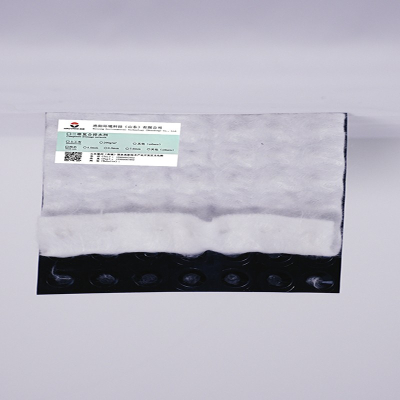
The process uses three-layer co-extrusion technology, where raw materials are processed at approximately 200°C, extruded through a die, and cooled on calibrated rollers. The non-woven fabric and geomembrane are produced and adhere to each other to form the HDPE geomembrane by one-time thermal compounding, which greatly reduces loss while simplifying the production process and improving anti-seepage capability, chemical stability, and aging resistance.
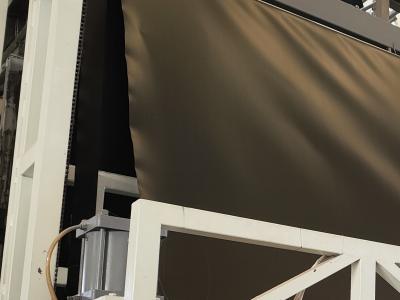
Advanced HDPE Membrane Manufacturer facilities use automatic thickness control systems that maintain dimensional tolerances within ±5% across the full roll width.
Smooth vs. Textured Membrane HDPE
Membrane HDPE products are available in smooth or textured finishes:
Feature Smooth Textured
Weldability Superior Good — requires careful parameter adjustment
Material Cost 20–40% lower Premium pricing
Slope Stability Suitable for slopes <3H:1V Required for slopes >3H:1V
Interface Friction Standard Approximately 3x higher
Recent research published in 2026 notes that textured HDPE geomembranes are recommended in environmentally sensitive applications such as landfill liners and mining facilities due to their enhanced interface friction, which improves stability and reduces slippage. However, recent findings suggest that surface texturing, depending on material formulation and exposure conditions, may accelerate antioxidant depletion, potentially affecting service life.
Real-World Applications and Case Studies
Taiwan Landfill Expansion Project (2010–2014)
The Reinforced Soil Dike at a Class B Waste Landfill Expansion Project in Kaohsiung, Taiwan, utilized ACEMembrane™ HDPE as a key component. The project incorporated multiple geosynthetic products:
ACEGrid® GG for soil reinforcement
ACETex® NW non-woven geotextile for filtration
ACEMembrane™ for barrier and containment
ACEDrain™ S for drainage
The Membrane HDPE served as the primary fluid barrier, preventing leachate migration from the waste mass into surrounding soil and groundwater.
Extreme-Duty Applications — GSE HX Geomembrane
Solmax's GSE® HX is a premium-grade Membrane HDPE designed for the most aggressive applications. Independent immersion testing in actual brine and copper tailing solutions at temperatures up to 75°C demonstrated negligible degradation even after 150 days, confirming long-term performance in extreme mining and industrial conditions.
Key performance features:
Stress crack resistance exceeding 1,000 hours without failure (GRI GM13 minimum is 500 hours)
Exceptional chemical resistance in aggressive brine and tailing solutions
Better thermal stability — maintains performance at elevated temperatures up to 60°C
Outstanding UV stability for long-term exposed conditions
Antioxidant depletion time satisfying general containment service period
This product is widely used for mining heap leach pads, tailings storage facilities, brine ponds, process water containment, hazardous waste landfills, and chemical storage basins.
Hydroelectric Dam Application — Brazil
At the Salto and São Salvador hydroelectric power plants in Brazil, double-sided textured 1.5mm HDPE geomembranes were used as upstream impermeable blankets to minimize preferential flow paths that could occur with smooth-surface geomembranes. This application demonstrates the versatility of Membrane HDPE in water infrastructure projects.
Quality Assurance and Testing Protocols
GRI-GM13 Certification
GRI-GM13 is the industry standard specification for Membrane HDPE. It covers MQC considerations for both smooth and textured HDPE geomembranes and includes minimum physical, mechanical, and chemical properties.
Tests excluded from GRI-GM13 because they are irrelevant to HDPE geomembranes include:
Volatile Loss — no components in HDPE geomembranes evaporate below 100°C
Water Absorption — HDPE is hydrophobic with extremely low water absorption
Water Vapor Transmission — not designed for sheet materials of geomembrane thickness
Resistance to Soil Burial — HDPE has no plasticizer to biodegrade
Key Long-Term Performance Tests
GRI-GM13 requires three specific tests to challenge the antioxidant package:
Standard Oxidative Induction Time (Std-OIT) — minimum 150 minutes
High Pressure Oxidative Induction Time (HP-OIT) — minimum 500 minutes
Stress Crack Resistance (ASTM D5397) — minimum 500 hours
These tests ensure the HDPE Membrane will perform for decades in aggressive containment environments.
Selecting a Reliable HDPE Membrane Manufacturer
Key Evaluation Criteria
When evaluating HDPE Membrane Manufacturer partners, verify these essential items:
Certifications — GRI-GM13 certification with lot-specific Mill Test Reports. The GRI-GM13 specification includes a recommended warranty focused on the geomembrane material itself — not the installation.
Raw Material Traceability — Documentation showing 100% virgin resin from reputable suppliers (Dow, ExxonMobil, Borealis). Recycled content has no place in primary containment applications.
Mill Test Reports — Lot-specific documentation showing actual test values for thickness, tensile strength, puncture resistance, carbon black content, and OIT.
Testing Capability — GAI-LAP accredited laboratory or third-party validation from SGS, Intertek, or Bureau Veritas.
Warranty — Minimum 20-year manufacturer warranty for HDPE Membrane meeting GRI-GM13 standards.
Project References — Ask for landfill or mining projects that are five years old or older.
Red Flags to Avoid
Unwillingness to provide lot-specific Mill Test Reports
Prices significantly below market without explanation
Vague answers about resin sources or additive packages
No third-party certifications
Carbon black content below 2.0% — inadequate UV stabilization
Installation Best Practices for Membrane HDPE
Subgrade Preparation
The foundation must be smooth, free of rocks exceeding 12mm diameter, sticks, organic matter, and sharp objects. Compaction to ≥95% Proctor density is standard. For rough subgrades, a non-woven geotextile cushion (300–800g/m²) is recommended.
Seaming Methods
Dual-track thermal fusion welding is the preferred method for Membrane HDPE in long, straight seams. Key parameters affecting weld quality include welding temperature (400–500°C), welding speed (1.5–3.0 m/min), and welding pressure.
Extrusion welding is used for patches, penetrations, and irregular geometries.
Testing Protocols
Non-destructive testing of every seam via air pressure, vacuum box, or spark testing
Destructive sampling — minimum one sample per 300 meters of seam length
Trial welds required at start of each shift and after every four hours of continuous seaming
Frequently Asked Questions
Q1: What is the difference between Membrane HDPE and other geomembrane materials?
Membrane HDPE offers superior chemical resistance (pH 1.5–13), puncture/tear strength, and long-term stability compared to LLDPE, PVC, and EPDM. HDPE geomembranes reduce groundwater contamination risk by 99.9%+ compared to compacted clay liners alone.
Q2: What thickness of Membrane HDPE do I need for my project?
Thickness depends on application:
0.75–1.0mm: Aquaculture, secondary containment, canal lining
1.5mm: Municipal landfills, mining heap leach pads
2.0mm: Hazardous waste landfills, high-risk mining applications
2.5–3.0mm: Extreme chemical exposure, high-pressure applications
Q3: What certifications should a Membrane HDPE meet?
Require GRI-GM13 certification with lot-specific Mill Test Reports. Key properties to verify: density ≥0.940 g/cm³, tensile yield (11–44 kN/m depending on thickness), puncture resistance (250–960 N), carbon black content 2.0–3.0%, stress crack resistance ≥500 hours, Std-OIT ≥150 minutes, HP-OIT ≥500 minutes.
Q4: How do I find a reliable HDPE Membrane Manufacturer?
Look for manufacturers with GRI-GM13 certification, 100% virgin resin documentation, third-party test reports, and 20-year warranties. Leading manufacturers include Solmax (GSE HX for extreme applications), AGRU, and manufacturers in China's Shandong Province, which offers competitive pricing and established supply chains.
Q5: How long does Membrane HDPE last?
Properly manufactured and installed Membrane HDPE with adequate UV stabilization demonstrates service life of 20–50 years for exposed applications and 50–100+ years when buried. GSE HX, tested in brine and copper tailing solutions at temperatures up to 75°C, showed negligible degradation after 150 days with antioxidant depletion times satisfying general containment service periods.
Conclusion: Verified Specifications Over Apparent Savings
The global market for Membrane HDPE offers abundant supply at competitive price levels. The risk for buyers is not supply failure but specification failure — accepting material that appears similar to certified products but lacks the documented properties required for decades of service.
Real-world projects demonstrate that success depends on verified performance: the Taiwan landfill project used HDPE geomembranes for long-term leachate containment; GSE HX proved exceptional resistance in extreme mining conditions at 75°C; and GRI-GM13 provides the industry-standard framework for quality assurance.
Professional buyers reduce risk through three actions:
Write specifications referencing recognized international standards (GRI-GM13)
Demand lot-specific Mill Test Reports before any material ships
Select HDPE Membrane Manufacturer partners who provide comprehensive test data, material traceability, and documented project references
The most cost-effective HDPE Membrane is not the one with the lowest initial price, but the one that delivers verified performance throughout the project's design life.
Procurement Resource: Our Membrane HDPE Technical Specification Template and Supplier Audit Checklist are available without charge. These documents reflect field experience across landfill, mining, and water infrastructure projects worldwide.
Contact our technical sales engineering team for a specification review, to request lot-specific Mill Test Reports, or to discuss project-specific HDPE Membrane requirements for your next inquiry.