HDPE Waterproofing Sheet: 2026 Market Analysis, Technical Specifications, and Global Sourcing Strategies
Introduction: The Growing Importance of HDPE Waterproofing Sheet
Across landfill engineering, mining operations, water conservancy, and civil construction, one material has become indispensable for reliable fluid containment: the HDPE Waterproofing Sheet. As environmental regulations tighten and infrastructure ages, the demand for high-performance barriers that prevent liquid migration continues to rise.
The construction films market, which includes High Density Polyethylene HDPE Liners, was valued at USD 19.89 billion in 2025 and is projected to reach USD 31.84 billion by 2034, growing at a CAGR of 5.37% . HDPE films hold approximately 13% of this market share, valued for their high strength-to-density ratio, excellent moisture resistance, and chemical durability .
This report examines the HDPE Waterproofing Sheet market in 2026, providing technical specifications, real-world case studies from high-altitude mining projects and industrial waste containment, emerging research on PFAS permeation, and procurement guidance for industrial buyers.
 |  |  |
Market Context — Size, Drivers, and Regional Dynamics
Current Market Valuation and Growth Outlook
The global HDPE Waterproofing Sheet market continues its steady expansion as part of the broader geomembrane sector. While specific data for HDPE waterproofing sheets alone is part of the larger geomembrane market (valued at approximately USD 2.89 billion in 2026), the construction films market provides broader context, with HDPE films maintaining a solid 13% share .
Key market drivers include:
Infrastructure Development — Large-scale dam, reservoir, and canal projects across Asia, the Middle East, and South America require reliable High Density Polyethylene HDPE Liners for seepage control. A lead‑zinc smelting project in Hulunbuir, Inner Mongolia, used two-layer HDPE lining (2.0mm upper layer + 1.0mm lower layer) for a smelting waste yard and a rainwater collection pond using 1.5mm HDPE geomembrane composite lining .
Mining Sector Demand — Mining applications consume substantial volumes of Geomembrane Sheet products for heap leach pads and tailings storage. A high‑altitude mine in Mongolia (1,600m) and Northern China (2,600m) successfully used HDPE geomembranes for brine lagoons and chemical solution ponds, highlighting the material's exceptional flexibility and durability under extreme conditions .
Environmental Regulation — Stricter liner requirements for landfills and hazardous waste facilities continue to drive demand for certified HDPE Waterproofing Sheet. The U.S. EPA has published technical guidance documents for geomembrane installation and inspection, emphasizing the importance of QA/QC programs during installation to decrease leakage .
Emerging Concern — PFAS Containment — PFAS (per- and polyfluoroalkyl substances) have become a significant regulatory focus. An active research project at Florida State University (October 2025–September 2026) is investigating the permeability of fluorotelomer alcohols (FTOHs) through two‑layer landfill liner systems combining HDPE geomembranes and geosynthetic clay liners (GCLs) . The study examines breakthrough times and permeation coefficients at four temperatures (40, 50, 60, and 70°C). A separate study published in the Journal of Hazardous Materials (August 2025) examined PFAS profiles in leachate from landfills with double HDPE geomembrane liner systems, underscoring continued research into PFAS migration mechanisms .
Regional Market Characteristics
| Region | Key Characteristics | Typical Applications |
| Asia-Pacific | Fastest-growing; large manufacturing base | Reservoirs, mining, landfills |
| North America | Mature QA/QC culture; strict ASTM/GRI-GM13 | Landfill caps, secondary containment |
| Europe | CE marking required; sustainability focus | Tunnel waterproofing, foundation barriers |
| Middle East/Africa | High UV exposure; enhanced stabilizers needed | Irrigation ponds, dam lining |
The Hulunbuir lead‑zinc smelting project in Inner Mongolia demonstrates the scale of Asian installations: a rainwater collection pond lined with 1.5mm smooth HDPE over 600g/m² geotextile and 4800g/m² bentonite mat, plus a waste yard with 2.0mm upper and 1.0mm lower HDPE layers .
Technical Specifications for HDPE Waterproofing Sheet
Material Composition and Key Properties
A specification-grade HDPE Waterproofing Sheet is manufactured from virgin high-density polyethylene resin with density controlled between 0.94 and 0.96 g/cm³. The additive package includes:
1.Carbon black (2.0–3.0%) for UV stabilization and long-term weathering resistance
2.Antioxidants to suppress thermal oxidation during processing and service life
3.Process aids to ensure uniform sheet formation
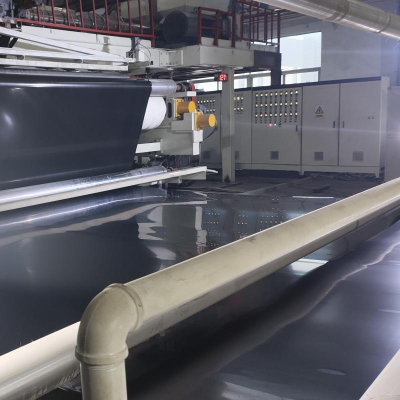
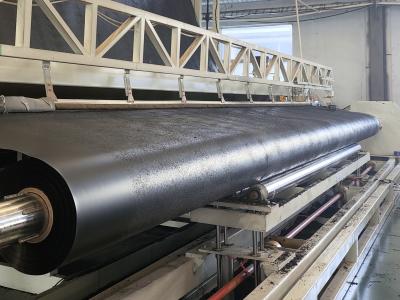
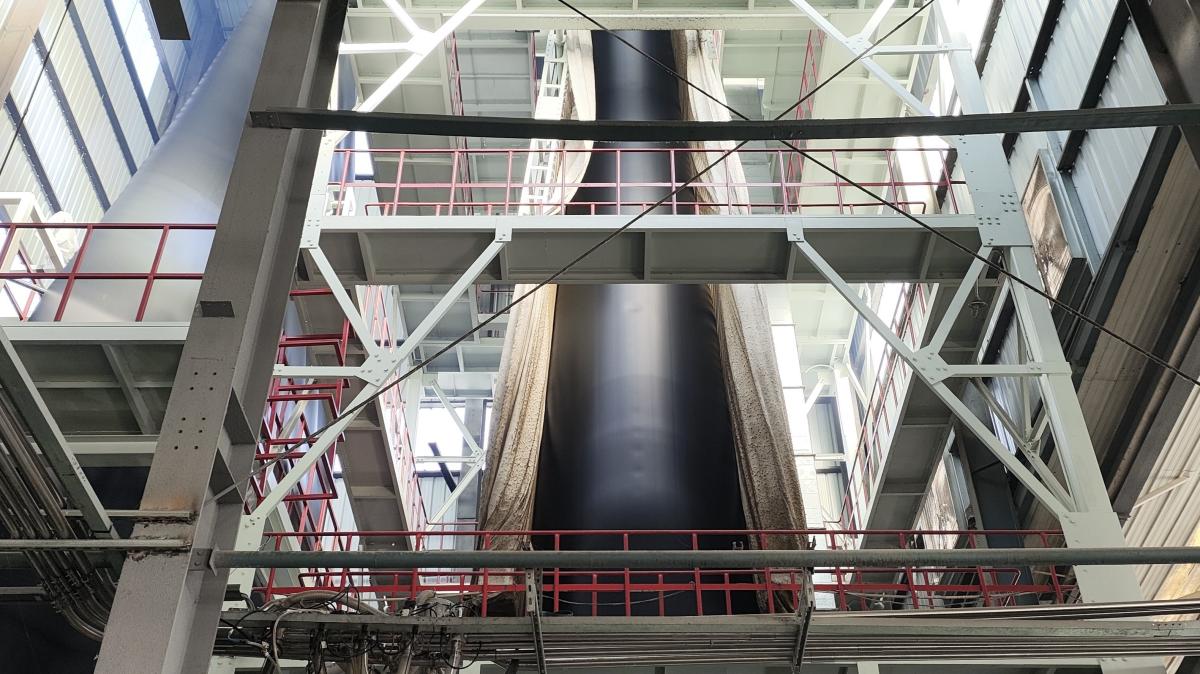
The production process uses a three-layer co-extrusion method, where raw materials are processed at approximately 200°C by fusing and coextrusion, maintaining basic properties throughout manufacturing . The resulting Geomembrane Sheet offers exceptional flexibility while retaining outstanding mechanical properties.
Industry standards reference GRI-GM13 or ASTM D7176 for High Density Polyethylene HDPE Liners used in containment applications . Key performance parameters include:
| Property | 1.5mm Requirement | 2.0mm Requirement | Test Method |
| Thickness tolerance | ±5% | ±5% | ASTM D5199 |
| Density (min) | 0.940 g/cm³ | 0.940 g/cm³ | ASTM D1505 |
| Tensile strength at yield (MD) | ≥ 22 kN/m | ≥ 29 kN/m | ASTM D6693 |
| Elongation at break | ≥ 700% | ≥ 700% | ASTM D6693 |
| Puncture resistance | ≥ 480 N | ≥ 640 N | ASTM D4833 |
| Stress crack resistance | ≥ 300 hours | ≥ 1,000 hours | ASTM D5397 |
| Carbon black content | 2.0–3.0% | 2.0–3.0% | ASTM D4218 |
| Oxidative Induction Time | ≥ 100 minutes at 200°C | ≥ 100 min | ASTM D3895 |
A Geomembrane Sheet meeting these thresholds delivers 99.9 percent containment efficiency and, when properly installed and covered, service life of 20–50 years for exposed applications and 50–100+ years when buried .
Manufacturing Capabilities
Modern HDPE Waterproofing Sheet production lines can produce thicknesses from 0.12mm to 4.0mm, with widths ranging from 2m to 9m and roll lengths from 50m to 420m . The three-layer co-extrusion process uses multi-zone heating systems that precisely control melt flow, ensuring consistent thickness across the full sheet width .
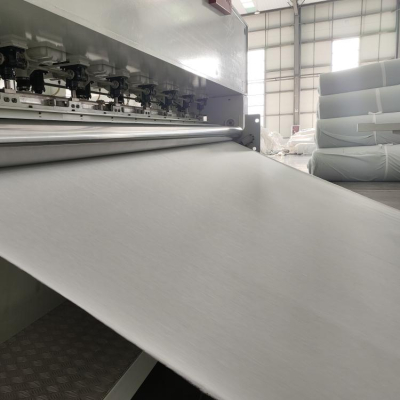
Surface finishes available include smooth, single-textured, and double-textured, with textured options improving friction performance on slopes exceeding 3H:1V. Color options typically include black (standard, with carbon black), white (reflective, for exposed applications), and custom colors upon request .
H3: Quality Documentation and Traceability
A reputable manufacturer of High Density Polyethylene HDPE Liners provides:
1.Mill Test Reports — lot-specific documentation showing actual test values for each property
2.Third-party certification — SGS, TÜV, or GAI-LAP accredited lab reports
3.ISO 9001 compliance — quality management system certification
4.CE certification — for European market access
The U.S. EPA emphasizes that the use of a QA/QC program during installation decreases the amount of leakage in landfills. Six specific methods for fabricating field seams of geomembranes are recognized: extrusion fillet seams, extrusion flat seams, hot wedge seams, hot air seams, chemical fusion seams, and adhesive seams .
Real‑World Applications and Case Studies
High‑Altitude Mining — Northern China and Mongolia
A technical paper presented to the International Geosynthetics Society documented the use of HDPE geomembranes in an industrial brine lagoon and chemical solution pond at mine sites in Northern China (elevation 2,600m) and Mongolia (elevation 1,600m) .
Challenges addressed:
Extreme temperature variations
High UV exposure at altitude
Aggressive chemical solutions requiring superior chemical resistance
Solution:
HDPE geomembrane with exceptional flexibility and outstanding mechanical properties
Low-permeability barrier to stop migration of liquids and chemicals
Specialized installation procedures adapted for high-altitude conditions
The paper concluded that HDPE Waterproofing Sheet provides an effective and economical solution for liquid containment and leakage prevention in chemical ponds under extreme environmental conditions .
Lead‑Zinc Smelting Waste Yard — Hulunbuir, China
Beijing GeoEnviron Engineering & Technology, Inc. executed a major containment project for a lead‑zinc smelting facility in Hulunbuir, Inner Mongolia . This project was part of a larger industrial complex designed to produce 140,000 tons of zinc and 60,000 tons of lead annually.
Rainwater Collection Pond:
1.5mm smooth HDPE Waterproofing Sheet
600g/m² geotextile protection layer
4800g/m² bentonite mat (GCL) as secondary barrier
0.8m compacted soil cover
Smelting Waste Yard:
Two-layer HDPE liner system
Upper layer: 2.0mm textured HDPE geomembrane
Lower layer: 1.0mm smooth HDPE geomembrane
Leachate detection and collection system
Results:
Completed within project schedule
Provides long-term containment for smelting by‑products
Prevents groundwater contamination from heavy metals
PFAS Permeation Research — Florida State University (Ongoing)
An active research project (October 2025–September 2026) at Florida State University is investigating the permeability of volatile PFAS compounds through two‑layer landfill liner systems combining HDPE geomembranes and GCLs .
Research Objectives:
1.Determine which layer (HDPE geomembrane or GCL) is more permeable to fluorotelomer alcohols (FTOHs)
2.Establish breakthrough time and permeation coefficient for each layer
3.Test four FTOH compounds (4:2, 6:2, 8:2, 10:2) at four temperatures (40, 50, 60, and 70°C)
4.Develop permeation parameters using mathematical modeling
Significance:
FTOHs are among the most abundant volatile PFAS compounds in landfill gas and leachate. HDPE is the most widely used geomembrane in landfill liners. Findings will inform future HDPE Waterproofing Sheet specifications and may lead to enhanced barrier requirements for PFAS containment .
A separate study published in the Journal of Hazardous Materials (August 2025) examined PFAS concentrations in leachate from three municipal solid waste landfills utilizing double HDPE geomembrane liner systems. Primary leachate ∑PFAS concentrations ranged from 3,200–81,000 ng/L, while secondary leachate ranged from 3,300–96,000 ng/L . While liner systems are highly effective, PFAS migration through landfill liners remains a concern, underscoring the importance of continued research.
Application‑Specific Guide for HDPE Waterproofing Sheet
Landfill Engineering
Municipal solid waste and hazardous waste landfills represent the largest application segment for High Density Polyethylene HDPE Liners. Typical specifications:
| Application | Thickness | Surface | Standard |
| MSW base liner | 1.5mm | Smooth/textured | GRI-GM13 |
| Hazardous waste primary liner | 2.0mm | Textured on slopes | GRI-GM13 |
| Landfill cap/closure | 1.0–1.5mm | Smooth | GRI-GM13 |
The U.S. EPA has published technical guidance documents to augment QC/QA guidelines for geomembrane installation and inspection, covering six specific methods for fabricating field seams .
Mining and Heap Leach
Mining applications subject HDPE Waterproofing Sheet to aggressive chemicals and sustained tensile stress. The high-altitude project in Mongolia and China demonstrated successful use in challenging environments .
Recommended specifications:
1.Minimum thickness: 2.0mm for heap leach pads
2.Textured surface for slopes exceeding 3H:1V
3.Stress crack resistance ≥ 1,000 hours (ASTM D5397)
Water Conservancy — Dams and Reservoirs
Dam and reservoir projects utilize Geomembrane Sheet products for upstream face waterproofing and canal lining. The Hulunbuir rainwater collection pond used a 1.5mm smooth HDPE Waterproofing Sheet with bentonite mat backup .
Shrimp and Fish Farming Ponds
Aquaculture applications require 0.5mm to 1.0mm HDPE Waterproofing Sheet with non‑toxic formulations. White reflective geomembranes are increasingly specified to reduce water temperature in tropical climates .
Selecting a Manufacturer for HDPE Waterproofing Sheet
Evaluation Criteria
When selecting a manufacturer for High Density Polyethylene HDPE Liners, verify:
Material Traceability
1.Raw material certificates showing virgin resin from reputable suppliers (Dow, ExxonMobil, Borealis)
2.Lot-specific Mill Test Reports with actual test values
3.Incoming quality inspection documentation
Certifications
ISO 9001 (quality management)
ISO 14001 (environmental management)
GRI-GM13 or ASTM compliance
CE marking for European projects
Testing Capability
In-house laboratory with calibrated test equipment
Third-party validation from GAI-LAP accredited labs, SGS, or TÜV
Testing frequency that meets standard requirements
Technical Support
Pre-sale design assistance
Installation training and welding guidance
On-site support for large projects
24‑hour response to quality issues
Warranty
Minimum 20‑year manufacturer warranty for HDPE Waterproofing Sheet meeting GRI-GM13 standards.
Red Flags to Avoid
1.Unwillingness to provide lot-specific Mill Test Reports
2.Prices significantly below market without explanation
3.Vague answers about resin sources
4.No third-party certifications
5.Short warranty or none offered
Installation and Quality Assurance
H3: Subgrade Preparation
The foundation must be smooth, free of rocks exceeding 12mm diameter, sticks, organic matter, and sharp objects. Compaction to ≥95 percent Proctor density is standard. A non-woven geotextile cushion (300–800g/m²) is typically installed for puncture protection on rough subgrades.
H3: Seaming Methods
The U.S. EPA recognizes six specific methods for fabricating field seams of geomembranes :
1.Extrusion fillet seams — for details and patches
2.Extrusion flat seams — for panel connections
3.Hot wedge seams — preferred for long, straight runs
4.Hot air seams — for certain polymer types
5.Chemical fusion seams — for solvent-weldable materials
6.Adhesive seams — for specific applications
For HDPE Waterproofing Sheet, dual‑track thermal fusion welding (hot wedge) is the preferred method for primary seams. The seam area must be free of moisture, dust, and debris before welding.
Testing Protocols
1.Non-destructive testing of every seam via air pressure, vacuum box, or spark testing
2.Destructive sampling — minimum one sample per 300 meters of seam length
3.Trial seams required at start of each shift and after every four hours of continuous seaming
Frequently Asked Questions
Q1: What thickness of HDPE Waterproofing Sheet do I need for my project?
Thickness depends on application and risk level:
0.5mm–1.0mm: Aquaculture ponds, decorative water features, secondary containment
1.5mm: Municipal landfills, irrigation reservoirs, canal lining
2.0mm: Hazardous waste landfills, mining heap leach pads, industrial chemical containment
2.5mm–3.0mm: Extreme chemical exposure, high-pressure applications
The Hulunbuir smelting waste yard used a two‑layer system with 2.0mm upper and 1.0mm lower HDPE liners .
Q2: What is the typical service life of High Density Polyethylene HDPE Liners?
Properly manufactured and installed HDPE Waterproofing Sheet with adequate antioxidant packages demonstrates service life of 20–50 years for exposed applications and 50–100+ years when covered . Carbon black at 2.0–3.0% provides UV stabilization that prevents embrittlement over decades of service.
Q3: What certifications should I require for HDPE Waterproofing Sheet?
Require GRI-GM13 or ASTM D7176 certification with lot-specific Mill Test Reports. Key properties to verify: tensile strength at yield (≥22 kN/m for 1.5mm, ≥29 kN/m for 2.0mm), puncture resistance (≥480 N for 1.5mm, ≥640 N for 2.0mm), carbon black content (2.0–3.0%), and stress crack resistance (≥300 hours for 1.5mm, ≥1,000 hours for 2.0mm) .
Q4: How are PFAS concerns affecting HDPE Waterproofing Sheet specifications?
Ongoing research at Florida State University is investigating PFAS permeation through HDPE geomembranes and GCLs . A separate study confirmed PFAS migration through double HDPE liner systems remains a concern, though liners are highly effective overall . Findings may lead to enhanced specifications for PFAS containment in the coming years. Procurement managers should monitor this research.
Q5: What is the difference between smooth and textured HDPE Waterproofing Sheet?
Smooth sheets provide optimal weldability and lower material cost, suitable for flat surfaces and base liners. Textured sheets incorporate surface asperities that improve interface friction with geotextile or soil layers, essential for slopes exceeding 3H:1V (approximately 18 degrees). Textured variants typically cost 20–40 percent more than smooth sheet of equivalent thickness.
Conclusion: Verified Specifications Over Apparent Savings
The global market for HDPE Waterproofing Sheet offers abundant supply at competitive price levels. The risk for buyers is accepting material that appears similar to certified products but lacks the documented properties required for decades of service.
Real‑world projects demonstrate that success depends on verified performance: the high‑altitude mines in Mongolia and China required HDPE geomembranes with exceptional flexibility and durability ; the Hulunbuir smelting facility used a two‑layer HDPE liner system for long‑term waste containment ; FSU research is establishing PFAS permeation parameters to inform future specifications .
Professional buyers reduce risk through three actions:
1.Write specifications referencing recognized international standards (GRI-GM13, ASTM D7176)
2.Verify conformance through independent testing and lot-specific Mill Test Reports before shipment
3.Select manufacturers who provide comprehensive test data, material traceability, and documented project references
The most cost-effective Geomembrane Sheet is not the one with the lowest initial price, but the one that delivers verified performance throughout the project's design life.
Procurement Resource: Our HDPE Waterproofing Sheet Technical Specification Template and Supplier Audit Checklist are available without charge. These documents reflect field experience across landfill, mining, water conservancy, and industrial containment projects worldwide.
Contact our technical sales engineering team for a specification review, to request lot-specific Mill Test Reports, or to discuss project-specific requirements for your current HDPE waterproofing inquiry.