HDPE Impermeable Liner: 2026 Market Analysis, Technical Specifications, and Global Sourcing Guide
Introduction: The Backbone of Modern Containment Engineering
When a project demands absolute fluid containment—whether it is a hazardous waste landfill, a mining tailings facility, or a water reservoir—engineers specify one material above all others: the HDPE Impermeable Liner. High-density polyethylene geomembranes have become the global standard for preventing contaminant migration, protecting groundwater, and ensuring long-term environmental compliance.
The market reflects this dominance. The global HDPE Geomembrane Liner market was valued at USD 2.69 billion in 2025 and is projected to reach USD 3.92 billion by 2032, growing at a CAGR of 5.6% . Asia-Pacific leads consumption, followed by North America and Europe, driven by waste management infrastructure, mining expansion, and water conservation projects .
This report examines the HDPE Impermeable Liner market in 2026: technical specifications, manufacturing standards, real-world project applications, and practical guidance for selecting a reliable HDPE Geomembrane Supplier.
 |  |  |
Market Context — Growth Drivers and Regional Patterns
What Is Fueling Demand for HDPE Impermeable Membrane
The structural demand for HDPE Impermeable Membrane systems rests on three pillars: regulation, mining, and water scarcity.
Environmental regulation remains the strongest driver. Modern landfill cells require reliable barrier systems to limit leachate migration, with side slopes creating additional demand for textured HDPE configurations . The U.S. EPA and European Commission have both tightened containment requirements, mandating certified liner systems for waste facilities .
Mining tailings storage represents one of the most demanding applications. Large containment areas, aggressive process environments, and long project lives increase requirements for chemical resistance, stress crack resistance, and interface performance . The global mining sector continues to expand, with each new heap leach pad or tailings facility requiring a HDPE Impermeable Liner.
Water management drives demand across aquaculture pond lining, reservoirs, and canal systems. The need for seepage control in water-scarce regions has made HDPE liners the preferred solution for agricultural and municipal water storage .
Regional Market Structure
Asia-Pacific is the largest consumption region and manufacturing center, supported by waste infrastructure, mining, water management, and aquaculture demand . China’s Shandong Province has emerged as a global production hub, with manufacturers like Haoyang Environmental operating over 26 production lines and annual capacity exceeding 93,500 tons .
North America and Europe are specification-intensive markets where material certification, construction quality assurance, and long-term durability carry substantial importance. Established suppliers in these regions compete through technical services and higher-performance grades .
Technical Specifications for HDPE Impermeable Liner
Material Composition and Standards
A specification-grade HDPE Impermeable Liner is manufactured from virgin high-density polyethylene resin, density controlled between 0.934 and 0.940 g/cm³ . The formulation typically comprises:
95–98% HDPE resin
2–3% carbon black (20–40 nm particle size) for UV stabilization
0.25–1.0% antioxidants and processing aids
Carbon black dispersion must be A-1, A-2, or B-1 per ASTM standards. The additive package prevents long-term oxidation and provides processing lubrication .
Industry standards reference GRI-GM13 or ASTM D7176. For projects in India, IS 16352:2020 is mandatory, covering smooth and textured HDPE geomembranes from 0.50 mm to 3.00 mm .
Key Performance Parameters (GRI-GM13)
| Property | 1.5mm (60 mil) | 2.0mm (80 mil) | Test Method |
| Density (min) | 0.940 g/cm³ | 0.940 g/cm³ | ASTM D1505 |
| Tensile Yield | 22 kN/m | 29 kN/m | ASTM D6693 |
| Tensile Break | 40 kN/m | 53 kN/m | ASTM D6693 |
| Puncture Resistance | 480 N | 640 N | ASTM D4833 |
| Tear Resistance | 187 N | 249 N | ASTM D1004 |
| Carbon Black Content | 2.0–3.0% | 2.0–3.0% | ASTM D4218 |
| Stress Crack Resistance | 500 hours | 500 hours | ASTM D5397 |
| Std-OIT | ≥100 min | ≥100 min | ASTM D3895 |
A HDPE Impermeable Liner meeting these thresholds delivers 99.9% containment efficiency and, when properly installed and covered, service life exceeding 50 years .
Manufacturing Process
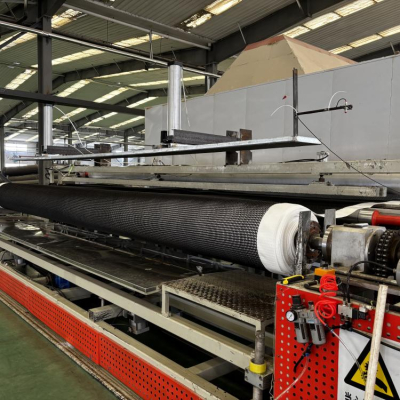
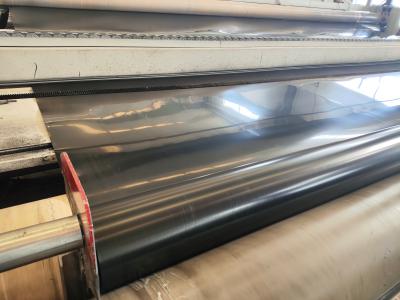
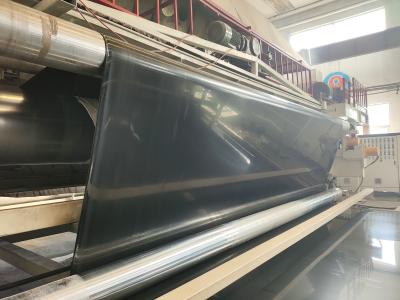
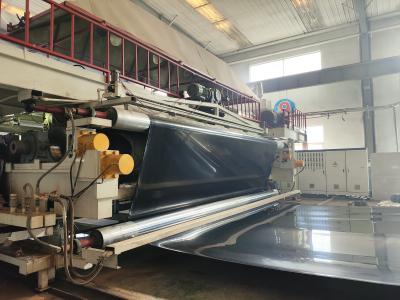
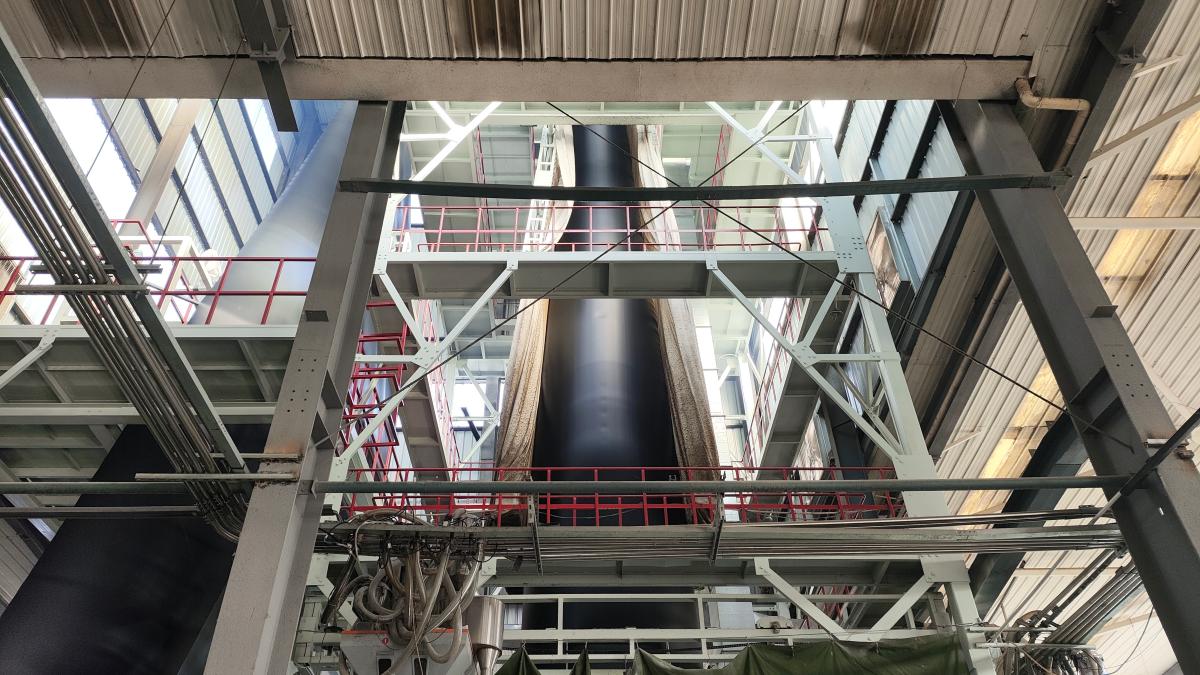
The production of HDPE Impermeable Liner involves extrusion and calendering. The process begins with blending virgin HDPE resin with carbon black masterbatch and antioxidants. The compounded material is then extruded through either a flat die (cast film) or circular die (blown film) .
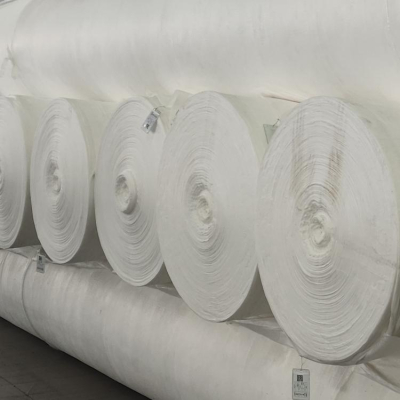
Flat die extrusion produces thicknesses from 30 mil to 120 mil with widths up to 15 feet per extruder. Blown film extrusion can achieve widths up to 35 feet when opened. The sheet is cooled on sizing rollers, inspected for thickness and surface defects, and wound onto cores for shipment .
Traceability is essential. Every production lot should be sampled and tested, with results recorded on a Mill Test Report documenting actual values for thickness, tensile strength, puncture resistance, carbon black content, and OIT.
Real-World Applications and Case Studies
Sarasota Landfill Leachate Ponds, Florida
COMANCO Environmental completed a leachate collection system installation at a central Florida county landfill in January 2026. The project involved a 1-acre leachate pond liner system consisting of a double synthetic liner configuration .
The system included:
Secondary 60 mil (1.5 mm) textured HDPE Impermeable Liner
300 mil double-sided geocomposite
Primary 60 mil textured HDPE Impermeable Liner
All liner components were installed with a 3-foot overlap to form an effective leachate detection system. The project required installation within tight working spaces and around a large concrete wall, with coordination of multiple material types across two ponds during Florida’s rainy season .
Bacolod Sanitary Landfill, Philippines
The City of Bacolod required a long-term containment solution for its growing solid waste management needs. For the sanitary landfill in Brgy. Felisa, the design called for a dual-liner system to prevent leachate from contaminating surrounding soil and groundwater .
Maccaferri Philippines supplied both a Geosynthetic Clay Liner (GCL) and a 1.5mm HDPE Impermeable Liner. The GCL served as the secondary barrier, offering low permeability and self-sealing characteristics. The HDPE liner was installed as the primary barrier, providing superior chemical resistance and durability against punctures and environmental stress .
A1 Highway Attenuation Pond, Austria
Along the A1 Highway in Wolfsbach, Austria, a new attenuation pond was designed to capture water run-off and vehicle pollutants, including oil, diesel, and chemicals. The pond was lined with a HDPE Impermeable Liner and protected using a non-woven geotextile, then covered with Concrete Canvas CCX-M® .
The installation was completed within 5 days, with the client reporting approximately 40% cost savings compared to standard concrete. The HDPE liner provided the primary containment barrier, while the CCX-M® provided durable protection .
Selecting a Reliable HDPE Geomembrane Supplier
Key Evaluation Criteria
When sourcing HDPE Impermeable Liner, verify these essential items with potential suppliers:
Certifications — GRI-GM13 or ASTM compliance with third-party validation. For projects in India, IS 16352:2020 certification is mandatory under the government’s Quality Control Order effective January 2024 .
Material Traceability — 100% virgin resin from reputable suppliers. The formulation should use 95–98% HDPE resin with 2–3% carbon black .
Mill Test Reports — Lot-specific documentation showing actual test values for thickness, tensile strength, puncture resistance, carbon black content, and OIT.
Production Capacity — Leading manufacturers like Haoyang Environmental operate over 26 production lines with annual capacity exceeding 93,500 tons, offering 10-meter wide geomembranes that reduce installation time and seam risks .
Testing Capability — GAI-LAP accredited laboratory or third-party validation from SGS, Intertek, or Bureau Veritas.
Warranty — Minimum 20-year manufacturer warranty for HDPE Impermeable Liner meeting GRI-GM13 standards.
Market Leaders
Major global suppliers include Solmax, AGRU, JUTA, Sotrafa, Officine Maccaferri, Atarfil, PLASTIKA KRITIS, Seaman, and Naue. Chinese manufacturers including BPM Geosynthetics, HongXiang New Geo-Material, and Shandong Haoyang also hold significant market positions .
Frequently Asked Questions
Q1: What thickness of HDPE Impermeable Liner do I need?
Thickness depends on application risk level:
0.75–1.0 mm: Aquaculture ponds, secondary containment, canal lining
1.5 mm: Municipal landfills, mining heap leach pads, reservoirs
2.0 mm: Hazardous waste landfills, high-risk mining applications
2.5–3.0 mm: Extreme chemical exposure, high-pressure applications
The Bacolod Sanitary Landfill used 1.5mm HDPE Impermeable Liner as its primary barrier .
Q2: How long will an HDPE Impermeable Liner last?
Properly manufactured and installed HDPE Impermeable Liner with adequate UV stabilization demonstrates service life of 50 years or more. Underground applications can exceed this due to protection from UV exposure .
Q3: What is the difference between smooth and textured HDPE liner?
Smooth HDPE Impermeable Membrane offers superior weldability and lower cost for flat areas. Textured liner provides approximately three times higher friction on slopes and is required for slopes exceeding 3H:1V. The Sarasota landfill used textured liner on both primary and secondary layers .
Q4: What certifications should an HDPE Impermeable Liner meet?
Require GRI-GM13 certification with lot-specific Mill Test Reports. Key properties: density ≥0.940 g/cm³, tensile yield based on thickness, puncture resistance per thickness, carbon black 2.0–3.0%, and stress crack resistance ≥500 hours. For projects in India, IS 16352:2020 is mandatory .
Q5: How are HDPE Impermeable Liner seams tested?
Seams undergo non-destructive testing (air pressure, vacuum box, or spark testing) on 100% of seams and destructive testing (shear and peel tests) on samples taken at minimum one per 300 meters of seam length.
Conclusion: Verified Specifications Over Apparent Savings
The global market for HDPE Impermeable Liner offers abundant supply at competitive price levels. The risk for buyers is not supply failure but specification failure—accepting material that appears similar to certified products but lacks the documented properties required for decades of service.
Real-world projects demonstrate that success depends on verified performance: the Sarasota landfill required double synthetic liner configuration with 60 mil textured HDPE ; the Bacolod Sanitary Landfill used a dual GCL and HDPE liner system ; the A1 Highway attenuation pond achieved 40% cost savings with proper liner installation .
Professional buyers reduce risk through three actions:
Write specifications referencing recognized international standards (GRI-GM13, ASTM D7176, IS 16352)
Demand lot-specific Mill Test Reports before any material ships
Select HDPE Geomembrane Supplier partners who provide comprehensive test data, material traceability, and documented project references
The most cost-effective HDPE Impermeable Membrane is not the one with the lowest initial price, but the one that delivers verified performance throughout the project's design life.
Procurement Resource: Our HDPE Impermeable Liner Technical Specification Template and Supplier Audit Checklist are available without charge. These documents reflect field experience across landfill, mining, and water infrastructure projects worldwide.
Contact our technical sales engineering team for a specification review, to request lot-specific Mill Test Reports, or to discuss project-specific HDPE Impermeable Membrane requirements for your next inquiry.