HDPE Geomembrane in 2026: A Practical Guide to Market Trends, Specifications, and Long-Term Performance
Introduction
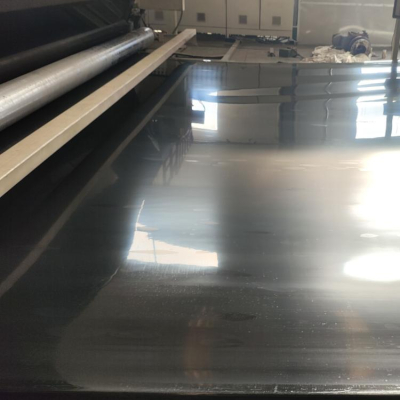
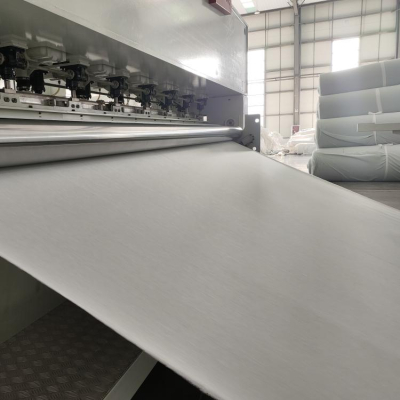
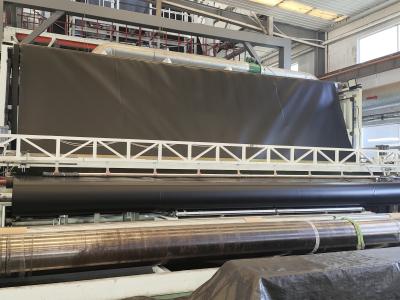
Look at any major containment project—a lined landfill, a heap leach pad, a reservoir—and chances are the barrier layer is Geomembrane in HDPE. Engineers keep specifying it because it works. Low permeability, chemical resistance, and a track record that spans decades give them confidence.
The market numbers reflect that trust. The HDPE anti-seepage geomembrane sector grew from $1.75 billion in 2025 to $1.89 billion in 2026, a 7.7% increase . By 2030, it is expected to hit $2.51 billion. Mining, waste containment, and water storage are the main drivers.
So what do you actually need to know about Geomembrane in HDPE in 2026? This guide covers the standards that matter, how the material holds up in aggressive mining conditions over 10-plus years, and what to check before you place an order.
 |  |  |
What Is Pushing Demand Right Now
Three Key Factors
Regulations are tightening. Subtitle D in the US and the EU Landfill Directive both require certified liner systems. If you are upgrading an older facility, you cannot avoid installing a Waterproof Geomembrane that meets current standards.
Mining keeps growing. Heap leach pads and tailings dams need reliable barriers. UK mining investment jumped £1.3 billion ($1.66 billion) in July 2025 alone—a 32% year-on-year rise. Similar trends are visible in Australia and Chile.
Water is getting scarce. Reservoir and canal projects are using Mine Dam Liner to cut seepage losses. In 2026, dam lining alone accounted for over 300 million square meters of geomembrane, with HDPE taking roughly 70% of that business.
Where the Material Comes From
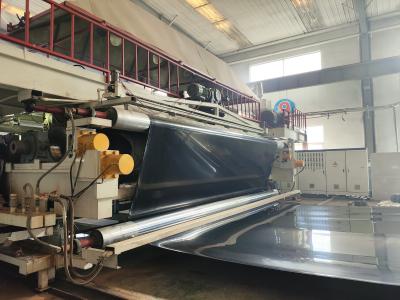
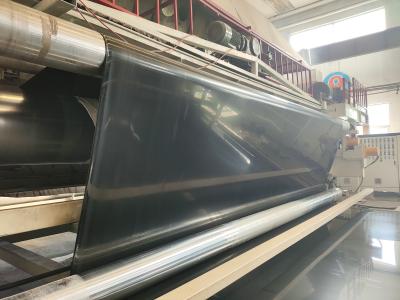
Most Geomembrane in HDPE is produced in Asia-Pacific, particularly in China’s Shandong Province. The clusters there have integrated supply chains and good port access . North American and European production tends to be smaller but comes with stricter QA standards. GRI-GM13 compliance and third-party testing are the norm in those markets.
Technical Standards — What to Check
The Resin Recipe
A proper Waterproof Geomembrane uses virgin HDPE resin with a density between 0.940 and 0.960 g/cm³. The mix is roughly:
95–98% HDPE
2–3% carbon black (20–40 nm) for UV resistance
0.25–1.0% antioxidants and processing aids
Carbon black dispersion should be A-1, A-2, or B-1 per ASTM standards. If it is not, UV protection will be uneven, and the liner will age faster.
GRI-GM13 Minimums
Most specs reference GRI-GM13 or ASTM D7176. The table below shows the key numbers for 1.0mm to 2.5mm sheets :
| Property | 1.0mm | 1.5mm | 2.0mm | 2.5mm |
| Density (min, g/cm³) | 0.940 | 0.940 | 0.940 | 0.940 |
| Tensile Yield (kN/m) | 15 | 22 | 29 | 37 |
| Puncture Resistance (N) | 320 | 480 | 640 | 800 |
| Stress Crack Resistance (hrs) | 500 | 500 | 500 | 500 |
| Carbon Black (%) | 2.0-3.0 | 2.0-3.0 | 2.0-3.0 | 2.0-3.0 |
| Std-OIT (min) | 100 | 100 | 100 | 100 |
| HP-OIT (min) | 400 | 400 | 400 | 400 |
Meeting these numbers gives you 99.9% containment efficiency. For mining, the liner also needs to handle aggressive solutions with pH from 8 up to 13.5 .
Smooth vs. Textured — A Practical Choice
Geomembrane in HDPE comes in both finishes . Textured sheet has a higher friction angle, which matters on slopes. If you are building a landfill or a tailings dam with slopes up to 1.5H:1V, textured material helps prevent slippage .
For flat areas—pond bottoms, canal beds, base liners—smooth is the better choice. It welds more easily and costs 20–40% less .
How It Performs — Real Data from the Field
10-Year Study, Brazilian Gold Mine
A 2024 paper in E3S Web of Conferences looked at an HDPE geomembrane that had been in service for 10 years at a gold mining dam in Brazil. The waste stored there had an average pH of 8 and contained cyanide.
Researchers exhumed samples from three exposure conditions: weather only, waste plus weather, and field seams plus tailings. They ran tensile, tear, puncture, and stress crack tests.
What they found:
No meaningful loss in tensile resistance
No increase in deformation
No significant degradation overall—except in stress crack resistance, which was lower
The liner may still be serviceable. But the team recommended ongoing monitoring, especially around stress crack performance.
12-Year Study, Gold Tailings Pond
Another 2025 study, also in E3S Web of Conferences, examined a 2.0mm HDPE geomembrane after 12 years at a gold tailings facility in Brazil. They used non-parametric statistical methods to evaluate samples from multiple locations on the dam.
Key observations:
Failure probability in tensile strength was 19% — meaning an 81% success rate as a hydraulic barrier
Stress crack resistance in all samples still exceeded 50% of the GRI-GM13 minimum
Std-OIT dropped to just 14% of the GRI-GM13 minimum — a clear sign of antioxidant depletion
HP-OIT held up better, only dropping to 80% of the minimum
Environmental sampling showed no significant contamination, confirming the liner was still doing its job
What this means for you: A properly specified Waterproof Geomembrane can last more than a decade in tough mining conditions. But the sharp drop in Std-OIT is a reminder that antioxidant packages need monitoring over time.
Installation Example — Laonil Lake Mine Dam
A dam raise project at Laonil Lake in Saskatchewan shows what field installation of Mine Dam Liner can look like. The site was remote, which complicated logistics. The slopes were steep — up to 1.5H:1V (about 34 degrees) — and the dam was 22 meters tall.
What they installed:
12,750 m² of 2.0mm (80 mil) smooth HDPE liner
12 oz nonwoven geotextile
Safety lanyards for crews working on slopes
Daily pre-work safety briefings
The project finished ahead of schedule. The contractor got cost savings and positive feedback from the client.
HDPE geomembrane is used in a wide range of applications: landfill liners, heap leach pads, pond liners, canal linings, retention basins, wastewater lagoons, and secondary containment .
Supplier Selection — What Matters
Your Checklist
When you are sourcing Waterproof Geomembrane, go through this list:
Certifications – GRI-GM13 or ASTM D7176, ideally with third-party validation . The 10-year Brazilian study confirmed that GRI-GM13 is a solid benchmark.
Resin source – 100% virgin resin from Dow, ExxonMobil, Borealis, or similar. Recycled content is not acceptable for primary containment .
Mill Test Reports – Lot-specific documents with actual values for thickness, tensile, puncture, carbon black, and OIT . Generic certificates are not enough.
Testing lab – GAI-LAP accredited or third-party validation from SGS, Intertek, or Bureau Veritas.
Warranty – 20-year minimum for Geomembrane in HDPE that meets GRI-GM13.
Red Flags
Watch out for suppliers who:
Won't share lot-specific Mill Test Reports
Quote prices well below market without a clear reason
Give vague answers about resin or additives
Lack third-party certifications
Offer carbon black content below 2.0% — that means poor UV protection
Frequently Asked Questions
Q1: What is Geomembrane in HDPE used for?
It is a high-density polyethylene sheet used to stop fluid migration in landfills, mines, and water storage . Its chemical resistance and durability make it a standard choice for environmental and civil engineering projects .
Q2: What thickness is typical for mine dams?
For mining, 1.5mm to 2.0mm is the standard range. The Brazilian studies looked at 2.0mm liners after 10–12 years of service. The Laonil Lake project also used 2.0mm.
Q3: How long does it last in mining conditions?
Field data shows effective performance beyond 10–12 years in aggressive environments with pH 8 and cyanide. With proper protection, it can last much longer.
Q4: Should I choose smooth or textured geomembrane?
Textured gives you more friction on slopes, which is critical for stability . Smooth is easier to weld and costs less. Use smooth on flat areas; use textured on slopes steeper than 3H:1V .
Q5: What certifications should I require?
Require GRI-GM13 and demand lot-specific Mill Test Reports. Check density (≥0.940), tensile yield by thickness, puncture resistance, carbon black (2.0–3.0%), Std-OIT (≥100 min), and HP-OIT (≥400 min) .
Conclusion: Buy Performance, Not Just Price
There is no shortage of Geomembrane in HDPE suppliers. The hard part is finding one that delivers what they promise. A low price does not help if the liner fails in five years.
Field data tells us that properly specified Waterproof Geomembrane works reliably in aggressive mining conditions for over a decade. The Brazilian studies showed an 81% success rate for a 2.0mm liner after 12 years. The Laonil Lake project finished early despite difficult site conditions.
Three steps lower your risk:
Write specs that reference GRI-GM13 or ASTM D7176.
Demand lot-specific Mill Test Reports before any shipment.
Work with suppliers who give you real test data, full traceability, and credible project references.
The cheapest Mine Dam Liner is rarely the best value. The best value is the one that performs for the full design life.
Procurement Resource: Our HDPE Geomembrane Technical Specification Template and Supplier Audit Checklist are available at no charge. They are based on real project experience across landfills, mines, and water infrastructure.
Contact our technical sales team to review your specs, request Mill Test Reports, or discuss project-specific Geomembrane in HDPE requirements.