GSM Geotextile: What the Weight Number Actually Tells Procurement Professionals
A contractor in the southeastern United States once shared a story that changed how he buys geotextiles. His firm won a state road project. The specification called for Geotextile 200 g. He found a supplier offering fabric that met the weight requirement at a price well below competitors. The rolls arrived, the crew installed them, and the road was paved.
Eighteen months later, sections of that road began showing cracks and settlement. When crews excavated the failed areas, they found the Nonwoven Geotextile had torn during installation. Small punctures from the aggregate had let subgrade soil migrate up into the base layer. The fabric met the specified weight. But its puncture resistance was too low for the sharp rock used on that job.
The replacement cost ate the profit from the entire project. He now asks for puncture test data on every geotextile he buys—and ignores anyone who tries to sell him based on GSM alone.
For procurement professionals and civil engineers, this story highlights a basic reality. Weight is easy to measure and easy to specify. But weight alone tells you almost nothing about whether a fabric will survive installation or perform over decades of service.
 |  |  |
Why Weight Became the Standard Specification
Walk onto any infrastructure project site, and you will hear people talking about geotextiles by weight. "We need Geotextile 200 g for the separation layer." "The spec calls for 300gsm Nonwoven Geotextile under the aggregate." Weight-based specifications are everywhere because they are simple. Engineers can write them quickly. Contractors know what to order. Suppliers know what to quote.
The Asia-Pacific region accounts for 35 percent of global geotextile consumption, driven by infrastructure investments across China and India . Road construction alone consumes 35 to 42 percent of all geotextiles . In these markets, GSM Geotextile products specified by weight dominate procurement.
But simplicity has a downside. Two fabrics with identical GSM can perform dramatically differently. A Nonwoven Geotextile made with consistent fiber distribution and adequate needle-punch density will resist puncture far better than a fabric of the same weight made with lower-quality materials and less careful manufacturing. The weight number does not reveal this difference.
What GSM Actually Measures
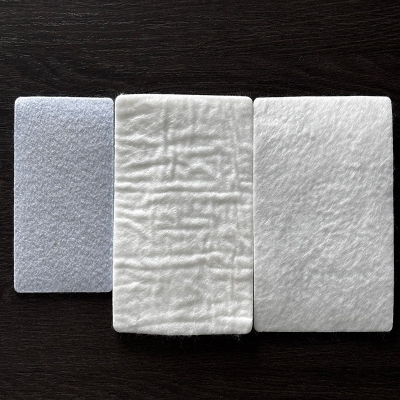
The manufacturing process for GSM Geotextile starts with polymer pellets—usually polypropylene for chemical resistance, or polyester where higher strength is needed. These pellets are melted and extruded into fibers, laid into a web, and bonded through needle-punching. The resulting fabric is weighed, and the mass per square meter is reported as GSM.
But several other factors determine whether a Nonwoven Geotextile will perform as needed:
1.Polymer quality: Virgin resin performs differently than recycled or off-spec material
2.Fiber distribution: Consistent laydown across the web ensures uniform properties
3.Needle-punch density: More needles per square meter create stronger entanglement
4.Additive packages: UV stabilizers and antioxidants affect long-term durability
A Geotextile 200 g product from a manufacturer with robust quality control will have consistent tensile strength, puncture resistance, and permeability from roll to roll. The same weight fabric from a supplier focused on hitting a low price may exhibit variability that compromises long-term performance.
What Research Shows About Geotextile Failure
A 2021 study published in Waste Management tracked Nonwoven Geotextile performance in landfill leachate collection systems . The researchers found that geotextiles exposed to fine particles and biological activity clogged far faster than design assumptions predicted. Within one to two years, hydraulic conductivity dropped to between 10⁻⁸ and 10⁻⁹ meters per second .
This research matters for anyone specifying GSM Geotextile. A weight that performs adequately in a clean drainage application may be completely insufficient in an environment with high fines or biological activity. The weight number does not tell you this.
An Australian road project from 2018 offers a different perspective. The contractor specified a 300gsm needle-punched Nonwoven Geotextile for subgrade protection and drainage across more than 20,000 square meters . Laboratory testing confirmed the material met project requirements before installation. The project succeeded because specification was backed by verification.
What Buyers Check Beyond the Weight Number
Procurement professionals who have dealt with failed geotextile installations tend to look at several factors when evaluating GSM Geotextile products.
First, they ask for tensile test data from multiple production lots. A single test result tells you little. Consistent results across lots tell you the manufacturer controls their process.
Second, they request references from projects with similar conditions. A Geotextile 200 g that worked in a highway job in Germany may not be right for a port facility in Indonesia.
Third, they verify that the Nonwoven Geotextile being offered matches certification requirements for their region. CE marking in Europe, ASTM standards in North America—a supplier who understands these regional differences is worth more than one offering a single product for every market.
Fourth, they check the supplier's ability to deliver consistent quality across large orders. If rolls from different batches have different properties, designers cannot rely on the geotextile performing as intended.
Questions Worth Asking Before You Specify
Q1: What does Geotextile 200 g actually guarantee?
Weight alone guarantees nothing. Geotextile 200 g tells you the fabric weighs 200 grams per square meter. It does not tell you its tensile strength, puncture resistance, or how long it will last. Two fabrics with identical weight can have very different properties depending on polymer quality and manufacturing consistency. Always request certified test data for the properties that matter to your application.
Q2: Is a heavier GSM geotextile always better?
Not necessarily. A heavier GSM Geotextile generally provides higher tensile strength and puncture resistance, which may be necessary for demanding applications like heavy traffic roads or sharp aggregate conditions. However, a lighter fabric with optimized properties may be perfectly adequate for separation applications while offering lower material cost. The appropriate weight depends on site-specific conditions, not a general rule.
Q3: What is the difference between a 200gsm nonwoven and a 200gsm woven?
A Nonwoven Geotextile is manufactured through needle-punching, creating a three-dimensional fiber matrix with high permeability and excellent filtration properties. A woven geotextile is manufactured by interlacing yarns, resulting in higher tensile strength and lower elongation. Nonwovens are preferred for filtration and drainage. Wovens are preferred for reinforcement. The same GSM weight does not mean they perform the same functions.
Q4: How do I make sure delivered geotextile matches what I specified?
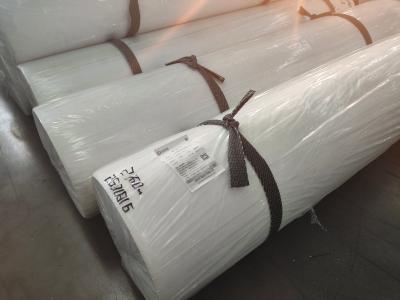
Request Mill Test Reports for each production lot and compare the reported values to your specification requirements. For critical projects, consider independent testing of samples from delivered rolls. Do a visual check for consistent appearance, no damage, and proper labeling. Some manufacturers now provide QR code tracking that links each roll to its production data.
Q5: What does the landfill research tell us about geotextile clogging?
The 2021 study showed that Nonwoven Geotextile in environments with high fines and biological activity can lose hydraulic conductivity within one to two years . For applications where clogging is a concern, specify fabrics with documented long-term flow reduction factors based on extended testing. Do not assume that a weight that works for clean drainage will work for challenging conditions.
Moving Beyond Weight-Based Specification
The industry is slowly shifting from specification by weight alone toward performance-based requirements. Engineers increasingly ask for certified test data on tensile strength, puncture resistance, and permittivity—properties that actually determine field performance.
Suppliers who understand this shift set themselves apart by offering technical support, not just price quotes. They have engineers who can review soil reports, recommend appropriate Nonwoven Geotextile products, and explain why. They maintain test labs and make quality data available.
For procurement professionals, moving beyond weight-based specification means asking different questions. Instead of "What is your price for Geotextile 200 g?" the better question is "What does our project actually need, and can you help us figure that out?"
Before you send out your next tender for geotextile materials, try a different approach. Send your project's geotechnical information and application requirements to our technical team. We will give you a no-obligation analysis of what GSM Geotextile or Nonwoven Geotextile specification makes sense for your specific conditions, including certified performance data and references from similar installations.