Global Surge in Geocomposite Demand: Why Triangle Drainage Net Leads Infrastructure Innovation
Meta Title : Triangle Drainage Net: Driving $4.6B Geocomposite Market Growth by 2033
Meta Description : Global geocomposite market hits $2.4B in 2026. Discover how Triangle Drainage Net technology with Nonwoven Geotextile integration is transforming landfill, dam, and transport projects worldwide.
 |  |  |
Introduction: The Drainage Revolution Reshaping Civil Engineering
The global geocomposites market is experiencing unprecedented momentum. Valued at USD 2.4 billion in 2026, the industry is projected to reach USD 4.6 billion by 2033, expanding at a robust CAGR of 9.8% . This growth trajectory reflects a fundamental shift in how engineers approach water management across infrastructure sectors. At the heart of this transformation lies the Triangle Drainage Net—a triplanar geocomposite technology that has redefined performance expectations for subsurface drainage systems.
Unlike conventional aggregate drains that consume valuable space and degrade over time, the Triangle Drainage Net combines high-flow capacity with exceptional compressive strength. Its three-dimensional HDPE core, featuring intersecting ribs at precise sixty-degree angles, creates preferential flow paths that maintain hydraulic efficiency even under extreme loads . When integrated with Nonwoven Geotextile filtration layers, these systems deliver what engineers have long sought: predictable, verifiable, and permanent drainage performance.
Industry analysts confirm that drainage geocomposites now command 42% of the total geocomposites market, driven by critical applications in road construction, landfill engineering, and water containment . This article examines the technological innovations, market dynamics, and real-world applications positioning the Triangle Drainage Net as the preferred solution for twenty-first century infrastructure challenges.
Market Dynamics Driving Adoption
Infrastructure Investment Surge
Global infrastructure spending has accelerated dramatically, with construction activities rising nearly 14% in key emerging markets during 2025 . Roads and highways account for 38% of geocomposite applications, as transportation agencies recognize that effective drainage directly correlates with pavement longevity and reduced maintenance costs . The Triangle Drainage Net addresses this need by providing consistent hydraulic performance that aggregate systems cannot guarantee.
Asia Pacific leads regional growth, contributing over 35% of market share through massive infrastructure programs in China and India . Government allocations exceeding USD 7 billion toward green infrastructure projects in 2025 have accelerated adoption of advanced geosynthetics. Meanwhile, North America exhibits the fastest growth at 11.2% CAGR, supported by stringent environmental regulations and federal infrastructure funding that increased 15% in 2025 alone .
Regulatory Pressure and Environmental Compliance
Environmental protection mandates are reshaping construction practices worldwide. Landfill and waste management applications represent the fastest-growing segment, reflecting tightened regulations governing leachate containment and groundwater protection . When installed in contact with Dam liners, the Triangle Drainage Net provides essential drainage that prevents hydrostatic pressure buildup—a critical safety function that regulators increasingly require for water containment facilities.
The integration of Nonwoven Geotextile components ensures long-term filtration performance, preventing the soil migration that compromises conventional drainage systems. This filtration capability proves essential for meeting environmental compliance standards, particularly in sensitive applications such as landfill capping systems and contaminated site remediation.
Technological Innovation in Triangle Drainage Net Design
Triplanar Geometry and Load Resistance
The engineering distinction of the Triangle Drainage Net lies in its triplanar core configuration. Unlike biplanar nets where two rib sets cross at angles, the triplanar design incorporates three distinct layers—two intersecting at sixty degrees with a longitudinal strand that maintains flow continuity under compression . This architecture prevents the "geotextile intrusion" phenomenon that can block flow channels in simpler geometries, ensuring consistent hydraulic transmissivity even at confining pressures exceeding 500 kPa .
Standard core thickness ranges from 5.0 to 9.0 millimeters, with hydraulic conductivity values reaching 5.0×10⁻³ m²/s under ASTM D4716 testing protocols . The HDPE formulation includes 2% carbon black for UV stabilization, providing resistance to degradation during construction exposure and decades of buried service .
Filtration Integration with Nonwoven Geotextile
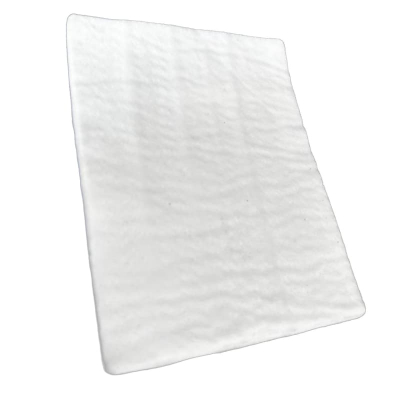
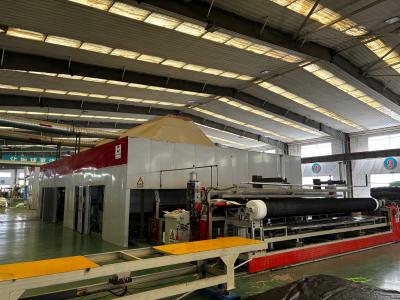
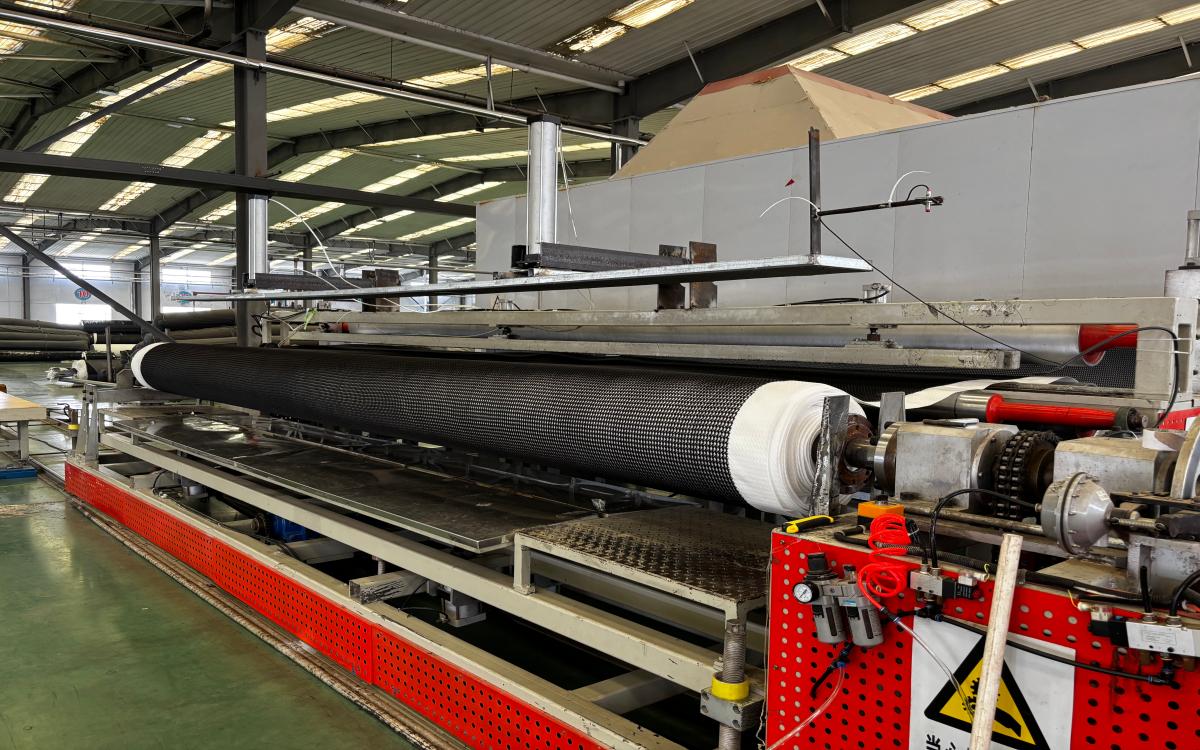
The thermal bonding process that attaches Nonwoven Geotextile to the geonet core creates a permanent composite structure. Needle-punched polypropylene or polyester fabrics provide pore sizes engineered to retain site-specific soil particles while passing water freely . Geotextile mass typically ranges from 200 to 400 grams per square meter, selected based on filtration requirements and anticipated loading conditions .
This integration serves multiple functions simultaneously: filtration prevents soil migration into drainage channels, separation maintains material boundaries, and protection shields underlying geomembranes from puncture . The result is a unified system that replaces multiple construction layers with a single, installable product.
Manufacturing Breakthroughs
Recent advances in polymer technology have expanded design possibilities. In June 2024, Geofabrics Australasia launched geocomposites manufactured from 100% recycled materials, maintaining mechanical performance while supporting circular economy objectives . Smart geocomposite systems with embedded sensors are gaining traction, enabling real-time monitoring of moisture conditions and predictive infrastructure maintenance .
Critical Applications and Performance Validation
Landfill Engineering: The ANSTO Case Study
The Australian Nuclear Science and Technology Organisation (ANSTO) Little Forest Legacy Site project exemplifies the Triangle Drainage Net's capabilities in demanding environmental applications. The site required an advanced capping system for waste disposal trenches containing historical buried materials, with strict requirements to limit rainfall infiltration and prevent radionuclide migration into groundwater .
Engineers selected a triplanar geonet with minimum transmissivity of 2.60×10⁻³ m²/s and tensile strength of 12 kN/m. The Triangle Drainage Net was installed beneath the geomembrane capping layer, providing critical drainage while protecting the liner from hydrostatic pressure. Traditional aggregate drainage was deemed impractical due to bulk, cost, and long-term clogging potential. The geocomposite solution delivered lightweight installation, rapid deployment, and verified performance meeting the site's 10-15 year design life requirements .
Transportation Infrastructure
Highway engineers increasingly specify Triangle Drainage Net systems for subgrade drainage, pavement edge drains, and retaining wall applications. The material's ability to withstand dynamic traffic loading while maintaining flow capacity proves essential for transportation corridors . Railway projects utilize similar configurations to drain track ballast and prevent fine soil pumping that leads to settlement and maintenance requirements .
When installed behind retaining walls or beneath pavement sections, the geocomposite intercepts groundwater before it can build pressure or soften subgrades. The Nonwoven Geotextile component prevents migration of fine particles that would otherwise clog drainage pathways, ensuring long-term performance without maintenance .
Water Containment and Dam Liners
In water containment applications, the Triangle Drainage Net provides essential protection for Dam liners and reservoir membranes. By collecting seepage and groundwater that reaches the liner surface, the geocomposite prevents hydrostatic pressure development that could stress or puncture the impermeable barrier . This drainage function proves particularly critical in pumped storage projects, irrigation reservoirs, and mining tailings facilities where liner integrity directly affects environmental safety.
The chemical resistance of HDPE ensures reliable performance in aggressive water chemistries, while the geotextile component protects the liner from puncture by overlying materials . Engineers designing water containment systems increasingly specify geocomposite drainage layers as standard practice, recognizing that the thin, reliable drainage layer provides insurance against catastrophic liner failure.
Installation Methodology and Quality Control
Site Preparation and Deployment
Proper installation begins with subgrade preparation—removing rocks, roots, and debris that could puncture the material. The surface should be smooth and firm, particularly in applications involving Dam liners where additional care prevents barrier contact with sharp objects .
Rolls are positioned at the high point of the drainage area and unrolled downslope. Overlap distances typically range from 100 to 300 millimeters, determined by site-specific loading conditions and engineering specifications. Adjacent rolls connect through simple overlaps or specialized fasteners for critical applications requiring enhanced connection integrity.
Backfilling and Quality Assurance
Cover material should be placed immediately after geocomposite deployment to prevent UV exposure and wind damage. Progressive loading from light equipment to final grade allows the Triangle Drainage Net to compress gradually while maintaining flow capacity. Quality control documentation should include roll numbers, installation locations, and photographs of critical connections before backfilling .
Field quality assurance typically verifies overlap dimensions, confirms intimate contact with underlying surfaces, and documents any repairs. Localized damage can be repaired with patches extending 300 millimeters beyond the damaged area, matching original material thickness and maintaining continuous drainage paths .
Market Outlook and Future Developments
Growth Projections Through 2033
The geocomposites market outlook remains strongly positive, driven by infrastructure renewal programs, environmental protection priorities, and demand for efficient construction materials . Increasing investment in transportation networks, waste containment facilities, and resilient urban infrastructure will sustain demand for high-performance drainage solutions through the forecast period.
Drainage geocomposites will maintain their dominant market position as engineers recognize the lifecycle cost advantages of manufactured drainage systems over traditional aggregates. The 42% market share held by drainage products reflects their critical role in infrastructure performance .
Emerging Technologies
Innovation continues to expand application possibilities. Smart geocomposite systems incorporating sensor layers enable real-time moisture monitoring and adaptive drainage control . These technologies support predictive maintenance approaches that optimize infrastructure management and extend service life.
Sustainability considerations are driving development of recyclable and bio-based polymer components. The introduction of 100% recycled material geocomposites demonstrates that environmental objectives can align with performance requirements . As global infrastructure standards evolve, integrated design approaches using geocomposites will become increasingly common, reducing construction timelines and lifecycle costs.
Frequently Asked Questions
Q: How does Triangle Drainage Net compare to conventional gravel drainage layers?
A: The Triangle Drainage Net provides equivalent or superior drainage capacity in a 5-9mm thickness compared to 300mm of gravel. Installation completes in days rather than weeks, performance is laboratory-verified rather than variable, and the bonded Nonwoven Geotextile prevents the long-term clogging that inevitably affects aggregate systems .
Q: Can this product be used with Dam liners in water containment applications?
A: Yes, and this represents a critical application. When installed in contact with Dam liners, the Triangle Drainage Net collects any seepage or groundwater reaching the liner surface, conveying it to collection points and preventing hydrostatic pressure that could stress or puncture the impermeable barrier .
Q: What loads can the material withstand without losing drainage capacity?
A: Standard grades maintain hydraulic transmissivity under confining pressures of 200-300 kPa, representing 40-60 feet of soil cover. Heavy-duty grades handle 500 kPa or more, equivalent to waste heights exceeding 100 feet . Laboratory testing under ASTM D4716 provides specific performance data for each product grade .
Q: How is the geotextile attached to the geonet core?
A: Thermal bonding uses heat and pressure to fuse the Nonwoven Geotextile to the geonet ribs at thousands of contact points. This creates a permanent connection that survives installation dragging, backfilling operations, and decades of underground service without delamination .
Q: What quality certifications should specifiers look for?
A: Reputable manufacturers maintain ISO 9001 quality management certification, with products tested to ASTM standards including D4716 for transmissivity, D5199 for thickness, and D1505 for density . Third-party verification through organizations such as SGS or BV provides additional assurance.
Conclusion: Engineering Confidence Through Innovation
The global infrastructure community has reached consensus: manufactured drainage systems outperform aggregate alternatives across every relevant metric. The Triangle Drainage Net exemplifies this advancement, delivering verified hydraulic performance, space efficiency, and long-term reliability that stone simply cannot match.
Market projections through 2033 confirm accelerating adoption, driven by infrastructure investment, environmental regulation, and demonstrated project success. From the ANSTO remediation site to highway projects across Asia Pacific, engineers are specifying triplanar geocomposites with confidence, knowing that laboratory-tested performance will translate to field results.
For specifiers seeking drainage solutions that eliminate variables and guarantee performance, the evidence supports one conclusion: the Triangle Drainage Net represents not just an alternative to conventional methods, but a fundamental improvement in drainage engineering.
Professional Consultation and Technical Support
Our engineering team assists with product selection, specification development, and installation guidance for projects worldwide. We provide technical data sheets, design calculations, and sample materials for project-specific evaluation.
Contact our geosynthetics specialists:
1.Request product samples for laboratory testing
2.Obtain project-specific design recommendations
3.Schedule technical presentations for your engineering team
4.Receive installation support for critical applications
*ISO 9001 certified manufacturing • Third-party tested performance • Global shipping capabilities*