The Global HDPE Impermeable Membrane Market 2026: Technical Specifications, Cost Analysis, and Strategic Procurement
Introduction: The Critical Role of HDPE Impermeable Membrane in Modern Containment
Few materials carry the engineering confidence that HDPE Impermeable Membrane does. Across mining operations, landfill cells, and water containment facilities, this material has become the default choice where failure is not an option. The reasons are straightforward: consistent chemical resistance, documented long-term performance, and a track record that spans decades.
The market dynamics around HDPE Impermeable Membrane have shifted in recent years. Raw material costs, regional supply chains, and tighter environmental rules are reshaping how buyers approach these purchases. In July 2025, UK mining and quarrying investment rose by £1.3 billion ($1.66 billion)—a 31.9 percent jump year-over-year . That kind of capital spending translates directly into demand for reliable containment. This report examines the current state of the HDPE Impermeable Membrane market, with a focus on clear specifications, realistic HDPE Liner Cost figures, and examples of how these materials perform in the field.
 |  |  |
Market Context: Where Demand Comes From
A Market That Keeps Growing
The numbers tell a clear story. The global high-density polyethylene geomembrane sector was valued at USD 1.75 billion in 2025 and climbed to USD 1.89 billion in 2026, a growth rate of 7.7 percent . Looking ahead, industry analysts expect the market to reach USD 2.51 billion by 2030 at a CAGR of 7.4 percent . Within that total, HDPE Impermeable Membrane accounts for roughly 40 to 55 percent, making it the dominant polymer choice by a wide margin.
What Is Pushing Demand
Mining Investment
When mineral prices are strong, mining companies spend on new leach pads and tailings facilities. Those projects nearly always specify HDPE Impermeable Membrane because of its ability to handle acidic or alkaline solutions without degrading. The recent surge in UK mining investment reflects broader global trends seen in Australia, Chile, and West Africa .
Water Storage Pressures
Water scarcity is not a future problem—it is a current one. The UN estimates that over two billion people already face high water stress . In response, governments and private operators are building reservoirs and lining canals to cut seepage losses. An unlined earthen basin can lose up to 85 percent of stored water; a properly installed HDPE Impermeable Membrane virtually eliminates that loss .
Regulatory Tightening
Environmental agencies in North America, Europe, and parts of Asia are raising minimum liner standards. Materials that passed inspection a decade ago now fail. For owners, the choice is simple: install certified HDPE Impermeable Membrane or risk permit denial, fines, and long-term liability. Tariffs have also affected the market by increasing the cost of imported polymer resins and manufacturing equipment, particularly in regions dependent on imported raw materials .
Regional Cost Differences
Where a project is located affects HDPE Liner Cost more than many buyers expect.
North America: Prices for 2mm HDPE Liner typically run USD 3.00–3.90 per square meter. The premium reflects rigorous ASTM testing, third-party quality assurance, and local technical support .
Asia-Pacific: With extensive domestic manufacturing, buyers can find 2mm HDPE Liner for USD 2.30–3.20 per square meter. The challenge is ensuring that exported material meets destination-country standards .
Europe: CE certification adds cost, putting 2mm HDPE Liner in the USD 3.20–4.10 per square meter range .
Middle East & Africa: Because most material is imported, costs run higher: USD 3.50–5.00 per square meter. High UV exposure and saline conditions often demand enhanced additive packages .
What Makes a Quality HDPE Impermeable Membrane
Material Basics
Not all HDPE Impermeable Membrane is the same. The material starts with virgin high-density polyethylene resin, density between 0.94 and 0.96 grams per cubic centimeter. Three additives are critical:
Carbon black (2.0–3.0 percent) blocks UV radiation, preventing the polymer from becoming brittle in sunlight .
Antioxidants protect the resin during the high-temperature extrusion process and throughout the material's service life.
Process aids ensure the sheet forms evenly, without thin spots that could become failure points.
Material that meets these numbers typically achieves 99.9 percent containment efficiency and, if buried or covered, a service life of 30 to 50 years .
Why 2mm HDPE Liner Is the Go-To for Tough Jobs
2mm HDPE Liner (80 mil) has become the default specification for high-risk applications. The reasons are practical:
Puncture resistance of 640 N means it can handle rough subgrades and the weight of heavy equipment during installation .
Stress crack resistance exceeding 1,000 hours provides a margin of safety in environments where chemical exposure and sustained stress are part of daily operations.
UV resistance ensures that even if the liner remains exposed for weeks during construction, it retains most of its original strength—≥65 percent after 1,600 hours of accelerated aging .
For heap leach pads, hazardous waste cells, and large industrial ponds, 2mm HDPE Liner is not an upgrade—it is the baseline.
How It Is Made
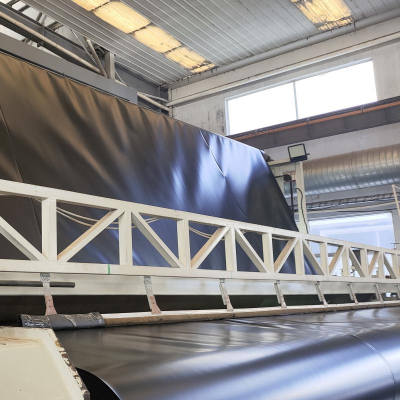
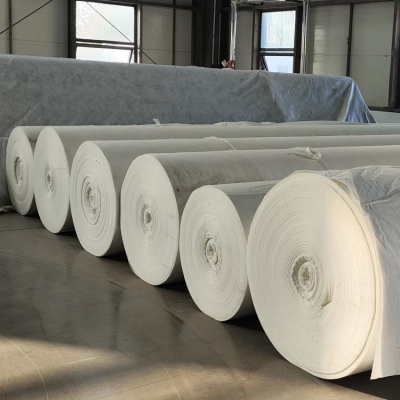
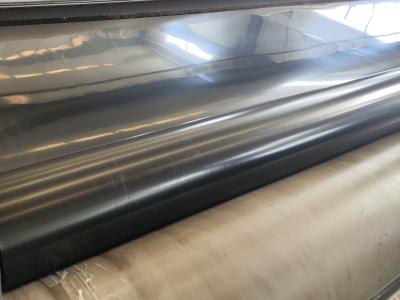
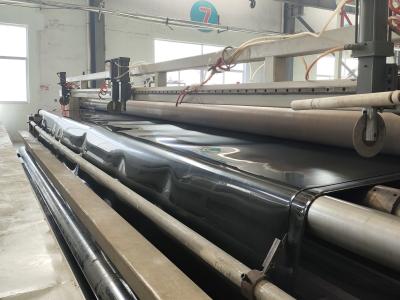
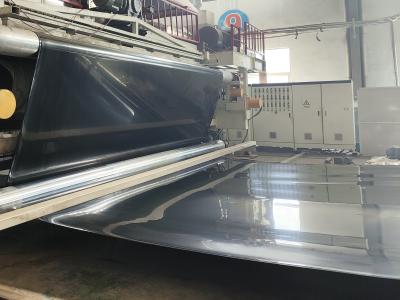
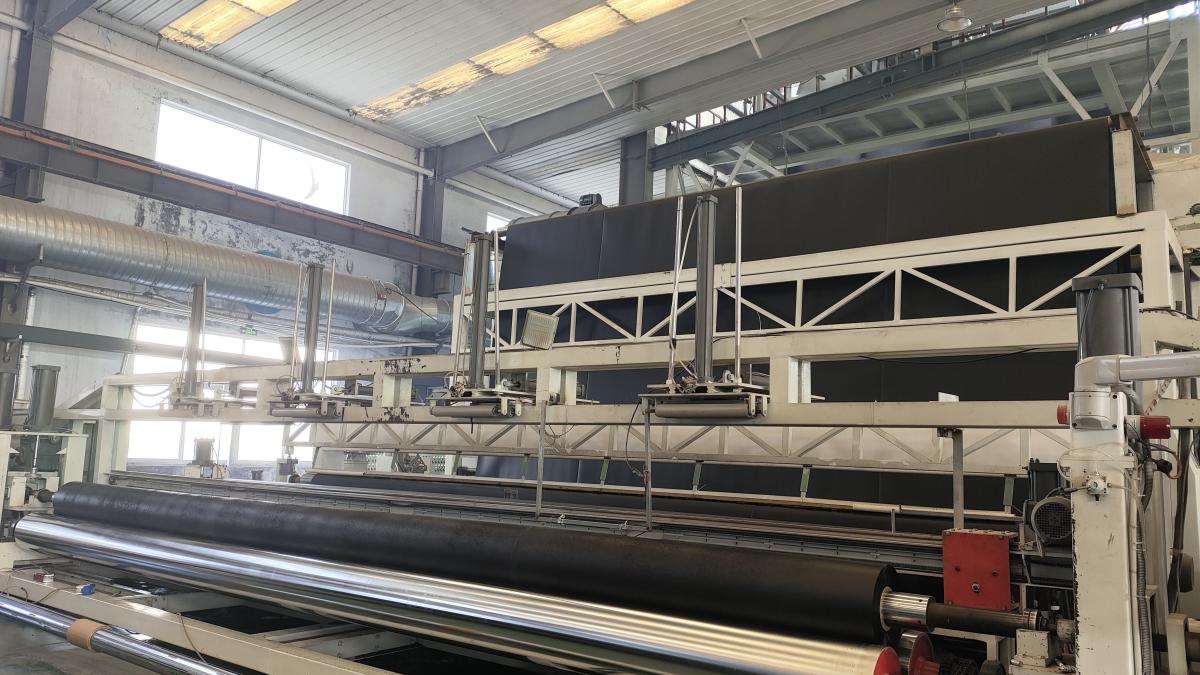
Manufacturing starts with extrusion. Resin, carbon black, and antioxidants are fed into an extruder, heated to 200–240°C, and forced through a die to form a continuous sheet . The sheet passes through rollers that control thickness, then cools on chill rolls before being wound onto rolls. Throughout the process, sensors check thickness, and lab staff take samples for tensile testing.
For textured variants, embossing rollers or nitrogen-assisted texturing creates asperities that enhance slope stability in landfill and mining applications .
Traceability matters. Each production lot should have a Mill Test Report showing actual test values. Buyers who accept shipments without these documents are taking a significant risk.
HDPE Liner Cost Analysis: 2026 Benchmarks
Material Cost by Thickness
As of 2026, global bulk pricing for HDPE Impermeable Membrane ranges from USD 0.50 to USD 3.50 per square meter for raw sheet delivered to port of loading . 2mm HDPE Liner commands premium pricing:
| Thickness | Smooth (USD/m²) | Textured Premium |
| 0.5 mm | $0.50–1.50 | +$0.30–0.80 |
1.0 mm | $1.00–2.50 | +$0.30–0.80 |
1.5 mm | $1.50–3.00 | +$0.30–0.80 |
2.0 mm | $2.00–3.50 | +$0.50–1.00 |
2.5–3.0 mm | $3.00–7.50 | +$0.50–1.20 |
For projects exceeding 50,000 m², volume discounts of 15 to 30 percent are typical .
Installation Cost Components
Total installed HDPE Liner Cost adds USD 0.50–3.00 per square meter or 20–50 percent to material cost :
| Cost Component | Range (USD/m²) | Description |
| Labor | $0.30–1.50 | Certified welding crews |
| Equipment | $0.10–0.50 | Welders, testing gear, deployment tools |
| Site Preparation | $0.20–1.00 | Subgrade grading, anchor trenches |
| Testing & QA | $0.10–0.40 | Non-destructive and destructive seam testing |
Factors Influencing HDPE Liner Cost
Thickness is the dominant factor. Each 0.5 mm increment adds 40 to 100 percent to material cost.
Surface Texture adds 20 to 40 percent. Textured liners provide better friction on slopes, but they require extra processing steps.
Certification adds 10 to 20 percent. GRI-GM13 or ASTM-compliant material costs more than non-certified alternatives, but the premium correlates with a 95 percent reduction in field failure rates according to industry data .
Tariffs have become a factor, particularly in regions that rely on imported resin or manufacturing equipment. Buyers in Asia-Pacific and Latin America have seen HDPE Liner Cost increase as a result .
Real-World Applications and Case Studies
Malaysian Biogas Capture Project (Award Winner)
Solmax received the Award of Excellence at the 2022 International Achievement Awards for a biogas capture project in Malaysia . Cenergi develops biogas projects generating renewable energy from palm oil mill effluent (POME) wastewater.
The project uses an impermeable geomembrane barrier and floating cover system. HDPE Impermeable Membrane was installed as the primary barrier at the pond base to protect groundwater from pollution. The floating cover system enhances anaerobic digestion by excluding air and reducing odor. The system also limits methane release and enables collection for use as alternative fuel .
The POME lagoon was lined with 1.0mm HDPE geomembrane along the base and covered with a 1.5mm HDPE geomembrane sheet for biogas capture—creating an anaerobic digester. This application demonstrates how HDPE Impermeable Membrane serves dual functions: environmental protection and renewable energy generation.
High-Altitude Chemical Containment in China and Mongolia
A technical paper presented to the International Geosynthetics Society documented HDPE Impermeable Membrane application in an industrial brine lagoon and chemical solution pond at mine sites in Northern China and Mongolia, at elevations of 2,600 meters and 1,600 meters respectively .
The paper discusses how HDPE Impermeable Membrane with exceptional flexibility, mechanical properties, and durability provides an effective solution for liquid containment and leakage prevention in chemical ponds under extreme environmental conditions. The installation required specialized approaches to address challenges of high altitude and temperature extremes .
Mongolian Coal Mine Tailings Pond
A 2023 Mongolian coal mine project utilized a textured 2mm HDPE Liner to prevent tailings pond leaks. The installation reduced potential remediation costs by $500,000 by preventing environmental contamination and avoiding regulatory penalties . The project highlights the value of investing in certified HDPE Impermeable Membrane for high-risk applications.
Southeast Asian Industrial Wastewater Pond
A 120,000 m² industrial wastewater pond in Southeast Asia utilized 1.5 mm HDPE Liner with subgrade compaction to ≥95 percent Proctor density . Installation by two welding teams over 45 days achieved 100 percent air pressure testing plus random destructive seam testing. Through optimized roll layout planning, material waste was reduced to 4.5 percent, demonstrating that proper planning directly reduces effective HDPE Liner Cost .
Getting Installation Right
A high-quality liner can fail if installation is done poorly. Three areas deserve attention:
Subgrade preparation: Remove rocks, roots, and debris. Compact to at least 95 percent Proctor density. Install a geotextile cushion (300–800 g/m²) where puncture risk is high .
Seaming: Dual-track thermal fusion welding is the preferred method. Keep seams oriented parallel to the slope. Keep the work area clean—dust, moisture, and debris all compromise welds. Seam area must be free of moisture, dust, and debris before welding .
Testing: Test every seam, not just a sample. Non-destructive methods (air pressure, vacuum box) cover the full length. Destructive samples—one per 300 meters—verify weld strength .
Frequently Asked Questions
Q1: What factors most affect HDPE Liner Cost for my project?
The primary cost drivers are thickness (each 0.5 mm increment adds 40–100%), surface texture (smooth vs. textured adds 20–40%), project scale (volume discounts of 15–30% for >50,000 m²), and site conditions (slope complexity, subgrade preparation requirements, and accessibility) .
Q2: What is the typical service life of 2mm HDPE Liner?
Properly manufactured and installed 2mm HDPE Liner with adequate antioxidant packages demonstrates service life of 50–100 years when covered . Exposed installations have shorter service life depending on UV stabilization and local climate conditions. The Malaysian biogas project, installed with 1.5mm HDPE, is expected to perform for decades.
Q3: How does 2mm HDPE Liner compare to thinner alternatives for mining applications?
2mm HDPE Liner offers significantly higher puncture resistance (640 N vs. 480 N for 1.5 mm) and superior stress crack resistance (1,000+ hours vs. 300 hours minimum) . For mining heap leach pads handling aggressive chemicals, the additional thickness provides critical safety margins. The Mongolian coal mine project demonstrated that investing in 2mm thickness prevented $500,000 in potential remediation costs .
Q4: What certifications should I require for HDPE Impermeable Membrane?
Require GRI-GM13 or ASTM D7465 certification with lot-specific Mill Test Reports . Verify that test equipment calibration is current, testing frequency meets standard requirements, and reported values meet specified minima. For projects in regulated jurisdictions, confirm that the material is approved by local environmental authorities.
Q5: How do tariffs affect HDPE Liner Cost in 2026?
Tariffs have increased HDPE Liner Cost in regions dependent on imported polymer resins and manufacturing equipment, particularly Asia-Pacific and Latin America . Buyers should factor import duties into total landed cost and consider sourcing from domestic manufacturers where available.
Conclusion: Verified Specifications Over Apparent Savings
The global HDPE Impermeable Membrane market offers abundant supply at competitive HDPE Liner Cost levels. The risk for buyers is accepting material that appears similar to certified products but lacks the documented properties required for decades of service.
Real-world projects demonstrate that success depends on verified performance: the Malaysian biogas project required HDPE Impermeable Membrane with low methane transmission rates ; the high-altitude chemical ponds needed exceptional flexibility and durability ; the Mongolian mine project showed that investing in 2mm HDPE Liner prevented costly remediation .
Professional buyers reduce risk through three actions:
Write specifications referencing recognized international standards (GRI-GM13, ASTM D7465)
Verify conformance through independent testing and lot-specific Mill Test Reports before shipment
Select suppliers who provide comprehensive test data, material traceability, and documented project references
The most cost-effective HDPE Impermeable Membrane is not the one with the lowest initial HDPE Liner Cost, but the one that delivers verified performance throughout the project's design life.
Procurement Resource: Our HDPE Impermeable Membrane Technical Specification Template and Supplier Audit Checklist are available without charge. These documents reflect field experience across mining, landfill, industrial containment, and water infrastructure projects worldwide.
Contact our technical sales engineering team for a specification review, to request lot-specific Mill Test Reports, or to discuss project-specific HDPE Liner Cost estimates for your current inquiry.