The Global 2mm HDPE Liner Market 2026: Technical Specifications, Applications, and Strategic Procurement
Meta Title: 2mm HDPE Liner Market 2026: Specifications, Pricing & Global Sourcing
Meta Description: Global 2mm HDPE Liner demand surges in 2026. Technical specifications, pricing benchmarks ($2.30–$3.90/m²), case studies from mining & landfill projects, and procurement strategies for industrial buyers.
 |  |  |
Introduction: Why 2mm HDPE Liner Defines Critical Containment
Engineers and procurement professionals across mining, waste management, and water infrastructure sectors face a common challenge: selecting a containment barrier that performs reliably under demanding conditions for decades. 2mm HDPE Liner (80 mil) has emerged as the most frequently specified thickness for high-risk applications, offering an optimal balance between mechanical strength, puncture resistance, and long-term durability .
The black coloration—achieved through 2–3 percent carbon black content—provides essential UV stabilization while blocking light penetration that would otherwise promote biological growth in contained liquids . Unlike thinner materials, 2mm HDPE Liner withstands aggressive subgrade conditions, heavy equipment traffic during installation, and sustained chemical exposure.
This report examines the 2mm HDPE Liner market in 2026, providing data-driven analysis of technical specifications, application case studies, pricing dynamics, and procurement best practices for industrial buyers worldwide.
Market Fundamentals and Pricing Dynamics
Current Market Valuation
The global geomembranes market continues expanding, with 2mm HDPE Liner representing a significant segment of high-specification containment applications. Broader market analyses project growth from USD 2.23 billion in 2025 to USD 3.59 billion by 2034, a CAGR of 5.46 percent . Thicknesses of 2.0 mm and above capture premium pricing due to higher resin consumption and more stringent quality requirements.
As of 2026, global bulk pricing for 2mm HDPE Liner ranges from USD 2.30 to USD 3.90 per square meter for raw sheet delivered to port of loading . Regional variations are significant:
| Region | Price Range (USD/m²) | Key Characteristics |
| Asia-Pacific | $2.30–$3.20 | Competitive pricing, domestic manufacturing |
| North America | $3.00–$3.90 | Strict ASTM compliance, mature QA culture |
| Europe | $3.20–$4.10 | CE certification, sustainability focus |
| Middle East/Africa | $3.50–$5.00 | Import logistics, enhanced UV specifications |
Indonesian market data for 2026 shows 2mm HDPE Liner ranging from Rp 80,000 to Rp 120,000 per square meter (approximately $5.20–$7.80/m² delivered), reflecting local logistics, import duties, and distributor margins .
Factors Driving 2mm HDPE Liner Demand
Mining Sector Requirements
Mining applications—particularly heap leach pads and tailings storage facilities—specify 2mm HDPE Liner as minimum thickness due to concentrated chemical solutions, elevated temperatures, and sustained tensile stress. A copper mining project in Arizona utilized 2 mm thick HDPE geomembrane liners to handle high temperatures and aggressive chemicals in the extraction process, preventing seepage into nearby water sources .
Landfill Regulatory Standards
Municipal solid waste and hazardous waste landfills require robust containment systems. New York State regulations mandate that geomembrane base liner material must be constructed of HDPE polymer acceptable to regulatory authorities, with strict installation and testing protocols . The 2mm thickness is commonly specified for primary liners in hazardous waste cells.
Water Infrastructure Projects
Large-scale reservoirs and canal lining projects increasingly specify 2mm HDPE Liner for applications where puncture risk from underlying soils or future maintenance activities is significant. The material's 640–960 N puncture resistance (ASTM D4833) provides substantial safety margins .
Raw Material Cost Volatility
HDPE resin prices, which constitute 40–70 percent of finished liner cost, are influenced by crude oil and natural gas markets . Recent Middle East geopolitical tensions have caused price fluctuations, with HDPE resin prices rising significantly in early 2026 . Buyers must account for this volatility in project budgeting.
Technical Specifications for 2mm HDPE Liner
Material Composition and Standards Compliance
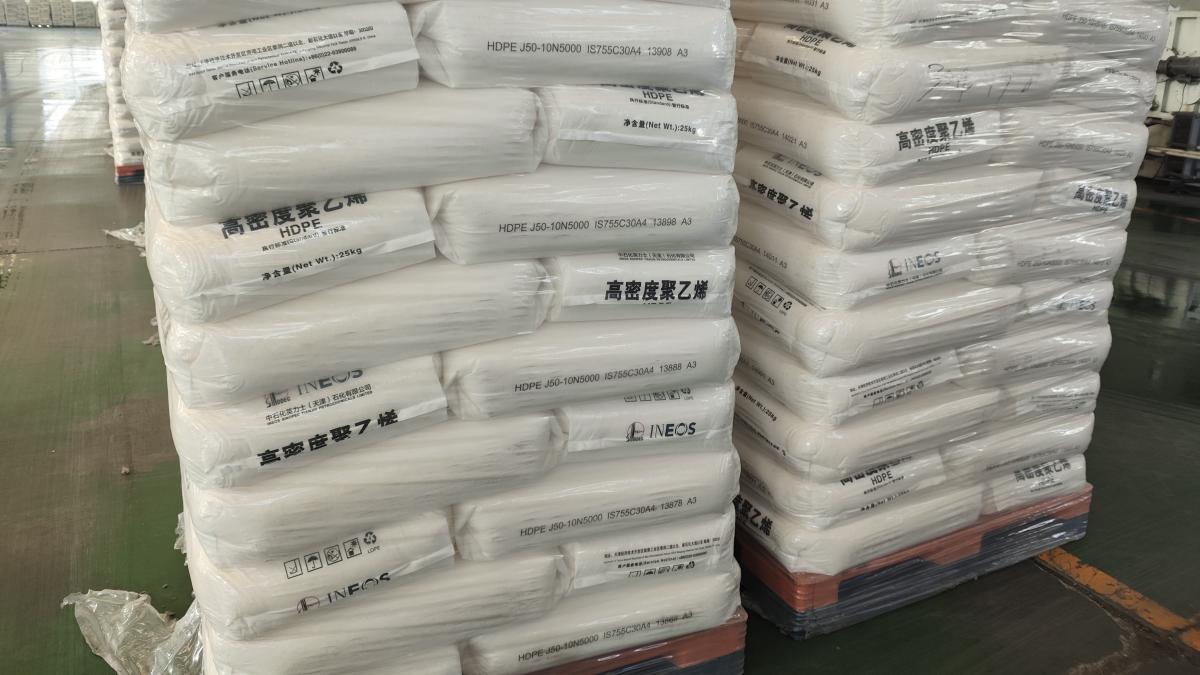
Specification-grade 2mm HDPE Liner is manufactured from virgin high-density polyethylene resin with controlled density between 0.94 and 0.96 grams per cubic centimeter . The additive package includes:
1.Carbon black (2.0–3.0%) for UV stabilization and long-term weathering resistance
2.Antioxidants to suppress thermal oxidation during processing and service life
3.Process aids to ensure uniform sheet formation and weldability
Industry standards reference GRI-GM13 or ASTM D7465. Critical performance parameters for 2mm thickness include :
| Property | Minimum Requirement | Test Method |
| Nominal Thickness | 2.00 mm ±5% | ASTM D5199 |
| Density | ≥ 0.940 g/cm³ | ASTM D1505 |
| Tensile Strength at Yield | ≥ 29 kN/m | ASTM D6693 |
| Tensile Strength at Break | ≥ 53 kN/m | ASTM D6693 |
| Elongation at Break | ≥ 700% | ASTM D6693 |
| Tear Resistance | ≥ 249–374 N | ASTM D1004 |
| Puncture Resistance | ≥ 640–960 N | ASTM D4833 |
| Carbon Black Content | 2.0–3.0% | ASTM D4218 |
| Stress Crack Resistance | ≥ 1,000–3,000 hours | ASTM D5397 |
| Oxidative Induction Time | ≥ 100 minutes at 200°C | ASTM D3895 |
| Permeability | ≤ 1.0 × 10⁻¹¹ cm/s | ASTM D5887 |
Material meeting these thresholds demonstrates 99.9 percent containment efficiency and service life estimates of 30–50 years when properly installed and covered .
Manufacturing Process
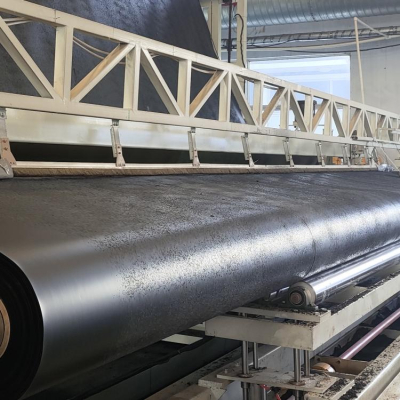
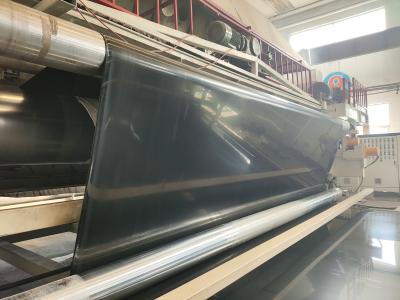
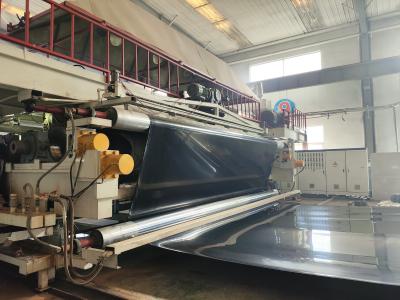
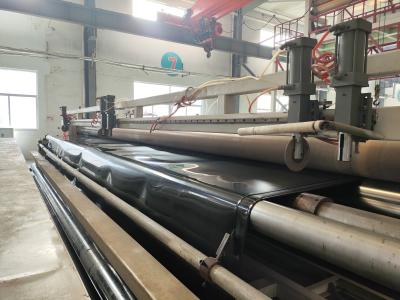
2mm HDPE Liner is manufactured through blown film extrusion or flat die extrusion. The production workflow follows standardized procedures :
1.Raw material dosing: Virgin HDPE resin combined with carbon black masterbatch and antioxidants using automated gravimetric blending for precise ratios
2.Drying and conditioning: Maintaining moisture below technical thresholds
3.Extrusion: Multi-zone heating systems controlled between 200–240°C
4.Sheet forming: Precision calendering for thickness control with continuous monitoring
5.Cooling: Chill rolls stabilize sheet thickness and surface finish
6.Quality inspection: Online spark testing, tensile sampling, and carbon black dispersion testing
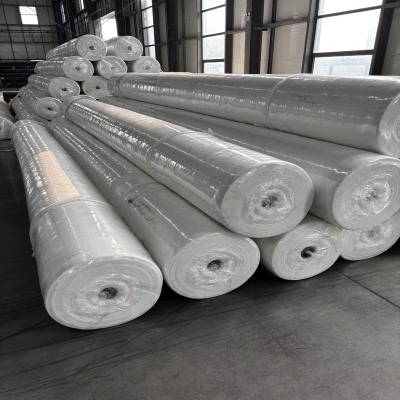
7.Final winding: Tension-controlled automatic roll systems
For textured variants, embossing rollers create asperities to enhance slope stability in landfill and mining applications .
Installation Requirements
Regulatory standards mandate specific installation protocols for HDPE Geomembrane Liner systems :
Subgrade preparation: Surface must be free of stones, organic matter, cracks, irregularities, protrusions, loose soil, and abrupt grade changes. A non-woven geotextile cushion (300–800 g/m²) is typically installed for puncture protection .
Seaming requirements: Field seams must be oriented parallel to maximum slope direction. Dual-track thermal fusion welding is the preferred method, with extrusion welding minimized. Seam area must be free of moisture, dust, and debris before seaming .
Testing protocols:
1.Non-destructive testing of entire seam length (air pressure, vacuum box, spark testing)
2.Destructive seam sampling at minimum one sample per 300 meters of seam length
3.Trial seams at start of each shift and after every four hours of continuous seaming
Environmental restrictions: Field seaming prohibited when ambient temperature is below 32°F (0°C), liner surface exceeds 158°F (70°C), during sustained winds over 20 mph, or during precipitation .
Application Case Studies
Arizona Copper Mine Heap Leach Pad
A copper mining operation in Arizona demonstrates the critical role of 2mm HDPE Liner in mineral processing. The project required lining a heap leach pad to handle high-temperature sulfuric acid solutions used in copper extraction .
The specification required 2 mm thick HDPE geomembrane liners to withstand both the aggressive chemical environment and mechanical stresses from overlying ore placement. The high-quality geomembranes enhanced operational efficiency while preventing seepage of harmful chemicals into nearby water sources, ensuring compliance with environmental regulations and protecting local ecosystems .
This application highlights why 2mm thickness is non-negotiable for mining projects: thinner materials would risk stress cracking under sustained chemical exposure and mechanical loading.
Texas Landfill Cell Construction
A landfill project in Texas selected HDPE geomembrane with a thickness of 1.5 mm for lining base and sides of landfill cells . While this project used 1.5 mm, hazardous waste cells typically require 2mm HDPE Liner for primary containment.
The specification required careful attention to welding quality and seam strength to ensure long-term performance. Successful installation resulted in a sealed environment safeguarding groundwater and surrounding soil from leachate contamination .
Brazilian Biodegradable Waste Pond Study
A 2021 study published in Case Studies in Chemical and Environmental Engineering examined an exhumed 0.8 mm HDPE geomembrane after 15.17 years of field exposure in a biodegradable waste pond . The sample exhibited brittle tensile behavior with low elongation (259.24%) and low stress crack resistance (8.89 hours). High density (0.965 g/cm³) corroborated high crystallinity (57%), and oxidative induction time of only 6.94 minutes demonstrated resin unprotected against oxidative degradation .
This research underscores why 2mm HDPE Liner with adequate antioxidant packages is essential for long-term applications. The exhumed material's degradation would have been accelerated had it been thinner, potentially causing rupture and environmental impact.
Indonesian Hazardous Waste Landfill
A 150,000 m² hazardous waste landfill cell in Indonesia utilized 2.0 mm smooth HDPE liner with 600 g/m² nonwoven geotextile cushion . Installation employed double-wedge welding with destructive seam testing per ASTM D6392. The 60-day installation achieved successful hydrostatic testing and regulatory approval .
Material procurement strategy optimized HDPE liner price per roll while maintaining compliance with environmental authority standards. This project demonstrates that competitive pricing and regulatory compliance are achievable with proper specification and supplier selection.
Geomembrane Pond Liner Applications
Agricultural Irrigation Reservoirs
Agricultural applications increasingly specify 2mm HDPE Liner for irrigation reservoirs where puncture risk from maintenance equipment or underlying soils is significant. The material's 640–960 N puncture resistance provides substantial safety margins compared to thinner alternatives .
The black coloration prevents light penetration that would promote algal growth, maintaining water quality for irrigation. Service life of 30–50 years when properly covered justifies the higher upfront cost through reduced maintenance and replacement cycles .
Industrial Containment Ponds
Chemical manufacturing facilities and wastewater treatment plants require robust containment for hazardous by-products. A chemical facility in West Bengal, India, required secure containment for acids, alkalis, and industrial effluents where even minor leakage could contaminate groundwater .
Laboratory-scale immersion tests confirmed chemical compatibility before installation—a critical step many installers overlook. The liner demonstrated resistance to aggressive compounds while maintaining dimensional stability through seasonal temperature fluctuations. Installation achieved service life projections exceeding 25 years with minimal maintenance requirements.
Aquaculture Ponds
Fish and shrimp farming operations specify 0.5 mm to 1.0 mm HDPE liner for most applications, but 2mm HDPE Liner may be required for ponds with heavy equipment access or aggressive species . The smooth surface facilitates cleaning and prevents pathogen harborage common in earthen ponds.
Producers report average yield improvements of 20 percent following conversion from unlined to lined systems, with 2mm thickness providing additional puncture protection during harvesting operations.
Current Industry Developments
Conductive Geomembranes for Leak Detection
The integration of conductive layers within HDPE Geomembrane Liner structures enables post-installation leak location without excavation. New York State regulations now require electrical resistivity leak location evaluation on areas of both primary and secondary liners with slopes of 10 percent or less .
This technology is migrating from specialized applications to standard specifications in high-risk environmental projects. All discovered liner defects must be repaired, with written reports including GPS-based electrical maps documenting spatial results throughout survey areas .
Sustainable Material Development
Manufacturers are developing 2mm HDPE Liner incorporating post-industrial recycled resin while maintaining GRI-GM13 compliance. Adoption is increasing in non-critical applications, with gradual penetration into primary containment expected as compounding technology improves .
However, for hazardous waste and mining applications, virgin resin remains essential. The Brazilian case study demonstrated that inadequate antioxidant protection leads to premature degradation, regardless of initial thickness .
Digital Integration in Procurement
Online pricing transparency enables buyers to compare options faster, with independent sellers listing prices online . This transparency pressures suppliers to compete on both price and service. Advanced manufacturers offer digital quotation systems and technical documentation to support buyer decision-making.
Procurement Framework for Industrial Buyers
Specification Development
Issue a comprehensive technical data sheet with every inquiry. Include :
1.Required thickness: 2.0 mm ±5%
2.Polymer type: Virgin HDPE resin, density ≥ 0.940 g/cm³
3.Surface finish: Smooth or textured (specify if slopes exceed 10%)
4.Carbon black content: 2.0–3.0% with documented dispersion
5.Minimum physical properties referencing GRI-GM13 or ASTM standards
6.Roll dimensions: Width 5–8 m, length 50–100 m typical for 2mm thickness
Do not permit suppliers to bid against unspecified requirements.
Supplier Qualification
Request current certification documents and sample Mill Test Reports from recent production matching your specification. Verify :
1.Test equipment calibration is current
2.Testing frequency meets standard requirements
3.Reported values meet or exceed specified minima
4.Material traceability systems are documented
5.Third-party certifications (ISO 9001, GRI-GM13, SGS, Intertek) are current
Suppliers unable to provide these documents on request should be treated with caution.
Price Evaluation
Compare quoted pricing on a delivered basis, including all logistics charges. Request breakdown of :
1.Material cost by thickness and polymer type
2.Certification and testing costs
3.Freight to project site (FOB, CIF, or delivered)
4.Volume discount tiers for multi-phase projects
For 2026, global bulk pricing for 2mm HDPE Liner ranges USD 2.30–3.90/m² before logistics . Significantly lower quotes may indicate recycled content, reduced additive packages, or absent certification.
Sample Verification
Request physical samples before large orders. Compare surface finish, flexibility, and carbon black dispersion against certified standards. Sample evaluation can reveal quality differences that specifications alone cannot capture.
Inspection and Acceptance
For orders exceeding significant value thresholds, engage third-party inspection during production. Verify :
1.Thickness uniformity across sheet width
2.Carbon black dispersion
3.Mechanical properties through independent laboratory testing
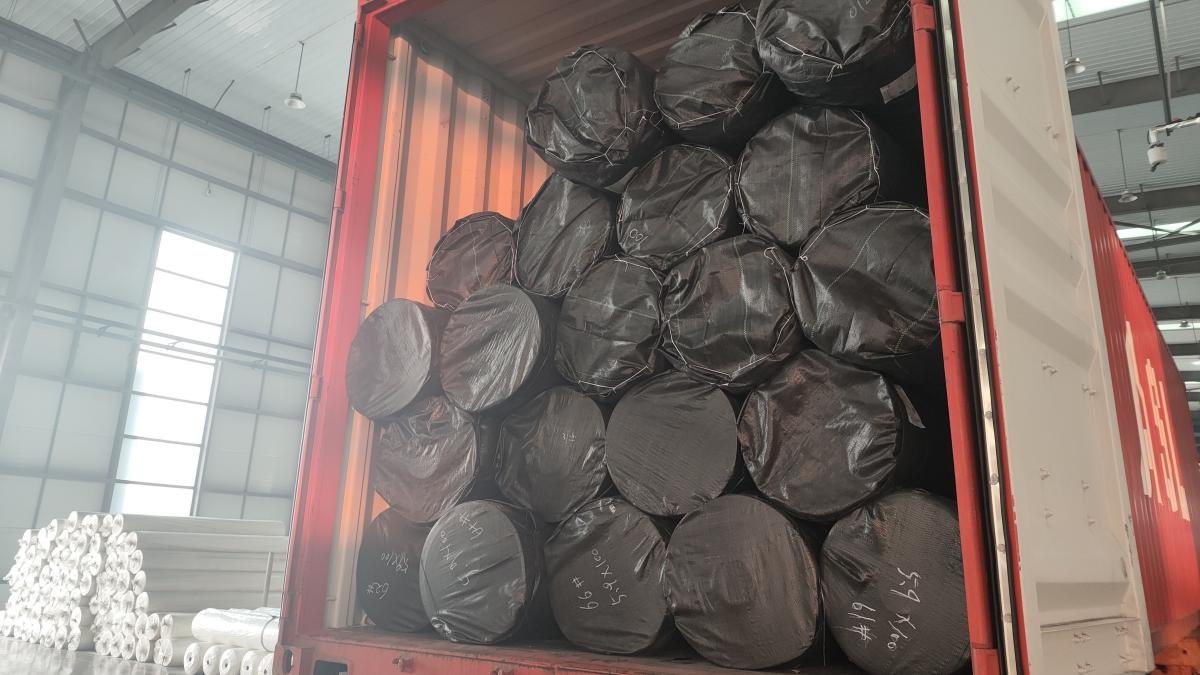
4.Proper packaging for transport (weather-protected, stable stacking)
Retain independent laboratory samples from each production lot for reference. New York regulations require that for each lot number of geomembrane material arriving on site, a sample must be collected and archived .
Frequently Asked Questions
Q1: What thickness of HDPE Liner do I need for my project?
Thickness selection depends on application and regulatory requirements:
0.5 mm to 1.0 mm: Aquaculture, decorative ponds, light-duty secondary containment
1.0 mm to 1.5 mm: Municipal landfills, irrigation reservoirs, general water storage
1.5 mm to 2.0 mm: Hazardous waste landfills, mining heap leach pads, industrial containment
2.0 mm and above: High-head mining, severe chemical exposure, critical infrastructure
For most high-risk permanent applications, 2mm HDPE Liner provides the optimal balance of durability, regulatory acceptance, and lifecycle cost .
Q2: What is the typical service life of 2mm HDPE Liner?
Properly manufactured and installed 2mm HDPE Liner with adequate antioxidant packages demonstrates service life of 30 to 50 years when covered . The Brazilian case study showed that inadequate antioxidant protection leads to degradation within 15 years, emphasizing the importance of quality material selection .
Q3: How do I verify that quoted 2mm HDPE Liner meets specifications?
Request the supplier's GRI-GM13 certification and a Mill Test Report from a production lot matching your specification. Compare reported values for tensile strength, elongation, puncture resistance, carbon black content, and oxidative induction time against standard requirements . For critical projects, engage third-party laboratory testing of samples from delivered rolls.
Q4: What welding method is recommended for 2mm HDPE Liner?
Dual-track thermal fusion welding is the preferred method for field seams . Extrusion welding should be minimized to the extent practical. Seam area must be free of moisture, dust, and debris before welding. All seams require non-destructive testing over their full length, with destructive sampling at minimum one sample per 300 meters .
Q5: What is the difference between smooth and textured 2mm HDPE Liner?
Smooth liner is standard for most applications and provides optimal weldability. Textured liner incorporates surface asperities that improve interface friction with geotextile or soil layers on slopes exceeding 10 percent . Textured variants typically cost 10–20 percent more than smooth sheet of equivalent thickness.
Conclusion: Verified Specifications Over Apparent Savings
The global 2mm HDPE Liner market offers abundant supply at competitive price levels. The risk for buyers is not supply failure but specification failure—accepting material that appears similar to certified products but lacks the documented properties required for decades of service.
Real-world projects demonstrate that success depends on verified performance: the Arizona copper mine required 2mm thickness to withstand aggressive chemicals ; the Brazilian case study showed that inadequate antioxidant protection leads to premature degradation regardless of thickness ; New York regulations mandate strict testing protocols to ensure long-term containment .
Professional buyers reduce risk through three actions:
1.Write specifications referencing recognized international standards (GRI-GM13, ASTM D7465)
2.Verify conformance through independent testing and documentation before shipment
3.Select suppliers who provide comprehensive test data and material traceability
The most cost-effective HDPE Geomembrane Liner is not the one with the lowest initial price, but the one that delivers verified performance throughout the project's design life.
Procurement Resource: Our 2mm HDPE Liner Technical Specification Template and Supplier Audit Checklist are available without charge. These documents reflect field experience across landfill, mining, industrial containment, and water infrastructure projects worldwide.
Contact our technical sales engineering team for a specification review, to request lot-specific Mill Test Reports, or to discuss project-specific requirements for your current inquiry.