Geotextile For Roads: Engineering Longer-Lasting Pavements in an Era of Infrastructure Demands
Meta Title: Geotextile For Roads: Research, Selection & Procurement Guide
Meta Description: Evidence-based guide to geotextile for roads: peer-reviewed research on field performance, material selection criteria, and strategic sourcing for infrastructure projects worldwide.
In 2025, an international research team from Iowa State University published findings from a year-long field study of woven geotextiles applied to unpaved roads in the United States . The results provided rare empirical validation of what engineers have long theorized: geotextile-stabilized sections exhibited significantly less deformation and effectively reduced moisture content in subgrade layers compared to control sections without geosynthetics . This full-scale monitoring, conducted under real traffic loads including heavy trucks and farm equipment, confirms that properly specified geotextile for roads delivers measurable performance benefits that extend pavement life and reduce maintenance costs.
For civil engineers, procurement specialists, and infrastructure developers worldwide, this research underscores a fundamental truth: geotextile for roads is not merely a construction accessory but an engineered component whose selection demands rigorous attention to site-specific conditions, material science, and long-term performance data.
 |  |  |
Market Context: The Growing Role of Geosynthetics in Global Road Construction
The global geotextiles market, valued at USD 3.86 billion in 2025, is projected to reach USD 6.15 billion by 2034, growing at a compound annual rate of 6.80 percent . Within this landscape, road construction represents the dominant application segment, accounting for approximately 35-42 percent of market share depending on the analysis . This dominance reflects the widespread recognition that geotextile road fabric delivers essential functions—separation, filtration, drainage, and reinforcement—that directly impact pavement longevity.
The Asia-Pacific region leads global consumption with a 35.40 percent market share, driven by massive infrastructure investments in China and India, coupled with government initiatives for rural connectivity . China's 14th Five-Year Plan for transportation infrastructure has particularly stimulated demand for high-performance geosynthetics, while India's PMGSY-III program promotes the use of geotextiles in rural road construction .
North American markets, shaped by the Infrastructure Investment and Jobs Act, show pronounced growth in advanced geotextile technologies, with the U.S. market projected to reach USD 0.98 billion by 2032 . European markets are driven by environmental regulations and demand for sustainable construction materials, including natural fiber-based options and products with reduced microplastic release .
A notable trend is the emergence of geotextiles with reduced microplastic release, a market segment projected to grow from USD 0.64 billion in 2026 to USD 1.42 billion by 2036 . Road and civil engineering applications will dominate this segment with a 30 percent share, as public procurement policies increasingly mandate sustainable construction materials with verified environmental performance .
Technical Foundations: How Geotextile For Roads Functions
Core Functions in Pavement Systems
A properly specified geotextile for roads performs multiple critical functions simultaneously, each contributing to pavement durability :
Separation: Placed between the subgrade soil and aggregate base, nonwoven geotextile prevents intermixing of materials. This separation maintains the structural integrity of the base layer, preventing fine subgrade soils from contaminating the aggregate and compromising load distribution . This function is particularly critical in roads constructed over soft or saturated subgrades, where without separation, aggregate would simply sink into the underlying soil.
Filtration: The fabric allows water to pass from the subgrade into drainage systems while retaining soil particles. This prevents the migration of fines that would otherwise clog drains and create pore pressure buildup . The filtration function is governed by the fabric's pore size distribution relative to the soil's particle size—a relationship that must be carefully engineered for each project.
Drainage: Nonwoven geotextile can transport water laterally within its plane, reducing hydrostatic pressure behind retaining structures and beneath pavements . This in-plane flow capacity, or transmissivity, is a key differentiator between basic filter fabrics and true drainage geocomposites.
Reinforcement: By distributing loads over a wider area, geotextiles increase the shear strength of weak soils and improve the structural capacity of pavement systems . The Iowa field study demonstrated that woven geotextile-stabilized sections exhibited significantly less deformation and improved soil strength and stiffness .
Manufacturing Precision
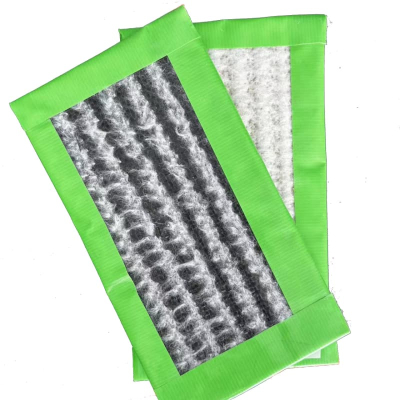
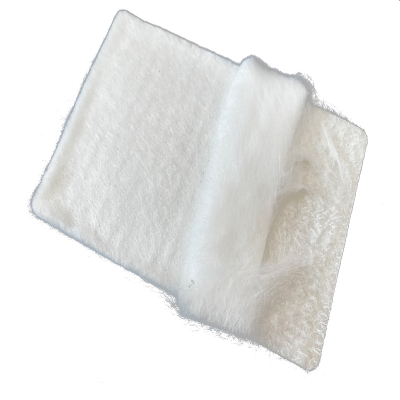
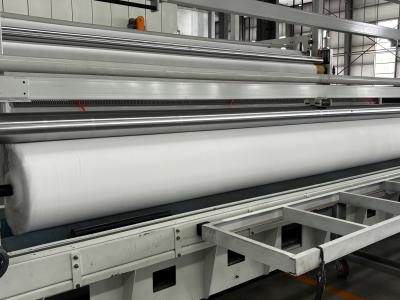
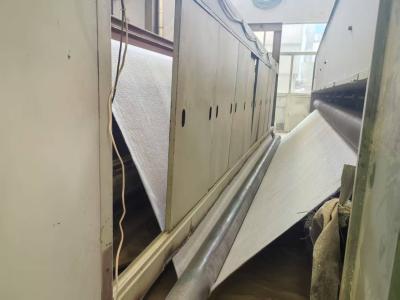
The performance characteristics of geotextile road fabric derive directly from manufacturing processes. For nonwoven geotextile, the primary production method is needle-punching, where thousands of barbed needles mechanically entangle fibers into a dense, three-dimensional mat . This process creates excellent filtration and separation capabilities with high puncture resistance, making these materials ideal for road base reinforcement .
Needle-punched nonwovens offer high tensile and puncture resistance, durability under heavy loads and dynamic conditions, and proven performance in road construction applications . However, quality varies significantly based on needle density, penetration depth, and fiber quality—factors that experienced buyers scrutinize when evaluating suppliers.
For applications requiring higher tensile strength, woven geotextiles produced by loom bonding of longitudinal warp yarns and perpendicular weft yarns provide superior reinforcement capacity . These materials are commonly specified for soil stabilization in roads and railways, where they separate material layers and distribute loads effectively .
Research Validation: What Studies Reveal About Field Performance
Iowa Field Study: Quantifying Moisture Control and Deformation Reduction
The 2025 study published in Transportation Geotechnics provides rare full-scale validation of geotextile performance under real-world conditions . Researchers installed moisture and temperature sensors at multiple depths across three test sections on unpaved roads in Iowa: two with different woven geotextiles and one control section without geosynthetics. The sections were subjected to actual traffic loads including heavy trucks and farm equipment, as well as variable precipitation and temperature conditions throughout the monitoring period.
Results showed that both woven geotextiles effectively reduced volumetric water content in the subgrade compared to the control section . While both performed similarly in moisture control, differences were observed in drainage capacity, influenced by the specific properties of each material. Despite reduced water flow and increased soil moisture under colder conditions, both geotextiles maintained consistent performance. Most significantly, the geotextile-stabilized sections exhibited substantially less deformation, demonstrating improved soil strength and stiffness .
The researchers concluded that managing moisture in pavement layers is crucial for preventing distresses such as cracking and erosion, which can lead to costly repairs. High moisture content can compromise the structural integrity of pavement, intensifying wear and tear caused by traffic .
Wicking Geotextile Innovation: Laboratory Insights
A 2024 master's thesis from the University of Victoria introduced a novel geosynthetic composite combining biaxial polypropylene geogrids with wicking nonwoven geotextiles . Unlike conventional wicking geotextiles that rely on deep-grooved fibers, these chemically treated nonwovens become hydrophilic while preserving the large lateral drainage functionality of traditional nonwoven geotextile .
A series of model tests including rainfall simulation and plate loading tests demonstrated that the inclusion of this composite significantly enhanced drainage, stiffness, and bearing capacity of road bases over weak subgrade . This research points toward next-generation geotextile for roads that integrate multiple functions more effectively than current products.
International Case Studies: Geotextiles in Action
Duqm Road Project, Oman: Stabilizing Sabkha Soil
The National Route 32 project in Oman's Special Economic Zone at Duqm demonstrates how engineered geosynthetic systems address extreme soil conditions . Part of this six-lane dual carriageway, approximately 16 kilometers long, required construction over Sabkha soil—a salt flat formation notorious for instability.
Bonar Natpet, a regional geosynthetics producer, proposed a three-layer system including a nonwoven geotextile component. The SNW25 needle-punched, lightly thermally-bonded nonwoven was specified to act as a filter for the soil above, preventing erosion of backfill material and consequent settlement . According to the company, this product offers superior puncture resistance compared to most needle-punched nonwovens of comparable weight.
The design, validated using Plaxis 2D finite element software, demonstrates how geotextile road fabric functions within engineered systems to address specific geotechnical challenges .
Bhavnagar Pavement Stabilization, India: Coastal Road Challenges
The Creek Kalatalav Sanesh road in Bhavnagar, Gujarat, presented significant engineering challenges . The proposed road was formed between creeks, with a high groundwater table and elevated flood levels during monsoons. Subgrade strength was found to have a California Bearing Ratio of less than 2 percent with poor soil properties. The road previously demanded high maintenance and repair costs.
Maccaferri's solution for this 14-kilometer project included multiple geosynthetic products, with nonwoven geotextile provided to perform separation and filtration functions . High-strength geogrids improved ground conditions and ensured uniform stress transfer to the subsoil. The project demonstrates how properly specified geotextile for roads enables construction in challenging coastal environments.
Bertha Cut, Scotland: Access Road Over Weak Soils
A section of road between the A85 and Bertha Park in Perth, Scotland, required construction through an area of weak soils with groundwater lying above road level . Conventional capping layer construction proved unsuccessful, necessitating an alternative approach.
Field trials demonstrated that an aggregate layer mechanically stabilized by incorporating a geocomposite of TriAx geogrid backed with nonwoven geotextile, combined with a new drainage regime, would overcome the extremely challenging ground and groundwater conditions . This layer provided sufficient support to carry light construction traffic and allowed the permanent road to be built above without issues—a testament to the value of engineered geosynthetic solutions.
Strategic Procurement: A Framework for Informed Decision-Making
For international buyers navigating the complex landscape of geotextile for roads sourcing, several factors warrant careful consideration.
Certification and Compliance
Verify that products carry certification to relevant international standards—ASTM, ISO, or regional specifications as appropriate. The Iowa field study emphasizes that geotextile performance depends on specific material properties, and these must be verified through certified test reports . Request Mill Test Reports for each production lot and compare reported values against project specifications.
Site-Specific Engineering
The Duqm and Bhavnagar case studies both demonstrate that successful geotextile road fabric specification requires detailed understanding of site conditions . Engage suppliers who employ geotechnical engineers capable of reviewing soil reports and recommending appropriate materials based on actual conditions, not generic specifications.
Installation Quality Matters
Research confirms that proper installation is essential to achieving design performance . Surface preparation, proper overlap (typically 30-50 centimeters), and secure anchoring prevent shifting and ensure the geotextile functions as intended. For critical projects, consider on-site installation supervision by technical representatives.
Total Cost Analysis
Look beyond unit price to assess total project cost, including installation efficiency, long-term performance, and potential failure costs. The Iowa study demonstrates that geotextile-stabilized sections exhibit significantly less deformation, translating to reduced maintenance requirements over the pavement life .
Supply Chain Reliability
For international procurement, evaluate supplier experience with export documentation, container optimization, and customs compliance. Digital shipment tracking and advance documentation availability can significantly reduce port delays and associated costs.
Frequently Asked Questions
Q1: What type of geotextile should I specify for road construction over soft subgrade?
The choice depends on your primary objective. For separation and filtration, nonwoven geotextile is typically preferred due to its excellent permeability and ability to prevent soil migration while allowing water passage . For applications requiring significant reinforcement—such as very weak subgrades or heavy traffic loads—woven geotextiles offer higher tensile strength and load distribution capacity . In many cases, composite systems combining both types provide optimal performance, as demonstrated in the Duqm project .
Q2: How do I determine the appropriate geotextile weight or grade for my road project?
Selection should be based on site-specific factors including subgrade strength (measured by California Bearing Ratio), traffic loads, aggregate characteristics, and drainage requirements. For nonwoven geotextile, heavier grades (typically 200-300 g/m²) provide greater puncture resistance and are suitable for demanding applications, while lighter grades may suffice for separation only . The Iowa research emphasizes that performance depends on specific material properties, not just weight—request certified test data for critical indices like tensile strength, puncture resistance, and permittivity .
Q3: What does recent research indicate about geotextile performance under real-world conditions?
The 2025 Iowa field study provides valuable validation: woven geotextiles effectively reduce subgrade moisture and enhance drainage performance, with stabilized sections exhibiting significantly less deformation than control sections . The research confirms that geotextiles maintain consistent performance even under challenging conditions, including cold temperatures and heavy precipitation. This full-scale monitoring under actual traffic loads offers rare empirical evidence supporting geotextile specification.
Q4: How do I verify that delivered geotextile meets specified quality standards?
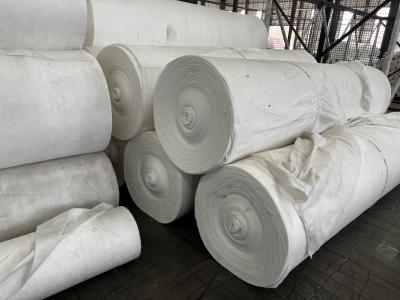
Implement a verification protocol including: requesting Mill Test Reports for each production lot and comparing against specification requirements; conducting visual inspection for consistent appearance, absence of damage, and proper labeling; for critical projects, considering independent third-party testing of samples from delivered rolls; and confirming traceability documentation linking rolls to production data .
Q5: What are the emerging trends in geotextile technology for road applications?
Three significant trends are shaping the market. First, wicking geotextile composites that actively remove moisture from pavement layers, as demonstrated in recent University of Victoria research . Second, geotextiles with reduced microplastic release, driven by regulatory scrutiny and sustainable procurement policies . Third, smart geotextiles integrated with IoT sensors enabling real-time infrastructure monitoring and predictive maintenance . These innovations point toward a future where geotextile for roads delivers even greater performance and environmental benefits.
A Research-Based Approach to Geotextile Specification
The gap between laboratory certification and field performance has been documented repeatedly—in peer-reviewed journals, in conference proceedings, and in project post-mortems. The Iowa field study and the international case studies from Oman, India, and Scotland all underscore that responsible specification requires looking beyond standard data sheets to application-specific evidence .
The most reliable suppliers differentiate themselves not through lowest price, but through documented performance in conditions similar to your project. They employ engineers who can review soil reports and recommend appropriate geotextile road fabric based on published research and verified case studies. They maintain relationships with independent testing laboratories and make that data available to buyers.
Before you finalize specifications for your next road construction project, consider a different approach. Share your project's geotechnical data and application requirements with our technical team. We will provide a no-obligation analysis referencing relevant research and comparable installations, recommending appropriate geotextile for roads specifications with documented performance in conditions similar to yours. Let our engineers help you specify with confidence, reducing risk and ensuring long-term pavement performance.