Geotextile For Road Base: A Practical Look at What Research and Field Data Show
A highway project in Turkey tested something new. Engineers took a standard geotextile for road base and treated it with cement. The idea was simple: make the fabric do two jobs at once—separate the weak subgrade from the base layer and reinforce the base material itself. After 5,000 cycles of heavy loading, the results were clear. Permanent deformation dropped from 53.67 mm to 27.23 mm. The rut depth reduction ratio hit 49.26 percent. The traffic benefit ratio reached 14.62 .
This research, published in Transportation Geotechnics, confirms what field experience has long suggested. A properly specified geotextile for road base extends pavement life, reduces maintenance costs, and allows thinner aggregate sections. For procurement professionals and civil engineers, understanding what this material delivers—and how to specify it correctly—saves money and prevents failures.
 | 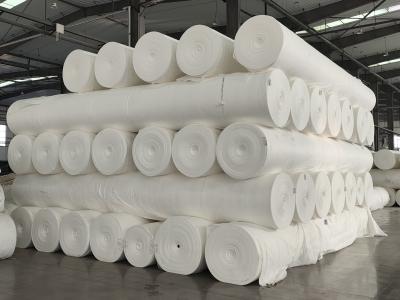 | 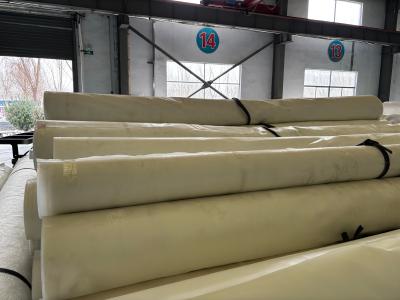 |
What Geotextile For Road Base Actually Does
When a truck drives over a road, the weight pushes down through the pavement into the base layer and subgrade below. If the subgrade is weak—soft clay, saturated silt, or loose sand—the aggregate base wants to sink into it. The two layers mix. The road cracks, ruts, and fails.
A geotextile for road base placed between the subgrade and aggregate stops this from happening. It performs three critical functions:
Separation: The fabric keeps aggregate from sinking into soft subgrade. This maintains the designed base thickness and prevents the weak soil from pumping up into the stone layer.
Filtration: Water that enters the base layer needs to drain down into the subgrade or out through side drains. The fabric lets water pass while holding soil particles in place. This prevents clogging that would trap water and weaken the road.
Reinforcement: When loads are heavy enough to push aggregate down into the subgrade, the fabric stretches and forms a tensioned membrane. It spreads the load over a wider area, reducing stress on the weak soil below.
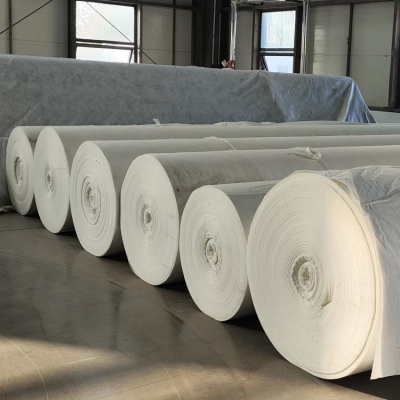
A PP geotextile (polypropylene nonwoven) is the most common choice for road base applications. Polypropylene resists chemicals found in soils, does not absorb water, and maintains strength through typical construction exposure.
What Research Shows About Geotextile Performance
Multiple studies have confirmed that geotextile for road base delivers measurable benefits.
The Turkish research demonstrated that geotextile reinforcement increased the stress propagation angle from 25 degrees to 43 degrees . This means loads spread wider, reducing stress on the subgrade. The same study found that using geotextile as both reinforcement and separation reduced permanent deformation by nearly half compared to separation alone.
A different study showed that reinforcement with geotextile reduced permanent deformation by 82 percent when using recycled concrete aggregates as base material. The fabric performed better than geogrid in terms of reaction modulus and bearing capacity ratio .
Field testing on unpaved roads found that using geotextile between each pavement layer reduced rut depth by 96 percent. When used in a single layer, the best location was at the interface between subgrade soil and base material, where rutting depth was reduced by 85 percent .
The economic case is equally strong. Studies show geotextiles can reduce pavement thickness by 20 to 50 percent while maintaining structural integrity. They also lower carbon footprint compared to thicker aggregate sections.
What A Quality Geotextile For Road Base Delivers
A reliable geotextile 300g m2 nonwoven fabric typically meets these specifications:
| Property | Typical Value | Test Standard |
| Weight | 300 g/m² | ASTM D5261 |
| Thickness | 2.4 mm | ASTM D5199 |
| Grab Tensile Strength | 9.5 kN/m | ASTM D4632 |
| CBR Puncture Resistance | 1.5 kN | ASTM D6241 |
| Trapezoid Tear Strength | 0.24 kN | ASTM D4533 |
| UV Resistance (500 hrs) | ≥70% strength retention | ASTM D4355 |
| Permittivity | K×(0.1-0.001) cm/s | ASTM D4491 |
| Apparent Opening Size | 0.07-0.21 mm | ASTM D4751 |
The geotextile 300g m2 weight class is commonly specified for road base applications where heavy traffic loads and soft subgrade conditions exist. This weight provides adequate puncture resistance for standard aggregate sizes while maintaining permeability for drainage.
For lighter-duty applications—such as access roads or low-traffic parking areas—lighter grades may suffice. For heavy haul roads or sections with exceptionally sharp aggregate, 350-400 g/m² grades provide additional puncture resistance.
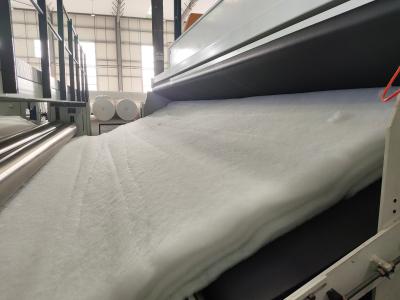
A PP geotextile made from spunbonded needle-punched continuous filament polypropylene offers advantages over polyester at this weight. Polypropylene density of 0.91 g/cm³ means more coverage area per roll compared to polyester. Polypropylene also provides excellent alkali and acid resistance across pH 2 to 13.
Where Geotextile For Road Base Gets Used
New Road Construction
When building roads over weak subgrade, geotextile for road base placed directly on the prepared subgrade creates a stable platform for aggregate placement. The fabric prevents intermixing, maintains aggregate thickness, and distributes loads.
Road Rehabilitation
When resurfacing existing roads with base failure, geotextile placed over the prepared subgrade after removing failed material prevents future failure.
Haul Roads and Temporary Access
Construction sites often need temporary roads for heavy equipment. PP geotextile on soft ground allows aggregate to stay in place under loaded trucks.
Parking Lots and Driveways
Commercial and residential projects use geotextile for road base under concrete or asphalt to prevent cracking from subgrade movement.
What Buyers Should Check Before Ordering
Test Reports
Request Mill Test Reports for each production lot. Key tests include grab tensile strength (ASTM D4632), CBR puncture (ASTM D6241), UV resistance (ASTM D4355), permittivity (ASTM D4491), and apparent opening size (ASTM D4751).
Weight Verification
Confirm that delivered fabric matches the specified geotextile 300g m2 weight within tolerance.
UV Stabilization
If the fabric will sit exposed before burial, verify UV inhibitor content. Quality PP geotextile includes carbon black or other stabilizers. Test results should show at least 70 percent strength retention after 500 hours.
Roll Width and Coverage
Standard rolls come in widths from 2 m to 6 m. Wider rolls reduce field seams.
Frequently Asked Questions
Q1: What weight geotextile do I need for road base?
For roads carrying heavy traffic or built over soft subgrade, geotextile 300g m2 is the most common specification. This weight provides adequate puncture resistance for standard aggregate and tensile strength for load distribution. For lighter-duty applications, 200 g/m² may suffice. For haul roads with very sharp aggregate, 350-400 g/m² provides additional protection.
Q2: What is the difference between woven and nonwoven geotextile for road base?
Nonwoven geotextile for road base is manufactured through needle-punching, creating a three-dimensional structure with high permeability and excellent filtration. It is preferred for separation and drainage applications. Woven geotextiles offer higher tensile strength for reinforcement but lower permeability. For most road base applications, nonwoven PP geotextile is the correct choice.
Q3: What does the research say about geotextile effectiveness?
Studies show that geotextile for road base can reduce permanent deformation by 82 percent compared to unreinforced sections. Field tests show rut depth reduction of 85 to 96 percent depending on placement. Geotextile reinforcement increases the stress propagation angle from 25 degrees to 43 degrees. These benefits translate to 20-50 percent reduction in required pavement thickness.
Q4: How should I specify Geotextile For Road Base for quality assurance?
Specify: needle-punched nonwoven construction from 100% virgin polypropylene fibers with UV stabilizers; minimum weight of 300 g/m² (or specified grade); minimum grab tensile strength appropriate to grade; minimum CBR puncture resistance; permittivity and apparent opening size meeting drainage requirements; and UV resistance of at least 70% strength retention after 500 hours. Request Mill Test Reports for each production lot.
Q5: Can geotextile reduce road construction costs?
Yes. Studies demonstrate geotextiles can reduce pavement thickness by 20 to 50 percent while maintaining structural integrity. This reduces aggregate material costs. Additionally, geotextile reinforcement extends service life and reduces maintenance intervals.
Conclusion
The geotextile for road base does essential work that most drivers never see. It separates weak subgrade from aggregate base. It filters water while holding soil in place. It reinforces the road section, allowing thinner pavements and longer service life.
Research confirms these benefits. Permanent deformation reductions of 82 percent. Rut depth reductions of 96 percent. Stress propagation angles that nearly double.
When specifying geotextile 300g m2 or other grades, verify mechanical properties through Mill Test Reports. Confirm UV stabilization for exposed periods. Select appropriate roll widths. Work with PP geotextile suppliers who provide certified test data.
Need help specifying geotextile for road base for your next project? Share your subgrade conditions, traffic loads, and aggregate specifications with our technical team. We will provide a no-obligation review of appropriate weight grades and performance data.