
Geotextile Nonwoven Fabric: Engineering Filtration and Separation for Modern Infrastructure
A creek bank in Brisbane, Australia, had eroded to the point where a shopping centre carpark was at risk of collapse. Engineers needed a solution that would stabilize the slope, filter water, and prevent further soil migration—all while allowing vegetation to re-establish. The specified material? Geotextile Nonwoven Fabric .
Over 21,000 square meters of continuous filament PET nonwoven geotextile was installed as a separation and stabilisation layer . The project succeeded because the fabric did what granular filters alone could not: it provided filtration, separation, and drainage in a single, installable layer.
For procurement professionals and civil engineers, this case illustrates why Geotextile Nonwoven Fabric has become indispensable for road construction, slope protection, drainage systems, and environmental containment worldwide .
 |  |  |
Market Context: A Sector Dominated by Nonwoven Solutions
The global geotextiles market reached USD 3.86 billion in 2025 and is projected to grow to USD 6.15 billion by 2034, at a compound annual rate of 6.80% . Within this market, Geotextile Nonwoven Fabric dominates, accounting for approximately 67.31% of market share in 2026 .
The Asia-Pacific region leads consumption with a 35.40% market share, driven by large-scale infrastructure investments across China and India . Road construction represents the largest application segment, with industry data showing that around 60% of nonwoven geotextiles are used on roads . According to the European Disposables and Nonwovens Association (EDANA), approximately 750 square kilometers of geotextile nonwovens are manufactured and sold annually .
The Geo Non Woven Fabric segment is forecast to reach USD 6.72 billion by 2032, growing at a CAGR of 7.2% . Global production volume reached approximately 2.63 million metric tons in 2025 .
Technical Foundations: How Geotextile Nonwoven Fabric Performs Underground
Manufacturing Process and Structural Design
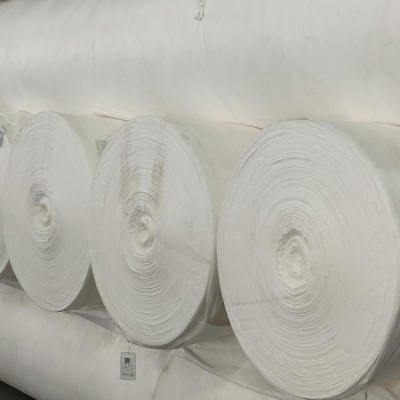
Geotextile Nonwoven Fabric is manufactured from synthetic polymers—predominantly polypropylene (PP) for its chemical resistance and cost advantages, or polyester (PET) where higher tensile strength and creep resistance are required .
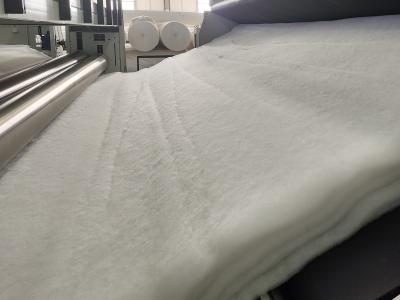
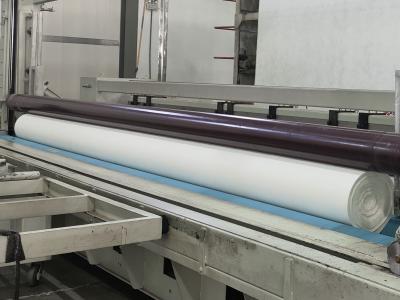
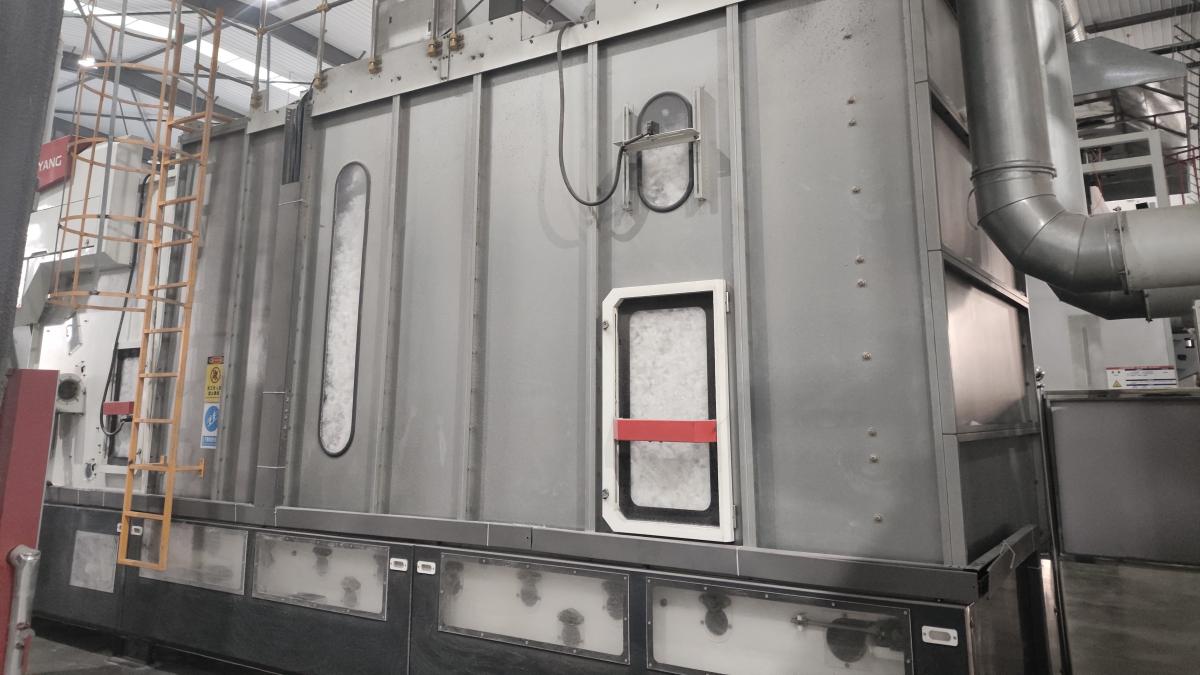
The most common manufacturing method is the spunbonded needle-punched process . Polymer pellets are fed into a screw extruder and melted. The molten polymer is extruded through spinnerets to form continuous filaments, which are then drawn to orient molecular structure. These filaments are laid into a uniform web and subsequently bonded through mechanical needle-punching, where thousands of barbed needles repeatedly penetrate the web, entangling fibers into a stable, three-dimensional matrix .
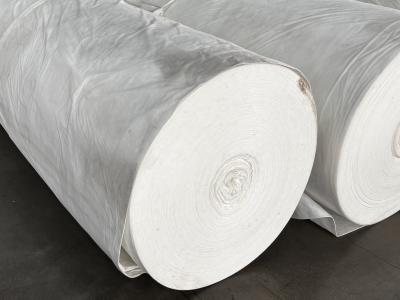
This needle-punch process creates the characteristic bulky structure of 200 GSM Non Woven Geotextile, with a complex pore network that enables effective filtration while maintaining high permeability . The process parameters—needle penetration depth, punch density, and web area density—can be precisely controlled to engineer specific performance characteristics. Higher needle punch density typically increases fiber entanglement and tensile strength.
Hydraulic Functionality: Filtration and Drainage
The defining characteristic of Geotextile Nonwoven Fabric is its ability to manage water flow while retaining soil particles. This dual functionality is quantified through two critical hydraulic parameters: permittivity (flow normal to the plane) and transmissivity (flow within the plane) .
For filtration applications, the fabric must satisfy two competing requirements: sufficient openness to allow unimpeded water flow, yet sufficiently tight pore structure to prevent migration of fine soil particles. The three-dimensional structure of needle-punched nonwovens provides an additional advantage: the ability to transport water laterally within the fabric plane, enabling Geo Non Woven Fabric systems to function as integrated drainage layers .
The 200 GSM Weight Class
200 GSM Non Woven Geotextile represents one of the most commonly specified weight classes in the industry. A 200gsm nonwoven fabric typically offers thickness of approximately 1.7-2.0mm, breaking strength of 6.5 kN/m, CBR puncture resistance of 0.9 kN, and vertical permeability coefficient between K×(0.1~0.001) cm/s .
This weight class provides an optimal balance of strength, puncture resistance, and permeability for demanding applications including driveway bases, shed bases, drainage layers in higher loading areas, and soakaway systems . UV inhibitors are typically added to enhance durability during exposed installation periods .
Mechanical Properties and Standards
Quality Geotextile Nonwoven Fabric is tested against international standards including ASTM and ISO methods . Key tests include:
1.Grab tensile strength (ASTM D4632)
2.CBR puncture resistance (ASTM D6241)
3.UV resistance after 500 hours (ASTM D4355)
4.Apparent Opening Size (ASTM D4751)
5.Water permeability (ASTM D4491)
Quality 200 GSM Non Woven Geotextile products typically retain at least 70% of original tensile strength after 500 hours of UV exposure .
Research Validation: Academic Insights into Nonwoven Performance
A comprehensive review published in ScienceDirect examined the manufacturing process of spunbonded needle-punched Geotextile Nonwoven Fabric and highlighted the relationship among process parameters, fabric structure, and hydraulic properties . The research concluded that Geo Non Woven Fabric is preferred in civil engineering, filtration, and drainage applications because of its complex three-dimensional structure and tailored pore size distribution .
The study emphasized that the desired end-use performance of Geotextile Nonwoven Fabric has a close relationship with its structure—specifically pore size and distribution—which can be regulated by altering process parameters . This underscores that manufacturing quality directly determines field performance.
International Case Studies
Queen Street Pavement Upgrade, Yeppoon, Australia
Livingstone Shire Council undertook a critical infrastructure upgrade on Queen Street in Queensland to address severe pavement cracking caused by a soft, saturated subgrade . The solution required structural reinforcement combined with effective moisture management. The project used 3,600 m² of geotextile that provided separation, filtration, reinforcement, and moisture management .
The construction team removed existing pavement, stabilised the subgrade, and installed the geotextile with tile overlap embedded into drainage pipe, creating a direct drainage pathway to effectively manage moisture levels . The geotextile's wicking properties efficiently removed excess moisture, preventing subgrade saturation and surface cracking. The material also provided essential separation and structural support, enhancing pavement durability .
Kedron Brook Slope Remediation, Brisbane, Australia
An embankment adjacent to Kedron Brook had eroded and destabilised a shopping centre carpark . Bellwether Contractors specified Geotextile Nonwoven Fabric as a separation and stabilisation layer. Approximately 6,000 square meters of GF54 and 15,000 square meters of Class C GF34 were installed—continuous filament PET geotextiles used extensively in road and rail works as well as landscaping for slope stabilisation .
Strip drains were laid at intervals to efficiently filter and transport water runoff into the creek, and a 3D geocell was installed to create a suitable base for subsequent landscaping and revegetation . The project was subsequently revegetated with grasses, trees, and shrubs.
Strategic Procurement: What Experienced Buyers Evaluate
For international buyers navigating Geotextile Nonwoven Fabric sourcing, several factors warrant careful consideration.
Certification and Compliance: Verify that products carry certification to relevant international standards—ASTM, ISO, or regional specifications. Request Mill Test Reports for each production lot .
Weight Grade Selection: 200 GSM Non Woven Geotextile is suitable for heavy-duty applications including driveway bases, drainage layers, and soakaway systems . Lighter grades may suffice for basic separation, while heavier grades up to 800gsm are used for demanding reinforcement applications .
UV Stabilization: For projects where fabric may be exposed before burial, verify UV resistance data. Quality Geo Non Woven Fabric retains at least 70% of tensile strength after 500 hours of UV exposure .
Application-Specific Engineering: The Brisbane creek project demonstrates that successful specification requires understanding of site conditions. Engage suppliers who can provide engineering support.
Frequently Asked Questions
Q1: What is the difference between nonwoven and woven geotextile for road applications?
Geotextile Nonwoven Fabric is manufactured through needle-punching, creating a three-dimensional structure with high permeability and excellent filtration properties. It is preferred for separation, filtration, and drainage. Woven geotextiles are produced by interlacing yarns, resulting in higher tensile strength and lower elongation, preferred for reinforcement where high strength is required. For many road projects, Geo Non Woven Fabric provides the separation and filtration needed for subgrade protection.
Q2: What is the typical specification for a 200 GSM Non Woven Geotextile?
A quality 200 GSM Non Woven Geotextile typically offers: thickness of approximately 1.7-2.0mm, breaking strength of 6.5 kN/m in both machine and transverse directions, CBR puncture resistance of 0.9 kN, tear strength of 0.16 kN, and vertical permeability coefficient between K×(0.1~0.001) cm/s . Apparent Opening Size typically ranges from 0.07 to 0.2mm .
Q3: How do I select the right weight grade for my project?
Selection should be based on application requirements. 200 GSM Non Woven Geotextile is suitable for heavy-duty applications including driveway bases, shed bases, drainage layers in higher loading areas, and soakaway systems . For basic separation and light filtration, lighter grades (100-150gsm) may suffice. For demanding reinforcement applications such as railway ballast stabilization, heavier grades (300-800gsm) are required .
Q4: How do I verify that delivered Geotextile Nonwoven Fabric meets specified quality standards?
Request Mill Test Reports for each production lot and compare reported values against your specification requirements. For critical projects, consider independent third-party testing of samples from delivered rolls. Conduct visual inspection for consistent appearance, no damage, and proper labeling. Key tests include grab tensile strength (ASTM D4632), CBR puncture (ASTM D6241), UV resistance (ASTM D4355), and permittivity (ASTM D4491) .
Q5: What does research indicate about nonwoven geotextile filtration performance?
A ScienceDirect review confirms that Geotextile Nonwoven Fabric is preferred in civil engineering, filtration, and drainage applications because of its complex three-dimensional structure and tailored pore size distribution . The desired end-use performance has a close relationship with fabric structure, which can be regulated by altering manufacturing process parameters. Needle-punched nonwovens can effectively drain water in vertical and horizontal directions while preserving soil particles .
A Partnership Approach to Geotextile Specification
The projects that go smoothest treat Geotextile Nonwoven Fabric specification as an engineering decision, not a purchasing exercise. They bring geotechnical engineers into the conversation early, select materials based on site-specific conditions, and verify performance through appropriate testing.
Suppliers who understand this approach set themselves apart by offering technical support, not just price quotes. They have engineers who can review soil reports, recommend appropriate 200 GSM Non Woven Geotextile or other grades, and explain the basis for their recommendations. They maintain test laboratories and make quality data available.
Before you finalize specifications for your next infrastructure project, consider a different approach. Share your project's geotechnical information and application requirements with our technical team. We will provide a no-obligation analysis of what Geotextile Nonwoven Fabric or 200 GSM Non Woven Geotextile specification makes sense for your specific conditions, including certified performance data and references from similar installations. Let our engineers help you specify with confidence, reducing risk and ensuring long-term project performance.