Geotextile Membrane 100m: Standard Roll Lengths for Efficient Infrastructure Projects
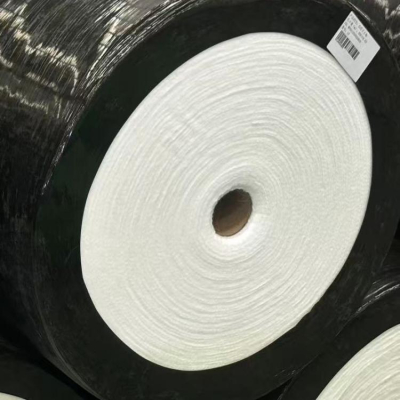
When planning a road construction or drainage project, procurement teams face a practical question: how much material fits on each roll, and how does that affect installation efficiency? The Geotextile Membrane 100m roll length has become an industry standard for good reason. It balances handling convenience with minimized on-site seams, reducing labor time and material waste.
For civil engineers and procurement specialists, understanding Geotextile Membrane 100m specifications means looking beyond length alone. Weight grade, material type, and manufacturing quality all determine whether a geotextile performs as expected over decades of service.
 |  |  |
Market Context: Standardization in Geotextile Supply
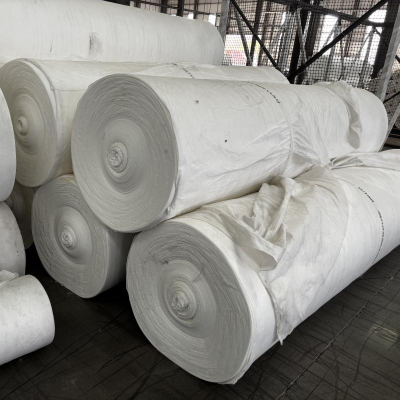
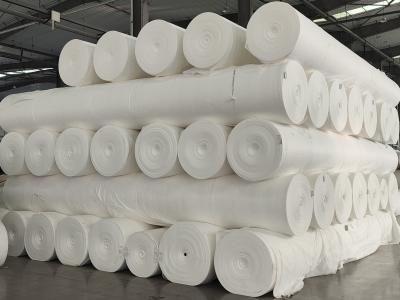
Geotextiles are manufactured in a range of roll lengths, typically from 50 meters up to 300 meters per roll . The Geotextile Membrane 100m configuration has emerged as a preferred choice for many infrastructure applications because 100-meter rolls are long enough to cover substantial areas with fewer seams but not so heavy that manual handling becomes difficult.
The global geotextiles market reached USD 3.86 billion in 2025 and is projected to grow to USD 6.15 billion by 2034, at a compound annual rate of 6.80 percent. Within this expanding market, nonwoven geotextiles dominate, accounting for approximately 67 percent of market share . The Asia-Pacific region leads consumption with a 35 percent market share, driven by infrastructure investments across China and India.
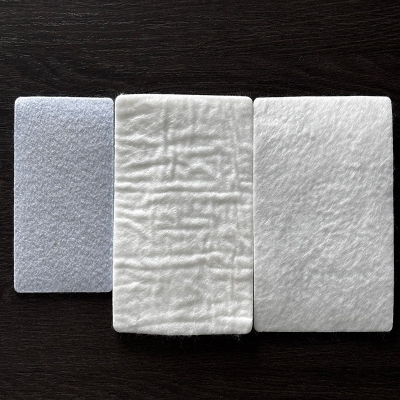
Geotextile 250g m2 represents a commonly specified weight grade within this market. A 250gsm nonwoven geotextile typically offers approximately 1.5mm thickness, tensile strength of 20 kN/m in both machine and cross-machine directions, and elongation at break of 65-70 percent .
Technical Specifications: What to Look for in a Geotextile Membrane 100m
Weight Grades and Performance
When specifying a Geotextile Membrane 100m roll, the weight grade (measured in grams per square meter) determines mechanical properties. Lighter grades from 100gsm to 150gsm suit basic separation applications. Medium grades from 200gsm to 300gsm, including Geotextile 250g m2, handle drainage and filtration in road construction and retaining walls. Heavy grades from 400gsm to 800gsm provide puncture protection and reinforcement for demanding applications like landfill liner protection and railway ballast stabilization .
A Polyester Geotextile of 250gsm weight offers high tensile strength, excellent creep resistance, and superior durability in demanding environments. Polyester (PET) continuous filament geotextiles are manufactured from virgin PET chips through a spunbond process, extruding continuous filaments that are needle-punched into a stable three-dimensional structure with high strength .
Material Types
Polyester Geotextile products are preferred for applications requiring high tensile strength and long-term creep resistance. Polyester has excellent creep performance, high tensile modulus, and is highly resistant to environmental damage within normal pH and temperature ranges encountered in soils .
Polypropylene (PP) geotextiles offer excellent chemical resistance and cost-effectiveness. High tenacity virgin fiber polypropylene geotextiles provide ultra-high tensile strength and superior puncture strength, available in weights from 70 to 2000 gsm .
Roll Configurations
Standard roll widths range from 1 meter to 8 meters, with Geotextile Membrane 100m lengths common across the industry . Some manufacturers offer roll widths up to 6.5 meters, with special orders available for wider configurations . Roll weights vary by material density, for example, a 5.05-meter wide roll at 100 meters length may weigh approximately 105 kg .
Manufacturing Processes
Nonwoven Geotextiles
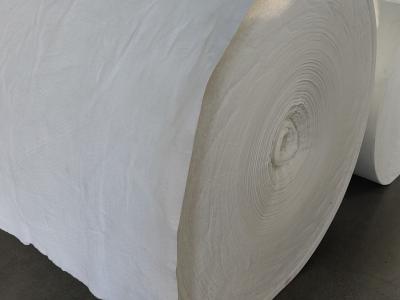
Nonwoven Polyester Geotextile products are manufactured using needle-punching technology. Staple fibers or continuous filaments are laid into a uniform web, then mechanically entangled using thousands of barbed needles. This creates a three-dimensional structure with high permeability and effective filtration properties .
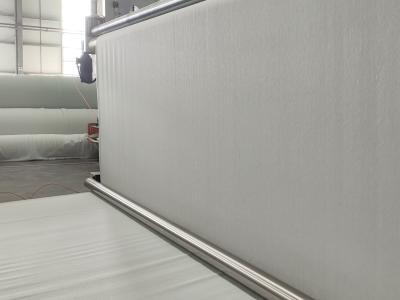
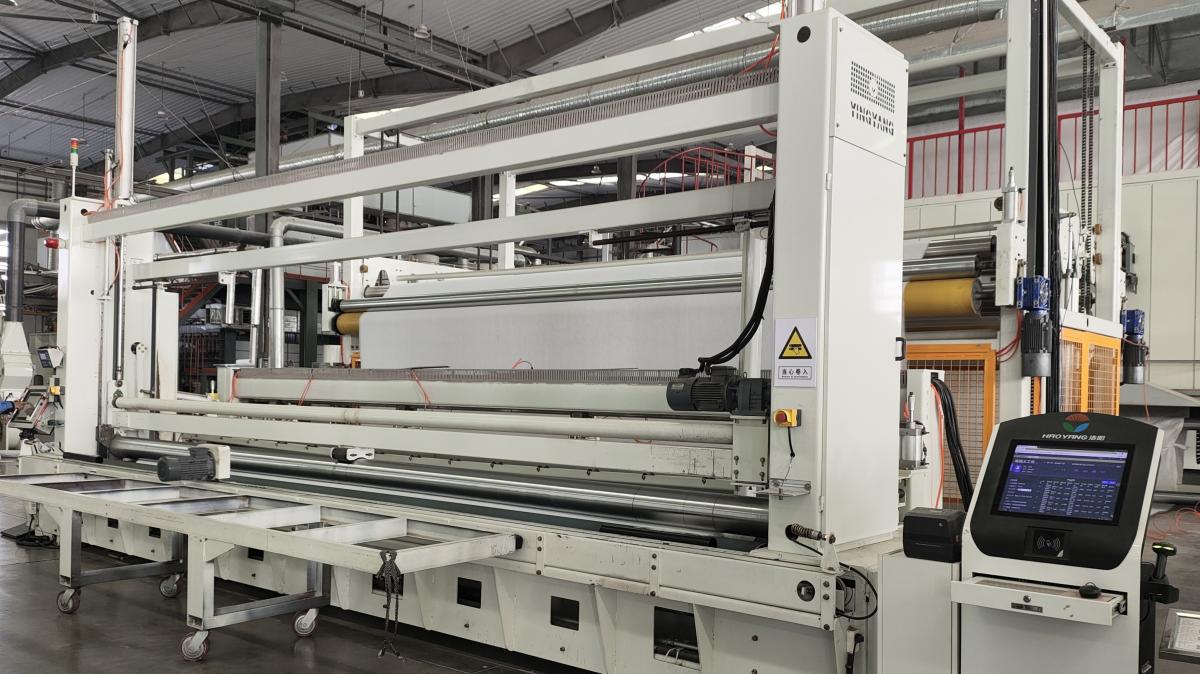
Production parameters including needle penetration depth, punch density, and web area density are precisely controlled to engineer specific performance characteristics. Higher needle density increases fiber entanglement, improving tensile strength and puncture resistance. Quality manufacturers implement three-stage quality control: raw material verification, in-process monitoring, and final product testing .
UV Stabilization and Color Options
Geotextiles are manufactured with different degrees of UV stabilization depending on application requirements. For projects where material may be exposed before burial, enhanced UV resistance is essential. Color options include white, grey, and custom colors; special UV-stabilized formulations are available for extended exposed applications .
Application Categories for Geotextile Membrane 100m
Road Construction
In road applications, Geotextile Membrane 100m rolls serve as separation layers between subgrade soil and aggregate base. The fabric prevents intermixing, maintains structural integrity, and extends pavement life. The Geotextile 250g m2 weight grade is commonly specified for this application, providing adequate puncture resistance for standard aggregate conditions.
Drainage Systems
Behind retaining walls and beneath pavement systems, geotextiles act as filter fabrics, allowing water passage while retaining soil particles. The three-dimensional structure of nonwoven geotextiles provides excellent permittivity and transmissivity, making them ideal for these applications .
Erosion Control
On slopes and embankments, geotextiles stabilize soil surfaces, reduce rainwater impact, and prevent soil migration. A Polyester Geotextile with enhanced UV resistance can remain exposed during vegetation establishment periods .
Landfill and Environmental Containment
In landfill liner systems and mining heap leach pads, geotextiles provide protection for geomembranes while facilitating leachate collection and drainage .
Procurement Considerations
Certification and Compliance
Verify that products carry certification to relevant international standards. The entire production of quality geotextiles is subject to ISO 9001 (Quality Management), ISO 14001 (Environmental Management), and ISO 45001 (Occupational Health and Safety) certifications, with plants audited by independent external institutes on a regular basis .
Weight Grade Selection
Selection should be based on application requirements. Geotextile 250g m2 is suitable for road construction, drainage filtration, and moderate load applications. For basic separation, lighter grades may suffice; for heavy reinforcement, higher grades up to 800gsm may be required .
Roll Length and Width
Standard Geotextile Membrane 100m lengths simplify procurement and installation planning. Verify available widths for your project—standard widths typically range from 1 to 6 meters, with custom widths available from some manufacturers .
UV Stabilization Requirements
For projects where geotextile may remain exposed before burial, specify enhanced UV stabilization. Quality products retain at least 70 percent of original tensile strength after 500 hours of accelerated UV exposure.
Frequently Asked Questions
Q1: What is the standard length for geotextile rolls?
The Geotextile Membrane 100m roll length is an industry standard, but geotextiles are available in lengths from 50 meters up to 300 meters per roll depending on manufacturer and product type . Longer rolls reduce seams and installation time but require heavier handling equipment.
Q2: What weight grade should I specify for road construction?
Geotextile 250g m2 is commonly specified for road separation and filtration applications. This weight grade offers adequate puncture resistance for standard aggregate conditions while maintaining cost-effectiveness. For heavier traffic loads or sharper aggregate, consider 300gsm to 400gsm grades.
Q3: What is the difference between polyester and polypropylene geotextiles?
A Polyester Geotextile offers higher tensile strength, better creep resistance, and excellent durability in demanding environments . Polypropylene geotextiles provide excellent chemical resistance and cost advantages . Polyester is preferred for high-strength reinforcement applications; polypropylene is suitable for most separation and filtration needs.
Q4: How do I verify quality for a large geotextile order?
Request Mill Test Reports for each production lot. Quality manufacturers implement three-stage quality control: raw material verification, in-process monitoring with electronic mass-per-unit-area checks, and final product testing at accredited laboratories . For critical projects, consider independent third-party testing.
Q5: Can geotextiles be used for long-term exposed applications?
Yes, with proper specification. Geotextiles are manufactured with different degrees of UV stabilization. For extended exposed applications, specify enhanced UV resistance. Quality Polyester Geotextile products maintain integrity under prolonged sun exposure, with some achieving up to 2000 hours UV resistance .
Conclusion
Selecting the right Geotextile Membrane 100m specification requires attention to weight grade, material type, roll configuration, and application requirements. The Geotextile 250g m2 weight grade offers an optimal balance of strength and permeability for many infrastructure applications. Polyester Geotextile products provide superior tensile strength and creep resistance for demanding reinforcement roles.
Technical support is available for procurement teams and engineers specifying geotextiles for infrastructure projects. Submit project requirements for a no-obligation review of appropriate Geotextile Membrane 100m specifications, including weight grade recommendations and certified performance data.