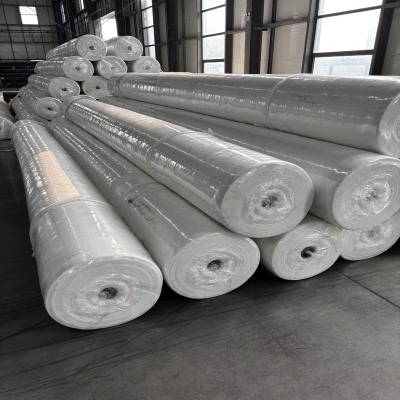
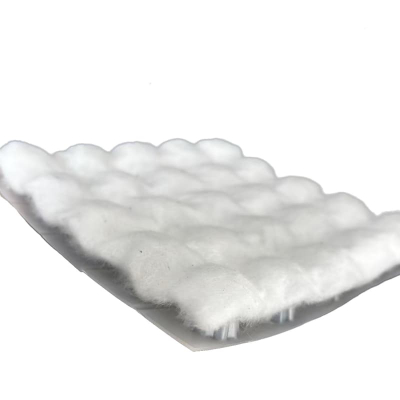
Geotextile Anti UV: Why UV Resistance Determines Long-Term Field Performance
A road construction project in an alpine tundra environment faced a recurring problem. Seasonal freeze-thaw cycles caused frost heave and pavement cracking. Engineers specified a wicking geotextile for frost damage control, but solar radiation—particularly ultraviolet exposure—was causing premature failure of the material. The solution came through blending modification technology, developing UV-resistant wicking fibers with a specific formulation of 2% UV-1164 plus 0.3% B900 additive .
This research, published in the Journal of Testing and Evaluation, demonstrated that UV-resistant modification could significantly inhibit the deterioration of hydraulic conductivity. Compared to unmodified material, the modified geotextile showed increased hydraulic conductivity of approximately 0.35E-5 g/s and improved drainage capacity by 0.76% at 200 hours .
For procurement professionals and civil engineers, understanding Geotextile Anti UV properties is essential. Ultraviolet radiation is one of the primary factors leading to premature failure of geotextiles exposed during installation or in permanent applications . Without proper UV stabilization, a fabric can lose over 50% of its tensile strength within weeks of sun exposure.
Why UV Resistance Matters in Geotextile Applications
Geotextile Anti UV properties are critical for any project where the fabric will remain exposed to sunlight before burial or serve in permanent exposed applications. Research has shown that retention ratio of tensile properties of nonwoven polypropylene geotextiles decreased by approximately 50% on exposure to ultraviolet light .
The mechanism is photo-oxidative aging. Ultraviolet radiation breaks down polymer chains, causing embrittlement and strength loss. A Geotextile Road Fabric left exposed for 30-60 days without proper UV stabilization can lose sufficient strength to compromise its separation and reinforcement functions.
PP Geotextile Non Woven products incorporate carbon black or other UV stabilizers to mitigate this degradation. The black color in standard geotextiles indicates the presence of carbon black, which absorbs ultraviolet radiation and converts it to heat, protecting the polymer beneath. Studies have demonstrated that geotextile composites with larger weights of polyester geotextile and proper UV stabilization were more stable against ultraviolet light .
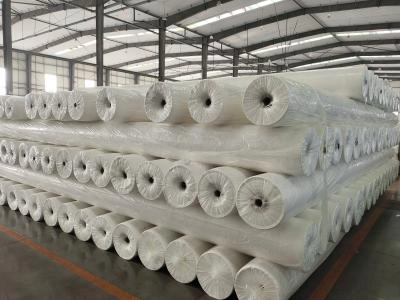 | 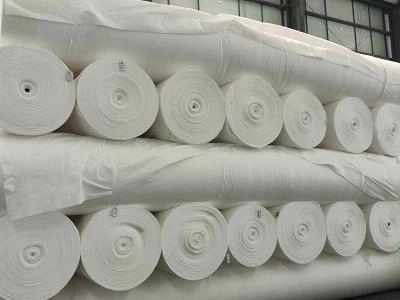 | 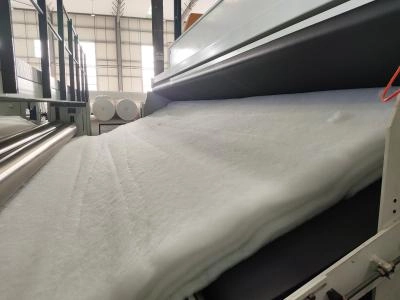 |
How Anti-UV Geotextiles Are Manufactured
Geotextile Anti UV properties begin at the polymer formulation stage. UV stabilizers and absorbers are compounded into the polymer resin before extrusion, ensuring protection throughout the fiber cross-section—not just as a surface coating.
UV Stabilizer Packages
Effective UV stabilization typically involves a combination of additives:
Carbon black: The most common UV stabilizer for polypropylene geotextiles. Standard content of 2-3% provides adequate protection for typical construction exposure periods. Research has shown that geotextile composites with carbon black as ultraviolet stabilizer demonstrated improved weatherability .
Hindered amine light stabilizers (HALS): Absorb free radicals generated by UV exposure, slowing polymer degradation.
UV absorbers: Compounds like UV-1164 that absorb harmful radiation before it reaches the polymer.
Recent research on wicking geotextiles identified an optimal formulation of 2% UV-1164 plus 0.3% B900 addition for enhanced anti-UV performance .
Manufacturing Considerations
For PP Geotextile Non Woven products, the needle-punching process must maintain the fiber structure while ensuring even distribution of UV stabilizers. Polypropylene filament geotextiles are produced through spunbonded needle-punching with specially formulated polymers that provide high strength and suitable fracture elongation . Some advanced geotextiles are made through duplicated geotextile construction, combining polypropylene and polyester layers via needle-punching to improve overall weatherability .
Applications Requiring Anti-UV Geotextiles
Road Construction in Cold Regions
In alpine tundra environments, roadbed engineering faces frost heave and thaw settlement challenges . Geotextile Anti UV products with wicking properties have important application value in frost damage control of roadbeds. The material removes moisture from the subgrade while maintaining its strength despite UV exposure during construction.
Highway and Railway Projects
Geotextile Road Fabric used in road and railway construction often experiences extended exposure periods during installation. Weather-related delays can leave fabric uncovered for weeks, making UV resistance critical. High-strength polypropylene spun-bonded needle-punched geotextiles with UV-resistant masterbatch have been developed specifically for highway and railway separation layers .
Landfill Covers and Environmental Applications
Exposed landfill caps and erosion control installations may remain in sunlight permanently. Geotextile Anti UV products with enhanced UV stabilization are essential for these long-term exposed applications.
Tunnel and Underground Construction
Even in underground applications, geotextiles may be stored on-site and exposed before installation. Quality PP Geotextile Non Woven products with UV stabilization maintain their properties through the construction phase .
Research Validation: Performance Under UV Exposure
A comprehensive Korean study on duplicated geotextiles assessed the weatherability of nonwoven polypropylene geotextiles with carbon black as ultraviolet stabilizer . The research found:
Retention ratio of tensile properties of nonwoven polypropylene geotextiles decreased by about 50% on exposure to ultraviolet light
Geotextile composites showed slightly decreased degradation compared with polypropylene geotextiles alone
Duplicated geotextiles with larger weights of polyester geotextile were more stable against ultraviolet light
Changes of tensile properties of geotextile composites were in the range of -20% to +10% under various chemical conditions
The wicking geotextile study demonstrated that UV-resistant modification could significantly inhibit the deterioration of hydraulic conductivity over time . The research highlighted that UV exposure degrades not only mechanical strength but also drainage performance—a critical consideration for applications where both functions are required.
What Buyers Should Check Before Ordering
UV Test Reports
Request Mill Test Reports showing UV resistance data per ASTM D4355. Quality Geotextile Anti UV products should retain at least 70% of tensile strength after 500 hours of accelerated UV exposure. Premium products may achieve 80% retention.
Stabilizer Verification
Confirm what UV stabilizers are used and at what concentration. Carbon black content of 2-3% is standard for most applications. For extended exposure, specify enhanced stabilizer packages.
Weight and Thickness
Heavier geotextiles generally provide better UV resistance because the outer fibers can sacrifice themselves while protecting the interior structure. For long-term exposed applications, consider PP Geotextile Non Woven products in the 300-400 g/m² range.
Color Confirmation
Black geotextiles typically contain carbon black for UV stabilization. While other colors exist, black is the industry standard for UV-resistant applications.
Frequently Asked Questions
Q1: How long can Geotextile Anti UV fabric remain exposed to sunlight?
Properly stabilized Geotextile Anti UV with 2-3% carbon black typically retains adequate strength for 30 to 60 days of exposure. Research shows that without stabilization, polypropylene geotextiles can lose approximately 50% of tensile strength on UV exposure . For extended exposure periods, specify enhanced UV stabilization and request test data confirming strength retention after extended exposure.
Q2: What is the difference between carbon black and other UV stabilizers?
Carbon black is the most common and cost-effective UV stabilizer for PP Geotextile Non Woven. It absorbs UV radiation and converts it to heat. Hindered amine light stabilizers (HALS) and UV absorbers like UV-1164 work through different mechanisms, absorbing free radicals or harmful radiation . The optimal approach often combines multiple stabilizers.
Q3: Does Geotextile Anti UV lose drainage performance under UV exposure?
Yes. Research has shown that hydraulic conductivity deteriorates with aging time, but modification treatment can significantly inhibit the deterioration degree . Compared to unmodified material, anti-UV treated geotextiles showed increased hydraulic conductivity and improved drainage capacity over time.
Q4: Can Geotextile Anti UV be used for exposed landfill caps?
Yes, but specify enhanced UV stabilization. Research on duplicated geotextiles demonstrated that geotextile composites with larger weights of polyester geotextile were more stable against ultraviolet light . For permanent exposed applications, consider heavier grades (400+ g/m²) with extended UV resistance.
Q5: How should buyers specify Geotextile Anti UV for quality assurance?
Specify: PP Geotextile Non Woven with UV stabilizers compounded into the polymer; minimum 70% tensile strength retention after 500 hours UV exposure per ASTM D4355; carbon black content of 2-3% or documented HALS/UV absorber content; weight grade appropriate to application; and Mill Test Reports confirming UV resistance for each production lot.
Conclusion
Geotextile Anti UV products protect infrastructure investments by maintaining strength and performance despite sun exposure. Research confirms that without proper stabilization, geotextiles can lose over 50% of tensile strength from UV degradation . With advanced stabilizer packages, Geotextile Road Fabric and PP Geotextile Non Woven products retain their mechanical and hydraulic properties through installation and service life.
When specifying anti-UV geotextiles, verify stabilizer content, request UV test data, and match weight grade to exposure duration and application demands.
Need help specifying Geotextile Anti UV for your next project? Share your exposure conditions and application requirements with our technical team. We will provide a no-obligation review of appropriate UV-stabilized specifications with certified performance data.