Geotextile 800g m²: Understanding the Performance Threshold for High-Risk Installations
When specifying protection layers for high-load applications, engineers often face a choice between 400, 600, and 800 g/m². The cost difference between these grades is modest, but the performance gap at the puncture threshold is not. Field data from multiple landfill and mining operations indicates that the transition from 400 to 800 g/m² corresponds to a significant reduction in installation damage incidents.
A landfill operator in Germany found this out the hard way. After repeated punctures with 400 g/m² fabric under drainage stone, the site switched to 800 g/m². The heavier material survived the same aggregate drops without damage. The project recovered three weeks of lost schedule.
This case illustrates a broader pattern. Across mining heap leach pads, heavy-haul roads, and railway ballast applications, the Geotextile 800g m2 grade has become the specification of choice where lighter materials have proven inadequate. For procurement teams and project engineers, understanding the technical basis for this weight class—and what to verify on delivery—is essential for reliable project execution.
 |  |  |
The Mechanical Rationale for 800 g/m²
The primary function of a heavy protection geotextile is to distribute point loads from angular aggregate over a wider area, preventing puncture of the underlying geomembrane or subgrade. CBR puncture strength, measured per ASTM D6241, provides a direct indication of this capability.
A 200 g/m² nonwoven fabric typically delivers approximately 1.0 kN. A 400 g/m² product gives around 2.0 kN. The Geotextile 800g m2 grade achieves 4.00 kN—double the 400 g/m² value and four times the 200 g/m² figure. This is not a linear relationship; puncture resistance scales faster than weight due to increased thickness and fibre entanglement density.
The 5.0 mm thickness of 800 g/m² fabric provides cushioning that lighter grades cannot match. When stone contacts the fabric, the thickness allows load to spread before the underlying layer is stressed. The 25.0 kN/m tensile strength (ASTM D4595) ensures the fabric does not split under equipment loads. Together, these properties make PP Geotextile Non Woven at 800 g/m² a robust solution for aggressive installation conditions.
Why Puncture Resistance Is the Critical Installation Parameter
Tensile strength gets significant attention during design. On site, however, the first failure mode is almost always puncture. Aggregate dropped from height concentrates load on small contact points. If the fabric cannot resist that point pressure, it fails immediately.
Field observations from multiple projects indicate that puncture incidents drop sharply once CBR exceeds 3.5 kN. At 4.00 kN, the fabric survives even careless stone placement. Several European landfill operators have reported that switching from 400 to 800 g/m² eliminated puncture repairs entirely over subsequent project phases. The additional material cost was modest compared to the savings in downtime and labour.
For mining applications, the Mine Geotextile segment has similar requirements but with added chemical exposure. Heap leach pads contain acidic solutions with pH as low as 2. PP Geotextile Non Woven maintains its properties across pH 2-13, while polyester would hydrolyse under acidic conditions. This chemical resistance, combined with the mechanical strength of the 800 g/m² weight, makes polypropylene the standard choice for mining protection layers.
Manufacturing and Structural Characteristics
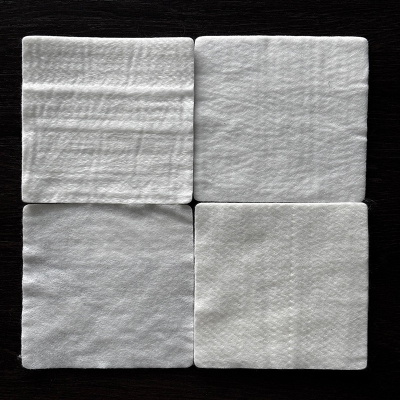
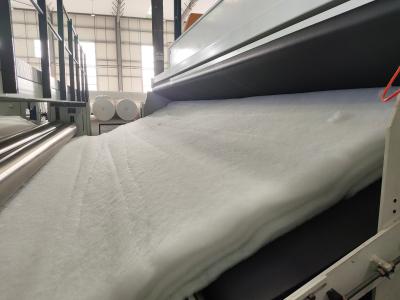
The needle-punching process for 800 g/m² follows the same principles as lighter grades but with greater material input. Polypropylene staple fibres are opened, blended, and carded into a uniform web. Multiple webs are cross-lapped to achieve the target mass per unit area.
A needle loom then drives thousands of barbed needles through the layered web at high frequency. The barbs carry surface fibres into the interior, mechanically entangling them into a stable three-dimensional mat. This process creates a dense, felt-like structure with no chemical binders or adhesives.
For 800 g/m² production, manufacturers increase needle density and penetration depth to ensure bonding through the full thickness. Some producers apply light calendering—heat and pressure—to smooth the surface, though this slightly reduces permeability. The finished fabric has a bulky, tough texture that provides both strength and water flow capacity.
The apparent opening size of approximately 0.10 mm retains soil particles while allowing 2,500 L/min/m² of water flow. This combination of filtration and drainage performance is essential for leachate collection systems and subgrade stabilisation.
Application Categories for 800 g/m²
Landfill Liner Protection
The fabric sits directly on the geomembrane beneath the drainage stone layer. It absorbs point loads from angular aggregate and spreads them over a wider area. The 0.10 mm opening size retains soil particles while allowing leachate drainage. This application accounts for a significant portion of 800 g/m² consumption in European and North American markets.
Mining Heap Leach Pads
Heap leach operations require protection layers that withstand both mechanical abuse and chemical attack. The ore is sharp and heavy, and the leachate is often acidic. Mine Geotextile at 800 g/m² provides the puncture resistance and chemical stability required for these demanding conditions. Polypropylene's resistance to acidic environments makes it the preferred polymer for this application.
Heavy-Haul Roads
Access roads on soft ground need separation layers that prevent aggregate from punching into the subgrade. A loaded haul truck can exert point loads that penetrate lighter fabrics. The 25.0 kN/m tensile strength of 800 g/m² distributes these loads, maintaining road surface integrity under repeated passes.
Railway Ballast Stabilisation
Railway tracks require separation between sharp ballast and soft subgrade. The dynamic loading from trains stresses the geotextile repeatedly over decades. Heavier weights provide the long-term durability that lighter grades cannot match in this application.
Procurement Considerations
Test Documentation
Request Mill Test Reports for each production lot covering CBR puncture (ASTM D6241), tensile strength (ASTM D4595), UV resistance (ASTM D4355), permittivity (ASTM D4491), and apparent opening size (ASTM D4751). Values should be consistent across lots, indicating stable process control.
Weight Verification
Confirm delivered material meets 800 g/m² within standard tolerance (±10%). If the weight falls below specification, puncture resistance will be correspondingly reduced.
UV Stabilisation
If the fabric remains exposed before burial, verify the presence of carbon black or other UV inhibitors. Minimum specification is 70% tensile strength retention after 500 hours of accelerated exposure per ASTM D4355.
Roll Dimensions
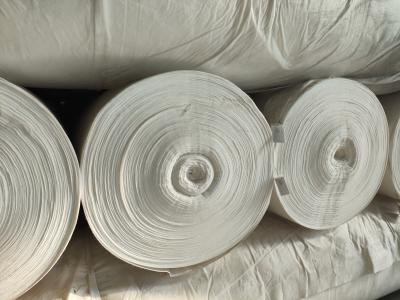
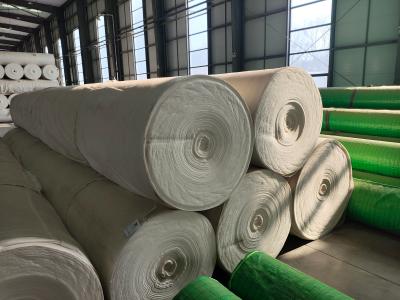
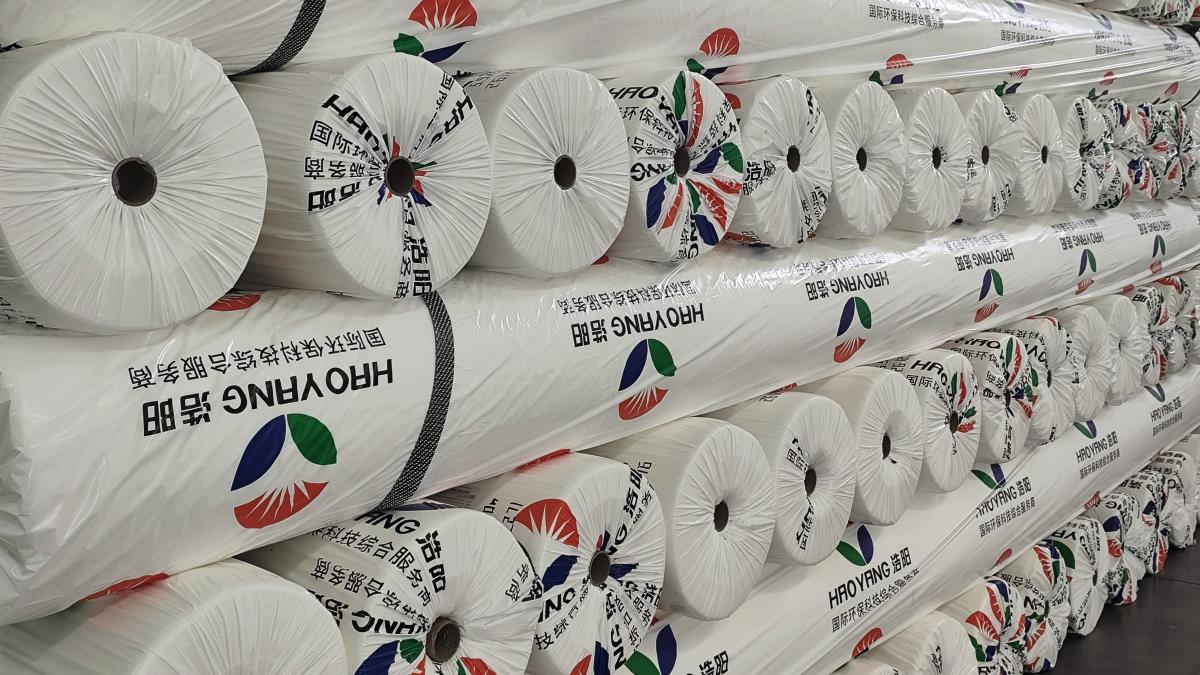
Standard widths range from 2.0 to 8.0 metres, with typical lengths of 50 to 100 metres. A 4 m × 100 m roll of 800 g/m² weighs approximately 320 kg. Plan for mechanical handling equipment on site.
Frequently Asked Questions
Q1: When is 800 g/m² the appropriate specification?
Specify 800 g/m² when aggregate is angular and dropped from height, when equipment loads are heavy, or when subgrade conditions are soft. If a lighter grade has experienced punctures on similar projects, 800 g/m² is a proven upgrade. For light-duty applications such as footpaths or low-traffic car parks, lighter grades are sufficient.
Q2: Why specify PP over polyester for 800 g/m²?
Polypropylene resists pH 2-13, making it suitable for acidic mine leachate and landfill leachate. Polyester can hydrolyse in alkaline or acidic conditions. Polypropylene also repels water, which aids drainage performance. Polyester provides higher tensile strength, but for protective applications, polypropylene is generally the more durable choice.
Q3: Can 800 g/m² be used for temporary haul roads?
Yes. Geotextile 800g m2 provides effective separation and stabilisation for heavy-haul access roads over soft ground. The tensile strength keeps aggregate from punching into the subgrade, reducing rutting and maintenance requirements.
Q4: How is UV resistance verified on delivered fabric?
Review the Mill Test Report for UV resistance per ASTM D4355. Specification requires at least 70% tensile strength retention after 500 hours. Black fabric indicates the presence of carbon black, the standard UV stabiliser.
Q5: What is the typical roll weight for 800 g/m²?
A 4 m wide by 100 m long roll weighs approximately 320 kg. A 6 m wide roll weighs about 480 kg. Site handling equipment should be capable of managing these weights.
Summary
Geotextile 800g m2 serves projects where standard weights have proven inadequate. The CBR puncture strength of 4.00 kN provides a safety margin that lighter grades cannot match. The tensile strength of 25.0 kN/m ensures structural integrity under equipment loads. The thickness of 5.0 mm offers cushioning that protects underlying geomembranes and subgrades.
When specifying PP Geotextile Non Woven at 800 g/m², verify mechanical properties through Mill Test Reports, confirm UV stabilisation for exposed periods, and select roll widths that minimise field seams. The upfront cost difference between 400 and 800 g/m² is modest compared to the potential cost of installation damage and project delays.
Need assistance evaluating 800 g/m² for your site conditions? Submit your aggregate specifications, equipment loads, and subgrade data to our technical team. We will review your application and provide a no-obligation recommendation with certified performance data.