Geotextile 400g m²: A Heavyweight Specification for Demanding Infrastructure Applications
A landfill expansion project in the United Kingdom faced a persistent problem. The protection layer installed over the geomembrane kept puncturing during stone placement. Each puncture required costly repairs and delayed the construction schedule. The solution came from switching from a lighter fabric to a Geotextile 400g m² specification. The heavier fabric withstood the sharp aggregate and heavy equipment traffic, allowing the project to proceed without further delays.
This case illustrates a pattern familiar to many infrastructure engineers. When the standard weight grades fall short, the Geotextile 400g m² weight class steps in. For procurement professionals and civil engineers, understanding what a Non Woven Needle Punched fabric at this weight delivers—and how to specify it correctly—can make the difference between a successful project and an expensive repair.
 |  |  |
What 400g m² Delivers in the Field
The 400 grams per square meter weight class sits at the upper end of medium-weight geotextiles. A quality PP Geotextile Non Woven at 400g m² typically offers grab tensile strength of approximately 1,500 N (newtons) in both machine and cross-machine directions, CBR puncture resistance around 4.3 kN, and thickness of roughly 2.8 to 3.0 millimeters . These numbers translate directly to field performance.
The puncture resistance matters because it determines whether the fabric survives when sharp stone gets dumped onto it from height. The tensile strength determines whether the fabric holds together when heavy equipment turns on the aggregate layer above it. For demanding applications like landfill liner protection, railway ballast stabilization, and heavy-traffic haul roads, these properties are non-negotiable.
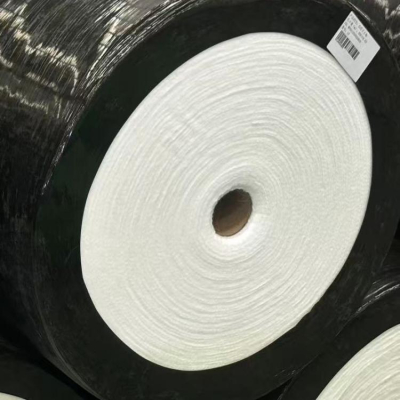
Non Woven Needle Punched geotextiles at 400g m² are manufactured from either polypropylene (PP) or polyester fibers through the needle-punching process . The needle-punching creates a three-dimensional fiber structure with distinctive pores that provide excellent filtration and drainage capabilities . This structure allows water to flow through while retaining soil particles, making it suitable for both filtration and separation applications.
Manufacturing: How 400g m² is Produced
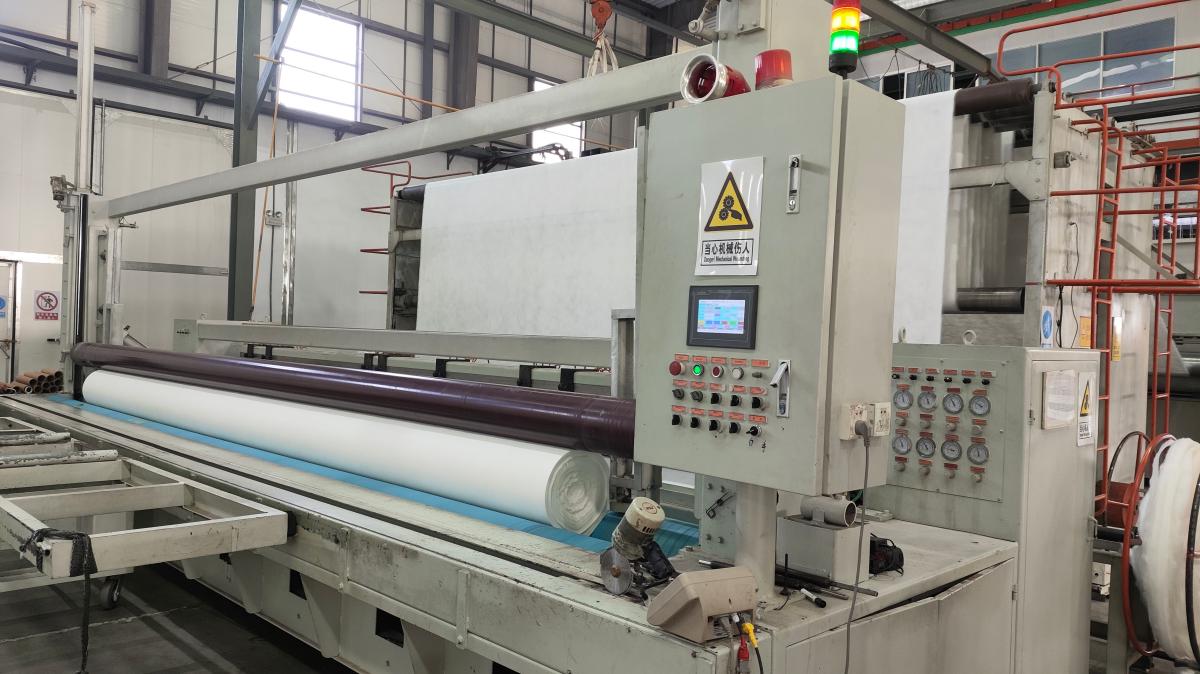
The production of PP Geotextile Non Woven at 400g m² follows the needle-punched manufacturing process. Short fibers—either polypropylene or polyester—are opened, blended, carded into a uniform web, and cross-lapped to achieve the target weight . The layered web then passes through a needle loom where thousands of barbed needles punch through the material at high frequency. The barbs carry fibers through the web, mechanically entangling them into a stable three-dimensional structure.
This mechanical bonding creates the bulky, felt-like character of Non Woven Needle Punched geotextiles . No weaving, no knitting, no chemical binders—just fiber entanglement that provides both strength and permeability.
Key process parameters that affect final fabric quality include needle density, penetration depth, and web area density . Manufacturers who control these parameters closely produce consistent fabric. Those who do not produce rolls that vary from one batch to the next, creating problems on site.
Research and Technical Context
The ScienceDirect engineering reference confirms that needle-punched nonwoven geotextiles are extensively used in civil engineering applications including road and railway construction, landfills, land reclamation, sea defence, and slope stabilization . The reference notes that these fabrics can perform more than one function simultaneously—filtration, separation, protection, drainage, and reinforcement—depending on the application requirements .
The fibrous network of Non Woven Needle Punched geotextiles accounts for their bulky nature, wide range of pore size distribution, and good drainage characteristics . The structure is anisotropic due to fiber reorientation during needling, with fiber segments migrating from the surface toward the interior and becoming perpendicular to the fabric plane .
Applications for Geotextile 400g m²
Landfill Protection Layers
Landfill liner systems require a protection layer between the geomembrane and the drainage stone. A Geotextile 400g m² fabric provides the puncture resistance needed for this critical application. The fabric cushions the geomembrane from sharp aggregate while allowing leachate to drain through.
Heavy-Traffic Haul Roads
When construction access roads must cross soft subgrade, heavy trucks can push aggregate down into the soil. A PP Geotextile Non Woven at 400g m² separates the layers while distributing loads. The fabric's tensile strength holds aggregate in place even under repeated heavy passes.
Railway Ballast Stabilization
Railway tracks require separation between sharp ballast and soft subgrade. The dynamic loading from trains stresses geotextiles repeatedly. Heavier weights like 400g m² provide the long-term durability this application demands.
Coastal Protection
Rock armour placed on slopes to prevent erosion requires a filter layer beneath it. Non Woven Needle Punched fabric at 400g m² survives the impact of stone placement while allowing water to drain and preventing soil loss.
What Buyers Should Check Before Ordering
Test Reports
Request Mill Test Reports for each production lot. Key tests include grab tensile strength (ASTM D4632), CBR puncture (ASTM D6241), UV resistance (ASTM D4355), permittivity (ASTM D4491), and apparent opening size (ASTM D4751). A quality Geotextile 400g m² product should show consistent values across these tests.
Weight Verification
Confirm that delivered fabric meets the specified 400g m² weight within tolerance. A fabric claiming 400g m² but weighing less will not provide the expected puncture resistance.
UV Stabilization
If the fabric will sit exposed before burial, verify UV inhibitor content. Quality PP Geotextile Non Woven includes carbon black or other stabilizers. Test results should show at least 70 percent strength retention after 500 hours.
Roll Width and Coverage
Standard rolls come in widths from 1 to 6 meters . Wider rolls reduce field seams. For large projects, specify widths that match your planned coverage to minimize cutting and waste.
Frequently Asked Questions
Q1: What projects need Geotextile 400g m² instead of lighter fabric?
Choose Geotextile 400g m² when the job involves sharp aggregate, heavy equipment traffic, or soft subgrade that allows stone punch-through. Specific applications include landfill liner protection, heavy-traffic haul roads, railway ballast stabilization, and coastal protection. For basic separation under light traffic, lighter grades like 200-300g m² usually suffice.
Q2: What is the advantage of PP Geotextile Non Woven over polyester at 400g m²?
PP Geotextile Non Woven offers several advantages. Polypropylene density of 0.91 g/cm³ means more coverage area per roll compared to polyester (1.38 g/cm³). Polypropylene provides better alkali and acid resistance across pH 2 to 13. Polypropylene is also hydrophobic, which helps drainage performance.
Q3: What is the difference between 400g m² needle-punched and thermally bonded nonwoven?
Non Woven Needle Punched geotextiles are mechanically bonded through fiber entanglement, creating a bulky, three-dimensional structure with excellent filtration and drainage properties . Thermally bonded fabrics use heat to fuse fibers, resulting in a flatter, more uniform structure but lower permeability. For drainage and filtration applications, needle-punched is the preferred choice.
Q4: How should buyers specify Geotextile 400g m² for quality assurance?
Specify: needle-punched nonwoven construction from 100% virgin polypropylene or polyester fibers with UV stabilizers; minimum weight of 400g m²; minimum grab tensile strength appropriate to grade; minimum CBR puncture resistance; permittivity and apparent opening size meeting drainage requirements; and UV resistance of at least 70% strength retention after 500 hours. Request Mill Test Reports for each production lot.
Q5: What are standard roll sizes for Geotextile 400g m²?
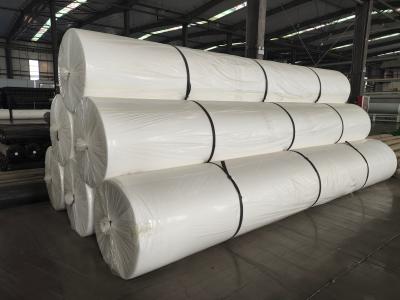
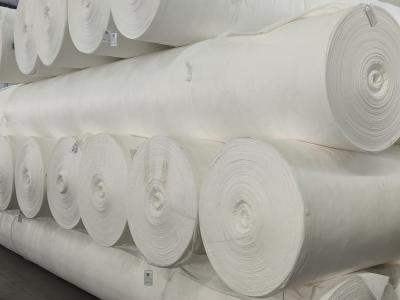
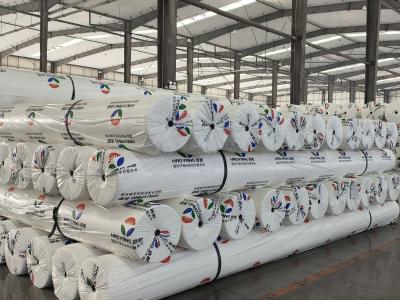
Standard widths range from 1 to 6 meters, with typical roll lengths of 50 to 100 meters . Some manufacturers offer widths up to 4.5 meters or 6.2 meters depending on production capability . The 400g m² weight gives a roll weight of approximately 20 kg per 100 m², requiring mechanical handling on large projects.
Conclusion
The Geotextile 400g m² weight class serves infrastructure projects where lighter materials would fail. From landfill liner protection in the UK to heavy-traffic haul roads worldwide, this Non Woven Needle Punched fabric provides the puncture resistance, tensile strength, and filtration efficiency that demanding applications require.
When specifying PP Geotextile Non Woven at 400g m², verify mechanical properties through Mill Test Reports. Confirm UV stabilization for exposed periods. Select appropriate roll widths to minimize field seams.
Need help specifying Geotextile 400g m² for your next project? Share your application details with our technical team. We will provide a no-obligation review of appropriate specifications with certified performance data.