Geotextile 100GSM: The Spec That Gets Misused More Than Any Other
A procurement manager I know once sent me a photo of a torn geotextile. It was a 100GSM fabric. He had used it under a drainage trench. Six months later, the trench clogged. Soil had washed into the gravel. The fabric had ripped in three places.
He asked me what went wrong. I told him the truth. The fabric didn't fail. The specification did.
Geotextile 100GSM is a lightweight filtration fabric. It has a specific job. When you ask it to do something else—like reinforcement or protection against sharp rock—it fails. This article explains where 100GSM works, where it doesn't, and how to avoid the mistake that procurement manager made.
 |  |  |
What 100GSM Can and Cannot Do
Let's start with the numbers. A typical Geotextile 100GSM has a mass of 100 grams per square meter. Thickness is about 0.8 mm. Grab tensile strength is around 4.5 kN/m. Apparent opening size is roughly 0.20 mm. Water flow under a 50 mm head is about 155 L/m²/s.
Those numbers tell a clear story. The 0.20 mm opening is good for filtering silt and fine sand. The flow rate is more than enough for drainage. The tensile strength is fine for installation—it won't tear when you unroll it and cover it with gravel.
But that 4.5 kN/m tensile strength won't reinforce a soft subgrade. It won't bridge weak spots under a road. It won't stop clay from pumping up into aggregate. For those jobs, you need a heavier fabric or a woven geotextile.
Geotextil PP at 100GSM is made from polypropylene. Polypropylene handles pH from 2 to 13. It resists acidic leachate and alkaline soils. That's why it's used in Mine Geotextile applications where process solutions are aggressive. But chemical resistance is not the same as load-bearing capacity. Don't confuse the two.
Where 100GSM Actually Works
I've seen 100GSM perform well in several applications. None of them involve heavy loads.
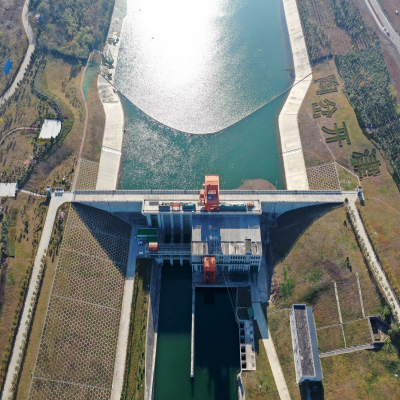
Drainage trenches. Wrap the perforated pipe. Line the trench before gravel goes in. The fabric keeps soil out of the drainage aggregate. Water flows through. The system works for years.
French drains. Same principle. The fabric acts as a filter. It stops fine particles from clogging the gravel. The 0.20 mm opening is a good match for most soils.
Soakaway crates. Surround the crate with 100GSM fabric. It prevents silt from entering while letting water infiltrate. Simple and effective.
Landscaping. Weed suppression under gravel paths. Separation between soil and decorative stone. Underlay for artificial turf. The fabric is cheap, light, and easy to cut. On sites with difficult access, that matters.
Light road separation. If the subgrade is stable and traffic is light, 100GSM can separate soil from aggregate. But the margin for error is thin. I've seen it fail when a contractor used it under a temporary access road. Loaded trucks punched through in two weeks. He had to rebuild with 300GSM.
Mine Geotextile filtration. In heap leach pads, 100GSM works as a filter cloth when the ore is fine and the solution is acidic. The polypropylene resists chemical attack. But if the ore is sharp or the overburden is heavy, step up to a heavier grade.
Where 100GSM Fails
Now the hard part. Where does 100GSM get specified incorrectly?
Heavy haul roads. A loaded truck exerts point loads that exceed the puncture resistance of a 100GSM fabric. The fabric punctures. Soil pumps up. The road fails. The repair cost is far higher than the savings from using a lighter fabric.
Landfill liner protection. Landfill liners need protection from sharp drainage stone. 100GSM is too thin. It will puncture under the weight of the stone. The geomembrane gets damaged. The entire containment system is compromised. Use 800GSM for that job.
Reinforcement over soft clay. 100GSM has low tensile strength. It cannot reinforce a weak subgrade. The fabric stretches. The clay moves. The structure settles. Use a woven geotextile or a geogrid instead.
The pattern is consistent. If the application involves sharp materials, heavy loads, or weak ground, 100GSM is the wrong specification. If the application is filtration or light separation, 100GSM often works well.
How the Fabric Gets Made
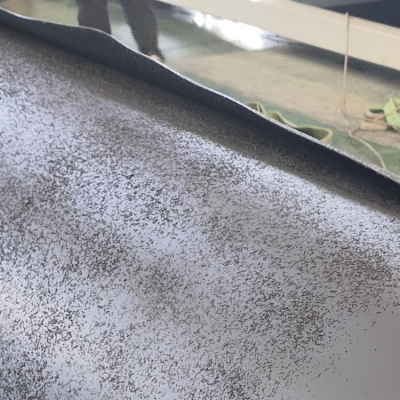
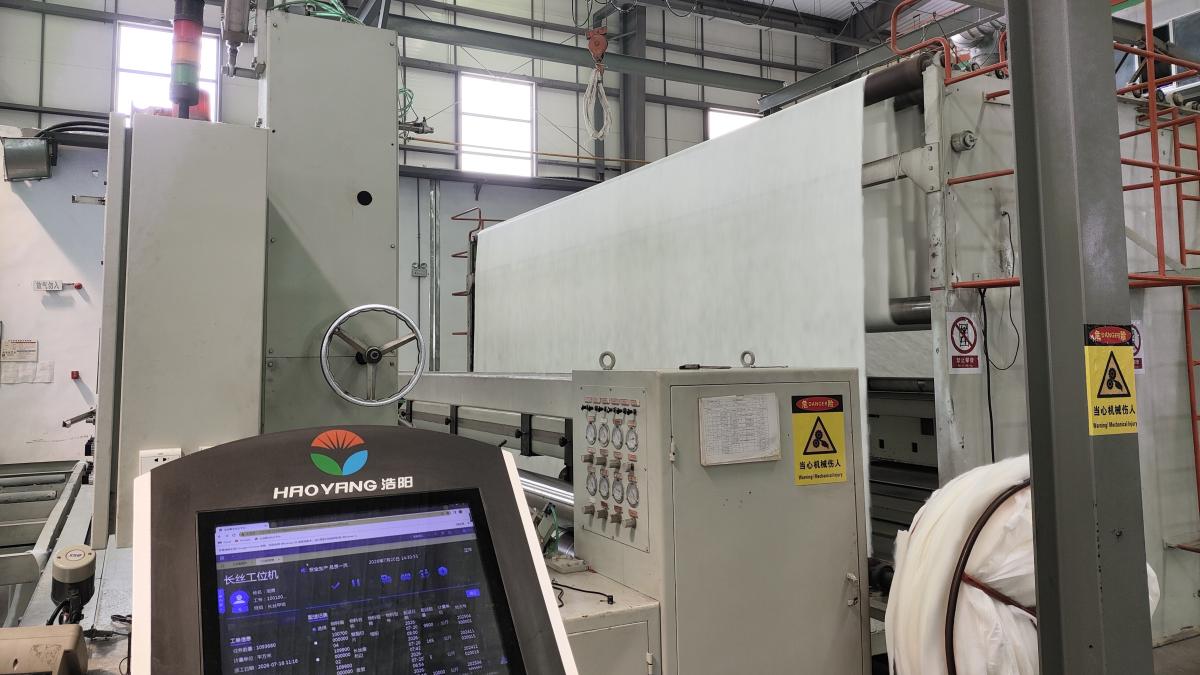
Geotextile 100GSM is made through needle-punching. Polypropylene pellets are melted and extruded into fibers. The fibers are carded into a uniform web. Then thousands of barbed needles punch through the web, entangling the fibers into a stable three-dimensional mat.
No weaving. No knitting. No chemical binders. Just fiber entanglement. The needle density and penetration depth control the final properties. Higher needle density increases strength but can reduce permeability. Manufacturers balance these parameters to hit the target specification.
Some suppliers use recycled polypropylene. That can introduce variability. Virgin resin gives consistent properties batch after batch. For critical filtration jobs, ask for virgin material.
What to Check Before You Order
Test reports. Ask for Mill Test Reports. Mass per unit area (ASTM D5261), thickness (ASTM D5199), grab tensile strength (ASTM D4632), apparent opening size (ASTM D4751). If the supplier can't provide these, find another supplier.
Weight verification. Weigh a sample. If it's supposed to be 100GSM, it should be 100GSM within tolerance. A 15 percent shortfall means you're paying for air.
UV stabilization. If the fabric sits in the sun before burial, check for UV inhibitors. Carbon black is standard. The fabric should retain at least 70 percent of tensile strength after 500 hours of exposure.
Application match. Be honest about the job. Filtration or reinforcement? Light loads or heavy? Stable ground or soft? The answers determine whether 100GSM is appropriate or whether you need 200GSM, 300GSM, or heavier.
Frequently Asked Questions
Q1: Can I use Geotextile 100GSM under a driveway?
For a light-duty driveway over stable subgrade, yes. For a driveway that sees heavy trucks or sits on soft clay, no. The 100GSM fabric will tear or puncture. Use 200GSM or heavier.
Q2: What's the difference between Geotextil PP and polyester at 100GSM?
Geotextil PP resists pH 2-13 and is hydrophobic, so it works well in drainage and acidic mining environments. Polyester has higher tensile strength but can hydrolyze in alkaline or acidic conditions. For most filtration jobs, PP is the safer bet.
Q3: How does 100GSM perform in Mine Geotextile applications?
It works as a filter cloth in heap leach pads and tailings facilities where the solution is acidic and the ore is fine. The polypropylene resists chemical attack. But if the ore is sharp or the overburden is heavy, specify a heavier grade to avoid puncture.
Q4: What roll sizes are available for Geotextile 100GSM?
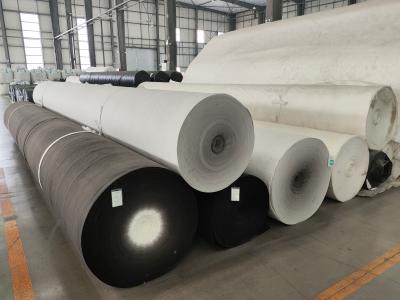
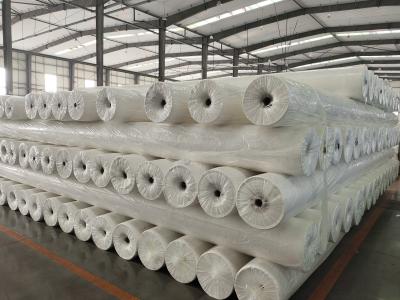
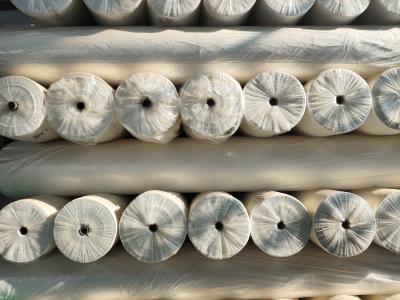
Standard widths range from 1 to 6.2 meters. Roll lengths are typically 100 to 200 meters. A 100 m² roll weighs about 10 kg, so one person can handle it.
Q5: How do I know if the fabric meets UV requirements?
Check the Mill Test Report for ASTM D4355 results. It should show at least 70% strength retention after 500 hours. Black fabric contains carbon black, which is the standard UV stabilizer.
The Bottom Line
Geotextile 100GSM is a filtration and separation fabric. It is not a reinforcement geotextile. It is not a protection layer for geomembranes under sharp rock. It is not for heavy haul roads.
For drainage, landscaping, and light filtration, it is a cost-effective solution that performs well when specified correctly. For anything involving sharp materials, heavy loads, or weak ground, step up to a heavier grade.
Don't let a supplier talk you into using 100GSM where you need 300GSM. And don't let them sell you an 85GSM fabric labeled as 100GSM. Ask for test reports. Verify the weight. Match the fabric to the job.
Need help figuring out if 100GSM is right for your project? Send us your application details—soil type, load conditions, drainage requirements. Our technical team will review your case and recommend the appropriate specification with certified performance data. No obligation, just straight answers.