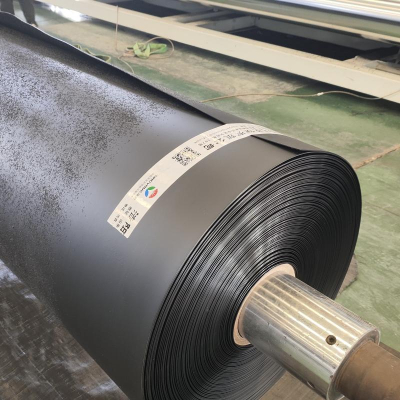
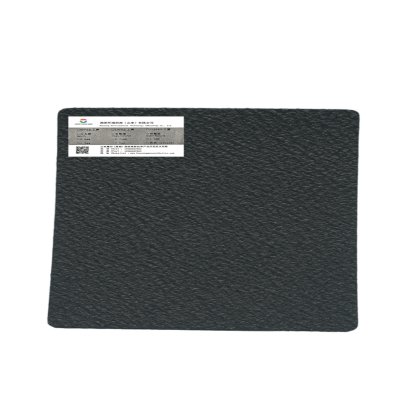
Geomembrane Sheet Market 2026-2035: Technical Specifications, Industry Trends, and Global Sourcing Guide
Introduction: The Essential Role of Geomembrane Sheet in Modern Containment
Across landfill engineering, mining operations, water conservancy, and civil construction, one material has become indispensable for reliable fluid containment: the Geomembrane Sheet. As environmental regulations tighten and infrastructure ages, the demand for high-performance barriers that prevent liquid migration continues to rise.
The global geomembrane market was valued at USD 2.6 billion in 2025 and is projected to grow from USD 2.7 billion in 2026 to USD 4.5 billion by 2035, representing a compound annual growth rate of 5.8% . HDPE geomembranes dominate this market, valued for their high strength-to-density ratio, excellent chemical resistance, and long-term durability .
This report examines the Geomembrane Sheet market in 2026, providing technical specifications, manufacturing processes, emerging trends in seam testing and quality assurance, real-world application examples, and guidance for global buyers.
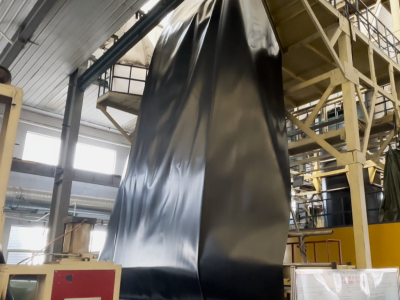 |  | 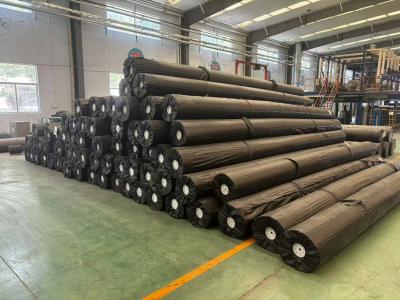 |
Market Context — Size, Growth, and Regional Dynamics
Current Market Valuation and Growth Outlook
The broader geosynthetics membranes market—which includes HDPE Smooth Geomembrane products—was valued at approximately USD 1.35 billion in 2025 and is projected to reach USD 2.15 billion by 2032, growing at a 6.8% CAGR . Within this market, HDPE remains the dominant material choice, favored for its durability, UV resistance, and suitability for large-scale containment projects .
Key growth drivers include:
Infrastructure Development — Large-scale dam, reservoir, and canal projects across Asia, the Middle East, and Africa require reliable Geomembrane Sheet products for seepage control. Landfill closures, heap leach mining, and wastewater treatment reservoirs represent major application segments .
Environmental Regulation — Stricter liner requirements for landfills and hazardous waste facilities continue to drive demand for certified HDPE Geomembrane. Wisconsin state regulations, for example, mandate specific density testing frequencies (one test per 100,000 ft² of installed geomembrane) and stress crack resistance documentation for each resin batch .
Mining Sector Demand — Research published in 2024 confirms that appropriate HDPE Smooth Geomembrane liners can be expected to perform "very well for an extremely long time, limiting leakage and contaminant migration" when properly constructed on suitable subgrades .
Technical Specifications for Geomembrane Sheet
Material Composition and Manufacturing
A specification-grade HDPE Smooth Geomembrane is manufactured from virgin high-density polyethylene resin with density controlled between 0.939 and 0.960 g/cm³ . The additive package includes:
Carbon black (2.0-3.0%) for UV stabilization and long-term weathering resistance
Antioxidants to suppress thermal oxidation during processing and service life
Process aids to ensure uniform sheet formation
The production process uses three-layer co-extrusion technology, where raw materials are processed at approximately 200°C by fusing and coextrusion. This method preserves the material's basic properties during manufacturing .
Real-World Applications and Case Studies
Taiwan Landfill Expansion Project (2010-2014)
The Reinforced Soil Dike at a Class B Waste Landfill Expansion Project in Kaohsiung, Taiwan, utilized ACEMembrane™ HDPE Smooth Geomembrane as a key component . The project incorporated multiple geosynthetic products:
ACEGrid® GG for soil reinforcement
ACETex® NW non-woven geotextile for filtration
ACEMembrane™ for barrier and containment
ACEDrain™ S for drainage
The HDPE Smooth Geomembrane served as the primary fluid barrier, preventing leachate migration from the waste mass into surrounding soil and groundwater. This project demonstrates the integration of Geomembrane Sheet with complementary geosynthetics in modern landfill engineering .
The Critical Role of Seaming in Geomembrane Performance
Research has consistently shown that "the whole is only as good as its weakest element" — and for Geomembrane Sheet installations, seams are invariably the weakest element . Seam quality is "at the heart of solid waste and liquid containment systems," with seam type, construction, and inspection forming a major part of containment engineering practice .
Key seam types for HDPE Geomembrane include :
Extrusion fillet welding — for patches and penetrations
Extrusion flat welding — for panel connections
Hot wedge fusion welding — preferred for long, straight seams
Tailings Storage Facility Research
A 2024 study published in Mining journal summarized key findings on geosynthetics in tailings storage facilities . The research addressed:
Compressibility and permeability of tailings
Leakage prediction through circular and non-circular geomembrane holes
Effect of subgrade permeability on liner performance
Long-term performance of HDPE geomembranes
Key conclusion: An appropriate HDPE Smooth Geomembrane liner "can be expected to perform very well for an extremely long time, limiting leakage and contaminant migration from the facility into the surrounding environment" — provided the liner is well-constructed on a suitable subgrade .
Quality Assurance and Testing Protocols
Regulatory Requirements for Geomembrane Sheet
Wisconsin state regulations (NR 516) provide a benchmark for Geomembrane Sheet quality assurance requirements applicable to landfill and containment projects :
Material Testing:
Density and melt index — one test per 100,000 ft² of installed geomembrane, minimum one test per resin batch
Environmental stress cracking resistance — one test per resin batch
Carbon black content — per GRI-GM13 specifications
Pre-Qualification Testing:
Conducted on each welding machine by each seaming technician
Required at start of each work day
Repeated at intervals ≤5 hours
Following work interruptions, weather changes, or machine setting changes
Destructive Seam Testing:
One sample per 500 feet of fusion seam (standard)
One sample per 1,000 feet when leak location testing is conducted
Minimum 5 shear tests and 5 peel tests per sample location
Non-Destructive Testing:
Performed on all seams of geomembrane attached by welding or mechanical attachments
Includes all plastic plate and pipe penetrations
Leak Location Testing:
Conducted after leachate collection layer placement
Documentation of all detected defects and repairs required
These regulatory requirements are representative of best practices for Geomembrane Sheet installations worldwide.
Installation Best Practices for HDPE Smooth Geomembrane
Subgrade Preparation:
The foundation must be smooth, free of rocks exceeding 12mm diameter, sticks, organic matter, and sharp objects. Compaction to ≥95% Proctor density is standard. For rough subgrades, a non-woven geotextile cushion (300-800 g/m²) is recommended.
Seaming:
Dual-track thermal fusion welding (hot wedge) is the preferred method for HDPE Smooth Geomembrane. Extrusion welding is used for patches, penetrations, and irregular geometries.
Testing:
Non-destructive testing of every seam via air pressure, vacuum box, or spark testing
Destructive sampling — minimum one sample per 500 feet of fusion seam
Trial welds at start of each shift and after every 5 hours of continuous seaming
Selecting a Reliable Supplier for Geomembrane Sheet
Key Evaluation Criteria for HDPE Geomembrane Manufacturers
When sourcing Geomembrane Sheet products, verify these essential items with potential suppliers:
Certifications:
GRI-GM13 compliance — the industry standard for HDPE geomembranes
ISO 9001 — quality management system
Third-party test reports — from accredited laboratories
Material Traceability:
Documentation showing 100% virgin resin from reputable suppliers (Dow, ExxonMobil, Borealis)
Recycled content is unacceptable for primary containment applications
Mill Test Reports:
Lot-specific documentation showing actual test values for:
Thickness (with tolerance)
Tensile strength at yield and break
Puncture resistance
Carbon black content (2.0-3.0%)
Stress crack resistance (≥300 hours)
Testing Capability:
In-house laboratory with calibrated test equipment
Documentation of calibration within 3 months of installation start
Warranty:
Minimum 20-year manufacturer warranty for HDPE Smooth Geomembrane meeting GRI-GM13 standards
Manufacturing Capabilities
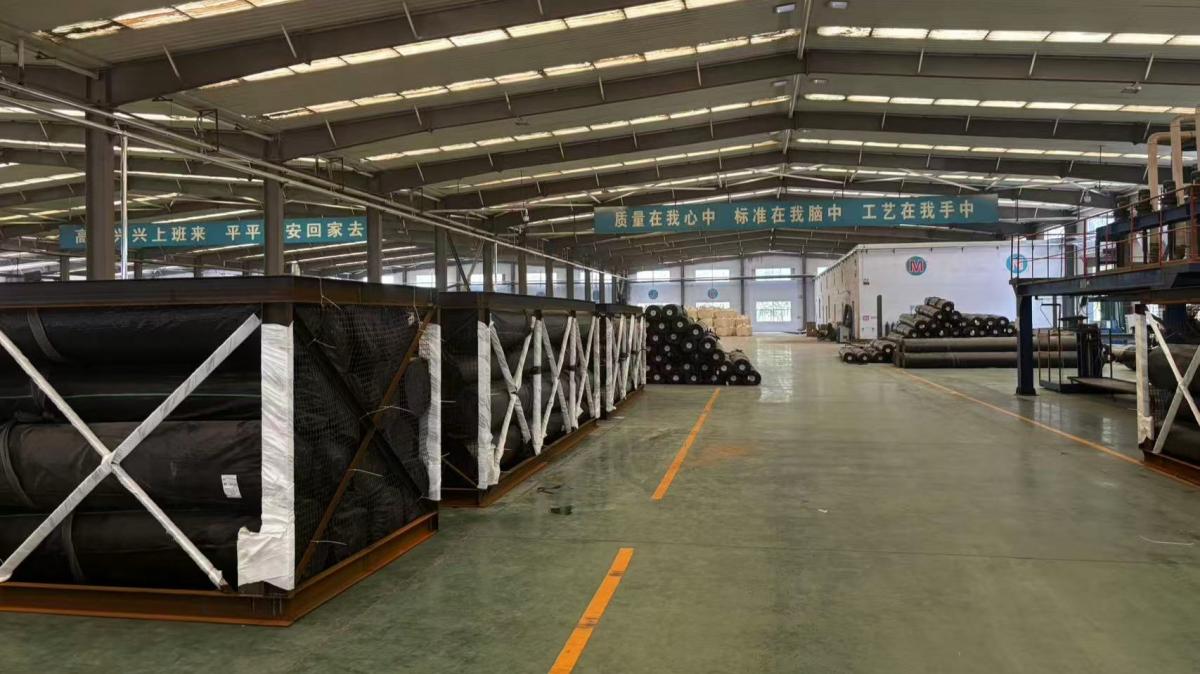
Leading Geomembrane Sheet manufacturers produce roll widths from 2m to 9m, with roll lengths determined by thickness and weight specifications. Typical production cycles range from 15-25 days after order confirmation.
Red Flags to Avoid
Unwillingness to provide lot-specific Mill Test Reports
Vague answers about resin sources or additive packages
No third-party certifications (GRI-GM13, ISO)
Carbon black content below 2.0% — indicates inadequate UV stabilization
Short warranty or none offered
Frequently Asked Questions (FAQ)
Q1: What is the difference between HDPE Smooth Geomembrane and textured geomembrane?
HDPE Smooth Geomembrane offers superior weldability, lower material cost (20-40% less), and easier deployment. It is suitable for slopes less than 3H:1V (approximately 18 degrees). Textured geomembrane provides approximately three times higher friction on slopes and is required for steeper applications .
Q2: What thickness of Geomembrane Sheet do I need for my project?
Thickness depends on application risk level:
0.75-1.0 mm: Aquaculture ponds, secondary containment, canal lining
1.5 mm: Municipal landfills, reservoirs, mining heap leach pads
2.0 mm: Hazardous waste landfills, high-risk mining applications
2.5-3.0 mm: Extreme chemical exposure, high-pressure applications
Q3: What certifications should a Geomembrane Sheet meet for landfill projects?
Require GRI-GM13 certification with lot-specific Mill Test Reports. Key properties to verify: density ≥0.940 g/cm³, tensile yield (11-44 N/mm depending on thickness), puncture resistance (240-960 N), carbon black content 2.0-3.0%, and stress crack resistance ≥300 hours .
Q4: How are Geomembrane Sheet seams tested?
Seams undergo both non-destructive testing (air pressure, vacuum box, or spark testing on 100% of seams) and destructive testing (shear and peel tests on samples taken at minimum one per 500 feet of fusion seam). Trial welds are required at start of each work day and after every 5 hours of continuous seaming .
Q5: What is the typical service life of a Geomembrane Sheet?
Properly manufactured and installed HDPE Smooth Geomembrane with adequate UV stabilization demonstrates a service life of 20-50 years for exposed applications and 50+ years when covered. Research confirms that HDPE geomembranes "can be expected to perform very well for an extremely long time" when well-constructed on suitable subgrades .
Conclusion: Verified Specifications Over Apparent Savings
The global Geomembrane Sheet market offers abundant supply at competitive price levels. The risk for buyers is not supply failure but specification failure—accepting material that appears similar to certified products but lacks the documented properties required for decades of service.
Real-world research and regulatory standards demonstrate that success depends on verified performance:
Wisconsin NR 516 regulations mandate specific density, stress crack, and seam testing protocols
Academic research confirms HDPE geomembranes perform extremely well when properly constructed
Seam quality is "at the heart" of containment system integrity
Professional buyers reduce risk through three actions:
Write specifications referencing recognized international standards (GRI-GM13, ASTM D7176)
Demand lot-specific Mill Test Reports before any material ships
Select HDPE Geomembrane manufacturers who provide comprehensive test data, material traceability, and documented project references
The most cost-effective HDPE Smooth Geomembrane is not the one with the lowest initial price, but the one that delivers verified performance throughout the project's design life.
Procurement Resource: Our Geomembrane Sheet Technical Specification Template and Supplier Audit Checklist are available without charge. These documents reflect field experience across landfill, mining, and water infrastructure projects worldwide.
Contact our technical sales engineering team for a specification review, to request lot-specific Mill Test Reports, or to discuss project-specific Geomembrane Sheet requirements for your next inquiry.