
Geomembrane Cost Per Square Foot: What Buyers Need to Know in 2026
Introduction
Every containment project starts with a budget question: what is the Geomembrane Cost Per Square Foot? It seems straightforward, but anyone who has actually sourced liner material knows the answer depends on a handful of variables—thickness, resin quality, texture, order size, and where the project sits on the map.
For HDPE liners, the HDPE Liner Price can range from under $0.50 to over $3.00 per square foot for material alone. Add installation labor, subgrade preparation, welding, and testing, and the total installed number looks very different.
This guide breaks down the Geomembrane Cost Per Square Foot in 2026, explains the cost drivers that procurement teams actually negotiate on, and offers practical advice for getting real value from HDPE Liner Suppliers.
 |  |  |
What You Will Pay in 2026
Material Cost by Thickness
Thickness drives cost more than any other factor. More resin equals higher material cost. In 2026, here is what HDPE geomembranes are going for:
0.5 mm (20 mil) : $0.65 – $1.00 per ft² — aquaculture, small ponds
1.0 mm (40 mil) : $1.30 – $1.50 per ft² — reservoirs, secondary containment
1.5 mm (60 mil) : $1.97 – $2.50 per ft² — landfill liners, dam lining
2.0 mm (80 mil) : $2.50 – $3.50 per ft² — hazardous waste, mining
3.0 mm (120 mil) : $3.90 – $5.00 per ft² — extreme chemical exposure
Across all geomembrane types, you are looking at roughly $0.28 to $3.00 per square foot. HDPE specifically lands in the $0.50 to $2.55 range.
Installed Cost — The Number That Actually Matters
Material cost is only part of the story. A 1.5 mm liner might cost $2.00 per square foot, but by the time it is in the ground, you are paying more. Here is the breakdown for a typical installation:
Material: 45–60% of total
Labor (deployment + welding) : 25–35%
Subgrade prep: 10–15%
Testing and QA/QC: 5–10%
For a dam lining project, total installed Geomembrane Cost Per Square Foot runs $1.00 to $5.00. For a landfill liner system with geotextiles, clay, and leachate collection, you are looking at $5 to $20 per square foot or more.
Why Prices Vary — What Actually Drives Cost
Resin Quality and Certification
Virgin HDPE resin costs more than recycled material, but it delivers. GRI-GM13 certified liners are made from 100% virgin resin with 2–3% carbon black and antioxidants. Service life? 40–50 years. Recycled-content liners? You might get 5–15 years. That 20–30% savings upfront can turn into a much bigger cost down the road.
For regulated landfills, GRI-GM13 is not optional. It is required. Non-certified material is cheaper—20–50% less—but it will not pass inspection.
Thickness
We already covered this, but it bears repeating. Each 0.5 mm increase adds roughly 40–60% to material cost. A 1.5 mm liner costs about 50% more than a 1.0 mm liner.
Smooth vs. Textured
Smooth HDPE liners are 15–35% cheaper than textured ones. Texturing requires extra processing—nitrogen gas injection or embossing—and slower line speeds. But if your site has slopes steeper than 3H:1V, textured is not a luxury. It is the only way to keep the liner from sliding.
Order Volume
Volume matters more than many buyers realize. The HDPE Liner Price drops as quantities increase:
Small (100–1,000 m²) : $1.50 – $3.00 per m²
Medium (1,000–10,000 m²) : $1.00 – $2.00 per m²
Bulk (10,000+ m²) : $0.50 – $1.50 per m²
Wholesale pricing starts at about 10,000 m², with discounts of 10–20%.
Resin Raw Material Costs
Resin is the single largest line item in manufacturing cost—50–60% of the total. HDPE resin prices follow crude oil markets, typically ranging from $800 to $1,500 per metric ton. Long-term contracts often include resin price adjustment clauses.
Roll Width and Logistics
Wider rolls (7–10 m) mean fewer field seams and less labor. But they require larger extrusion lines, which not every manufacturer runs. Standard widths (5–7 m) tend to have lower Geomembrane Cost Per Square Foot because production volumes are higher. Shipping and import duties also hit the delivered cost.
The Bigger Picture — Market Growth
The geomembrane market is expanding. It was worth USD 2.6 billion in 2025 and is projected to hit USD 4.5 billion by 2035, a CAGR of 5.8%. The HDPE segment alone accounted for USD 819.9 million in 2025.
The HDPE anti-seepage geomembrane market specifically grew from USD 1.75 billion in 2025 to USD 1.89 billion in 2026, a CAGR of 7.7%, and is expected to reach USD 2.51 billion by 2030.
What is driving this? Environmental regulation is the biggest factor. The US EPA and the European Commission have both tightened containment rules. Operators upgrading older facilities must install certified geomembranes.
Infrastructure development—especially in Asia-Pacific—keeps demand strong. The region is the largest geomembrane market. And advances in polymer manufacturing have made geomembranes stronger, more consistent, and more reliable than they were a decade ago.
The top players—Solmax, AGRU America, Naue, Plastika Kritis, and Seaman Corporation—held 48.7% of the market in 2025.
Cost by Application — What Different Projects Pay
Landfill Liners
Landfill liner systems are the most complex containment applications. A modern composite liner includes prepared subgrade, geotextile cushion, geomembrane, compacted clay, leachate collection, and protective soil.
For a 1.5 mm liner, Geomembrane Cost Per Square Foot runs $1.20 to $2.80. For 2.0–2.5 mm, expect $2.80 to $3.50.
A 10-acre landfill (435,600 square feet) will cost $2.2 million to $8.7 million for the full liner system.
Mining Heap Leach Pads
Mining applications need chemical resistance and puncture strength. Typical specs: 1.5–2.5 mm thickness, double textured surface, GRI-GM13 certification. HDPE Liner Price runs $2.20–3.67 per square meter for material only.
Agricultural Ponds
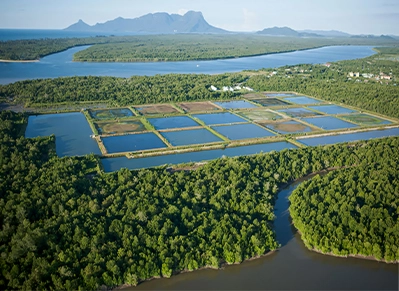
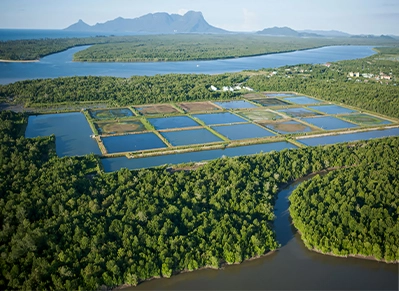
Agricultural applications use thinner, less expensive liners. HDPE pond liners run $0.50–$2.10 per square foot. 0.5 mm works for aquaculture and temporary use. 1.0–1.5 mm is recommended for permanent reservoirs.
How to Evaluate HDPE Liner Suppliers
What to Check
When you are comparing HDPE Liner Suppliers and their HDPE Liner Price quotes, go through this list:
Certifications – GRI-GM13 or ASTM compliance. For regulated landfills, GM13 is mandatory.
Resin traceability – 100% virgin resin from Dow, ExxonMobil, or Borealis. Recycled content is a non-starter for primary containment.
Mill Test Reports – Lot-specific documents with actual numbers. Generic certificates are not good enough.
Total installed cost – Material price alone is misleading. You need the full picture including labor, subgrade prep, and testing.
Warranty – 20-year minimum for HDPE geomembranes meeting GRI-GM13.
Red Flags
Watch out for suppliers who:
Quote prices well below market without a clear reason
Will not share lot-specific Mill Test Reports
Give vague answers about resin sources
Lack third-party certifications
Offer carbon black below 2.0% (inadequate UV protection)

Frequently Asked Questions
Q1: What is the typical Geomembrane Cost Per Square Foot for 1.5 mm HDPE?
Material-only cost runs $1.97 to $2.50 per square foot. Total installed cost, including labor and testing, runs $1.00 to $5.00 per square foot depending on site conditions.
Q2: How does HDPE Liner Price compare to other geomembrane materials?
HDPE is the most economical choice. HDPE: $0.50–$2.55 per ft². LLDPE: $0.60–$2.50. PVC: $0.60–$2.00. EPDM: $0.75–$2.50. HDPE gives you the best balance of cost, durability, and chemical resistance.
Q3: What factors affect Geomembrane Cost Per Square Foot the most?
Thickness is the biggest factor (40–60% price increase per 0.5 mm). Texture matters (smooth is 15–35% cheaper). Certification adds 10–20%. Order volume gives 10–20% discounts. Resin costs follow crude oil.
Q4: How do I get the best HDPE Liner Price from suppliers?
Order in bulk (10,000+ m² triggers wholesale pricing). Choose smooth over textured where slopes allow. Specify GRI-GM13 only if required. Consider Asian manufacturers for competitive pricing. Negotiate resin price adjustment clauses.
Q5: What is the difference between material cost and installed cost?
Material cost is typically 45–60% of total installed cost. Labor is 25–35%. Subgrade prep is 10–15%. Testing is 5–10%. Always compare total installed cost, not just material HDPE Liner Price.
Conclusion: Know the Numbers Before You Buy
The Geomembrane Cost Per Square Foot is not a fixed number. It moves with thickness, resin quality, texture, order volume, and site conditions. By understanding these factors, you can make better decisions—decisions that balance upfront cost with long-term performance.
The geomembrane market is growing. Regulation, infrastructure, and mining are all pushing demand. Working with reliable HDPE Liner Suppliers who provide certified materials, lot-specific Mill Test Reports, and transparent pricing is essential.
The most cost-effective geomembrane is not the one with the lowest HDPE Liner Price. It is the one that performs for the full design life.
Procurement Resource: Our Geomembrane Cost Estimation Worksheet and Supplier Evaluation Checklist are available at no charge. These tools help you compare bids on an apples-to-apples basis.
Contact our technical procurement team for a cost estimate review, to request Mill Test Reports, or to discuss project-specific Geomembrane Cost Per Square Foot requirements.