Geo Fabric Non Woven: Understanding the Engineered Filter That Protects Infrastructure Assets
A highway project in Romania’s A1 Motorway—a 123-kilometer corridor connecting Bucharest to Western Europe—faced a common geotechnical challenge: embankment stability over variable soils. The solution for Section V alone required 1.2 million square meters of Geo Fabric Non Woven to serve as separation and filtration layers. The material, made from virgin polypropylene, was specified to allow high water flows perpendicular to the plane while preventing displacement of granular materials. The project succeeded because the right Non Woven Geotextile Membrane was selected for the right purpose .
For procurement professionals and civil engineers, this case illustrates a broader reality. Nonwoven Geotextile products have become essential tools for building roads, stabilizing embankments, managing drainage, and protecting environmental containment systems. Understanding how these materials work—and how to specify them correctly—has become critical to project success and long-term asset performance.
Market Context: A Sector Defined by Steady Growth and Regional Demand
The global geotextiles market reached USD 3.86 billion in 2025 and is projected to grow to USD 6.15 billion by 2034, at a compound annual rate of 6.80 percent. The Nonwoven Geotextile segment dominates this market, accounting for approximately 67 percent of total consumption. Road construction represents the largest application segment, responsible for 35 to 42 percent of all geotextile use depending on the analysis .
The Asia-Pacific region leads global demand with a 35.40 percent market share, driven by massive infrastructure investments across China and India. China’s ongoing transportation and water conservancy projects have particularly stimulated demand for high-performance Geo Fabric Non Woven products. North American markets, shaped by the Infrastructure Investment and Jobs Act, show pronounced growth in environmentally certified products, with the U.S. market projected to reach USD 0.98 billion by 2032. European markets are driven by stringent environmental regulations and demand for sustainable construction materials .
Within this expanding market, Non Woven Geotextile Membrane products are specified for four primary functions: separation, filtration, drainage, and protection. For road construction, Nonwoven Geotextile placed between subgrade and aggregate base prevents intermixing of materials, maintains structural integrity, and extends pavement life. For drainage applications, it allows water to pass while retaining soil particles—a function that directly prevents costly clogging failures.
 |  |  |
Technical Foundations: How Geo Fabric Non Woven Performs Underground
Manufacturing Process and Structural Design
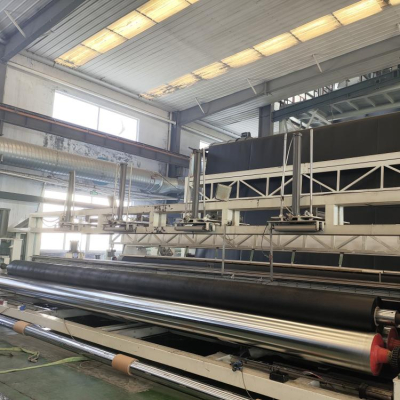
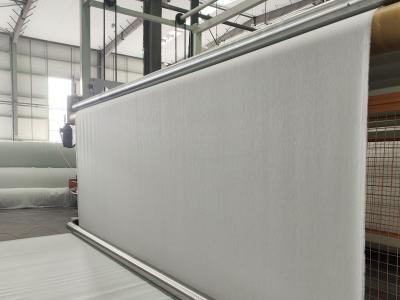
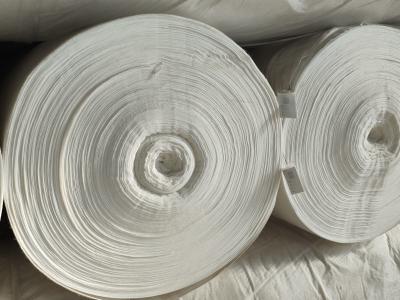
Geo Fabric Non Woven is manufactured from synthetic polymers—predominantly polypropylene for its chemical resistance and cost-effectiveness, or polyester where higher tensile strength and creep resistance are required. The production process for high-quality Nonwoven Geotextile typically follows the spunbonded needle-punched method, which creates a complex three-dimensional fiber structure .
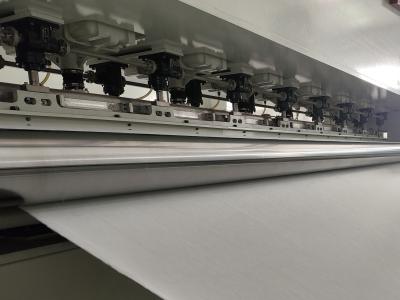
The manufacturing process begins with polymer pellets fed into a screw extruder and melted. The molten polymer is extruded through spinnerets to form continuous filaments, which are then drawn to orient molecular structure and enhance tensile properties. These filaments are laid into a uniform web and subsequently bonded through mechanical needle-punching, where thousands of barbed needles repeatedly penetrate the web, entangling fibers into a stable, three-dimensional matrix .
This needle-punch process creates the characteristic bulky structure of Non Woven Geotextile Membrane, with a complex pore network that enables effective filtration while maintaining high permeability. The process parameters—needle penetration depth, punch density, and web area density—can be precisely controlled to engineer specific performance characteristics. Higher needle punch density typically increases fiber entanglement and tensile strength, while penetration depth affects the degree of fiber orientation through the fabric thickness .
Hydraulic Functionality: Filtration and Drainage
The defining characteristic of high-performance Geo Fabric Non Woven is its ability to manage water flow while retaining soil particles. This dual functionality is quantified through two critical hydraulic parameters: permittivity (flow normal to the plane) and transmissivity (flow within the plane) .
For filtration applications, the Nonwoven Geotextile must satisfy two competing requirements: sufficient openness to allow unimpeded water flow, yet sufficiently tight pore structure to prevent migration of fine soil particles. This balance is characterized by the Apparent Opening Size, which for quality Non Woven Geotextile Membrane products typically ranges from 0.08 to 0.11 mm depending on weight grade .
The three-dimensional structure of needle-punched nonwovens provides an additional advantage: the ability to transport water laterally within the fabric plane. This in-plane flow capacity, or transmissivity, enables Nonwoven Geotextile systems to function as integrated drainage layers, collecting and conveying water to collection points. This capability proves invaluable in applications such as behind retaining walls, beneath landfill caps, and within slope stabilization systems .
Mechanical Robustness and Survivability
Beyond hydraulic performance, successful geotextile specification must account for installation stresses and long-term service conditions. The mechanical properties of Geo Fabric Non Woven—tensile strength, elongation at break, puncture resistance, and tear strength—determine their ability to survive installation and perform under load.
A quality Nonwoven Geotextile exhibits substantial elongation capacity, typically 50 to 60 percent at break, which allows them to conform to irregular subgrades and redistribute stresses without rupturing. This conformability proves particularly valuable when installing over soft soils or irregular surfaces. CBR puncture resistance values increase with fabric weight, ranging from approximately 1,800 N for 150gsm fabric to over 6,900 N for 600gsm heavy grades .
UV resistance, measured by retention of tensile properties after accelerated exposure, typically exceeds 70 percent after 500 hours for properly stabilized Non Woven Geotextile Membrane products .
Research Validation: What Studies Reveal About Geotextile Performance
Academic Research on Filtration and Drainage
A comprehensive review published in ScienceDirect examined the manufacturing process of spunbonded needle-punched Nonwoven Geotextile and highlighted the relationship among process parameters, fabric structure, and hydraulic properties. The research concluded that nonwoven geotextiles are preferred in civil engineering, filtration, and drainage applications because of their complex three-dimensional structure and tailored pore size distribution .
The study emphasized that the desired end-use performance of Geo Fabric Non Woven has a close relationship with its structure—specifically pore size and distribution—which can be regulated by altering process parameters. This underscores that manufacturing quality directly determines field performance, and that specifiers cannot rely on weight alone when selecting materials .
Weathering and Durability Research
A Korean study on the weatherability of geotextile composites examined the performance of Nonwoven Geotextile materials under ultraviolet exposure. The research found that retention of tensile properties of nonwoven polypropylene geotextiles decreased by about 50 percent on exposure to ultraviolet light, while geotextile composites with carbon black stabilizers showed significantly better retention. Geotextile composites with larger weights of polyester geotextile were more stable against ultraviolet degradation .
This research matters for anyone specifying Non Woven Geotextile Membrane for projects where the fabric may be exposed before burial. Proper UV stabilization is not optional—it is essential for maintaining design performance through the installation period.
International Case Studies
The Bhavnagar pavement stabilization project in Gujarat, India, demonstrates how Nonwoven Geotextile functions within engineered systems for challenging conditions. The proposed road was formed between creeks, with a high groundwater table and elevated flood levels during monsoons. Subgrade strength was found to have a California Bearing Ratio of less than 2 percent with poor soil properties. The road previously demanded high maintenance and repair costs .
Maccaferri’s solution for this 14-kilometer project included multiple geosynthetic products, with Geo Fabric Non Woven provided to perform separation and filtration functions. High-strength geogrids improved ground conditions and ensured uniform stress transfer to the subsoil. The project demonstrates how properly specified Nonwoven Geotextile enables construction in challenging coastal environments .
The A1 Motorway project in Romania provides another documented example. Engineers specified a Non Woven Geotextile Membrane system for embankment areas to act as a separation and filtration layer. This geotextile facilitates high water flows perpendicular to the plane while preventing displacement of granular materials, ensuring the integrity and functionality of various construction layers and long-term stability .
Emerging Trends in Nonwoven Geotextile Technology
Sustainability and Material Efficiency
Environmental considerations increasingly influence procurement decisions. Geo Fabric Non Woven products made with recycled polymers are gaining acceptance, provided they meet certified performance requirements. The ability to reduce aggregate thickness through proper geotextile selection contributes to lower embodied carbon in road construction. According to industry data, if new roads in the EU were made with nonwovens instead of gravel, it would save approximately 6.8 million tons of carbon dioxide equivalents annually .
Performance-Based Specification
The industry is gradually shifting from prescriptive specifications based on weight toward performance-based requirements focused on outcomes. Engineers increasingly specify minimum tensile strength, puncture resistance, and permittivity values rather than simply calling for a particular GSM. This shift reflects growing recognition that weight alone does not guarantee performance .
Digital Traceability
Progressive manufacturers now offer QR code tracking that links each roll to production data, Mill Test Reports, and installation documentation. This traceability proves invaluable for large-scale projects with stringent quality assurance requirements and for verifying compliance with international standards.
Strategic Procurement: What Experienced Buyers Evaluate
For international buyers navigating Nonwoven Geotextile sourcing, several factors warrant careful consideration beyond the weight number.
Certification and Compliance: Verify that products carry certification to relevant international standards—ASTM, ISO, or regional specifications. The A1 Motorway project utilized Geo Fabric Non Woven with CE marking under the Construction Products Regulation, ensuring demonstrated performance for intended uses .
Application-Specific Engineering: The Bhavnagar project demonstrates that successful specification requires detailed understanding of site conditions. Engage suppliers who employ geotechnical engineers capable of reviewing soil reports .
Total Cost Analysis: Look beyond unit price to assess total project cost. A higher-quality Non Woven Geotextile Membrane may have higher initial cost but lower installation damage, longer service life, and reduced risk of costly failure.
Supply Chain Reliability: For international procurement, evaluate supplier experience with export documentation, container optimization, and customs compliance. The A1 project achieved optimized transport loading due to 6.5-meter roll widths, minimizing overlay areas and installation time .
Frequently Asked Questions
Q1: What is the difference between spunbonded and staple fiber Nonwoven Geotextile?
Spunbonded Geo Fabric Non Woven is manufactured directly from polymer pellets through a continuous process, eliminating intermediate steps and reducing production cost. This results in higher strength-to-weight ratios and more consistent properties. Staple fiber nonwovens are made from cut fibers that are carded and needle-punched. For demanding applications like road construction and drainage, spunbonded needle-punched Nonwoven Geotextile is typically preferred due to its superior mechanical properties .
Q2: How does the needle-punching process affect geotextile performance?
Needle-punching creates the three-dimensional structure that gives Non Woven Geotextile Membrane its filtration and drainage capabilities. Higher needle density increases fiber entanglement, improving puncture resistance and tensile strength but potentially reducing permeability. The penetration depth affects fiber orientation through the fabric thickness. Manufacturers who control these parameters precisely produce fabrics with consistent properties, while those who do not may produce fabrics with weak spots .
Q3: How do I select the right weight grade for my project?
Selection should be based on application requirements and site conditions. Lightweight grades (up to 200gsm) are suitable for basic separation and light filtration. Medium weight grades (200-400gsm) including Geotextile 200 g and 300gsm products are commonly specified for road construction, drainage filtration, and applications requiring moderate load resistance. Heavyweight grades (400gsm and above) are used for demanding applications such as railway ballast stabilization, landfill protection layers, and projects with extreme UV exposure .
Q4: How do I verify that delivered Nonwoven Geotextile meets specified quality standards?
Request Mill Test Reports for each production lot and compare reported values against your specification requirements. For critical projects, consider independent testing of samples from delivered rolls. Conduct visual inspection for consistent appearance, no damage, and proper labeling. The A1 Motorway project demonstrates that quality verification begins with supplier selection—choose manufacturers who document their quality systems .
Q5: What does research indicate about UV degradation of Nonwoven Geotextile?
Korean research on weatherability found that Nonwoven Geotextile without proper UV stabilization can lose approximately 50 percent of tensile strength after ultraviolet exposure. Geotextile composites with carbon black stabilizers showed significantly better retention. For projects where fabric may be exposed before burial, specify Non Woven Geotextile Membrane with documented UV resistance (ASTM D4355) and carbon black content of 2-3 percent with verified dispersion .
A Partnership Approach to Geotextile Specification
The projects that go smoothest treat Geo Fabric Non Woven specification as an engineering decision, not a purchasing exercise. They bring geotechnical engineers into the conversation early, select materials based on site-specific conditions, and verify performance through appropriate testing.
Suppliers who understand this approach set themselves apart by offering technical support, not just price quotes. They have engineers who can review soil reports, recommend appropriate Nonwoven Geotextile products, and explain the basis for their recommendations. They maintain test laboratories and make quality data available.
Before you finalize specifications for your next infrastructure project, consider a different approach. Share your project's geotechnical information and application requirements with our technical team. We will provide a no-obligation analysis of what Non Woven Geotextile Membrane specification makes sense for your specific conditions, including certified performance data and references from similar installations. Let our engineers help you specify with confidence, reducing risk and ensuring long-term project performance.