Double Punched Non Woven Geotextile: Does the Second Needle Pass Really Matter?
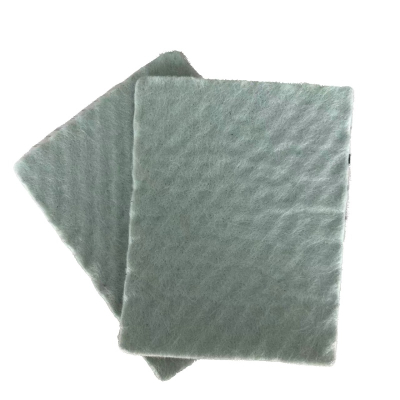
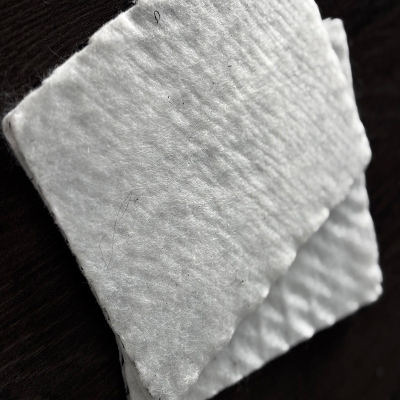
A road contractor in Queensland once showed me two fabric samples side by side. Same weight. Same polymer. Same color. One had survived a subgrade separation job without a single puncture. The other had torn in three places during installation. The difference, he said, was the number of times the fabric went through the needle loom. One was single punched. The other was Double Punched Non Woven Geotextile.
That conversation stuck with me. Most buyers compare weight, tensile strength, and price. Few ask how many needle passes the fabric received. Yet that manufacturing detail can determine whether a roll of Road Geotextile performs for decades or fails in the first week.
 | 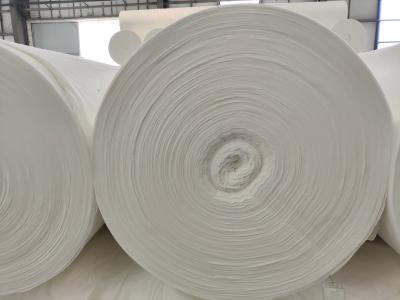 | 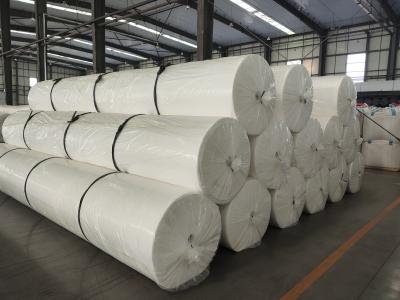 |
What the Second Pass Changes
Needle punching entangles fibers mechanically. Barbed needles drive through a fiber web, pulling filaments into new orientations and locking them together. One pass creates a workable fabric. A second pass tightens the network.
Research published in Fibres & Textiles in Eastern Europe compared manufacturing methods for needle-punched geotextiles . The study found that two-sided needle punching produced different tensile and hydraulic behavior than two-layered construction. The fiber architecture matters, not just the weight number.
After a second pass, fibers that were loosely oriented become more interlocked. Puncture resistance rises. Tensile strength improves. The fabric feels denser and less lofty. What does not change is the weight. A 300gsm double-punched fabric still weighs 300gsm. The performance comes from better fiber utilization, not more material.
Puncture Resistance: The Number That Predicts Failure
Specifiers often lead with tensile strength. In the field, puncture resistance determines survival.
A Florida Department of Environmental Protection evaluation tested an 8oz nonwoven geotextile component for static puncture strength per ASTM D6241 . Ten specimens averaged 805 pounds, with a minimum of 684 pounds. That performance level is typical for a well-made needle-punched fabric. A double-punched version of the same weight would be expected to deliver higher values because the denser fiber network distributes point loads more effectively.
For Road Geotextile applications where crushed aggregate is angular and dropped from truck beds, that margin matters. A puncture during installation means the separation layer fails before the road even opens. Repair requires removing aggregate, replacing fabric, and restarting. The cost dwarfs the price difference between single and double punched.
The Polyester Advantage Under Confinement
Non Woven Polyester Geotextile behaves differently from polypropylene under load. Polyester fibers have higher tensile strength at equivalent weight. They also resist creep better over time. For structures where the geotextile must maintain tension for decades, polyester is often the preferred choice.
A technical note in Geotextiles and Geomembranes examined how confinement affects needle-punched nonwoven geotextiles . When a 360 g/m² polyester geotextile was subjected to 75 kPa confining stress—roughly equivalent to 4 to 4.5 meters of soil cover—its strength nearly doubled and initial stiffness tripled. The mechanism is friction. Under pressure, fibers press against each other and resist sliding.
A Double Punched Non Woven Geotextile has more fiber contact points than a single-pass equivalent. Under confinement, those contact points generate more friction. The strength gain should be greater. For reinforced soil walls and basal reinforcement where the fabric is buried under meters of fill, this effect can be exploited in design.
Manufacturing Quality: The Hidden Risk
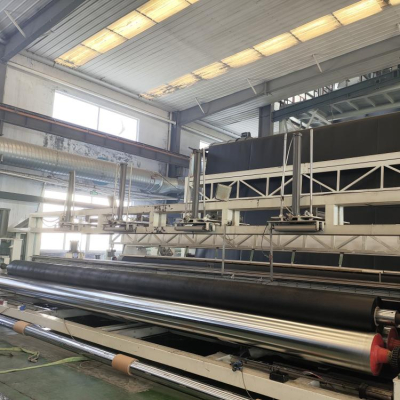
Producing double-punched fabric requires either two needle looms in series or a loom configured for two passes. The University of Indonesia documented specifications for a double-stroke needle punch machine used in geotextile production: 2,500 strokes per minute, 6,900 needles per meter of working width, and 37.3 kW power . That density of needling produces tightly entangled fabric.
But equipment alone does not guarantee quality. A landfill case history published in Geosynthetics ’99 documented a serious failure: broken needles from the production line were embedded in delivered geotextile rolls . The plant used a magnet to catch loose needles but lacked a metal detector. Contamination was discovered only during installation.
Buyers should verify that the manufacturer has metal detection and needle control procedures in place. Whether the fabric is single or double punched, embedded needles can compromise the liner system and create liability.
Where Double Punching Pays Off
Road Geotextile separation with sharp aggregate is the most common justification. The higher puncture resistance reduces installation damage and extends service life.
Reinforced soil structures using Non Woven Polyester Geotextile can benefit from the confinement effect. Denser fiber entanglement means more friction under load and potentially more efficient design.
Protection layers beneath geomembranes in landfills and containment ponds benefit from the cushioning effect of a denser fabric. Sharp drainage stone is less likely to puncture through to the liner.
For basic filtration under light loads, single-pass fabric is often adequate. Double punching adds cost. If the application does not demand the extra performance, that cost is wasted.
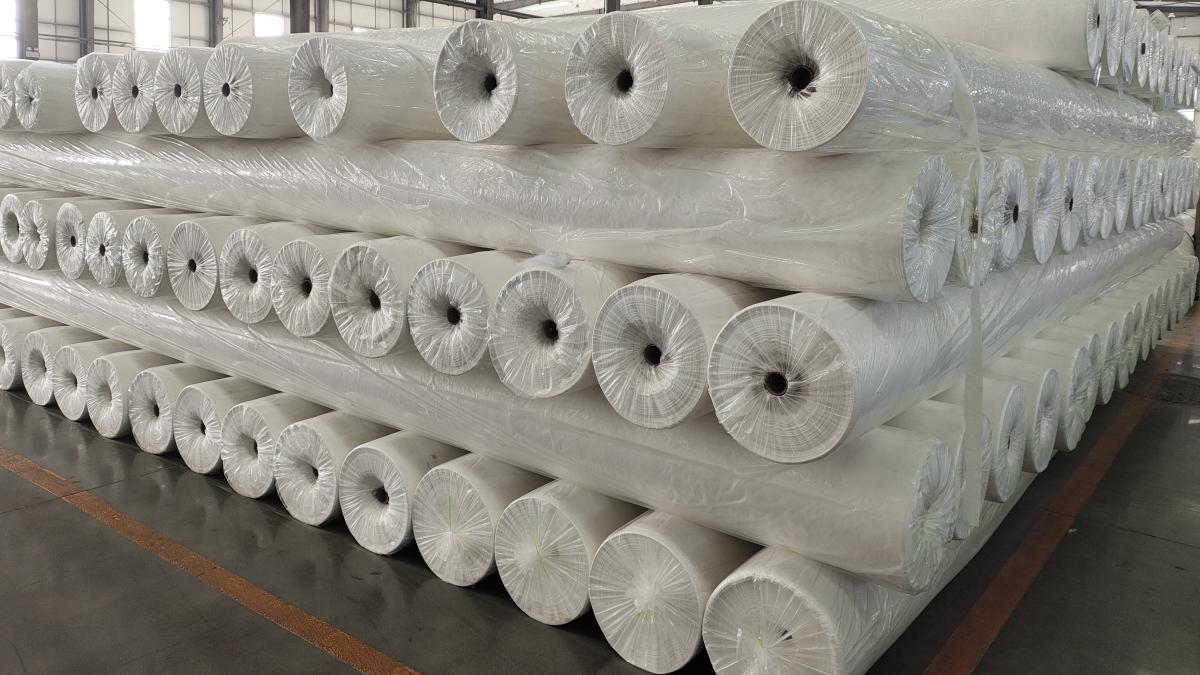
Frequently Asked Questions
Q1: How can I tell if a geotextile is truly double punched?
Ask for production documentation. Reputable manufacturers specify the number of needle passes in their technical data. The physical difference is subtle—double-punched fabric feels denser and less lofted than single-pass fabric of the same weight. The only reliable verification is the manufacturer‘s process specification and Mill Test Reports showing mechanical properties consistent with higher entanglement.
Q2: Is double punched always better than single punched?
No. Double punching increases puncture resistance and tensile strength, but it also reduces permeability slightly because the fiber network is denser. For drainage layers where high flow rates are critical, a single-pass fabric may perform better. Match the manufacturing method to the application.
Q3: What is the difference between double punched and double-sided needle punching?
These terms are sometimes used interchangeably, but they can mean different things. Double-sided punching refers to needles entering the web from both top and bottom. Double punching refers to two complete passes through a needle loom. A fabric can be double-sided but single-pass, or single-sided but double-pass. Ask the manufacturer to clarify their process.
Q4: Does double punching affect the stress-confinement effect?
Based on research on needle-punched nonwoven geotextiles, confinement significantly increases strength and stiffness . A double-punched fabric, with denser fiber entanglement, should exhibit a more pronounced confinement effect because there are more fiber contact points to generate friction. This can be advantageous in reinforced soil applications.
Q5: How should I specify Double Punched Non Woven Geotextile for quality assurance?
Specify: needle-punched construction with documented two-pass needling; polymer type (polypropylene for chemical resistance, polyester for tensile strength and creep resistance); minimum mass per unit area; minimum CBR puncture resistance per ASTM D6241; minimum grab tensile strength per ASTM D4632; UV resistance per ASTM D4355; and apparent opening size per ASTM D4751. Request Mill Test Reports for each production lot. Verify that the manufacturer has metal detection procedures in place.
The Bottom Line
Double Punched Non Woven Geotextile is a manufacturing upgrade, not a marketing label. The second needle pass increases fiber entanglement, which translates to higher puncture resistance and tensile strength without adding weight. For Road Geotextile applications with sharp aggregate, for reinforced soil structures where confinement effects can be exploited, and for protection layers beneath geomembranes, the premium is often justified.
But double punching is not universally better. It reduces permeability slightly. It adds cost. And it cannot compensate for poor quality control. Match the manufacturing method to the application. Verify the Mill Test Reports. Check that the fabric actually meets the specification it claims.
Need help specifying Double Punched Non Woven Geotextile for your next project? Share your application details with our technical team. We will provide a no-obligation review of appropriate specifications with certified performance data.