500 Micron Geomembran: 2026 Market Review, Technical Specifications, and Global Sourcing Guide
Introduction: Why 500 Micron Geomembran Is a Versatile Industry Standard
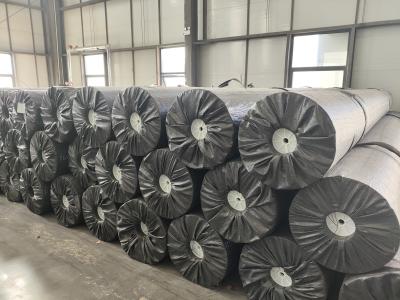
Across aquaculture ponds, mining heap leach pads, irrigation reservoirs, and secondary containment facilities, the Geomembran 500 Micron has established itself as a versatile and cost-effective solution. At 0.5 millimeters (20 mils), this medium-duty HDPE liner delivers sufficient puncture resistance and chemical stability for most medium-risk applications while keeping material costs significantly lower than thicker alternatives.
The numbers confirm its popularity. The broader geosynthetics market surpassed USD 12 billion in 2024, with geomembranes accounting for approximately 35 percent of that total . Within the geomembrane segment, HDPE remains the largest category by volume, and industry analysts estimate that Geomembran 500 Micron accounts for 25 to 30 percent of all HDPE geomembrane sales globally .
This report examines the Geomembran 500 Micron market in 2026, providing current pricing benchmarks, technical specifications, real-world application guidance, and practical advice on selecting reliable HDPE geomembrane supplier partners.
 |  |  |
Market Overview — Pricing, Demand, and Regional Patterns
What Is the Geomembrane Sheet Price for 500 Micron in 2026?
If you are sourcing Geomembran 500 Micron in bulk, the Geomembrane Sheet Price typically ranges from USD 0.80 to USD 1.80 per square meter (ex-works), depending on order volume, certification requirements, and regional sourcing .
Several factors influence the final Geomembrane Sheet Price:
| Factor | Impact on Price |
| Order volume | 15–35% discount for orders >50,000 m² |
| Surface finish | Textured adds USD 0.30–0.80/m² |
| Certification | GRI-GM13 or ASTM adds 10–20% premium |
| Regional sourcing | Asia-Pacific offers lowest base pricing |
Regional variations in Geomembran 500 Micron pricing reflect differences in manufacturing capacity, labor costs, and shipping distances. Asia-Pacific, particularly China’s Shandong Province—which produces over 70 percent of the world’s 500-micron geomembranes—offers the most competitive pricing due to integrated supply chains and bulk resin purchasing power . Shandong manufacturers maintain production clusters in cities like Tai’an, Jinan, and Laiwu, where close proximity to resin suppliers and export ports like Qingdao enables reduced lead times by 30–50 percent .
What Is Driving Demand for 500 Micron Geomembran?
Aquaculture Expansion — The 500-micron thickness is extensively used in shrimp and fish farming operations across Southeast Asia. Vietnamese shrimp producers report production increases of 20 to 30 percent after converting to lined ponds. The smooth surface inhibits bacterial growth compared to earthen ponds, while reduced water exchange rates improve biosecurity and lower pumping costs .
Mining Operations — Mining operations utilize Geomembran 500 Micron for heap leach pads, where the thickness provides sufficient chemical resistance to handle sulfuric acid in copper operations or cyanide solutions in gold recovery. One Chilean copper operation reported successful performance exceeding eight years with no measurable degradation .
Agricultural Water Storage — Irrigation reservoirs lined with HDPE geomembranes reduce seepage losses to near zero. In water-scarce regions, this efficiency translates directly to increased crop production. Projects in California’s Central Valley and Australia’s Murray-Darling Basin demonstrate the effectiveness of lined storage systems .
Secondary Containment — Fuel storage facilities, chemical processing plants, and wastewater treatment operations use Geomembran 500 Micron to contain spills and prevent soil contamination. Regulatory compliance often requires specific material certifications for these applications .
Technical Specifications for 500 Micron Geomembran
Material Composition and Manufacturing Standards
A specification-grade Geomembran 500 Micron is manufactured from virgin high-density polyethylene resin with density ranging from 0.94 to 0.96 g/cm³ . The additive package includes:
Carbon black (2.0–3.0%) for UV stabilization and long-term weathering resistance
Antioxidants to suppress thermal oxidation during processing and service life
Process aids to ensure uniform sheet formation
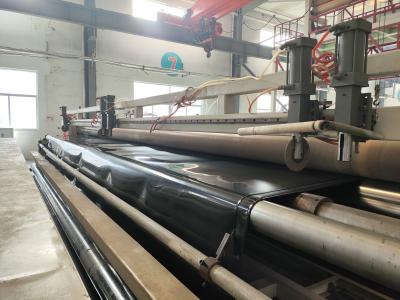
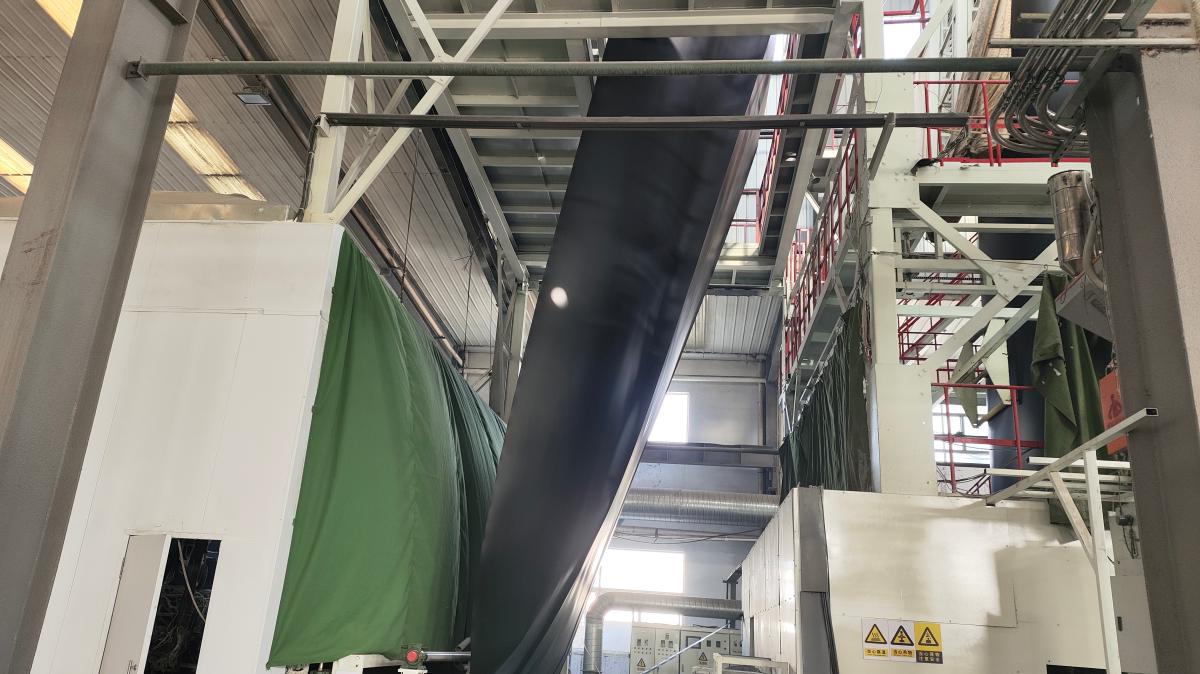
Modern extrusion lines utilize flat die technology combined with automated thickness control systems. These systems maintain dimensional tolerances within ±5 percent across the full roll width . For a Geomembran 500 Micron, this translates to consistent welding performance and predictable field behavior.
Leading HDPE geomembrane supplier facilities use three-layer co-extrusion technology, where raw materials are processed at approximately 200°C by fusing and coextrusion . This method preserves the material's basic properties during manufacturing.
Key Performance Parameters
A Geomembran 500 Micron meeting GRI-GM13 or ASTM standards must achieve the following minimum properties :
| Property | 500 Micron Requirement | Test Method |
| Thickness | 0.50 mm ±5% | ASTM D5199 |
| Density | ≥ 0.940 g/cm³ | ASTM D1505 |
| Tensile Strength at Yield | 15–17 kN/m | ASTM D6693 |
| Elongation at Break | ≥ 700% | ASTM D6693 |
| Puncture Resistance | 300–420 N | ASTM D4833 |
| Tear Resistance | ≥ 60 N | ASTM D1004 |
| Carbon Black Content | 2.0–3.0% | ASTM D4218 |
| Oxidative Induction Time | ≥ 100 min at 200°C | ASTM D3895 |
| Permeability | ≤ 1.0 × 10⁻¹² cm/s | ASTM D5887 |
A Geomembran 500 Micron meeting these thresholds delivers 99.9 percent containment efficiency and, when properly installed, a service life of 20–30 years for exposed applications .
Application-Specific Considerations
The suitability of Geomembran 500 Micron varies by application:
| Application | Suitability | Key Considerations |
| Aquaculture Ponds | Excellent 20–30% production increase reported | Excellent 20–30% production increase reported |
| Heap Leach Mining | Good | >8 years performance in Chilean copper operation |
| Irrigation Reservoirs | Excellent | Near-zero seepage losses |
| Landfill Caps | Good | Adequate for covers, not primary bottom liners |
| Secondary Containment | Excellent | Chemical resistance for mild exposures |
For landfill applications, Geomembran 500 Micron is typically reserved for caps and intermediate covers. Primary bottom liners, which must contain leachate and withstand waste loading, generally require thickness of 1.5 mm or greater .
Selecting a Reliable HDPE Geomembrane Supplier
Key Evaluation Criteria
When evaluating HDPE geomembrane supplier partners, verify these essential items:
Certifications — Look for GRI-GM13, ASTM D7176, or CE certification. Leading suppliers hold ISO 9001 and ISO 14001 certifications and provide test reports from accredited laboratories (SGS, Intertek, Bureau Veritas) .
Raw Material Traceability — Demand documentation showing 100 percent virgin resin from reputable suppliers (Dow, ExxonMobil, Borealis). Recycled content has no place in primary containment applications .
Mill Test Reports — Lot-specific documentation showing actual test values for thickness, tensile strength, puncture resistance, carbon black content, and OIT. Generic certificates covering an entire production quarter are not adequate .
Production Capability — Advanced manufacturers maintain in-house extrusion lines capable of consistent 500-micron thickness across large rolls, with multi-stage QA checkpoints during production. Over 90 percent of leading Shandong-based suppliers welcome virtual factory tours upon request .
Warranty — Minimum 20-year manufacturer warranty for Geomembran 500 Micron meeting GRI-GM13 standards.
Manufacturing Hubs and Supply Chain
China’s manufacturing clusters in Shandong Province have evolved into specialized hubs for engineered polyethylene products. These regions benefit from integrated supply chains—ranging from resin procurement to film extrusion and finishing—enabling consistent production . Proximity to major ports such as Qingdao and Yantai further enhances logistics efficiency, with 98 percent of manufacturers supporting EXW, FOB, or CIF terms .
For buyers in markets like Ecuador—which has no local geomembrane manufacturing plants—the emerging China-Ecuador Free Trade Agreement is reducing import tariffs on Chinese geomembranes to 0 percent, fundamentally altering the competitive landscape and making Chinese manufacturers the most strategic choice for cost-conscious projects
Red Flags to Avoid
Unwillingness to provide lot-specific Mill Test Reports
Geomembrane Sheet Price significantly below USD 0.80/m² without explanation
Vague answers about resin sources or additive packages
No third-party certifications
Carbon black content below 2.0 percent—indicates inadequate UV stabilization
Short warranty or none offered
Installation Best Practices for 500 Micron Geomembran
Subgrade Preparation
The foundation must be smooth, free of rocks exceeding 12 mm diameter, sticks, organic matter, and sharp objects. Compaction to ≥95 percent Proctor density is standard. For rough subgrades, a non-woven geotextile cushion (200–300 g/m²) is recommended.
Seaming Methods
Dual-track thermal fusion welding is the preferred method for Geomembran 500 Micron. Key parameters:
Welding temperature: 400–500°C
Welding speed: 1.5–3.0 m/min
Seam area must be dry and clean—moisture or dust compromises weld integrity
For irregular geometries, penetrations, and repairs, extrusion welding is used.
Testing Protocols
Non-destructive testing of every seam via air pressure, vacuum box, or spark testing
Destructive sampling — minimum one sample per 300 meters of seam length
Trial welds required at start of each shift and after every four hours of continuous seaming
Frequently Asked Questions
Q1: What is the typical Geomembrane Sheet Price for 500 micron in 2026?
Bulk pricing for Geomembran 500 Micron ranges from USD 0.80 to USD 1.80 per square meter (ex-works), depending on order volume and certification requirements. Volume discounts of 15–35 percent are available for orders exceeding 50,000 m² .
Q2: How long will a 500 Micron Geomembran last?
Properly manufactured and installed Geomembran 500 Micron with adequate UV stabilization demonstrates a service life of 20–30 years for exposed applications. One Chilean copper operation reported successful performance exceeding eight years with no measurable degradation .
Q3: Is 500 microns thick enough for a pond liner?
Yes, for most aquaculture ponds, irrigation reservoirs, and secondary containment applications. Vietnamese shrimp producers report production increases of 20–30 percent after converting to lined ponds with Geomembran 500 Micron . However, for applications with sharp rocks, heavy equipment traffic, or aggressive chemicals, thicker liners (1.0 mm or 1.5 mm) are recommended.
Q4: What standards should a 500 Micron Geomembran meet?
For international projects, require GRI-GM13 or ASTM D7176 certification with lot-specific Mill Test Reports. Key properties to verify: density ≥0.940 g/cm³, tensile yield ≥15 kN/m, puncture resistance ≥300 N, carbon black content 2.0–3.0%, and OIT ≥100 minutes .
Q5: How do I find a reliable HDPE geomembrane supplier?
Look for suppliers with GRI-GM13 certification, 100 percent virgin resin documentation, third-party test reports, and 20-year warranties. Over 90 percent of leading manufacturers in China's Shandong Province offer virtual factory tours upon request, allowing you to verify production capability before placing an order .
Conclusion: Verified Specifications Over Apparent Savings
The global market for Geomembran 500 Micron offers abundant supply at competitive Geomembrane Sheet Price levels. The risk for buyers is not supply failure but specification failure—accepting material that appears similar to certified products but lacks the documented properties required for decades of service.
Real-world applications demonstrate that success depends on verified performance: Chilean copper operations have demonstrated Geomembran 500 Micron performance exceeding eight years ; Vietnamese shrimp producers report 20–30 percent production increases after lining ponds ; and the emerging China-Ecuador FTA is making high-quality Chinese geomembranes more accessible to Andean markets .
Professional buyers reduce risk through three actions:
Write specifications referencing recognized international standards (GRI-GM13, ASTM D7176)
Demand lot-specific Mill Test Reports before any material ships
Select HDPE geomembrane supplier partners who provide comprehensive test data, material traceability, and documented project references
The most cost-effective Geomembran 500 Micron is not the one with the lowest initial Geomembrane Sheet Price, but the one that delivers verified performance throughout the project's design life.
Procurement Resource: Our 500 Micron Geomembran Technical Specification Template and Supplier Audit Checklist are available without charge. These documents reflect field experience across aquaculture, mining, and water infrastructure projects worldwide.
Contact our technical sales engineering team for a specification review, to request lot-specific Mill Test Reports, or to discuss project-specific Geomembrane Sheet Price estimates for your next Geomembran 500 Micron inquiry.