



500 Micron HDPE Sheet: 2026 Market Review, Technical Specifications, and Global Sourcing Guide
Introduction: The Balanced Choice for Medium-Duty Containment
Not every containment job needs a heavy 2mm liner. For farm ponds, secondary containment, and many aquaculture applications, the 500 Micron HDPE Sheet (0.5mm, 20 mil) provides the right balance. It gives you enough puncture resistance for most jobs, but keeps material costs low enough for large-area projects.
The broader HDPE market was worth about USD 75.82 billion in 2026 and should hit USD 105.6 billion by 2034 . Within that, geomembranes are a specialized but growing segment. 500 Micron HDPE Sheet products show up everywhere from community ponds in India to fish farms across Southeast Asia.
This report covers what you need to know about 500 Micron HDPE Sheet in 2026: real pricing data, technical specs that matter, a case study from a government pond project in Madhya Pradesh, and how to pick reliable HDPE Liner Sheet suppliers.
 |  |  |
Market Snapshot — Price, Demand, and Regional Patterns
What a 500 Micron HDPE Sheet Costs in 2026
If you are buying 500 Micron HDPE Sheet in bulk (ex-works), expect to pay between USD 0.80 and USD 1.80 per square meter. That is the range for standard smooth geomembranes.
Volume matters a lot:
| Order Volume (m²) | Typical Price (USD/m²) | What You Save |
| Under 10,000 | Under 10,000 1.20–1.80 Nothing yet | Under 10,000 1.20–1.80 Nothing yet |
| 10,000 – 50,000 1.00–1.60 10–15% | 10,000 – 50,000 1.00–1.60 10–15% | 10,000 – 50,000 1.00–1.60 10–15% |
| 50,000 – 200,000 0.90–1.40 15–25% | 50,000 – 200,000 0.90–1.40 15–25% | 50,000 – 200,000 0.90–1.40 15–25% |
| Over 200,000 0.80–1.20 25–35% | Over 200,000 0.80–1.20 25–35% | Over 200,000 0.80–1.20 25–35% |
Where you buy also changes the Geomembrane Pond Liner price:
| Region Price | Range (USD/m²) | Why the Difference |
| Asia-Pacific | 0.80–1.40 | Big local production clusters |
| North America | 1.20–1.80 | GRI-GM13 paperwork, QA costs |
| Europe | 1.30–1.90 | CE marking, environmental rules |
| Middle East/Africa | 1.50–2.20 | Shipping and import duties |
Who Is Buying 500 Micron HDPE Sheet
Government water projects — A government pond project in Madhya Pradesh, India, used 10,200 square meters of 500 Micron HDPE Sheet. After installation, water loss dropped by 85–90 percent. Local farmers got reliable irrigation water for the first time.
Aquaculture — Fish and shrimp farmers have learned that lined ponds outperform earthen ones. Geomembrane Pond Liner at 500 microns cuts water loss by up to 90 percent. The smooth surface also makes cleaning easier and reduces disease problems.
Environmental rules — Regulations keep getting tighter. HDPE Liner Sheet products provide low permeability (1 × 10⁻¹⁴ m/s to 5 × 10⁻¹² cm/s). That means 99.9 percent containment for most liquids.
Technical Deep Dive — What a Real 500 Micron HDPE Sheet Looks Like
Material Makeup
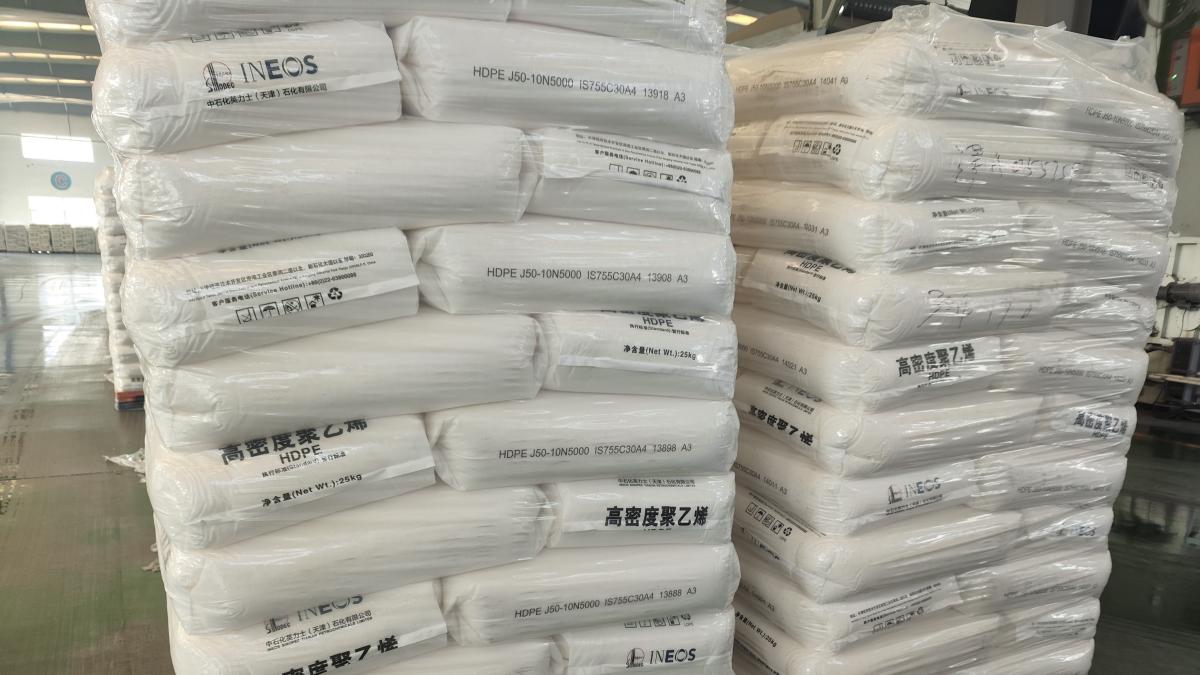
A good 500 Micron HDPE Sheet starts with virgin HDPE resin, density between 0.94 and 0.96 g/cm³. The additive package includes:
Carbon black (2.0–3.0 percent) for UV protection
Antioxidants to stop thermal oxidation
Process aids to keep the sheet uniform
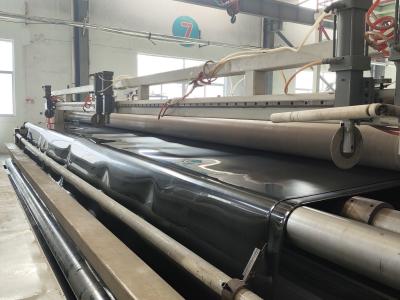
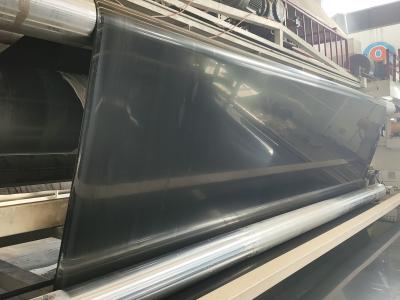
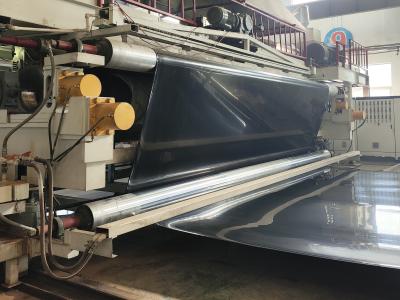
Modern extrusion lines use flat die technology with automated thickness control. They hold tolerances to ±5 percent across the full roll width. For a 500 Micron HDPE Sheet, that means consistent welding performance in the field.
The Numbers That Matter
To meet GRI-GM13 or IS 15351:2015 standards, a HDPE Liner Sheet at 500 microns needs these minimums:
| Property | Requirement | Test Method |
| Thickness | 0.50 mm ±5% | ASTM D5199 |
| Density | ≥ 0.940 g/cm³ | ASTM D1505 |
| Tensile Strength at Yield | 15–17 kN/m | ASTM D6693 |
| Elongation at Break | ≥ 700% | ASTM D6693 |
| Puncture Resistance | 300–420 N | ASTM D4833 |
| Tear Resistance | ≥ 60 N | ASTM D1004 |
| Carbon Black | 2.0–3.0% | ASTM D4218 |
| OIT | ≥ 100 min at 200°C | ASTM D3895 |
| Permeability | ≤ 1.0 × 10⁻¹² cm/s | ASTM D5887 |
A Geomembrane Pond Liner hitting these numbers gives you 99.9 percent containment. Properly installed and exposed, figure on 20–30 years of service life.
Why 500 Micron Is the Sweet Spot
Compared to thinner liners (0.3 mm and below), 500 Micron HDPE Sheet gives you much better puncture resistance (300–420 N) and tear strength (≥60 N). Compared to thicker liners (1.0 mm+), it costs 40–60 percent less and is easier to weld in the field.
For most pond and reservoir jobs where you are not dealing with sharp rocks or heavy equipment, 500 microns is the smart choice.
Real Project — Government Pond in Madhya Pradesh, India
The Situation
Madhya Pradesh is farming country. But water stress is a real problem. Low rainfall and high evaporation make it hard for farmers to keep crops going. The government decided to line a community pond to stop seepage losses.
What They Used
Material: Ocean HDPE Liner – 500 Micron
Area: 10,200 square meters
Standard: BIS 15351:2015
Installation: Thermal fusion welding
Why 500 Micron HDPE Sheet? Because it was thick enough to handle local conditions but light enough for the installation crew to manage. The material had to be UV-resistant (2–3% carbon black) and chemically stable for outdoor exposure.
How They Installed It
1.Site prep — The pond bed was leveled. Rocks, roots, and sharp objects were removed.
2.Deployment — Panels were unrolled and positioned. No dragging over rough ground.
3.Welding — Thermal fusion welding created airtight seams. The crew tested every seam.
4.Anchoring — Edges were secured with compacted soil and protective layers.
Challenges they faced:
Extreme temperatures meant pre-installation testing to check material flexibility
Uneven pond beds required extra groundwork for proper liner placement
Had to comply with Bureau of Indian Standards (BIS) 15351:2015
What Happened
Water loss dropped by 85–90 percent
Farmers got reliable water for irrigation
Agricultural yield increased by 15–20 percent
The pond now supports sustainable groundwater management
This project shows what a well-specified 500 Micron HDPE Sheet can do. It is not just theory. It works in the field.
How to Install 500 Micron HDPE Sheet — Practical Advice
Subgrade Prep
The ground under a HDPE Liner Sheet must be smooth. No rocks over 12 mm. No roots. No sharp edges. Compact to at least 95 percent Proctor density. On rough sites, put down a non-woven geotextile cushion (200–300 g/m²).
Welding
Two methods work for Geomembrane Pond Liner:
Wedge welding — Heat and pressure on overlapping panels. The machine moves along the seam, melts the two surfaces, and presses them together. Air pressure testing confirms the weld is good.
Extrusion welding — Molten HDPE is deposited into the seam between two panels. This works for irregular shapes, penetrations, and repairs. Vacuum testing or spark testing checks the weld.
Testing
Test every seam. Non-destructive methods (air pressure, vacuum, spark) cover 100 percent of wedge welds and extrusion welds. Destructive samples go to the lab at regular intervals — typically every 150 to 300 meters of seam.
How to Pick a Supplier for 500 Micron HDPE Sheet
Your Checklist
Certifications — Look for GRI-GM13, ASTM D7176, or IS 15351:2015. The Madhya Pradesh project required BIS 15351:2015.
Resin source — 100 percent virgin resin from Dow, ExxonMobil, or Borealis. No recycled content for primary containment.
Processing method — Blow film extrusion gives better tensile strength and flexibility than compression molding.
Mill Test Reports — Lot-specific, not a generic certificate. The report must show actual numbers for thickness, tensile, puncture, carbon black, and OIT.
UV stabilization — For outdoor use, UV-stabilized formulations are essential. Look for carbon black at 2–3 percent.
Warranty — Anywhere from 5 to 20 years depending on the supplier and application.
Manufacturing Hubs
China’s manufacturing clusters in Henan and Shandong provinces have become specialized hubs for engineered polyethylene products. These regions have integrated supply chains — resin procurement, extrusion, finishing — all in one place. Proximity to ports like Qingdao and Tianjin cuts transit times by up to two weeks compared to inland suppliers.
Standard production cycles run 15 to 25 days after order confirmation. Some suppliers offer expedited production (under 10 days) at a premium.
Red Flags
Avoid any supplier who:
Will not share lot-specific Mill Test Reports
Quotes under USD 0.80/m² without a good explanation
Gives vague answers about resin sources
Has no third-party certifications
Offers a short warranty or none at all
Frequently Asked Questions
Q1: What is the typical price for 500 Micron HDPE Sheet in 2026?
Bulk pricing runs USD 0.80 to USD 1.80 per square meter (ex-works). The Madhya Pradesh government project used 10,200 m² and got pricing within that range. Volume discounts of 15–35 percent are available for larger orders.
Q2: How long will a 500 Micron HDPE Liner Sheet last?
Properly made and installed 500 Micron HDPE Sheet with good UV stabilization lasts 20–30 years exposed. The Madhya Pradesh pond liner is expected to perform for at least 20 years.
Q3: Is 500 microns thick enough for a pond liner?
Yes, for most farm ponds, aquaculture ponds, and water storage applications. The Madhya Pradesh government project used 500 Micron HDPE Sheet and achieved 85–90 percent water savings. If you have sharp rocks, heavy equipment, or aggressive chemicals, go thicker — 1.0 mm or 1.5 mm.
Q4: What standards should a 500 Micron Geomembrane Pond Liner meet?
For projects in India, IS 15351:2015 is the standard (used in the Madhya Pradesh project). For international projects, GRI-GM13 or ASTM D7176 are the recognized standards. Key numbers to check: tensile strength 15–17 kN/m, puncture resistance 300–420 N, carbon black 2.0–3.0%.
Q5: What is the difference between 500 micron and 1mm HDPE sheet?
500 Micron HDPE Sheet (0.5mm) is half the thickness of 1mm. It costs 50–60 percent less, is easier to handle and weld, and works fine for moderate-risk jobs like farm ponds. A 1mm liner gives you higher puncture resistance (480+ N vs. 300–420 N) and is better for higher-risk applications.
Conclusion: Pay for Verified Quality, Not Just Low Price
The global market for 500 Micron HDPE Sheet has plenty of suppliers. The challenge is finding material that actually meets specifications. A low Geomembrane Pond Liner price means nothing if the liner fails after five years.
The Madhya Pradesh project proves what works: 10,200 m² of 500 Micron HDPE Sheet with BIS 15351:2015 compliance delivered 85–90 percent water savings. That is a real outcome, not a marketing claim.
Professional buyers do three things:
Write specifications that reference recognized standards (GRI-GM13, ASTM D7176, or IS 15351:2015)
Demand lot-specific Mill Test Reports before any material ships
Work with suppliers who provide test data, traceability, and real project references
The cheapest HDPE Liner Sheet is rarely the best deal. The best deal is the liner that does its job for 20 years or more.
Free Resource: We offer a 500 Micron HDPE Sheet Technical Specification Template and a Supplier Audit Checklist. Both are based on real project experience in farm ponds, aquaculture, and water infrastructure.
Contact our technical team to review your specs, request Mill Test Reports, or discuss your next 500 Micron HDPE Sheet inquiry.


