
2026 Market Analysis, Technical Specifications, and Supplier Selection Guide
Introduction: Why HDPE Lining For Ponds Has Become the Industry Standard
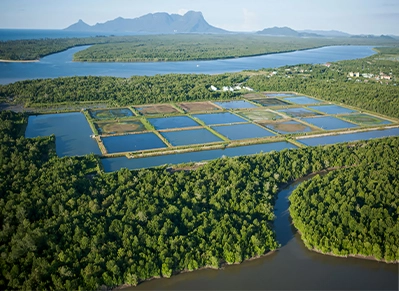
Across agricultural reservoirs, aquaculture facilities, and decorative water features, HDPE Lining For Ponds has emerged as the preferred solution for reliable water containment. The material's combination of chemical resistance, UV stability, and long service life has made it the go-to choice for project owners who cannot afford seepage or liner failure.
The numbers bear this out. The global pond liner market was valued at USD 2.67 billion in 2026 and is projected to reach USD 5.26 billion by 2035, representing a compound annual growth rate of 7.84 percent . Plastic pond liners — primarily HDPE, LLDPE, PVC, and EPDM — account for approximately 75 to 85 percent of all new pond lining projects worldwide, far outpacing traditional clay and concrete alternatives .
This report examines the HDPE Lining For Ponds market in 2026, providing technical specifications, case studies from actual installations, guidance on selecting HDPE Geomembrane Suppliers, and procurement best practices for commercial buyers.
 |  |  |
2.Market Fundamentals: Size, Growth, and Regional Dynamics
Current Market Valuation
The broader HDPE anti-seepage geomembrane market, which includes pond lining applications, grew from USD 1.75 billion in 2025 to USD 1.89 billion in 2026, a CAGR of 7.7 percent. The market is projected to reach USD 2.51 billion by 2030 at a CAGR of 7.4 percent .
Within this total, HDPE Lining For Ponds represents a substantial and growing segment. The material's dominance in commercial and semi-commercial applications stems from several measurable advantages:
1.Permeability below 1 × 10⁻¹¹ cm/s — virtually zero water loss
2.Resistance to pH 5 to 9.5, ammonia, nitrite, and salt up to 45 ppt in shrimp ponds
3.Carbon-black UV stabilization delivering 20 to 50 years of exposed service life, 50 to 100+ years when buried or covered
4.High-strength fusion welding achieving seam strength 90 to 95 percent of parent sheet material
Primary Market Drivers
Aquaculture Expansion
Global seafood demand continues rising, driving expansion of fish and shrimp farming operations worldwide. Aquaculture ponds require reliable HDPE Membrane systems that prevent seepage, maintain water quality, and improve harvest yields. Lined ponds deliver water savings of 70 to 90 percent compared to unlined earthen basins, with stocking density increases of 30 to 150 percent and feed conversion improvements of 10 to 30 percent .
Water Conservation Requirements
Unlined earthen ponds lose 30 to 60 percent of water volume annually to seepage, according to FAO and WorldFish Center data . In water-stressed regions, this loss is no longer acceptable. HDPE Lining For Ponds enables water conservation of up to 85 percent compared to unlined basins, making it essential for agricultural reservoirs and irrigation storage.
DIY and Commercial Landscaping Growth
The increasing popularity of pond construction among homeowners and commercial landscapers has emerged as a significant market driver. HDPE Geomembrane Suppliers report rising demand for user-friendly liner products that balance installation ease with long-term durability .
Environmental Compliance
Environmental regulations have spurred development of containment systems designed for regulatory adherence. HDPE Lining For Ponds plays a role in guaranteeing effective water retention and acting as a barrier against contamination, supporting initiatives dedicated to resource protection .
Regional Market Characteristics
North America holds approximately 35 percent of the global geomembranes market share, supported by established quality assurance practices and environmental enforcement. The region's position is fueled by agricultural water management requirements and commercial development activity .
Asia-Pacific accounts for 30 percent of the market and is the fastest-growing region, driven by China, India, and Southeast Asian nations executing large-scale irrigation, aquaculture, and infrastructure programs. Domestic manufacturing capacity enables competitive pricing .
Europe represents 25 percent of the global market, with policy frameworks emphasizing water conservation and sustainable practices fueling investments in liner solutions .
Middle East and Africa, with 10 percent market share, present distinct technical demands: high ultraviolet exposure, saline groundwater, and extreme temperature differentials require formulations with enhanced UV stabilization.
Technical Specifications for HDPE Lining For Ponds
Material Composition and Properties
Specification-grade HDPE Lining For Ponds is manufactured from virgin high-density polyethylene resin with controlled density between 0.94 and 0.96 grams per cubic centimeter. The additive package includes:
1.Carbon black (2.0 to 3.0 percent) for UV stabilization
2.Antioxidants to suppress thermal oxidation during processing and service life
3.Process aids to ensure uniform sheet formation and weldability
Industry standards reference GRI-GM13 or ASTM D7465. Critical performance parameters for pond lining applications include:
| Property | 0.75mm Requirement | 1.0mm Requirement | 1.5mm Requirement |
| Thickness tolerance | ±5% | ±5% | ±5% |
| Density | ≥ 0.940 g/cm³ | ≥ 0.940 g/cm³ | ≥ 0.940 g/cm³ |
| Tensile strength at yield | ≥ 15 kN/m | ≥ 20 kN/m | ≥ 20 kN/m |
| Puncture resistance | ≥ 350 N | ≥ 480 N | ≥ 640 N |
| Elongation at break | ≥ 600% | ≥ 700% | ≥ 700% |
| Carbon black content | 2.0–3.0% | 2.0–3.0% | 2.0–3.0% |
| Permeability | ≤ 1.0 × 10⁻¹¹ cm/s | ≤ 1.0 × 10⁻¹¹ cm/s | ≤ 1.0 × 10⁻¹¹ cm/s |
Material meeting these thresholds delivers 99.9 percent containment efficiency and, when properly installed, service life of 20 to 50 years for exposed applications and 50 to 100+ years when covered .
Thickness Selection Guide
Selecting the correct thickness for HDPE Lining For Ponds depends on application and site conditions:
0.5 mm to 0.75 mm: Decorative garden ponds, light-duty landscaping, small aquaculture
0.75 mm to 1.0 mm: General aquaculture (tilapia, catfish), medium-scale reservoirs
1.0 mm to 1.5 mm: Intensive shrimp farming, large agricultural reservoirs, industrial ponds
1.5 mm to 2.0 mm: Heavy-duty applications, ponds with rock placement or heavy equipment access
For most commercial pond applications, 1.0 mm HDPE Membrane provides an optimal balance of durability and cost.
Manufacturing Process
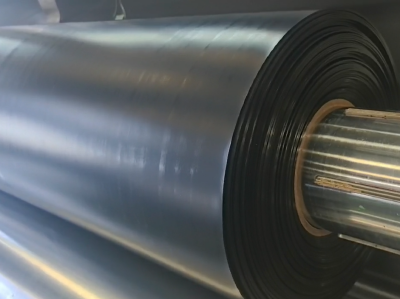
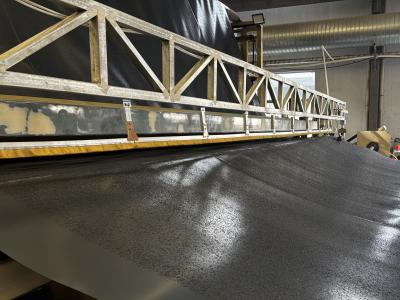
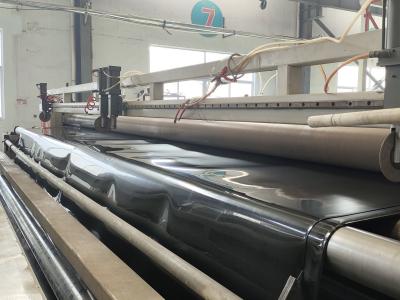
HDPE Lining For Ponds is manufactured through blown film extrusion or flat die extrusion. The production workflow follows standardized procedures:
1.Raw material compounding: Virgin HDPE resin combined with carbon black masterbatch and antioxidants using automated gravimetric blending
2.Drying and conditioning: Maintaining moisture below technical thresholds
3.Extrusion: Multi-zone heating systems controlled between 200–240°C
4.Sheet forming: Precision calendering for thickness control with continuous monitoring
5.Cooling: Chill rolls stabilize sheet thickness and surface finish
6.Quality inspection: Online spark testing, tensile sampling, and carbon black dispersion testing
7.Final winding: Tension-controlled automatic roll systems
Modern HDPE geomembrane production lines often integrate IoT sensors and AI-based process control systems to monitor real-time parameters like melt pressure, film thickness, and cooling rates, ensuring superior quality control and reduced waste .
Traceability is essential. Each production lot should be sampled and tested, with results recorded on a Mill Test Report. Buyers should request lot-specific documentation before shipment.
Real-World Case Studies
Nevada Tailings Storage Facility — 9 Million Square Feet of HDPE Liner
A tailings storage facility in northern Nevada provides a compelling example of HDPE Lining For Ponds in demanding mining applications. The facility, originally constructed in the late 1980s using VLDPE liner, experienced rapid UV degradation due to insufficient stabilizers. A replacement liner from an unknown HDPE producer also failed, causing leakage through the double liner system .
In 2017, engineers designed a new 625,000 square foot, double-lined pond using AGRU America 60 mil (1.5 mm) single-sided HDPE MicroSpike liner, with a 200 mil geonet as the separator between liners to guarantee quick flow to the leak detection sump. The project has since expanded to include almost 9 million square feet of HDPE liner across three phases .
Key outcomes:
1.Faster, more exact leak detection enables crews to pinpoint and seal leaks
2.Consistent friction angle values from the MicroSpike texture ensure slope stability
3.Thermal fusion welding created impermeable seals between adjacent sheets
4.All products tested at a GAI/LAP certified laboratory for quality
5.The pond remains leak-free to date
This case demonstrates that selecting qualified HDPE Geomembrane Suppliers with documented product testing is essential for long-term performance.
Malaysian Biogas Capture Project
A biogas capture project in Malaysia utilized HDPE Membrane for both base lining and floating cover applications. The project treats palm oil mill effluent (POME) wastewater and captures methane for power generation.
The POME lagoon was lined with 1.0 mm HDPE geomembrane along the base and covered with a 1.5 mm HDPE geomembrane sheet for biogas capture — creating an anaerobic digester. The system limits methane release, enables collection for use as alternative fuel, and protects groundwater from pollution .
Academic Research on HDPE Weld Performance
A 2025 study published in Geosynthetics International examined the long-term performance of HDPE extrusion welds aged at 85°C in synthetic leachate. The research investigated standard oxidative induction time (Std-OIT) and stress crack resistance (SCR) of 1.5 mm-thick HDPE geomembrane extrusion welds .
Key findings:
1.Heat-affected zones adjacent to the squeeze-out bead may exhibit faster Std-OIT depletion than the parent sheet
2.Welds with high welding-induced geometric irregularities resulted in SCR failure times close to that of a notched sheet
3.Overgrinding negatively impacts SCR of welds and accelerates degradation
4.No significant difference was observed between SCR values of fusion and extrusion welds during 40 months of immersion
This research underscores the importance of proper welding procedures and quality control when installing HDPE Lining For Ponds. Buyers should ensure their HDPE Geomembrane Suppliers provide documented welding guidelines and support certified installation.
Mine Tailings Chemical Durability Study
A 2025 study published in Geotextiles and Geomembranes examined the degradation of three 1.5 mm geomembranes — two made from HDPE and one from blended polyolefin resin — over three years in synthetic mine tailings pore water solutions at pH 4.0, 7.0, 8.0, and 9.5 .
Critical findings:
1.Both HDPE geomembranes reached nominal failure in stress crack resistance at 85°C
2.pH 7.0 solution was the most aggressive for degradation of mechanical properties
3.pH 9.5 solution was the most aggressive for antioxidant depletion
4.The blended polyolefin geomembrane showed no degradation
Relative performance could not be predicted from initial properties or solution chemistry alone
The study concludes that immersion testing is essential for applications involving complex chemical environments. For pond lining applications involving industrial effluent or unusual water chemistry, buyers should request chemical compatibility data from their HDPE Geomembrane Suppliers.
Application-Specific Selection
Aquaculture Ponds
Fish and shrimp farming operations specify 0.5 mm to 1.0 mm HDPE Lining For Ponds with non-toxic formulations to prevent bioaccumulation in harvested species. The smooth surface facilitates cleaning and harvesting while preventing pathogen harborage common in earthen ponds.
Benefits documented in the industry include:
1.Water savings: 70 to 90 percent reduction in seepage
2.Stocking density increase: 30 to 150 percent higher possible
3.Feed conversion improvement: 10 to 30 percent better FCR
4.Disease pressure reduction: 40 to 80 percent lower incidence of soil-transmitted pathogens
5.Payback period: typically 1 to 4 years on small commercial farms
Agricultural Irrigation Reservoirs
Agricultural applications represent a significant market for HDPE Lining For Ponds. Irrigation reservoirs require 1.0 mm to 1.5 mm smooth HDPE geomembranes that provide reliable water retention while withstanding UV exposure and agricultural chemical contact. The black coloration prevents light penetration that would otherwise promote algal growth, maintaining water quality for irrigation.
Decorative and Commercial Water Features
Commercial landscaping projects utilize 0.5 mm to 1.0 mm HDPE Membrane for water features in resorts, golf courses, and public parks. Installation precision is critical, employing thermal fusion or specialized adhesives to guarantee seam integrity .
Industrial Containment Ponds
Chemical manufacturing facilities and wastewater treatment plants require robust containment for hazardous by-products. For these applications, 1.5 mm to 2.0 mm HDPE Lining For Ponds with documented chemical compatibility is essential. Pre-installation immersion testing, as highlighted in the mine tailings study, should be standard practice for high-risk applications .
Installation Requirements and Quality Assurance
Subgrade Preparation
Surface must be free of stones, organic matter, cracks, protrusions, loose soil, and abrupt grade changes. Compaction to ≥95 percent Proctor density is standard. A non-woven geotextile cushion (300–800 g/m²) is typically installed for puncture protection.
Seaming Requirements
Field seams must be oriented parallel to maximum slope direction. Dual-track thermal fusion welding is the preferred method for HDPE Membrane installation. Seam area must be free of moisture, dust, and debris before welding.
Testing Protocols
Non-destructive testing: Entire seam length tested via air pressure, vacuum box, or spark testing
Destructive sampling: Minimum one sample per 300 meters of seam length
Trial seams: Required at start of each shift and after every four hours of continuous seaming
As the academic research demonstrates, proper welding procedures directly affect long-term liner performance .
Selecting HDPE Geomembrane Suppliers
What to Look For
When evaluating HDPE Geomembrane Suppliers, buyers should verify:
Certifications: GRI-GM13 or ASTM D7465 certification with lot-specific Mill Test Reports. Leading manufacturers include Solmax, GSE Environmental, AGRU, NAUE, and BPM .
Testing Capabilities: Suppliers with GAI/LAP certified laboratories, like the one used in the Nevada project, provide documented quality assurance .
Technical Support: Suppliers should offer welding guidelines, installation training, and field support.
Material Traceability: Each production lot must have documented test results for thickness, tensile strength, puncture resistance, carbon black content, and oxidative induction time.
Project References: Request case studies of similar applications.
Red Flags to Avoid
1.Inability to provide lot-specific Mill Test Reports
2.No third-party certification (GRI-GM13, ASTM)
3.Reluctance to provide material samples for testing
4.Pricing significantly below market benchmarks without explanation
Frequently Asked Questions
Q1: What thickness of HDPE Lining For Ponds do I need for my project?
Thickness selection depends on application:
0.5 mm to 0.75 mm: Decorative garden ponds, light-duty landscaping
0.75 mm to 1.0 mm: General aquaculture, medium-scale reservoirs
1.0 mm to 1.5 mm: Intensive shrimp farming, large agricultural reservoirs
1.5 mm to 2.0 mm: Heavy-duty applications, ponds with rock or equipment traffic
For most commercial pond applications, 1.0 mm HDPE Membrane provides an optimal balance of durability and cost.
Q2: How long does HDPE Lining For Ponds last?
Properly manufactured and installed HDPE Lining For Ponds demonstrates service life of 20 to 50 years for exposed applications and 50 to 100+ years when covered . The Nevada tailings facility, installed with 1.5 mm HDPE liner, is expected to perform for decades under demanding mining conditions .
Q3: How do I verify quality when selecting HDPE Geomembrane Suppliers?
Request current GRI-GM13 or ASTM D7465 certification and lot-specific Mill Test Reports. Compare reported values for tensile strength, puncture resistance, carbon black content, and oxidative induction time against standard requirements. For critical projects, request material samples for independent laboratory testing .
Q4: What is the difference between HDPE and other pond liner materials?
HDPE offers higher tensile strength, superior chemical resistance, and longer service life than PVC or EPDM — optimal for large agricultural reservoirs and aquaculture facilities. EPDM provides greater flexibility for irregular shapes, making it preferred for natural-style garden ponds. HDPE's carbon-black stabilization provides superior UV resistance for exposed applications .
Q5: What welding method is recommended for HDPE Membrane installation?
Dual-track thermal fusion welding is the preferred method for field seams . As the academic research shows, proper welding parameters are critical for long-term performance. Seam area must be free of moisture, dust, and debris before welding, and all seams require non-destructive testing over their full length .
Conclusion: Verified Specifications Over Apparent Savings
The global market for HDPE Lining For Ponds offers abundant supply at competitive price levels. The risk for buyers is accepting material that appears similar to certified products but lacks the documented properties required for decades of service.
Real-world projects demonstrate that success depends on verified performance: the Nevada tailings facility required 60 mil HDPE liner with documented friction angles and leak detection capability ; the Malaysian biogas project needed HDPE Membrane with low gas permeability for methane capture ; the academic research shows that welding quality directly affects long-term durability .
Professional buyers reduce risk through three actions:
1.Write specifications referencing recognized international standards (GRI-GM13, ASTM D7465)
2.Verify conformance through independent testing and lot-specific Mill Test Reports before shipment
3.Select HDPE Geomembrane Suppliers who provide comprehensive test data, material traceability, and documented project references
The most cost-effective HDPE Lining For Ponds is not the one with the lowest initial price, but the one that delivers verified performance throughout the project's design life.
Procurement Resource: Our HDPE Lining For Ponds Technical Specification Template and Supplier Audit Checklist are available without charge. These documents reflect field experience across aquaculture, agricultural, and commercial pond projects worldwide.
Contact our technical sales engineering team for a specification review, to request lot-specific Mill Test Reports, or to discuss project-specific requirements for your current inquiry.