200 GSM Non Woven Geotextile: The Balanced Specification for Drainage and Separation
When a highway embankment project in Norfolk, UK needed a stable drainage layer to speed up consolidation of fill material, engineers faced a choice. The traditional starter layer required a thick (up to 600mm) granular layer of 6C stone with geotextiles placed on either side . The alternative proposed a geocomposite that delivered significant cost and carbon savings—approximately 66% carbon reduction compared to the traditional specification .
While that project used a specialized drainage composite, it highlights a broader truth: for countless infrastructure applications—from driveway bases to road subgrade separation—the 200 GSM Non Woven Geotextile delivers an optimal balance of strength, permeability, and cost .
For procurement professionals and civil engineers, understanding the 200 GSM Non Woven Geotextile specification means recognizing how this mid-weight fabric performs across separation, filtration, and geotextile for drainage applications where lighter materials would fail and heavier grades would add unnecessary cost.
 |  |  |
Market Context: The 200 GSM Weight Class in High Demand
The global non-woven geotextile market was valued at approximately USD 4.73 billion in 2024 and is projected to reach USD 7.06 billion by 2035, growing at a CAGR of 3.71% . The 180–250 g/m² weight range—where 200 GSM Non Woven Geotextile sits—accounts for 35–45% of total non-woven geotextile consumption in North America and Europe .
Market drivers for the 200 GSM Non Woven Geotextile segment include:
1.Infrastructure investment: Major projects in Asia-Pacific, North America, and Europe require materials capable of handling increased loads and drainage demands
2.Stormwater regulations: Stricter environmental standards for drainage and filtration systems drive demand for reliable geotextile for drainage products
3.MSE wall construction: Mechanically stabilized earth walls require geofabric drainage layers behind segmental blocks and wrapped faces
The lightweight segment (200 g/m² or less) currently holds the largest market share due to widespread use in landscaping, erosion control, and agriculture . However, the medium-weight segment (200-500 g/m²), including 200 GSM Non Woven Geotextile, continues steady growth driven by infrastructure projects requiring enhanced durability .
Technical Specifications: What 200 GSM Delivers
Physical and Mechanical Properties
A quality 200 GSM Non Woven Geotextile manufactured via needle-punching typically offers:
| Property | Typical Value | Test Standard |
| Thickness | 1.7 – 2.0 mm | ASTM D5199 |
| Grab Tensile Strength | 6.5 kN/m (MD & TD) | ASTM D4632 |
| CBR Puncture Resistance | 0.9 kN | ASTM D6241 |
| Tear Strength | 0.16 kN | ASTM D4533 |
| UV Resistance (500 hrs) | ≥70% strength retention | ASTM D4355 |
| Vertical Permeability | K × (0.1 – 0.001) cm/s | ASTM D4491 |
| Apparent Opening Size | 0.07 – 0.21 mm | ASTM D4751 |
The 200 GSM Non Woven Geotextile weight class provides significantly higher puncture resistance than lighter grades (100-150gsm), making it suitable for applications involving sharp aggregate or construction traffic. The CBR puncture value of 0.9 kN is approximately 50% higher than a 150gsm product .
Material Composition
The preferred polymer for geotextile for drainage and filtration at this weight is polypropylene (PP), which offers excellent chemical resistance, UV stability when properly formulated, and cost-effectiveness. Manufacturers producing quality 200 GSM Non Woven Geotextile use 100% virgin polypropylene fibers containing UV inhibitors for outdoor durability .
For applications requiring different performance characteristics, some manufacturers offer polyester (PET) versions of 200 GSM Non Woven Geotextile, which provide higher tensile strength and better creep resistance under sustained loads .
Permeability and Filtration Performance
The defining characteristic of 200 GSM Non Woven Geotextile is its ability to manage water flow while retaining soil particles. This dual functionality is quantified through two critical parameters: permittivity (flow normal to the plane) and water permeability .
Effective geofabric drainage requires the fabric to satisfy two competing requirements: sufficient openness for unimpeded water flow, yet sufficiently tight pore structure to prevent migration of fine soil particles. The three-dimensional structure of needle-punched nonwovens provides this balance, with Apparent Opening Size typically ranging from 0.07 to 0.21 mm .
The vertical permeability coefficient is expressed as K × (0.1 – 0.001) cm/s, where K represents a factor of 1.0 to 9.9, indicating the fabric maintains adequate flow rates for most drainage applications .
Manufacturing Process: From Polymer to 200 GSM Non Woven Geotextile
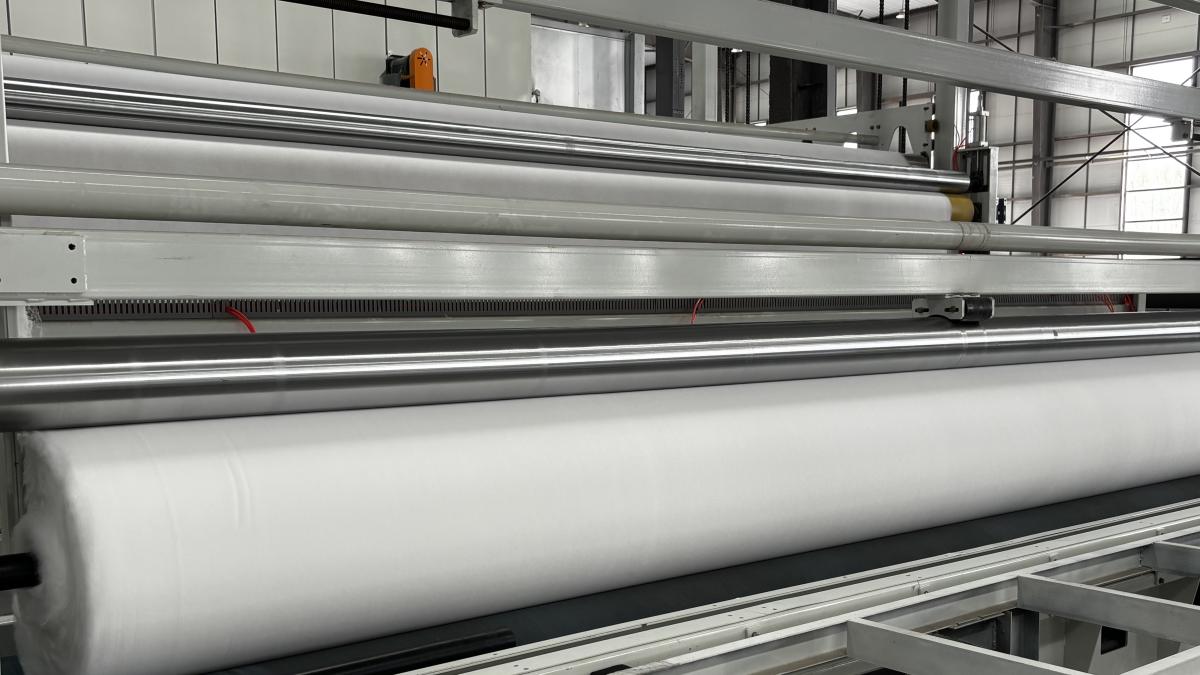
The production of high-quality 200 GSM Non Woven Geotextile follows the needle-punched manufacturing process, which has become the industry standard for its efficiency and performance .
Step 1: Fiber Preparation
Polypropylene or polyester fibers—either continuous filaments or staple fibers—are opened, mixed, and carded into a uniform web. The carding process involves working the fibers over large cylinders wrapped in toothed wire to disentangle and mix them into a homologous web of uniform weight per unit area .
Step 2: Cross-Lapping
The fibrous web is transferred from side to side onto a lower conveyor running perpendicular to the infeed. This layering allows finished fabrics of various weights (from 200gsm to over 2000gsm) and widths to be produced .
Step 3: Needle-Punching
The layered web passes through a needle loom where thousands of barbed needles penetrate the material thousands of times per minute. The barbs carry fibers through the web, mechanically entangling them into a stable three-dimensional structure . For 200 GSM Non Woven Geotextile, the needle-punching process provides the necessary strength while maintaining permeability.
Step 4: Calendering (Optional)
Some products receive light calendering—heat and pressure treatment—to control thickness and surface smoothness without substantially compromising permeability .
Application Categories for 200 GSM Non Woven Geotextile
The 200 GSM Non Woven Geotextile weight class serves a wide range of applications where separation and geotextile for drainage are required :
| Application | Primary Function |
| MSE Retaining Walls | Drainage and filtration layers behind segmental blocks |
| Road Subgrade Separation | Preventing aggregate/subgrade mixing over soft soils |
| French Drains & Trenches | Wrapping perforated pipe to prevent soil intrusion |
| Driveway Bases | Separation and stabilization under aggregate |
| Shed Bases | Ground stabilisation and frost protection |
| Soakaway Systems | Filtration around drainage structures |
| Landfill Leachate Collection | Cushioning and filtration layers |
| Coastal Revetment | Bedding and filtration under riprap |
| Roof Gardens | Drainage and protection layers |
For driveway bases and heavy loading areas, the 200 GSM Non Woven Geotextile provides a heavier-duty solution than standard weight fabrics, with higher tensile strength and excellent water permeability .
As a geotextile for drainage in SUDS (Sustainable Urban Drainage Systems) containment areas, the fabric allows natural percolation of water to filter through into designed discharge areas while ensuring fine aggregate is filtered to maintain stability and design strength .
International Validation: Road Subsidence in Indonesia
A 2024 study published in IOP Conference Series evaluated the effectiveness of geotextile and sub-drainage in addressing road subsidence on the Bumiayu–Sirampog Road in Brebes Regency, Indonesia . The research, conducted by Dinas PU Bina Marga dan Cipta Karya Provinsi Jawa Tengah, examined soil movement influenced by geological faulting.
Through 2D Plaxis V20 modeling, the study determined that treatment with geotextile reinforcement (class 1 stabilizer type) combined with PVC pipe sub-drainage could minimize extreme land displacement values from 5.126 meters to 1.414 meters . The reduction value based on field observations was smaller than laboratory calculations: 0.700 m compared to 0.845 m, confirming the effectiveness of geotextile reinforcement in soft soil conditions .
This research provides empirical validation for specifying 200 GSM Non Woven Geotextile in road construction over problematic subgrades.
Strategic Procurement for 200 GSM Non Woven Geotextile
Certification and Compliance
Verify that products carry certification to relevant international standards—ASTM, ISO, or EN as appropriate. Key tests include grab tensile strength (ASTM D4632), CBR puncture (ASTM D6241), UV resistance (ASTM D4355), permittivity (ASTM D4491), and apparent opening size (ASTM D4751) .
Request Mill Test Reports for each production lot and compare reported values against project requirements.
Weight Grade Validation
Confirm that the delivered 200 GSM Non Woven Geotextile meets the specified weight with tolerance of -8% per industry standards . This ensures the fabric provides the intended mechanical properties.
UV Stabilization
For projects where fabric may be exposed before burial, verify UV inhibitor content. Quality geotextile for drainage products include UV stabilizers for outdoor durability .
Roll Configurations
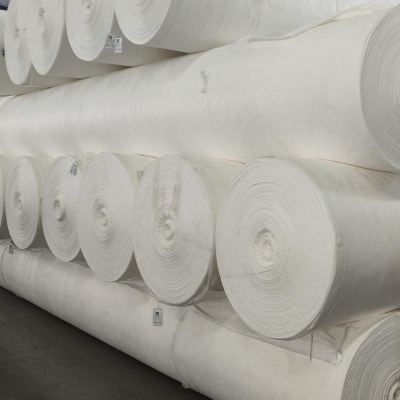
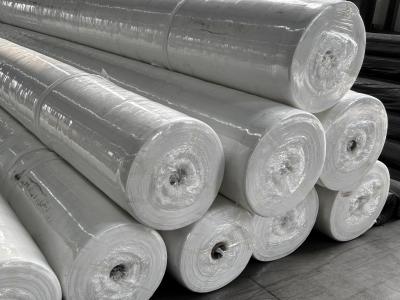
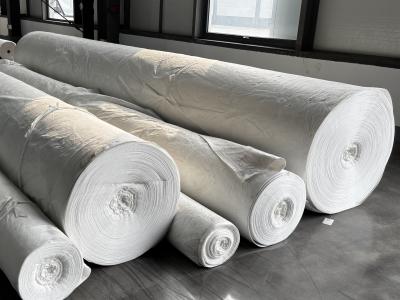
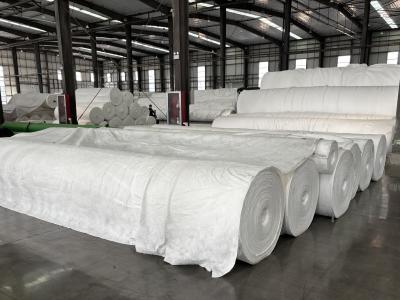
Standard roll widths for 200 GSM Non Woven Geotextile include 2.25m, 4.5m, and wider options . Wider rolls (up to 4.4m or more) reduce field seams and installation time. Standard roll lengths typically range from 20m to 100m .
Frequently Asked Questions
Q1: What applications require 200 GSM Non Woven Geotextile instead of lighter grades?
Choose 200 GSM Non Woven Geotextile when you need higher puncture resistance and tensile strength than 100-150gsm products provide, but heavier 300-400gsm grades are unnecessary. Specific applications include driveway bases, shed bases, drainage layers in higher loading areas, soakaway systems, and road subgrade separation over soft soils . For basic weed suppression or light landscaping, lighter grades are sufficient.
Q2: How does 200 GSM Non Woven Geotextile perform for geotextile for drainage applications?
The 200 GSM Non Woven Geotextile performs excellently for geotextile for drainage due to its balanced pore structure and permeability. The fabric allows water to pass through (vertical permeability coefficient K × 0.1-0.001 cm/s) while retaining soil particles (Apparent Opening Size 0.07-0.21 mm) . This makes it ideal for French drains, trench wraps, retaining wall drainage layers, and SUDS containment areas .
Q3: Is 200 GSM Non Woven Geotextile suitable for both woven and nonwoven applications?
200 GSM Non Woven Geotextile specifically refers to nonwoven construction via needle-punching. For applications requiring high tensile reinforcement with low elongation, a woven geotextile of similar weight would be specified. For separation, filtration, and geofabric drainage applications, nonwoven is the correct choice due to its three-dimensional structure and superior permeability .
Q4: How should I specify 200 GSM Non Woven Geotextile for quality assurance?
Specify: 100% virgin polypropylene fibers with UV inhibitor, needle-punched nonwoven construction, minimum CBR puncture of 0.9 kN, minimum grab tensile of 6.5 kN/m both directions, water permeability meeting ASTM D4491 requirements, and AOS (O90) between 0.07-0.21 mm . Request Mill Test Reports for each production lot. Reference standards ASTM D4632 (tensile), ASTM D6241 (puncture), and ASTM D4751 (AOS).
Q5: What does the Indonesian road study reveal about geotextile effectiveness?
The 2024 study on the Bumiayu–Sirampog Road in Brebes demonstrated that geotextile reinforcement combined with sub-drainage could reduce extreme land displacement from 5.126 meters to 1.414 meters—a 72% reduction . Field observations confirmed the effectiveness of this approach for road construction in areas affected by soil movement from geological faulting. This provides real-world validation for specifying 200 GSM Non Woven Geotextile in challenging subgrade conditions.
Conclusion and Call to Action
The 200 GSM Non Woven Geotextile weight class represents a critical specification for infrastructure projects requiring reliable separation, filtration, and drainage performance. From driveway bases in residential projects to road subgrade stabilization on major highways, this mid-weight geotextile for drainage delivers an optimal balance of strength, permeability, and cost-effectiveness.
When specifying, confirm mechanical properties including tensile strength, puncture resistance, and UV stabilization. Work with manufacturers who provide certified test data and documented quality systems.
Need help specifying 200 GSM Non Woven Geotextile for your next project? Share your application details—whether for geofabric drainage layers, road separation, or retaining wall filtration—with our technical team. We will provide a no-obligation review of appropriate specifications with certified performance data.