1mm HDPE Liner: Market Analysis, Technical Specifications, and Global Sourcing Guide (2026-2035)
Introduction: Why 1mm HDPE Liner Is the Industry’s Preferred Thickness
Not every containment project requires a 2mm heavy-duty liner. For aquaculture ponds, canal linings, secondary containment, and waterproofing applications, the 1mm HDPE Liner (40 mil) offers the optimal balance. It delivers sufficient puncture resistance and chemical stability for most medium-risk applications while keeping material costs significantly lower than thicker alternatives.
The plastic liner market, which includes HDPE geomembranes, was valued at approximately USD 5.34 billion in 2025 and is projected to reach USD 8.50 billion by 2035, growing at a 4.75% CAGR . Within this market, the HDPE segment holds the largest share—approximately 35%—due to its chemical resistance, cost-effectiveness, and durable quality .
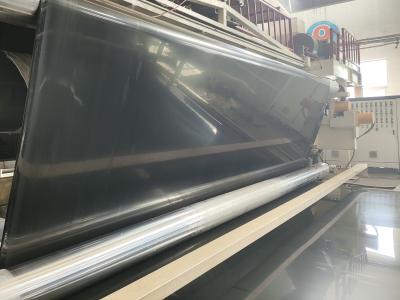
A 1mm HDPE Liner serves as an effective HDPE Impermeable Membrane, creating a reliable barrier against water migration, chemical attack, and UV degradation. This report examines the 1mm HDPE Liner market in 2026: current technical specifications, real-world case studies from major infrastructure projects, emerging research on waterproofing applications, and practical guidance for global buyers.
 |  |  |
Market Context — Size, Trends, and Growth Drivers
Current Market Valuation for HDPE Liners
The broader plastic liner market continues its steady expansion. With the HDPE segment commanding approximately 35% of the market, 1mm HDPE Liner products represent a substantial portion of sales across aquaculture, mining, landfill, and construction sectors . Key growth drivers include:
1.Infrastructure Development: Rising investment in water conservation and canal lining projects across Asia, the Middle East, and Africa
2.Aquaculture Expansion: Global seafood demand driving pond construction, with lined ponds delivering 70-90% water savings
3.Environmental Compliance: Stricter regulations requiring documented liner performance for landfills and industrial containment
4.Waterproofing Innovation: Growing adoption of HDPE self-adhered waterproofing membranes in below-grade construction
Material Cost Comparison: 1mm vs. Alternative Thicknesses
Based on current market data, pricing for 1mm HDPE Liner typically falls between thinner (0.5-0.75mm) and thicker (1.5-2.0mm) options. For buyers, the value proposition of 1mm lies in its balance of performance and cost—sufficient puncture resistance (320 N minimum) for most applications without the premium pricing of 2mm material .
Technical Specifications for 1mm HDPE Liner
Material Composition and Manufacturing Standards
A specification-grade 1mm HDPE Liner is manufactured from virgin high-density polyethylene resin with density controlled between 0.940 and 0.960 g/cm³ . The additive package includes:
1.Carbon black (2.0-3.0%) for UV stabilization and long-term weathering resistance
2.Antioxidants to suppress thermal oxidation during processing and service life
3.Process aids to ensure uniform sheet formation and weldability
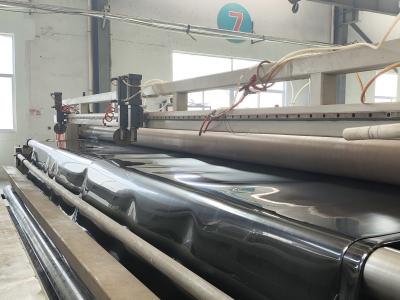
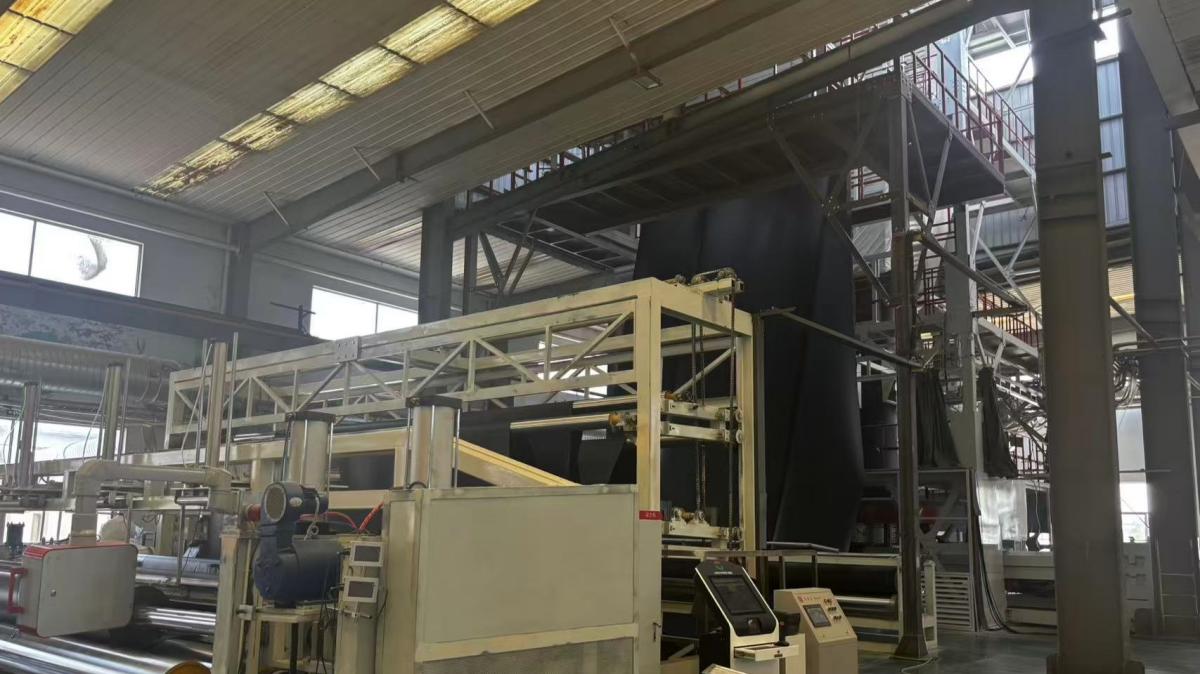
The production process uses extrusion technology with automated thickness control systems. Leading HDPE Membrane for Waterproofing applications, the material meets GRI-GM13 or ASTM D7176 standards. The table below summarizes key performance parameters for 1mm HDPE Liner based on GRI-GM13 specifications:
| Property | 1mm Requirement | Test Method |
| Density (min) | 0.940 g/cm³ | ASTM D1505 |
| Tensile Strength at Yield | 15 N/mm | ASTM D6693 |
| Tensile Strength at Break | 27 N/mm | ASTM D6693 |
| Elongation at Break | ≥700% | ASTM D6693 |
| Puncture Resistance | 320 N | ASTM D4833 |
| Tear Resistance | 125 N | ASTM D1004 |
| Carbon Black Content | 2.0-3.0% | ASTM D4218 |
| Stress Crack Resistance | ≥300 hours | ASTM D5397 |
| Oxidative Induction Time (Std-OIT) | ≥100 minutes | ASTM D3895 |
| Permeability | ≤1.0×10⁻¹² cm/s | ASTM D5887 |
A 1mm HDPE Liner meeting these thresholds delivers 99.9% containment efficiency and, when properly installed and covered, a service life of 20-50 years for exposed applications and 50+ years when buried .
Physical Property Advantages of 1mm Thickness
Compared to 0.5mm liners, 1mm HDPE Liner offers significantly higher puncture resistance (320 N vs. 176 N) and tensile strength . Compared to 1.5mm liners, 1mm is lighter, more flexible, and easier to install while still providing robust containment for most medium-risk applications.
For applications requiring an HDPE Impermeable Membrane, the 1mm thickness provides the following practical advantages:
Superior weldability — The uniform surface enables consistent thermal fusion welding
Lower material cost — 20-40% less than 1.5mm textured alternatives
Easier deployment — Reduced weight per roll simplifies logistics and field handling
Real-World Case Study — Sardar Sarovar Canal Lining Project (India)
Project Background and Challenges
The Sardar Sarovar Narmada Nigam Limited (SSNNL) operates an extensive canal system in Gujarat, India. One distributary canal—the "Tanchha Distributary"—was suffering severe water loss due to seepage. The surrounding farms had become waterlogged, and the canal embankment was in poor condition .
Key challenges:
The soil was "Clay of high plasticity (CH)" — black cotton soil with very high swelling pressure
During water flow, water ingressed through the lining and caused soil swelling
During dry periods, the soil shrank, creating repeated cycles of expansion and contraction
These cycles caused severe water piping through the canal into neighboring terrain
At several locations, cracks and breaches had been patched with cement mortar to restrict seepage
The total affected length was 3.02 km of canal, with a command area of 2,384 hectares
Compounding factors:
The bed of the canal was highly uneven
Brick lining was significantly disturbed and displaced
Banks had become disbursed and scattered
Piping from canal banks and leakage from siphons both contributed to the problem
Why Geomembranes Were Selected
Engineers evaluated multiple solutions:
Solutions without geomembranes — Scrapping existing banks and bringing in CNS soil (critical non-swelling soil) was considered, but locating CNS soil and transporting it would have been prohibitively expensive. Providing additional berms with new lining was considered, but swelling would inevitably lead to shear cracks. Concrete lining with welded wire mesh seemed promising but carried high costs .
The geomembrane solution — The function of a 1mm HDPE Liner would be to form an impervious curtain behind the brick lining, preventing water from contacting the expansive embankment soil. Brick lining alone allows water to seep through because of the porous nature of bricks. A HDPE Impermeable Membrane would solve this fundamental problem .
Technical Approach and Material Selection
The project compared three geomembrane materials:
0.3mm HDPE sheets
0.3mm LDPE sheets
IITD-developed textured geomembrane (0.6mm with novel design)
Findings from the trial:
0.3mm HDPE sheets had inherently poor puncture resistance, not providing confidence for large-scale installation
0.3mm HDPE sheets had installation limitations due to low flexibility
LDPE sheets of 0.3mm had similar limitations
The IITD geomembrane, with lower thickness and built-in texture, was very flexible and easy to install
For full-scale application, 1mm HDPE Liner would provide the optimal balance—sufficient thickness for puncture resistance while maintaining enough flexibility for installation over irregular terrain.
Results and Implications
The field trials demonstrated that geomembranes can effectively control water seepage in canals built on expansive soils. For buyers considering 1mm HDPE Liner for similar applications, the key lessons are:
Material selection must account for local soil conditions
Flexibility and puncture resistance are both critical for installation success
Even a thin geomembrane (0.6-1.0mm) can provide effective seepage control when properly specified
A HDPE Membrane for Waterproofing solves the fundamental problem of water contacting expansive soils
This case study has direct relevance for canal lining projects worldwide, particularly in regions with swelling clay soils.
HDPE Membrane for Waterproofing — Building Applications
HDPE Self-Adhered Waterproofing Membranes
Beyond pond and canal lining, 1mm HDPE Liner technology has advanced into building waterproofing applications. A study published in E3S Web of Conferences (2020) compared high polymer (HDPE) self-adhered waterproofing membranes with traditional SBS modified asphalt membranes .
Key advantages of HDPE self-adhered membranes:
| Parameter | HDPE Self-Adhered | Traditional SBS |
| Tensile property | Superior | Standard |
| Tear strength | Higher | Lower |
| Low-temperature bending | Excellent | Limited |
| Water resistance | Superior | Standard |
| Construction method | Pre-laid, open-flame free | Hot-melt, open-flame required |
| Equivalent layers | 1 layer = Level 1 fortification | 2 layers needed |
Green and Sustainable Advantages
The same study highlighted significant environmental and efficiency benefits of using HDPE Membrane for Waterproofing in building construction :
Material savings — A single layer of HDPE self-adhered membrane reaches the first level of fortification, equivalent to two layers of traditional SBS membrane. The same waterproof level saves one layer of material. Traditional SBS has 1000mm width and 100mm overlap, while HDPE comes in 2000mm width with 80mm overlap, reducing lap loss.
Cost and time savings — Field data comparison shows:
Material saved: approximately 1/2
Construction comprehensive cost saved: 1/3
Construction period saved: 1/3
Safety and environmental benefits:
No open flame operation required during construction
No asphalt smoke generated (traditional SBS produces toxic gases)
Reduced fire hazard and safety risks
No asphalt tar production (which can contaminate soil)
Construction flexibility:
Lower requirement for base moisture content
Can be constructed without open water on the base
Winter construction possible: welding method can be used at temperatures down to -10°C
Process simplicity: base treatment → detail node strengthening → positioning laying → lapping and coiling
This application of 1mm HDPE Liner as a building waterproofing membrane represents a growing market segment, particularly in commercial and residential construction.
Eldeco Mall Project, Delhi, India (2019-2020)
A commercial application of HDPE Membrane for Waterproofing occurred at the Eldeco Group mall project in Lajpat Nagar, Delhi. The client required a 100% watertight waterproofing solution for the below-grade structure .
Solution implemented:
Fosroc Membrane HDPE-P — a pre-applied, pressure-sensitive HDPE membrane that bonds directly to poured concrete below the raft
Used in conjunction with Proofex 3000 (SBS-based membrane with HDPE lining) for retaining walls
Benefits realized:
Fully bonded system prevents lateral water tracking
Reinforcement can be directly laid on the HDPE membrane
Settlement of subsoil after application does not affect membrane performance
Application process is very easy
This case demonstrates the growing adoption of 1mm HDPE Liner technology in building waterproofing applications, where impermeability and bond strength are critical.
How to Select a Reliable Supplier for 1mm HDPE Liner
Key Evaluation Criteria
When sourcing 1mm HDPE Liner, verify these essential items with potential suppliers:
Certifications — Look for GRI-GM13 or ASTM D7176 compliance. Reputable HDPE Membrane for Waterproofing suppliers hold ISO 9001 and ISO 14001 certifications and provide third-party test reports from accredited laboratories (GAI-LAP, SGS, Intertek) .
Raw Material Traceability — Demand documentation showing 100% virgin resin from reputable suppliers (Dow, ExxonMobil, Borealis). Recycled content has no place in primary HDPE Impermeable Membrane applications.
Mill Test Reports — Lot-specific documentation is required, not generic certificates covering an entire production quarter. The report must show actual test values for: thickness, tensile strength (yield ≥15 N/mm, break ≥27 N/mm), puncture resistance (≥320 N), carbon black content (2.0-3.0%), and Std-OIT (≥100 min) .
Testing Capability — Suppliers with in-house GAI-LAP accredited laboratories or third-party validation from recognized labs provide greater quality assurance .
Warranty — A minimum 20-year manufacturer warranty for 1mm HDPE Liner meeting GRI-GM13 standards is standard industry practice.
Manufacturing Capabilities
Major 1mm HDPE Liner manufacturers produce roll widths from 1m to 8m, with roll lengths determined by thickness and weight specifications. Typical production cycles range from 15-25 days after order confirmation, with expedited production available from select manufacturers .
Red Flags to Avoid
Unwillingness to provide lot-specific Mill Test Reports
Vague answers about resin sources or additive packages
No third-party certifications
Absence of UV stabilization documentation (carbon black content below 2.0%)
Short warranty or none offered
Installation Best Practices for 1mm HDPE Liner
Subgrade Preparation
The foundation must be smooth, free of rocks exceeding 12mm diameter, sticks, organic matter, and sharp objects. Compaction to ≥95% Proctor density is standard. For rough subgrades, a non-woven geotextile cushion (300-800g/m²) is recommended.
Seaming Methods
Dual-track thermal fusion welding is the preferred method for 1mm HDPE Liner. Key parameters:
Welding temperature: 400-500°C
Welding speed: 1.5-3.0 m/min
Seam area must be dry and clean — moisture or dust compromises weld integrity
For building waterproofing applications using self-adhered membranes, the process is simpler: base treatment → detail node strengthening → positioning laying → lapping and coiling . No open flame is required, improving construction safety.
Testing Protocols
Non-destructive testing of every seam via air pressure, vacuum box, or spark testing
Destructive sampling — minimum one sample per 300m of seam length
Trial welds required at start of each shift and after every four hours of continuous seaming
Frequently Asked Questions (FAQ)
Q1: What is the typical service life of a 1mm HDPE Liner?
Properly manufactured and installed 1mm HDPE Liner with adequate UV stabilization (carbon black content 2.0-3.0%) demonstrates a service life of 20-50 years for exposed applications and 50+ years when covered. Key factors affecting longevity include UV exposure intensity, chemical contact, and installation quality .
Q2: Is 1mm HDPE Liner suitable for building waterproofing applications?
Yes. The HDPE Membrane for Waterproofing is widely used in below-grade construction, tunnel linings, and foundation waterproofing. The pre-applied, self-adhered HDPE membranes (as used in the Eldeco Mall project) bond directly to poured concrete, creating a fully bonded system that prevents lateral water tracking. These membranes offer advantages over traditional SBS membranes: no open flame, no asphalt smoke, material savings of approximately 1/2, and construction cost savings of 1/3 .
Q3: What is the difference between 1mm and 0.5mm HDPE liners?
Compared to 0.5mm liners, 1mm HDPE Liner offers significantly higher puncture resistance (320 N vs. 176 N) and greater tensile strength (yield 15 N/mm vs. 9 N/mm). The Sardar Sarovar canal project found that 0.3mm sheets had poor puncture resistance and did not provide confidence for large-scale installation. For most medium-risk applications, 1mm is the recommended minimum thickness .
Q4: What standards should a 1mm HDPE Liner meet for export projects?
For international projects, require GRI-GM13 or ASTM D7176 certification with lot-specific Mill Test Reports. Key properties to verify: density ≥0.940 g/cm³, tensile yield ≥15 N/mm, puncture resistance ≥320 N, carbon black content 2.0-3.0%, and Std-OIT ≥100 minutes. For building applications, CE marking may be required for European projects .
Q5: How does 1mm HDPE Liner perform as an HDPE Impermeable Membrane in canal lining?
The Sardar Sarovar case study demonstrates that geomembranes effectively control water seepage in canals built on expansive soils. For HDPE Impermeable Membrane applications, 1mm thickness provides sufficient barrier properties while maintaining flexibility for installation over irregular terrain. The key is preventing water from contacting the embankment soil—a function the HDPE liner performs exceptionally well .
Conclusion: Verified Specifications Over Apparent Savings
The global market for 1mm HDPE Liner offers abundant supply at competitive price levels. The risk for buyers is not supply failure but specification failure—accepting material that appears similar to certified products but lacks the documented properties required for decades of service.
Real-world projects demonstrate that success depends on verified performance:
The Sardar Sarovar canal project showed that proper geomembrane selection is critical for expansive soil conditions
The Eldeco Mall project proved that HDPE Membrane for Waterproofing delivers 100% watertight below-grade protection
Independent research confirms that HDPE self-adhered membranes offer superior green credentials and cost savings over traditional alternatives
Professional buyers reduce risk through three actions:
Write specifications referencing recognized international standards (GRI-GM13, ASTM D7176)
Demand lot-specific Mill Test Reports before any material ships
Select suppliers who provide comprehensive test data, material traceability, and documented project references
The most cost-effective HDPE Impermeable Membrane is not the one with the lowest initial price, but the one that delivers verified performance throughout the project's design life.
Procurement Resource: Our 1mm HDPE Liner Technical Specification Template and Supplier Audit Checklist are available without charge. These documents reflect field experience across aquaculture, canal lining, and building waterproofing projects worldwide.
Contact our technical sales engineering team for a specification review, to request lot-specific Mill Test Reports, or to discuss project-specific HDPE Membrane for Waterproofing requirements for your next inquiry.