150 GSM Geotextile: Lightweight Filtration and Separation for Infrastructure Projects
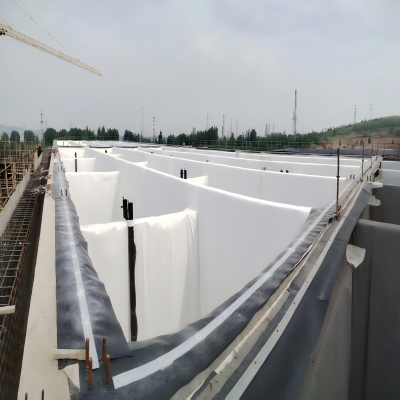
A roadway project in Southeast Asia recently showcased the effectiveness of a 150 GSM Nonwoven Geotextile used as a separation layer between soft clay subgrade and aggregate base. The fabric prevented intermixing of materials, allowed water to drain freely, and maintained structural integrity under construction traffic. Sections without the geotextile required repairs within months, while the reinforced section has performed without distress for years.
This outcome reflects what field experience and engineering research have consistently demonstrated. The 150 GSM Geotextile weight class offers an optimal balance of strength, permeability, and cost-effectiveness for a wide spectrum of civil engineering applications, from road construction to Mine Geotextile applications in heap leach pads and tailings facilities.
 |  |  |
What 150 GSM Geotextile Delivers in Practice
The 150 GSM Geotextile specification refers to fabric weight—150 grams per square meter. A quality needle-punched Nonwoven Geotextile at this weight typically offers grab tensile strength of approximately 0.6 kN in both machine and cross-machine directions, CBR puncture resistance around 1.7 kN, and thickness of roughly 0.9 to 1.3 mm .
These properties translate directly to field performance. The tensile strength determines whether the fabric remains intact under construction traffic. The puncture resistance determines whether the fabric survives when aggregate gets dumped onto it. The 0.07 to 0.20 mm apparent opening size ensures effective filtration while maintaining permeability .
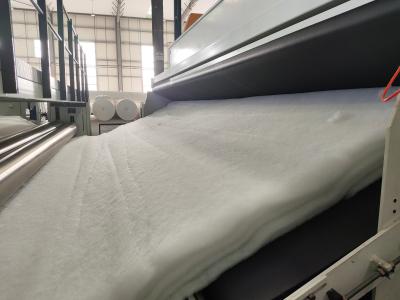
Nonwoven needle-punched construction creates a three-dimensional fiber structure with distinctive pores that make it suitable for filtration and drainage applications . The needle-punching process mechanically entangles fibers through repeated penetration with barbed needles, producing a flexible, felt-like fabric with good drainage characteristics and no chemical binders .
Manufacturing: How Needle Punching Creates the Structure
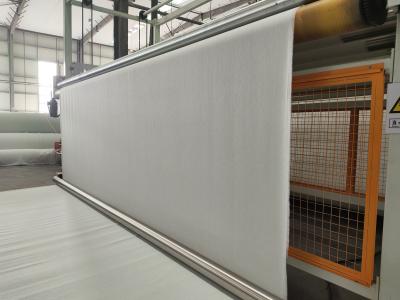
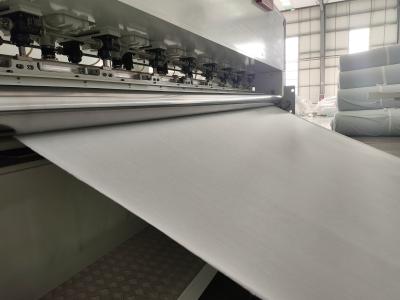
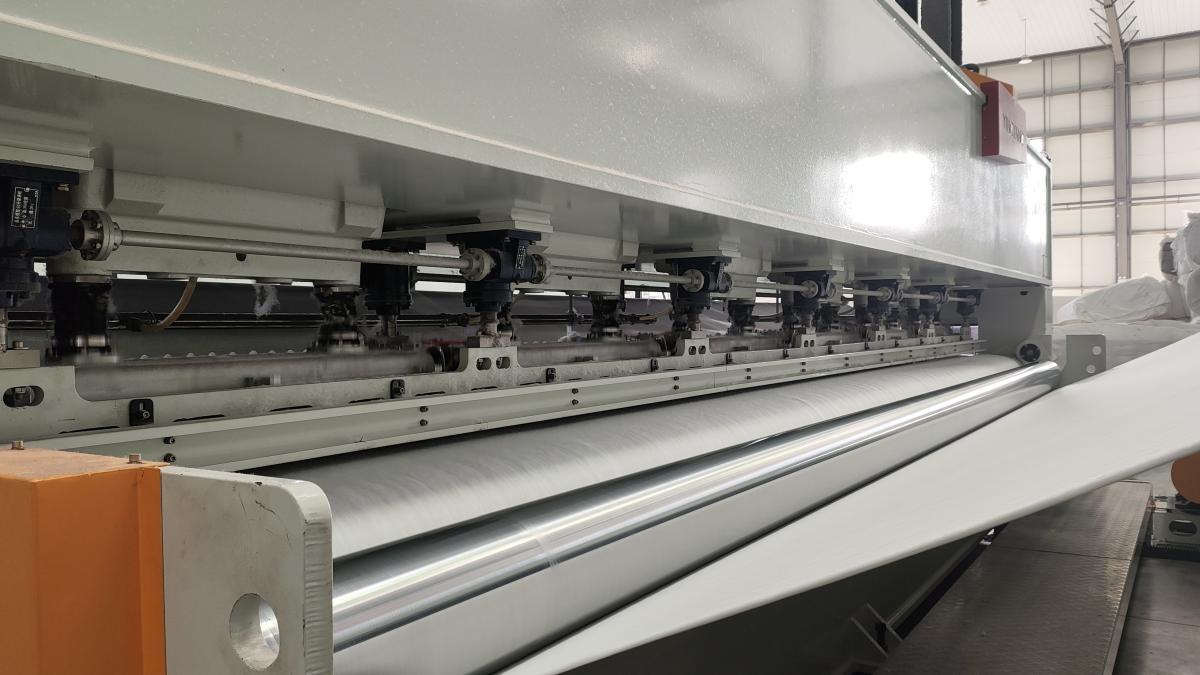
The production of Nonwoven Geotextile at 150 GSM follows the needle-punched manufacturing process. Short synthetic fibers—either polypropylene (PP) or polyester (PET)—are opened, blended, carded into a uniform web, and cross-lapped to achieve the target weight . The layered web then passes through a needle loom where thousands of barbed needles punch through at high frequency. The barbs carry fibers through the web, mechanically entangling them into a stable three-dimensional structure .
This mechanical bonding creates the bulky, felt-like character of needle-punched Nonwoven Geotextile materials . No weaving, no knitting, no chemical binders—just fiber entanglement that provides both strength and permeability .
PET (polyester) geotextiles are manufactured from virgin PET chips extruded into continuous filaments through a spunbond process, then needle-punched to create the stable three-dimensional fabric . PP geotextiles use staple fibers processed through carding and needling . Both polymer variants at 150 GSM offer UV stabilization for protection against aging under natural ultraviolet light exposure .
Primary Functions and Applications
The 150 GSM Geotextile weight class serves multiple critical functions across civil engineering projects:
Separation: The fabric prevents intermixing between different soil layers such as subgrade and aggregate base . This maintains designed section thickness and prevents soft soil from pumping upward into the stone layer.
Filtration and Drainage: Nonwoven geotextiles have excellent filtering performance, successfully retaining soil particles and preventing downstream particle transport while allowing water to pass through . The 150 GSM grade establishes a filter layer in soil, enhancing permeability and stability.
Road and Railway Construction: In road applications, Nonwoven Geotextile placed between subgrade and aggregate base prevents intermixing, maintains structural integrity, and extends pavement life . For railways, the fabric provides separation between sharp ballast and soft subgrade, reducing maintenance requirements.
Mine Geotextile Applications: The 150 GSM grade serves as filter cloth in heap leach pads and tailings facilities. The chemical resistance of polypropylene and polyester ensures performance in acidic mining environments, while the fabric maintains flow rates under sustained exposure to process solutions .
Environmental Protection: Geotextiles are employed in landfill engineering to line waste containment cells, provide drainage and filtration layers, and prevent soil erosion and groundwater contamination .
Market Context and Trends
The global geotextile market continues its steady expansion, with Nonwoven Geotextile products representing the largest share due to their strong filtration and drainage capabilities . The 150 GSM weight class is commonly used in separation, filtration, and light-duty reinforcement applications, with availability from numerous manufacturers across Asia, Europe, and other regions .
Standard roll widths for 150 GSM geotextiles range from 1 to 7 meters, with typical roll lengths of 100 to 300 meters . Mass per unit area tolerance of -8% is typical per industry standards . Both PP and PET fiber variants are available, with white as a common color option .
Frequently Asked Questions
Q1: What is the difference between 150 GSM Geotextile and heavier grades?
The 150 GSM Geotextile offers lower puncture resistance and tensile strength than heavier grades (200-400g), making it suitable for light to moderate applications like road subgrade separation, drainage filtration, and landscaping. Heavier grades provide additional puncture resistance for demanding applications like landfill liner protection but cost more. For basic separation under light traffic, 150 GSM often provides the optimal balance.
Q2: What is the advantage of Nonwoven Geotextile over woven at 150 GSM?
Nonwoven Geotextile offers superior filtration and drainage due to its three-dimensional pore structure. Woven geotextiles provide higher tensile strength for reinforcement but lower permeability. For drainage and filtration applications, nonwoven is the preferred choice .
Q3: How should buyers specify 150 GSM Geotextile for quality assurance?
Specify: needle-punched nonwoven construction from 100% virgin PP or PET fibers with UV stabilizers; minimum weight of 150g/m²; minimum grab tensile strength appropriate to grade; minimum CBR puncture resistance; permittivity meeting drainage requirements; and UV resistance of at least 70% strength retention after 500 hours. Request Mill Test Reports confirming these values .
Q4: Can 150 GSM Geotextile be used for Mine Geotextile applications?
Yes. The Mine Geotextile segment frequently specifies 150 GSM for filter cloth in heap leach pads and tailings facilities, where the chemical resistance of PP and PET ensures performance in acidic environments .
Conclusion
The 150 GSM Geotextile weight class provides reliable separation, filtration, and drainage performance for a wide range of infrastructure projects—from road construction to Mine Geotextile applications. This lightweight Nonwoven Geotextile delivers the tensile strength, puncture resistance, and permeability that engineers require for moderate-demand applications.
When specifying geotextiles at 150 GSM, verify mechanical properties through Mill Test Reports, confirm UV stabilization for exposed installation periods, and select appropriate roll widths to minimize field seams.
Need help specifying 150 GSM Geotextile for your next project? Share your application requirements with our technical team. We will provide a no-obligation review of appropriate specifications with certified performance data.