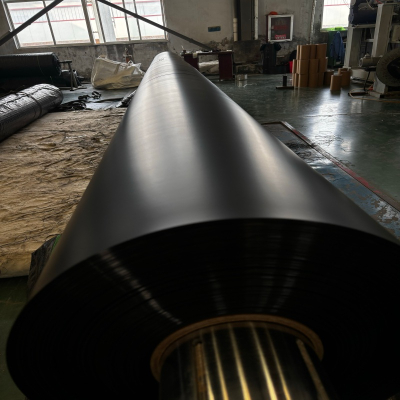
12 oz Non Woven Geotextile: A Spec for Tough Ground and Heavy Loads
A landfill operator in the Midwest had recurring problems with liner protection. The standard 8 oz geotextile used on previous phases kept puncturing during stone placement. Crews had to stop work, pull back the aggregate, patch the fabric, and restart. Each delay cost thousands of dollars.
For the final phase, the engineer switched to a 12 oz Non Woven Geotextile. The heavier fabric survived stone dumping without damage. The liner passed all leak tests. The job finished ahead of schedule.
This outcome matches field experience across many project types. When aggregate gets sharp or loads get heavy, lightweight fabrics often fail. The 12 oz Non Woven Geotextile handles conditions that lighter products cannot.
 |  |  |
When Standard Weight Geotextiles Come Up Short
Many road and landfill jobs specify geotextiles at 6 oz or 8 oz per square yard. Those weights work for basic separation under light traffic or clean drainage applications. But change the conditions—sharper stone, heavier trucks, softer subgrade—and those lighter fabrics often tear or puncture.
The 12 oz Non Woven Geotextile solves that problem. At roughly 407 grams per square meter, it delivers nearly double the puncture resistance of a 6 oz product. A quality PP Geotextile Non Woven at this weight typically offers grab tensile strength of 320 pounds, CBR puncture resistance of 900 pounds, and thickness around 115 mils .
Those numbers translate directly to field performance. Puncture resistance tells you whether the fabric survives when a loader drops sharp rock onto it. Tensile strength tells you whether the fabric holds together when heavy trucks turn on the aggregate above it.
How Needle Punching Creates the Structure
The manufacturing process for 12 oz Non Woven Geotextile starts with polypropylene fibers. Polypropylene works well because it resists chemicals, costs less than polyester, and has low density—meaning more coverage per pound .
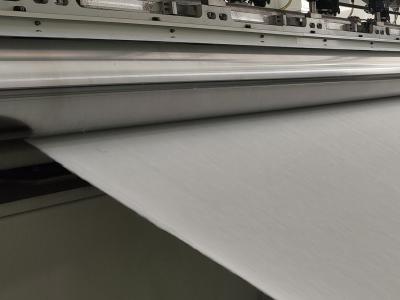
The fibers feed into a machine that lays them into a loose web. Then thousands of barbed needles punch through the web at high speed. The barbs grab fibers and push them through, tangling everything into a stable mat.
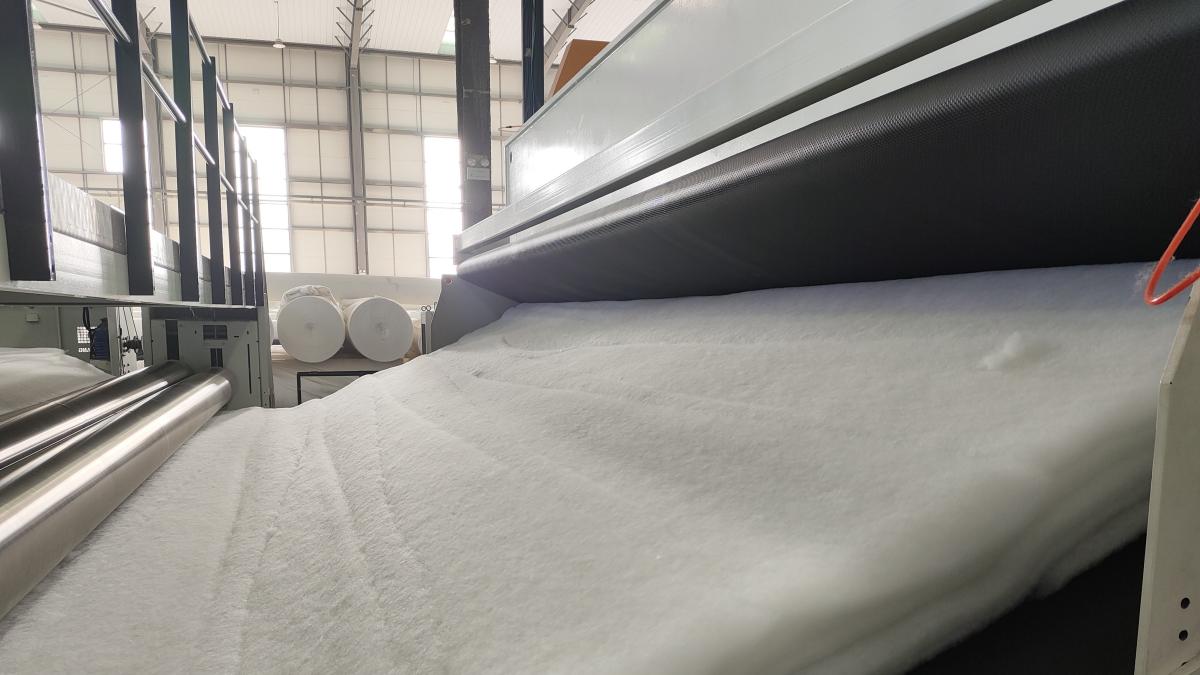
To reach 12 oz weight, multiple web layers get folded together before needling. The finished fabric has random pore paths. Water can flow through. Soil particles get trapped. No weaving. No knitting. Just mechanical locking of fibers.
This needle-punched structure gives Road Geotextile products at 12 oz their combination of strength and water flow. The same pores that let water through also allow needle barbs to pass during manufacturing, creating entanglement that holds the fabric together under load.
Key Numbers for 12 oz Non Woven Geotextile
A quality PP Geotextile Non Woven at 12 oz/yd² typically meets these values:
1.Weight: 12 oz/yd² (407 g/m²)
2.Thickness: 115 to 130 mils (2.9 to 3.3 mm)
3.Grab tensile: 320 lb in both directions
4.CBR puncture: 900 lb
5.Tear strength: 125 lb
6.UV retention after 500 hours: 70 to 80 percent
7.Opening size: 100 US Sieve (0.15 mm)
The CBR puncture value of 900 pounds runs about double what a 6 oz product provides. This gap often separates fabrics that survive installation from those that need repair.
Polypropylene resists chemicals across pH 2 to 13, covering most soil conditions. The material does not rot, resists mildew, and stands up to biological attack. With proper UV stabilizers, it holds strength through typical construction exposure.
Where 12 oz Weight Gets Specified
Landfill liner protection
Landfill systems place geotextile between the geomembrane and the drainage stone above it. If the fabric punctures, stone contacts the liner directly, creating leak paths. A 12 oz Non Woven Geotextile provides the puncture resistance this application demands.
Heavy haul roads
Construction access roads over soft ground need separation. Heavy trucks push aggregate down into the subgrade. A Road Geotextile at 12 oz keeps layers separate while distributing loads. The fabric's tensile strength holds aggregate in place even under repeated heavy passes.
Coastal revetments
Rock armour placed on slopes to stop erosion needs a filter layer underneath. Sharp, angular stone can puncture lighter fabrics during placement. 12 oz Non Woven Geotextile survives the impact while letting water drain and holding soil back.
Railway ballast
Railroad tracks need separation between sharp ballast and soft subgrade. Trains create repeated dynamic loading that stresses geotextiles. Heavier weights like 12 oz provide the long-term durability this application needs.
Roll Sizes and Handling
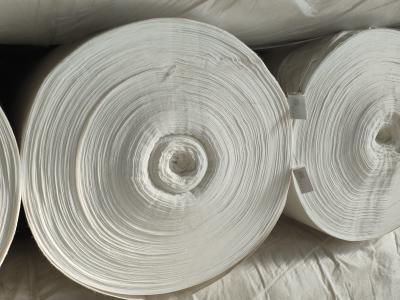
Standard 12 oz Non Woven Geotextile rolls come 15 feet (4.57 m) wide and 300 feet (91.5 m) long. Each roll covers about 500 square yards .
Wider rolls mean fewer field seams. For large jobs, some makers offer 6.5 m widths, cutting seam count nearly in half compared to 3 m rolls. Fewer seams lower labor costs and reduce potential weak points.
Roll weight matters for handling. A 15 ft by 300 ft roll of 12 oz fabric weighs about 1,200 pounds . Job sites need fork lifts or loaders to move rolls into position.
What Buyers Should Check
Test reports
Ask for Mill Test Reports for each production lot. Key tests are grab tensile (ASTM D4632), CBR puncture (ASTM D6241), UV resistance (ASTM D4355), and opening size (ASTM D4751). These numbers confirm whether the fabric meets your spec.
Weight
Confirm delivered fabric meets 12 oz/yd² within standard tolerance. Light fabric claiming 12 oz but weighing less will not provide the expected puncture resistance.
UV stabilizers
If fabric sits exposed before burial, verify UV protection. Quality PP Geotextile Non Woven includes carbon black or other stabilizers. Test results should show at least 70 percent strength retention after 500 hours.
Questions from Buyers
Q1: What projects need 12 oz Non Woven Geotextile instead of lighter fabric?
Choose 12 oz Non Woven Geotextile when the job has sharp aggregate, heavy equipment, or soft subgrade that lets stone punch through. Applications include landfill liner protection, heavy haul roads, coastal revetments, and railway ballast. For basic separation under light traffic, 6 oz or 8 oz usually works.
Q2: Why use PP Geotextile Non Woven over polyester at 12 oz?
PP Geotextile Non Woven offers three benefits at 12 oz. First, polypropylene density of 0.91 g/cm³ means more coverage per pound than polyester (1.38 g/cm³). Second, polypropylene handles alkali better for soil and landfill work. Third, polypropylene repels water, which helps drainage.
Q3: What are standard roll sizes for 12 oz Non Woven Geotextile?
Standard rolls are 15 ft (4.57 m) wide by 300 ft (91.5 m) long, covering 500 square yards per roll. Some makers offer 6.5 m widths for large projects. Roll weight at 12 oz runs about 1,200 pounds, so mechanical handling is required.
Q4: How should buyers verify 12 oz Non Woven Geotextile quality?
Request Mill Test Reports for each lot showing grab tensile, CBR puncture, UV resistance, and opening size. Confirm weight meets 12 oz/yd². For critical jobs, have an independent lab test samples. Work with Non Woven Geotextile Suppliers who provide documented quality data.
Q5: Can 12 oz Non Woven Geotextile handle heavy haul roads?
Yes. The Road Geotextile weight of 12 oz/yd² is made for demanding uses including heavy haul roads over soft ground. The 900 lb CBR puncture and 320 lb tensile strength provide protection under loaded trucks and construction equipment.
Summary
The 12 oz Non Woven Geotextile weight class serves jobs where lighter materials fail. From landfill liner protection to heavy haul roads, this PP Geotextile Non Woven provides the puncture resistance, tensile strength, and filtration that demanding applications need.
When specifying Road Geotextile at 12 oz, verify mechanical properties through Mill Test Reports. Confirm UV stabilization for exposed periods. Consider roll width to cut field seams.
Need help with 12 oz Non Woven Geotextile for your next project? Send your application details to our technical team. We will provide a no-obligation review of specifications with certified performance data.