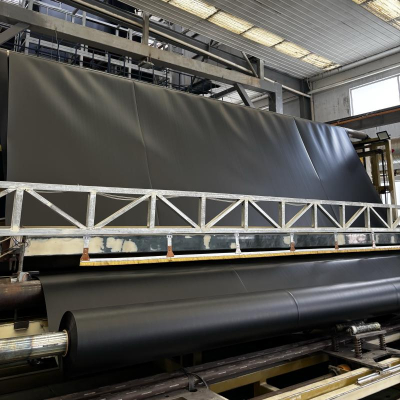
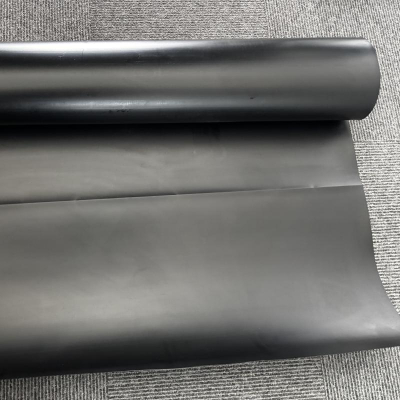
Landfill liner systems face a unique challenge that pond liners do not. Side slopes in municipal waste facilities often exceed 2.5H:1V. Cover soils add significant overburden pressure. Leachate recirculation creates moisture at the interfaces. Under these conditions, smooth geomembranes can slide. The 1988 Kettleman Hills failure remains the most cited example of what happens when interface friction is inadequate. The Textured HDPE Landfill Liner was developed specifically to address this failure mode. By creating a roughened surface on one or both sides, textured HDPE mobilizes mechanical interlock with geotextiles, drainage composites, and compacted clay. At thicknesses of 1.5mm or 2.0mm, this material provides both the chemical barrier required for waste containment and the shear strength needed for slope stability. This guide covers the specifications, performance data, and installation considerations for the Textured HDPE Landfill Liner.
Product Overview
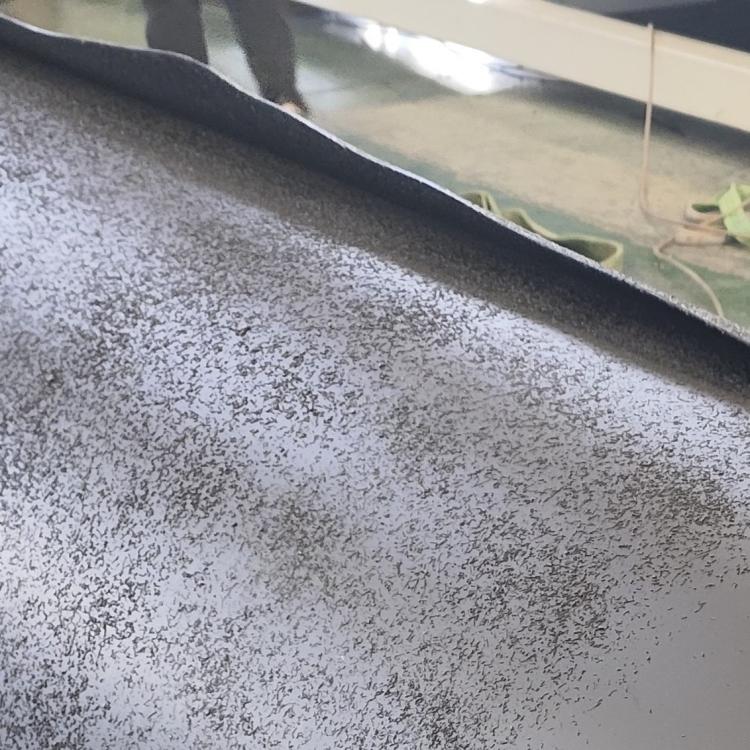
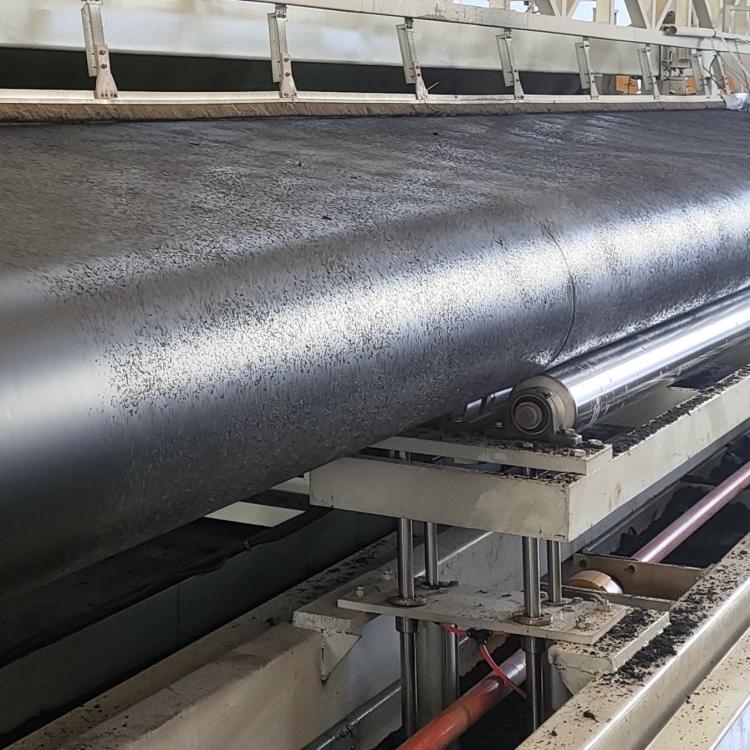
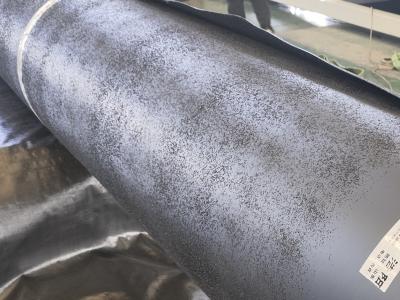
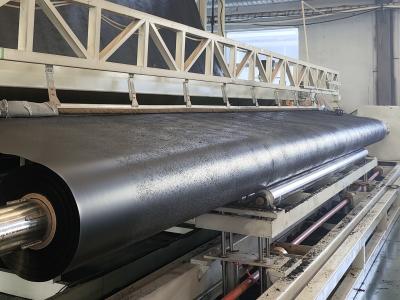
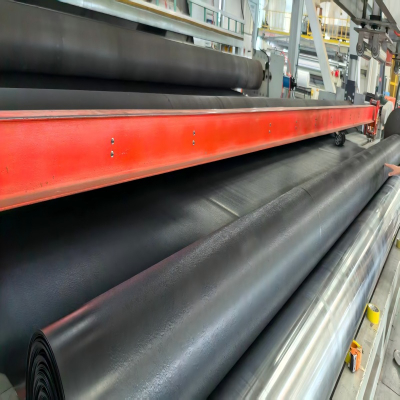
The Textured HDPE Landfill Liner is manufactured from virgin high-density polyethylene resin with carbon black content held at 2.0-3.0% for permanent UV stabilization. The texture is produced through either a nitrogen-injection or co-extrusion embossing process, creating uniform asperities across the sheet surface. The nominal thickness ranges from 1.5mm to 2.0mm for standard landfill applications, with 2.0mm being the most common specification for base liners.
The HDPE Landfill Liner in textured configuration serves two critical functions. First, it provides an impermeable barrier with permeability below 1.0×10⁻¹³ cm/s. Second, the textured surface delivers interface friction coefficients typically double those of smooth geomembranes, ensuring slope stability under operational loads.
As an HDPE Geomembrane designed for waste containment, the textured product meets or exceeds GRI-GM13 specifications. For facility operators comparing HDPE Liner Cost across options, textured material carries a premium over smooth but provides essential safety margins on sloped applications where smooth liners would be inadequate.
Product Features
Uniform Surface Texture. The texturing process produces consistent asperity height across the full sheet width. For double-sided textured products, both faces have roughness. For single-sided, only the top face is textured while the bottom remains smooth for subgrade contact. The textured HDPE Landfill Liner maintains interface friction values that meet regulatory requirements for landfill side slopes.
High Interface Shear Strength. Direct shear testing per ASTM D5321 documents interface friction angles corresponding to coefficients of friction of 0.65-0.75 against nonwoven geotextiles. This represents a 100-150% increase over smooth HDPE Geomembrane interface values.
Permanent Texture. The roughness is formed during extrusion and becomes integral to the sheet. It cannot wear away, flatten under load, or delaminate. The Textured HDPE Landfill Liner maintains its friction characteristics for the service life of the facility.
Low Permeability. The coefficient of permeability for HDPE is below 1.0×10⁻¹³ cm/s. Leachate does not migrate through the liner. Groundwater is protected.
Chemical Resistance. HDPE resists the complex chemistry of municipal leachate, including organic acids, heavy metals, and decomposition byproducts. The HDPE Landfill Liner does not swell, soften, or crack under these conditions.
High Puncture Resistance. At 2.0mm thickness, puncture resistance exceeds 640 N per ASTM D4833. This withstands the sharp objects often present in waste mass and subgrade.
Product Advantages
Slope Stability Insurance. The Textured HDPE Landfill Liner provides documented interface friction that satisfies regulatory requirements for landfill side slopes. Facility owners avoid the liability and remediation costs associated with liner slippage.
Reduced Cover Soil Requirements. Higher interface friction allows steeper slopes or reduced cover soil thickness. For landfill final covers, this translates to significant material savings. The HDPE Landfill Liner with texture achieves stability with less cover than smooth liner would require.
Compatibility with Standard Welding Equipment. Unlike some textured liners that create welding challenges, quality textured products leave the welding edge smooth or press the texture flat in the seam zone. Standard hot wedge equipment produces seams with full parent material strength.
Long Service Life. Properly manufactured and installed, the Textured HDPE Landfill Liner has a service life exceeding 50 years for covered applications. This matches or exceeds the post-closure care period required by regulations.
Cost-Effective Risk Management. While HDPE Liner Cost for textured material exceeds smooth, the additional expense is minor compared to the cost of a slope failure. The textured product provides essential safety margins at a reasonable premium.
Landfill Base Liners. The primary application for the Textured HDPE Landfill Liner is the bottom liner system of municipal solid waste landfills. The material is placed over a prepared subgrade and compacted clay layer, then covered with a drainage geocomposite and protective soil. The textured surface provides friction against the overlying drainage layer.
Landfill Side Slopes. Side slopes in modern landfills frequently exceed 2.5H:1V. The Textured HDPE Landfill Liner is essential on these slopes to prevent the liner and overlying materials from sliding down toward the waste mass. Single-sided texture is common here, with the smooth side against the clay subgrade and texture facing upward.
Final Cover Systems. Landfill caps require cover soils over the geomembrane. The HDPE Landfill Liner with texture provides friction that keeps the cover soil in place on side slopes, reducing erosion and maintaining cap integrity over decades of settlement.
Leachate Collection Ponds. Ponds that store leachate prior to treatment require liner systems. The Textured HDPE Landfill Liner is specified here primarily for its chemical resistance, though texture may be required on slopes.
Expansion Cells. As landfills expand vertically, new liner systems are installed on prepared slopes adjacent to existing waste. The HDPE Geomembrane with texture ensures stability during construction and operation.
Packaging and Transport
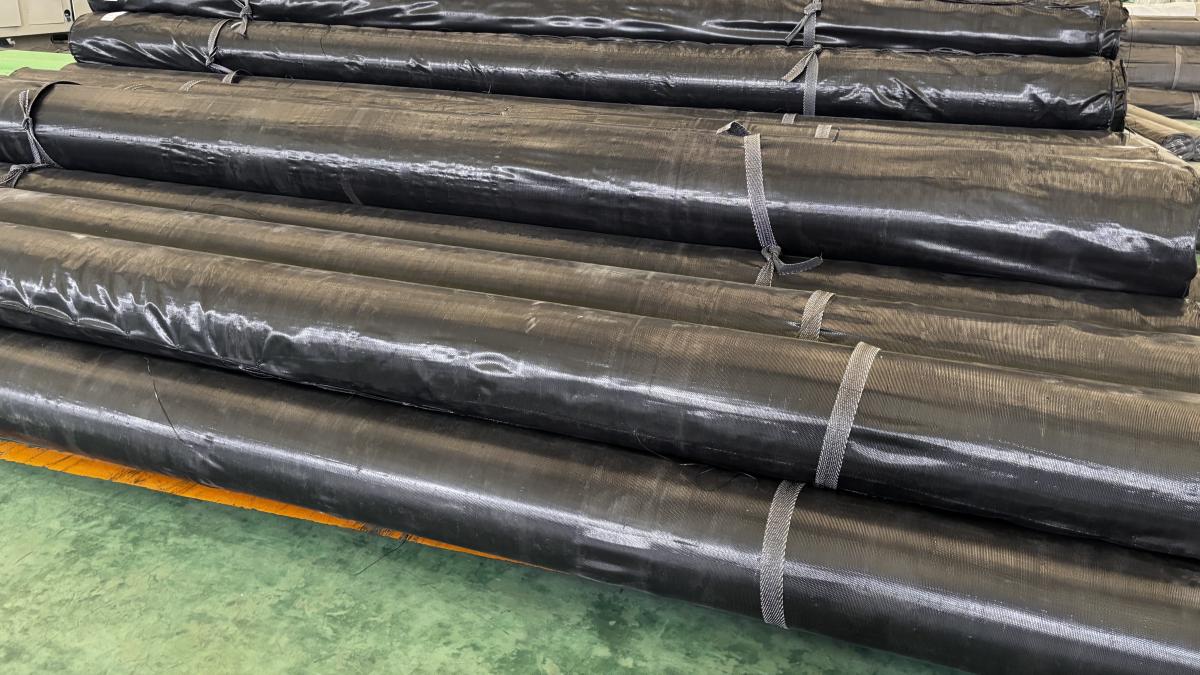
The Textured HDPE Landfill Liner is wound onto heavy-wall cardboard cores with minimum 300mm inner diameter to prevent core collapse during crane lifting. Because textured surfaces can interlock when wound, an interleaving film is placed between layers during rolling.
Each roll is wrapped in opaque white polyethylene film with UV inhibitors. Corner protectors are fitted to both roll ends. The wrapped roll is secured to a hardwood pallet using steel strapping with edge protection.
For ocean freight, rolls are loaded into 20-foot or 40-foot containers. Palletized rolls are braced with inflatable dunnage bags or dimensional lumber to prevent shifting during transit. Rolls exceeding standard container dimensions ship on flat-rack containers.
Shipping documentation includes commercial invoice, packing list, and certificate of analysis. Third-party inspection reports from SGS, Bureau Veritas, or TÜV are available on request.
Company Profile
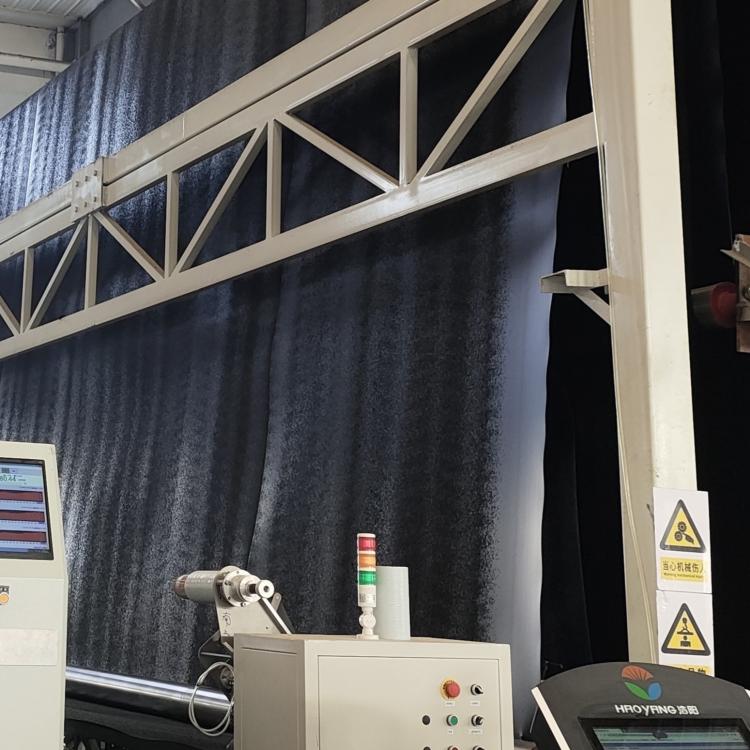
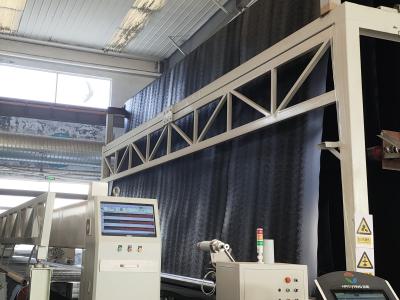
The manufacturing facility operates multiple extrusion lines dedicated to HDPE Geomembrane production. Daily output exceeds 15,000 square meters. Beta gauge systems monitor thickness continuously during production. Carbon black dispersion is verified regularly through microscopic analysis.
As a supplier of Textured HDPE Landfill Liner, the facility uses nitrogen injection or embossing rollers to achieve uniform asperity height without compromising polymer integrity. Laboratory personnel perform texture verification and peel adhesion testing on every production lot.
The quality management system holds ISO 9001 certification. Finished product is tested to GRI-GM13 and ASTM standards. The technical team has supported landfill liner installations across multiple continents, including base liner systems, side slope applications, and final covers.
Frequently Asked Questions
Q: Why is textured HDPE required for landfill slopes?
A: Smooth geomembranes achieve low interface friction coefficients, typically 0.3 against geotextiles. The Textured HDPE Landfill Liner achieves COF ≥0.65. This difference is critical on slopes steeper than 3H:1V. The 1988 Kettleman Hills failure demonstrated that smooth interfaces can fail even on moderate slopes under wet conditions.
Q: Does the texture flatten under waste load?
A: No. The texture is formed during extrusion and becomes integral to the polymer matrix. The HDPE Landfill Liner maintains asperity height under typical overburden pressures of 30-50 kPa. Testing confirms texture retention after decades of service.
Q: How does HDPE Liner Cost compare between smooth and textured?
A: HDPE Liner Cost for textured material is typically 10-20% higher than smooth due to the additional manufacturing step. However, for slope applications where smooth liners would require significantly thicker cover soils or flatter slopes, textured is often the more economical choice overall.
Q: Can textured liner be welded reliably?
A: Yes. Quality Textured HDPE Landfill Liner leaves the welding edge smooth or presses the texture flat in the seam zone. Standard hot wedge welding produces seams with full parent material strength. No special equipment or procedures are required.
Q: What interface friction value is required for landfill certification?
A: Regulatory requirements vary by jurisdiction. Most landfill design standards require a minimum factor of safety of 1.5 against sliding. The HDPE Geomembrane with texture commonly provides interface friction values that satisfy this requirement on slopes up to 1.5H:1V.
Q: What thickness is specified for landfill base liners?
A: 2.0mm is the most common specification for primary base liners in municipal solid waste landfills. Some facilities use 1.5mm for secondary liners or final covers. The Textured HDPE Landfill Liner at 2.0mm provides the puncture resistance and stress crack resistance required for long-term waste containment.
Q: How is the liner tested after installation?
A: Field seams are tested using both destructive (peel and shear) and non-destructive (vacuum box, spark testing, or air lance) methods. Panels are welded, tested, and repaired as needed before cover soil placement.
Q: What is the minimum order quantity?
A: For standard Textured HDPE Landfill Liner, orders typically start at one 20-foot container equivalent. This is approximately 5,000-7,000 square meters depending on thickness and roll configuration. Landfill projects commonly require multiple containers.
Q: Can samples be obtained for interface shear testing?
A: Yes. Sample swatches of Textured HDPE Landfill Liner are available upon request. Project-specific direct shear testing is strongly recommended when the liner will contact non-standard geotextiles or when unusual slope conditions exist.
Q: What is the typical lead time for landfill liner orders?
A: Standard orders ship within 15-30 days of order confirmation. Large landfill projects requiring significant quantities may require advance scheduling. Custom roll widths or lengths may extend lead time.
Summary
The Textured HDPE Landfill Liner is an essential component of modern waste containment systems. The textured surface provides interface friction that smooth geomembranes cannot match. The 1.5mm or 2.0mm thickness delivers puncture resistance, chemical resistance, and low permeability required for regulatory compliance. While HDPE Liner Cost for textured material exceeds smooth, the additional expense provides critical safety margins on slopes where smooth liners would be inadequate. For landfill operators, engineers, and contractors specifying liner systems for base liners, side slopes, or final covers, the HDPE Geomembrane with texture offers documented performance, reliable weldability, and a service life exceeding 50 years. Contact the technical sales team with project slope angles, subgrade conditions, and interface material specifications. Shear strength projections, welding procedure recommendations, and a commercial proposal will be provided based on the specific requirements of each facility.