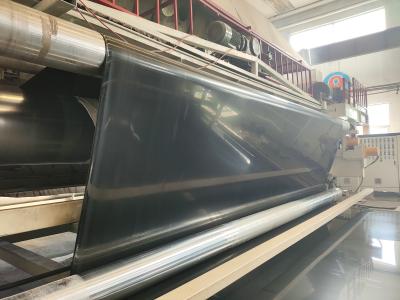
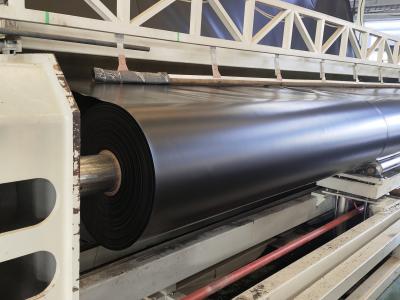
Landfills are not dumps. They are engineered containment systems. The difference sits at the bottom of the excavation. A black plastic sheet. Thick. Flexible. Impermeable. That sheet is the HDPE Landfill Liner Sheet. It keeps leachate out of groundwater. Rain percolates through waste and picks up heavy metals, organic acids, and decomposition byproducts. Without a barrier, that liquid reaches aquifers. With one, it gets collected and treated. The HDPE Landfill Liner Sheet is what regulators require beneath every waste cell. Thicknesses run 1.5mm or 2.0mm. The material meets GRI-GM13. This guide covers what it does and where it gets used.
What This Product Is
The HDPE Landfill Liner Sheet starts with virgin HDPE resin. Carbon black gets added at two to three percent. That carbon black blocks UV damage. Without it, the liner fails in months. With it, you get decades.
Thickness matters here. 1.5mm (60 mil) is common for secondary liners and caps. 2.0mm (80 mil) is the standard for primary base liners. The HDPE Landfill Liner at 2.0mm provides 640 Newtons of puncture resistance. That handles sharp objects in waste and subgrade.
The material comes smooth or textured. Smooth for base liners over clay. Textured for side slopes. The texture provides friction against geotextiles. It stops the liner from sliding.
As an HDPE Geomembrane, this product has permeability below 1.0×10⁻¹³ cm/s. Leachate does not get through. That is the whole point.
What It Does Well
Leachate does not move through. Permeability sits below 1.0×10⁻¹³ cm/s. Waste liquids stay where they belong. Groundwater stays clean.
Handles aggressive chemistry. The HDPE Landfill Liner Sheet stands up to organic acids and heavy metals. No swelling. No cracking. No softening.
UV protection lasts. Carbon black mixes into the resin before the liner forms. It is not paint. Scratch the surface and the carbon remains. The HDPE Landfill Liner keeps blocking sunlight for its whole life.
Stretches before tearing. Elongation at break exceeds 700 percent. Ground settles. The liner moves with it. No ruptures.
Stress crack resistance exceeds 300 hours. The HDPE Geomembrane passes this test. Recycled-content liners often fail. This matters under decades of waste load.
Textured finish for slopes. Side slopes need friction. Textured versions of the HDPE Landfill Liner Sheet provide interface friction coefficients of 0.65-0.75 against geotextiles. The liner stays put.
Why Landfills Specify HDPE
Regulatory compliance. The HDPE Landfill Liner Sheet meets EPA and state requirements. Many regulations specify minimum 60 mil thickness. The 2.0mm option provides additional safety margin. No waivers needed.
Proven track record. Landfills installed in the 1990s still perform. Exhumed samples show minimal degradation. The HDPE Landfill Liner lasts over 50 years covered.
Better stress crack resistance. Waste load applies pressure for decades. The HDPE Geomembrane with virgin resin achieves 300+ hours. Recycled-content liners often test at 150-200 hours. That difference matters.
Weldable with standard equipment. Hot wedge welders work on the HDPE Landfill Liner Sheet. Smooth surface gives clean welds. Textured versions leave the welding edge smooth. Seam strength matches parent material.
Smooth and textured options. Smooth for base liners. Textured for slopes. Both come from the same HDPE Landfill Liner product line.
Technical Specifications
Parameter
1.5mm
2.0mm
Test Method
Nominal Thickness
1.50±0.15
2.00±0.20
ASTM D5199
Density
≥0.940
≥0.940
ASTM D1505
Carbon Black Content
2.0-3.0%
2.0-3.0%
ASTM D4218
Tensile at Yield (kN/m)
≥22
≥29
ASTM D6693
Tensile at Break (kN/m)
≥40
≥53
ASTM D6693
Elongation at Break
≥700%
≥700%
ASTM D6693
Tear Resistance (N)
≥187
≥249
ASTM D1004
Puncture Resistance (N)
≥480
≥640
ASTM D4833
Stress Crack Resistance
≥300 hrs
≥300 hrs
ASTM D5397
Permeability (cm/s)
<1e-13
<1e-13
ASTM E96
Roll Width
5.8m, 7.0m
5.8m, 7.0m
Custom
Roll Length
50m-150m
50m-100m
Custom
Where It Gets Used
Landfill base liners. The HDPE Landfill Liner Sheet goes over compacted clay. Drainage geocomposite and protective soil go on top. The liner stops leachate from reaching groundwater.
Landfill side slopes. Slopes in modern landfills often exceed 2.5H:1V. Textured HDPE Landfill Liner is specified here. It prevents the liner and overlying materials from sliding.
Final cover systems. Landfill caps need a barrier against precipitation. The HDPE Landfill Liner Sheet stops water from entering the waste. Textured material provides friction with cover soils.
Leachate collection ponds. Ponds storing leachate before treatment need liners. The HDPE Geomembrane provides chemical resistance for aggressive liquids.
Expansion cells. Landfills grow vertically. New liner systems go on prepared slopes adjacent to existing waste. The HDPE Landfill Liner ensures stability during construction.
Smooth vs. Textured: Which One?
The HDPE Landfill Liner Sheet comes in both finishes. Smooth for base liners over clay. Textured for side slopes. The texture provides interface friction coefficients of 0.65-0.75 against geotextiles. The same HDPE Geomembrane product line covers both.
Comparison with Geomembrane Pond Liner
A Geomembrane Pond Liner holds water. A HDPE Landfill Liner holds leachate. The difference is chemistry.
Pond liners face clean water, maybe some fertilizer runoff. Landfill liners face organic acids, heavy metals, and decomposition byproducts. The HDPE Landfill Liner Sheet is formulated for that aggressive environment. The same HDPE Geomembrane technology applies, but the application demands more.
For pond applications, thinner material often works. For landfills, 1.5mm or 2.0mm is standard. The HDPE Landfill Liner is the conservative choice.
Packaging and Shipping
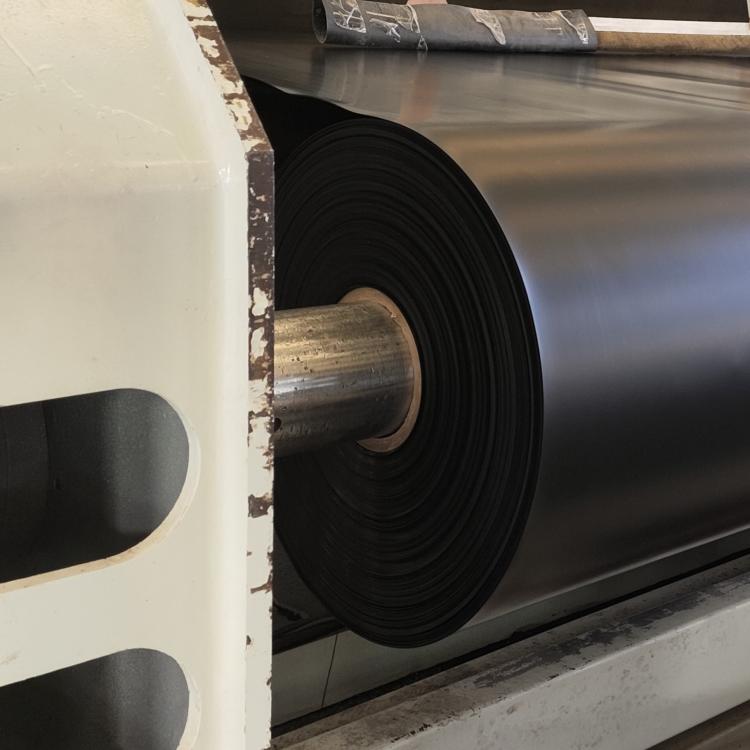
The HDPE Landfill Liner Sheet winds onto heavy cardboard cores. Inner diameter at least 300mm. This stops core collapse during lifting.
For textured products, interleaving film goes between layers. This prevents texture from locking together.
Each roll wraps in opaque white polyethylene film with UV inhibitors. Corner protectors go on both ends. The roll straps to a hardwood pallet.
For ocean freight, rolls load into 20-foot or 40-foot containers. Palletized rolls brace with dunnage bags. Oversized rolls use flat-rack containers.
Shipping documents include invoice, packing list, and certificate of analysis.
About the Supplier
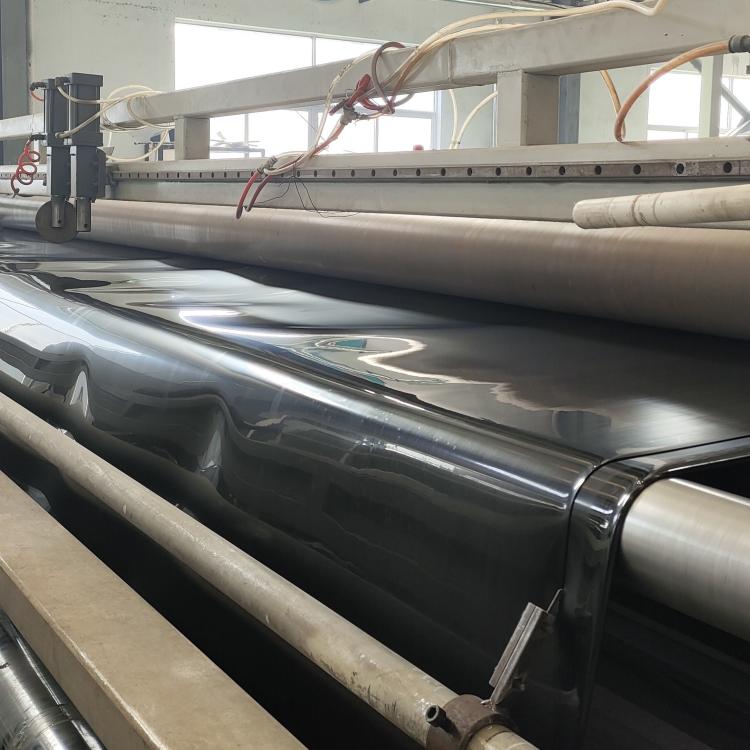
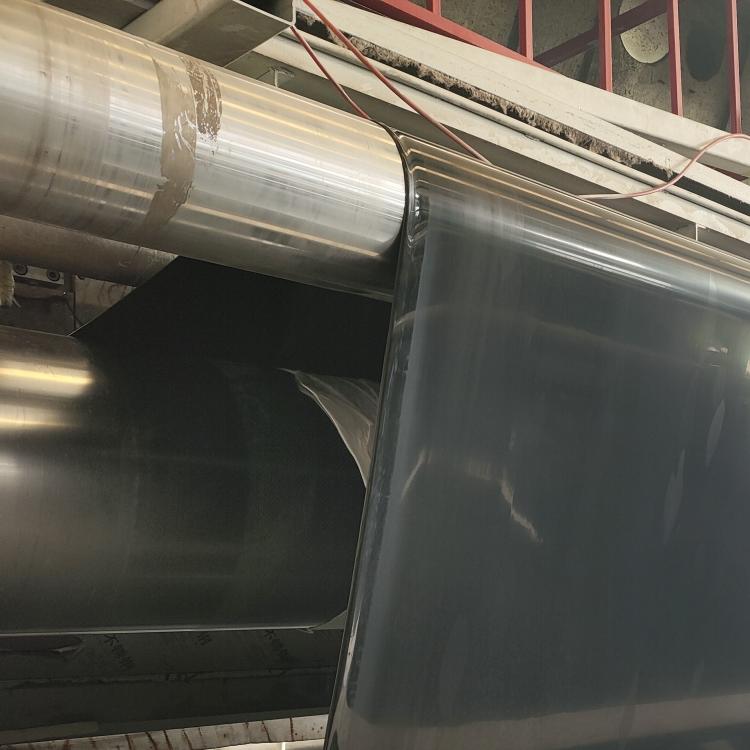
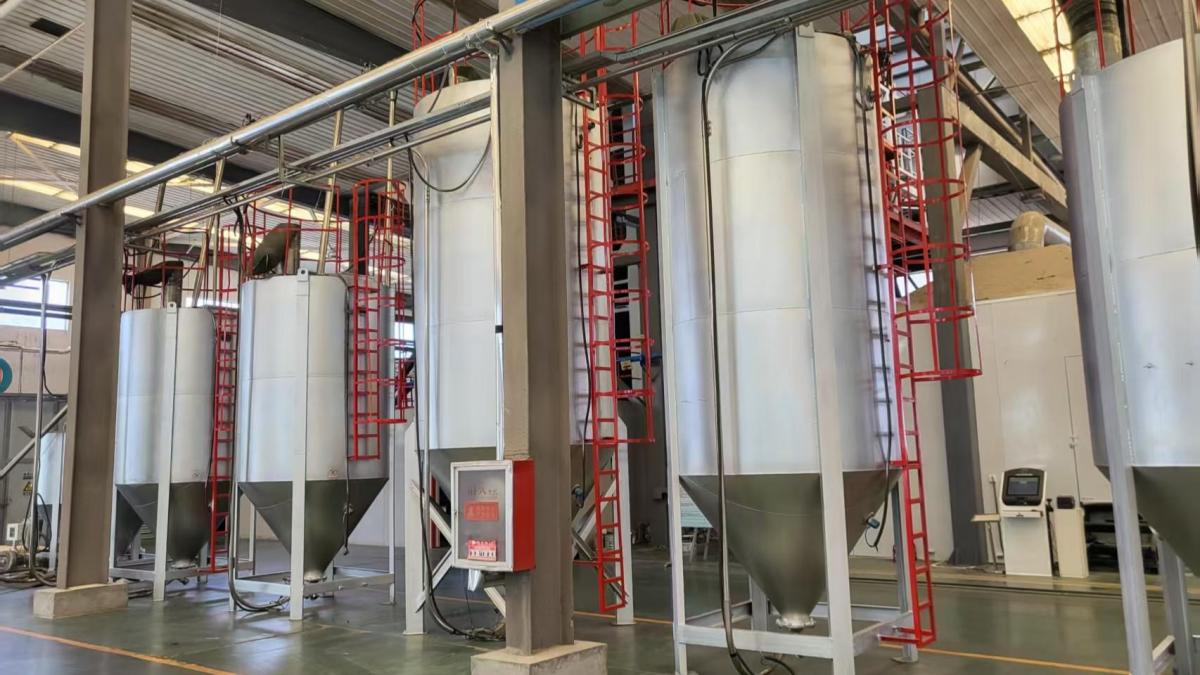
The factory runs multiple extrusion lines. Daily output supports large-scale landfill projects. All production uses 100% virgin resin.
The facility makes both smooth and textured finishes. Lab staff test every production lot. ISO 9001 covers quality. Finished product meets GRI-GM13 and ASTM standards.
The technical team has supported HDPE Landfill Liner Sheet installations across multiple continents. Support includes welding guidance and on-site troubleshooting.
Frequently Asked Questions
Q: What thickness is required for landfill base liners?
A: 2.0mm is the most common specification for primary base liners. Some facilities use 1.5mm for secondary liners or final covers. The HDPE Landfill Liner Sheet at 2.0mm provides the puncture resistance and stress crack resistance needed for long-term containment.
Q: What is the difference between smooth and textured?
A: Smooth HDPE Landfill Liner is for base liners over clay. Textured is for side slopes where interface friction is needed. Textured versions provide friction coefficients of 0.65-0.75.
A: Properly installed, the HDPE Landfill Liner Sheet lasts over 50 years covered. Exhumed samples from landfills installed in the 1990s show minimal degradation.
Q: Can this liner be used for ponds?
A: The same HDPE Geomembrane often works for both. But landfill applications need specific resistance to organic leachate. For a Geomembrane Pond Liner, the material is optimized for water. Check compatibility with the manufacturer.
Q: How is the liner tested after installation?
A: Field seams get tested with destructive (peel and shear) and non-destructive (vacuum, spark, or air lance) methods. Panels get welded, tested, and repaired before cover soil goes on.
Q: What is minimum order quantity?
A: Standard HDPE Landfill Liner Sheet orders start at one 20-foot container. That is roughly 5,000-7,000 square meters. Landfill projects commonly order multiple containers.
Q: Can I get samples?
A: Yes. Sample swatches of HDPE Landfill Liner are available. Compatibility testing is recommended for unusual leachate chemistry.
Q: What is lead time?
A: Standard orders ship within 15-30 days. Large landfill projects may need advance scheduling. Custom roll widths may add a few days.
Final Thoughts
The HDPE Landfill Liner Sheet is the standard for waste containment. The material provides permanent UV protection, near-zero permeability, and broad chemical resistance. At 1.5mm or 2.0mm thickness, it delivers the puncture resistance and stress crack resistance needed for decades of service.
Smooth for base liners. Textured for slopes. Both meet GRI-GM13. The HDPE Geomembrane has been proven in the field since the 1990s. While a Geomembrane Pond Liner handles water, the HDPE Landfill Liner handles the far more aggressive chemistry of waste.
For landfill operators and engineers, the HDPE Landfill Liner Sheet offers regulatory compliance and documented performance. Contact the technical sales team with project specifications. A quote, samples, and installation guidance will follow.