Back in the 1970s, farmers in California's Central Valley started reporting something troubling. The polyethylene liners they had installed in irrigation ponds were turning brittle. Cracks were appearing after only two or three years of service. Some liners failed completely during their fourth summer. Investigators traced the problem to UV exposure. Without adequate UV stabilization, the polymer chains were breaking down under sunlight. The industry response was a shift to carbon black loading. Today, that lesson is baked into every roll of Black HDPE Liner Sheet manufactured to specification. The black color is not cosmetic. It represents 2.0-3.0% carbon content, compounded throughout the material, providing UV protection that does not wash off or wear away. For anyone specifying containment for ponds, dams, or landfills, the Black HDPE Liner Sheet offers something no coating can match: permanent UV resistance built into the material itself. This document covers what that means for your project.
What the Black Color Actually Does
The Black HDPE Liner Sheet is manufactured from virgin high-density polyethylene resin with carbon black added during compounding. The carbon black serves one primary function: it absorbs UV radiation and dissipates it as heat before it can damage polymer chains. This is why black HDPE survives decades outdoors while natural polyethylene fails in months. The carbon content is held between 2.0% and 3.0% by weight, the range established by GRI-GM13 as optimal for UV protection without compromising physical properties.
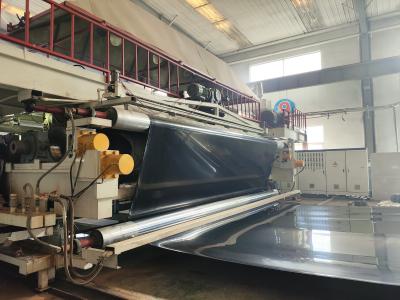
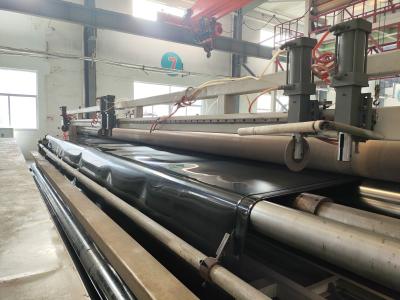
The base resin meets minimum density requirements of 0.940 g/cm³. The HDPE Liner Sheet is produced via flat-die extrusion or blown film processes, with thickness controlled by calendering rolls. Common thicknesses range from 0.75mm to 3.0mm. The 1.0mm and 1.5mm thicknesses account for most pond and reservoir applications. Thicker sheets are specified for landfills, mining, and other demanding environments.
Unlike reinforced or coated materials, this Black HDPE Liner Sheet is homogeneous. The barrier properties come from the polymer itself, not from a separate layer. Cut through the sheet and the interior is identical to the surface. This matters for seam quality and long-term performance.
Measurable Features of Black HDPE Liner Sheet
UV Resistance Is Permanent. Because carbon black is compounded throughout the resin, UV protection extends through the full thickness. Surface abrasion does not create unprotected zones. Accelerated weathering tests per ASTM D7238 show 85-90% tensile retention after 2000 hours of xenon arc exposure. Real-world installations from the early 1980s continue to perform.
Chemical Resistance Is Broad. HDPE resists acids, bases, salts, and many hydrocarbons. The HDPE Liner Sheet is essentially inert in most soil and water environments. This chemical resistance is uniform across the sheet and unaffected by carbon loading.
Permeability Is Essentially Zero. The coefficient of permeability for HDPE is below 1.0×10⁻¹³ cm/s. At this level, water molecules do not migrate through the sheet on any time scale relevant to civil engineering. The Black HDPE Liner Sheet functions as a true barrier.
Tensile Strength Is Directionally Balanced. Tensile at yield for 1.5mm material is approximately 33 kN/m in both machine and cross-machine directions. Elongation at break exceeds 700%. This ductility allows the liner to accommodate modest subgrade settlement without rupture.
Puncture Resistance Scales with Thickness. A 1.0mm sheet resists approximately 320 N per ASTM D4833. A 1.5mm sheet resists approximately 480 N. For rocky subgrades, thicker sheets or geotextile cushion layers are recommended.
Why Black HDPE Liner Sheet Dominates the Market
Field History Is Unmatched. The Black HDPE Liner Sheet has been continuously installed since the 1970s. No other geomaterial has comparable field performance data. Engineers can specify this product with confidence based on actual installations, not laboratory extrapolation.
Cost per Square Meter Is Lowest. HDPE offers the lowest material cost of any premium geomembrane. The Black HDPE Liner Sheet delivers 50-year design life at a fraction of the cost of reinforced polypropylene or EPDM. For large projects, this difference saves millions.
Welding Is Straightforward. The HDPE Liner Sheet accepts thermal fusion welding using standard hot wedge and extrusion equipment. Seam strength matches parent material. Field crews achieve high production rates with low rejection. No adhesives or solvents required.
Multiple Suppliers Ensure Availability. Black HDPE is manufactured globally by multiple producers. Supply chain redundancy means project schedules are not held hostage to single-source constraints. This matters for large projects with tight timelines.
Temperature Range Is Wide. HDPE remains flexible from -40°C to +80°C. The Black HDPE Liner Sheet can be installed in winter with appropriate protocols and performs through freeze-thaw cycles without embrittlement.
Technical Specifications by Thickness
Parameter
1.0mm
1.5mm
2.0mm
Test Method
Nominal Thickness
1.00 mm ±0.10
1.50 mm ±0.15
2.00 mm ±0.20
ASTM D5199
Density
≥0.940 g/cm³
≥0.940 g/cm³
≥0.940 g/cm³
ASTM D1505
Carbon Black Content
2.0-3.0%
2.0-3.0%
2.0-3.0%
ASTM D4218
Tensile Strength (yield)
≥22 kN/m
≥33 kN/m
≥44 kN/m
ASTM D6693
Elongation (break)
≥700%
≥700%
≥700%
ASTM D6693
Tear Resistance
≥125 N
≥187 N
≥250 N
ASTM D1004
Puncture Resistance
≥320 N
≥480 N
≥640 N
ASTM D4833
Permeability
<1.0×10⁻¹³ cm/s
<1.0×10⁻¹³ cm/s
<1.0×10⁻¹³ cm/s
ASTM E96
Applications for Black HDPE Liner Sheet
Ponds and Reservoirs. The most common use for Black HDPE Liner Sheet is water containment. Irrigation ponds, decorative lakes, fire ponds, and potable water reservoirs all specify black HDPE. The material carries NSF/ANSI 61 certification for potable water when manufactured from appropriate resin.
Dams. For dam rehabilitation and new construction, the Dam Liner Geomembrane provides upstream waterproofing. The Black HDPE Liner Sheet is installed over prepared concrete or soil substrates to prevent seepage and extend dam service life. Dam Liners manufactured from HDPE have been specified by the US Bureau of Reclamation for over thirty years.
Landfills. Municipal waste landfills and hazardous waste facilities rely on HDPE Liner Sheet as the primary barrier. The material's chemical resistance and low permeability meet regulatory requirements for long-term waste containment.
Mining. Heap leach pads, tailings storage, and process ponds specify Black HDPE Liner Sheet. The material withstands acidic and alkaline mining solutions while resisting puncture from coarse subgrades.
Agriculture. Manure lagoons, anaerobic digesters, and process water storage use HDPE Liner Sheet for chemical resistance to agricultural effluents and ability to withstand cleaning operations.
Canals. Irrigation canals lined with Black HDPE Liner Sheet reduce water loss from seepage and prevent weed growth that impedes flow. The smooth surface reduces friction compared to unlined earth canals.
Packaging and Transport
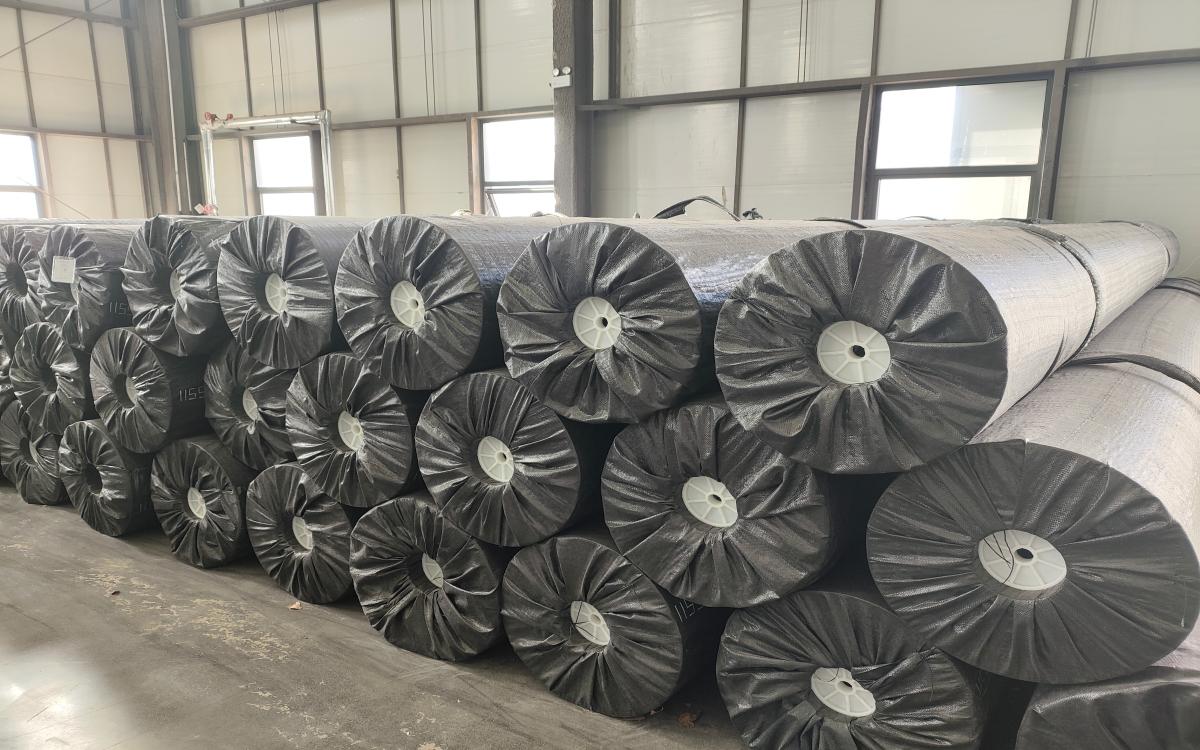
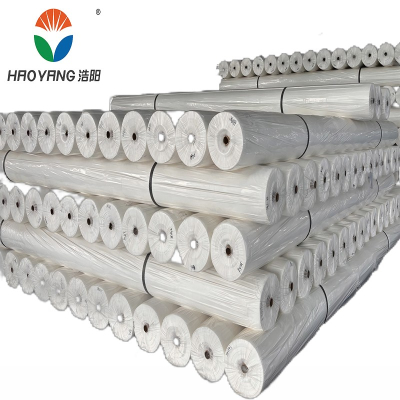
The Black HDPE Liner Sheet is wound on heavy-wall cardboard cores with minimum 300mm inner diameter. This prevents core collapse during crane lifting. Each roll is wrapped in opaque white polyethylene film with UV inhibitors. Corner protectors are fitted to both roll ends. The wrapped roll is secured to a hardwood pallet using steel strapping with edge protection.
For ocean freight, rolls are loaded in 20-foot or 40-foot containers. Palletized rolls are braced with pneumatic dunnage bags or dimensional lumber to prevent shifting during transit. Flat-rack containers are used for oversized rolls exceeding standard container dimensions.
Shipping documentation includes commercial invoice, packing list, certificate of analysis, and third-party inspection reports when requested.
Company Profile
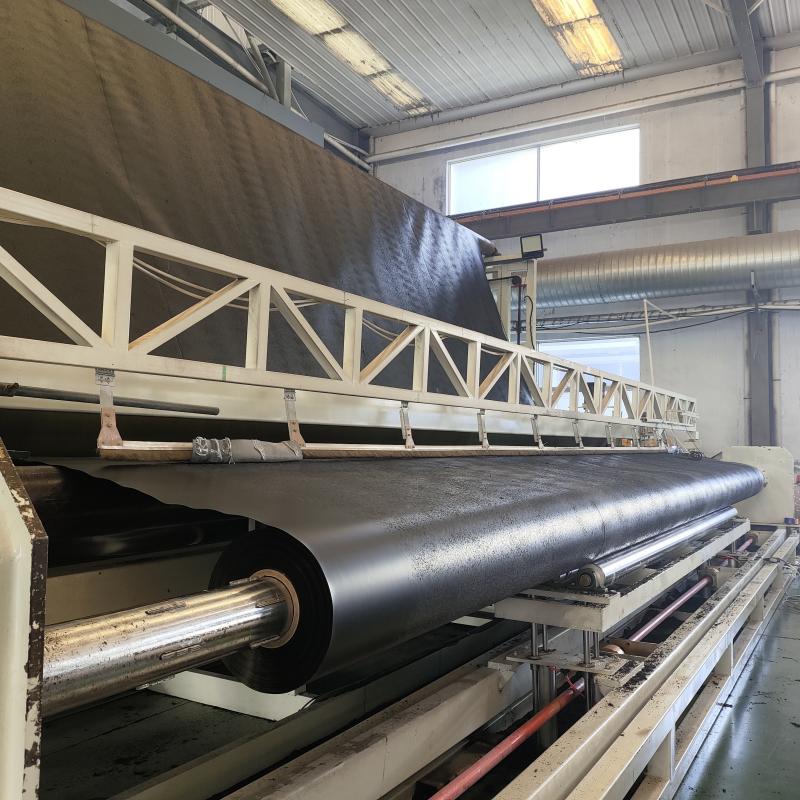
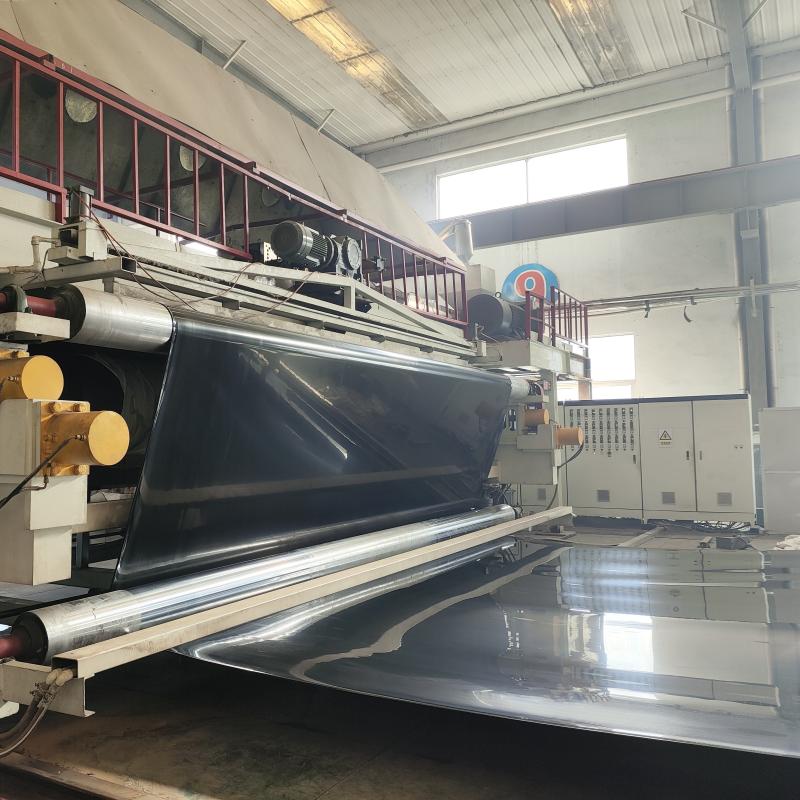
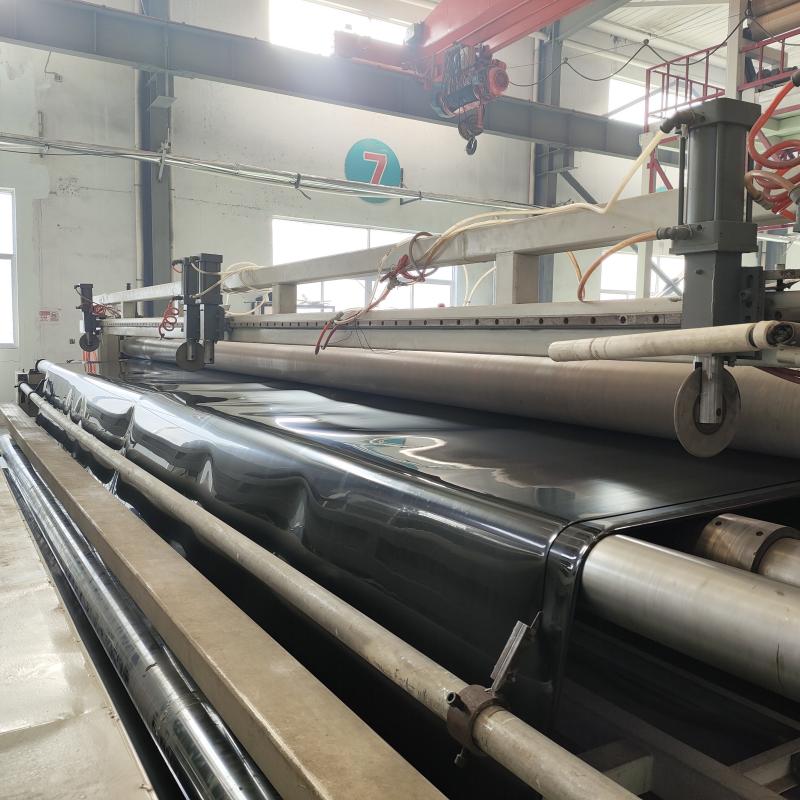
Our facility operates multiple extrusion lines producing HDPE Liner Sheet continuously. Daily output capacity exceeds 15,000 square meters. In-process thickness monitoring uses beta gauge systems to ensure consistent thickness across sheet width. Carbon black dispersion testing is conducted continuously using microscopic analysis.
Laboratory personnel perform peel adhesion verification on every production lot. The quality management system carries ISO 9001 certification. Finished product is tested to GRI-GM13 and ASTM standards.
Our technical team has supported Dam Liner Geomembrane installations across four continents. Support includes installation guidance, welding procedure specifications, and on-site troubleshooting when required.
Frequently Asked Questions
Q: Why is this liner black instead of another color?
A: The black color comes from carbon black added at 2.0-3.0% to provide UV stabilization. Carbon black absorbs UV radiation and prevents polymer degradation. Without it, the liner would become brittle within months of outdoor exposure.
Q: How long will a Black HDPE Liner Sheet last?
A: Properly manufactured and installed HDPE Liner Sheet has a service life exceeding 50 years for exposed applications. Covered applications last longer. This projection is based on liners installed in the 1970s and 1980s that continue performing today.
Q: Is Black HDPE Liner Sheet safe for drinking water?
A: Yes, when manufactured from appropriate resin. Our Black HDPE Liner Sheet is available with NSF/ANSI 61 certification for potable water contact. Specify this requirement at quotation.
Q: Can Black HDPE Liner Sheet be used as a Dam Liner Geomembrane?
A: Yes. HDPE geomembranes have served as Dam Liners for decades. The material provides upstream waterproofing for both new dams and rehabilitation projects. The US Bureau of Reclamation has published design guidance.
Q: What thickness do I need for my pond?
A: For most agricultural and decorative ponds, 1.0mm provides adequate puncture resistance. For ponds with rocky subgrades or steep slopes, 1.5mm is recommended. For critical applications or aggressive subgrades, 2.0mm provides additional margin.
Q: How is Black HDPE Liner Sheet seamed?
A: Thermal fusion welding using hot wedge equipment for long seams and extrusion welding for details and repairs. Seam strength matches parent material. No adhesives or solvents required.
Q: What subgrade preparation is needed?
A: The subgrade should be smooth, compacted, and free of sharp objects and debris. Stones larger than 6mm should be removed. For coarse subgrades, a geotextile cushion layer beneath the HDPE Liner Sheet is recommended.
Q: Does Black HDPE Liner Sheet float?
A: HDPE density is 0.94-0.96 g/cm³, slightly less than water. However, the liner is ballasted with water, soil, or concrete shortly after installation. Floating is not a practical concern for properly installed systems.
Q: What is the minimum order quantity?
A: For standard Black HDPE Liner Sheet, we accept orders starting at one 20-foot container equivalent. This is approximately 8,000-12,000 square meters depending on thickness and roll configuration. Trial quantities may be accommodated via LCL consolidation.
Q: Can I get samples for testing?
A: Yes. Sample swatches are available upon request. We recommend project-specific compatibility testing when the liner will contact unusual chemical environments.
Summary
The Black HDPE Liner Sheet emerged from real-world failures in the 1970s. Those failures taught the industry that UV protection must be permanent, not superficial. Carbon black compounded throughout the material provides that permanent protection. Today, the Black HDPE Liner Sheet is the most specified containment material worldwide. It is not the newest product or the most exotic. It is simply the most proven. For pond owners tired of seepage, for dam engineers requiring upstream waterproofing, for landfill operators needing regulatory compliance, the Black HDPE Liner Sheet delivers. Contact our technical sales team with your project requirements. We will provide thickness recommendations and pricing aligned with your construction timeline.