Walk onto any site where groundwater causes problems and you will see Nonwoven Geotextile Drainage Fabric 400g getting deployed. Superintendents who have been at this for decades know exactly why this weight shows up so often. It is heavy enough to handle installation abuse but still lets water move through faster than almost any alternative. The numbers matter less than what crews see on site: fabric that stays put, drains consistently, and does not tear when rock gets dumped on it.
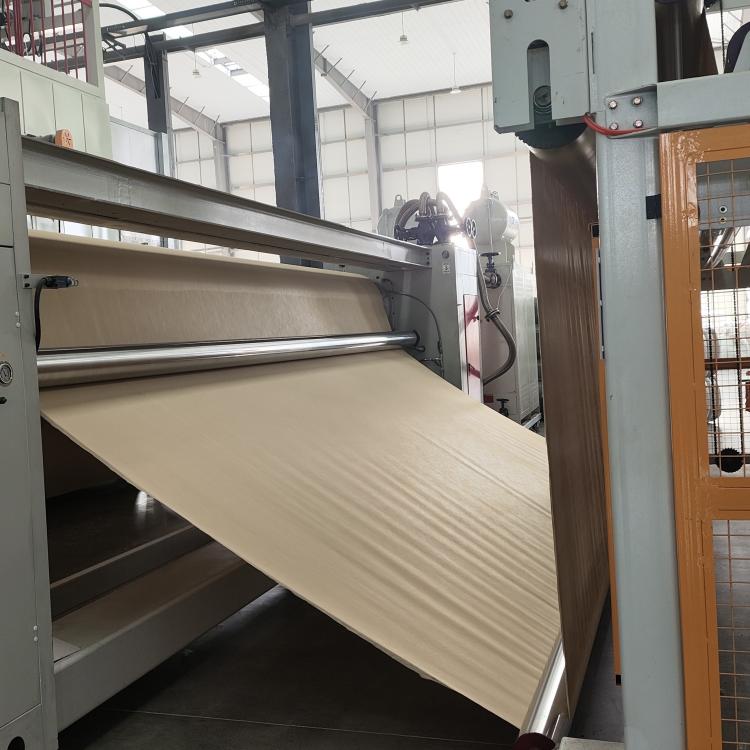
Nonwoven Geotextile Drainage Fabric 400g starts as synthetic fibers, typically polypropylene or polyester, that get mechanically entangled through needle punching. Thousands of barbed needles punch through the fiber web, physically locking everything together without glue or heat bonding . This creates a three-dimensional structure with controlled pore sizes that trap soil particles while letting water pass through. The 400 gram weight sits at a sweet spot where filtration efficiency meets mechanical strength.
What separates this material from lighter grades becomes obvious during installation. The Nonwoven Geotextile Drainage Fabric has body. It handles like a proper engineering material rather than something flimsy that tears if you look at it wrong. And unlike woven alternatives that prioritize strength at the expense of water flow, the nonwoven construction means drainage capacity stays high even under load .
Product Features
Three-Dimensional Fiber Matrix: The needle punching process creates random fiber orientation throughout the fabric thickness. This structure forms a complex network of interconnected voids that trap soil particles throughout the matrix rather than just on the surface . For drainage applications, this depth filtration means gradual clogging happens slower and systems keep working longer.
Controlled Pore Size Distribution: Apparent opening sizes typically range from 0.07 to 0.2 millimeters for Nonwoven Geotextile Drainage Fabric 400g . This range covers the majority of soil retention requirements. Manufacturers adjust fiber denier and needle punching density to target specific opening sizes matched to project soil conditions.
Mechanical Fiber Interlocking: The barbed needles physically entangle fibers rather than relying on adhesives or melting. This mechanical bond maintains integrity even under sustained load and in chemically aggressive environments where other bonding methods might degrade.
UV Stabilization: Quality Nonwoven Geotextile includes carbon black or other stabilizers incorporated during polymer extrusion. These additives absorb and dissipate ultraviolet radiation, protecting the polymer chains during the period between installation and cover placement .
Chemical and Biological Resistance: Polypropylene and polyester fibers resist attack from soil-borne acids, alkalis, and microorganisms. This chemical inertness means the fabric performs reliably in aggressive environments including industrial sites and landfill leachate collection.
Product Advantages
Installation Crews Finish Faster: Time on site costs money. Nonwoven Geotextile Drainage Fabric 400g unrolls smoothly and stays where placed because the weight gives it body without stiffness. Crews do not fight the material when laying it over uneven ground. It drapes into trenches naturally rather than requiring extra labor to hold it in place. Overlaps stay put during cover placement instead of sliding around .
One Layer Replaces Tons of Aggregate: Graded filter systems require quarrying, hauling, and placing multiple aggregate layers. The math never works in favor of stone when you add up trucking costs and labor. Nonwoven Geotextile Drainage Fabric 400g performs the same filtration function with a single layer rolled out in hours rather than days. When project owners calculate total installed cost against the aggregate alternative, the savings show up immediately on budget sheets.
Drainage Systems Stay Open for Decades: French drains and trench drains fail when fines migrate into aggregate and fill void spaces. Once that happens, excavation and replacement represent the only solutions. This fabric prevents that failure mode entirely. The three-dimensional fiber structure traps soil particles throughout its thickness rather than just on the surface. Water keeps moving while soil stays put. Specifying Geotextile Drainage Fabric means property owners avoid the expense and disruption of digging up failed drains years later .
Pavement Sections Maintain Design Thickness: Roads fail when subgrade soils pump up into base courses under traffic loads. This intermixing reduces structural capacity and leads to premature cracking and rutting. Nonwoven Geotextile Drainage Fabric 400g placed between subgrade and aggregate maintains separation indefinitely. The fabric allows water to pass while stopping soil migration. Roads protected this way require fewer overlays and less maintenance over their design life .
Walls Never Build Hydrostatic Pressure: Water pressure behind retaining walls causes more failures than any other factor. When drainage clogs or was never installed, pressure increases until walls move or crack. This fabric placed against the wall face and extending into drainage aggregate provides the path water needs to escape. The fabric holds soil in place while letting water pass freely. Walls with proper geotextile protection never experience the pressure buildup that destroys unprotected structures .
Product Parameters
Understanding the technical specifications helps engineers and contractors select the right material for their specific application. The following parameters represent typical values for standard Nonwoven Geotextile Drainage Fabric 400g manufactured from polypropylene or polyester fibers .
Parameter
Test Method
Unit
Typical
ValueNotes
Mass per Unit Area
ASTM D5261
g/m²
400 ± 6-8%
Weight tolerance ensures consistency
Thickness
ASTM D5199
mm
2.7 - 3.0
Under 2kPa pressure
Tensile Strength (MD/CMD)
ASTM D4595
KN/m
≥ 12.5
Machine direction/Cross direction
Elongation at Break
ASTM D4595
%
25 - 100
Provides ductility for settlement
CBR Puncture Resistance
ASTM D6241
KN
≥ 2.1
Resistance to point loads
Trapezoidal Tear Strength
ASTM D4533
KN
≥ 0.33
MD and CD directions
Apparent Opening Size (O95)
ASTM D4751
mm
0.07 - 0.2
Matched to soil gradation
Vertical Permeability Coefficient
ASTM D4491
cm/s
10⁻¹ to 10⁻³
Maintains flow under load
Width Availability
-
m
1 - 6
Custom widths available
Weight tolerance typically runs within six to eight percent of nominal value on quality material . Wider variation indicates inconsistent manufacturing that leads to surprises on site. Opening size selection depends entirely on soil gradation. Fine soils need smaller openings to prevent piping. Coarser soils tolerate larger openings without losing material.
Product Applications
Drainage Trenches: French drains, curtain drains, and foundation perimeter drains all rely on Nonwoven Geotextile Drainage Fabric 400g to keep aggregate clean. The fabric wraps around pipe and stone, allowing water in while keeping soil out. Without this protection, fines gradually fill void spaces and drainage stops. Excavating failed drains costs exponentially more than installing proper fabric initially .
Retaining Walls: Water builds up behind walls that lack proper drainage. This pressure eventually moves walls or cracks them. Nonwoven Geotextile Drainage Fabric 400g placed against the wall face and extending into drainage aggregate provides the path water needs to escape while holding soil in place . Walls with proper geotextile protection never experience the pressure buildup that destroys unprotected structures.
Road Construction: Placed between soft subgrade and aggregate base, the fabric prevents mixing that compromises pavement. State DOT specifications often require specific weights and opening sizes based on local soil conditions. Contractors who cut corners on geotextile quality find themselves repairing roads within years rather than decades .
Railway Applications: Ballast must remain clean to drain properly and maintain track geometry. When fine subgrade soils migrate upward into ballast, drainage suffers and maintenance costs climb. Nonwoven Geotextile Drainage Fabric 400g placed between subgrade and ballast prevents this contamination year after year .
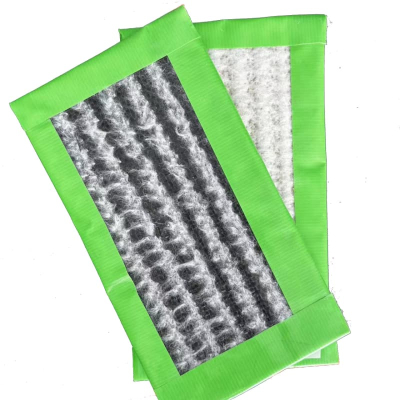
Ponds and Landfills: Bentonite mats and geomembranes need protection from puncture during cover placement. A layer of this fabric cushions these impermeable materials against sharp rocks in the cover soil. The same fabric provides filtration in leachate collection systems, keeping drainage aggregate clean while allowing liquid movement .
Erosion Control: On slopes where vegetation needs time to establish, fabric holds soil in place during rain events. Water passes through to the soil while the fabric prevents surface particles from washing away. This buys time for grass or other plantings to develop root systems .
Installation Realities
Subgrade Preparation: Nonwoven Geotextile Drainage Fabric 400g unrolls easiest when the ground is relatively smooth. Large clods or sharp protrusions should get removed before placement because even heavy fabric performs better on prepared surfaces .
Overlap Requirements: Overlaps typically run 300 to 500 millimeters depending on subgrade conditions. Soft ground needs more overlap because the fabric sections may shift during cover placement. Some specifications require sewing or thermal bonding for critical applications, but standard projects rely on cover weight to hold overlaps .
Cover Placement Sequence: Dumping aggregate directly on fabric works best when starting at the far end and working backward. This keeps trucks on already-placed cover rather than running on exposed fabric. When equipment must travel on bare fabric temporarily, keeping turning radius wide prevents tearing .
UV Exposure Limits: UV exposure limits vary by manufacturer but typically run 30 days maximum before cover placement. While quality fabric includes stabilizers that provide protection, no geotextile should stay exposed indefinitely. Projects delayed beyond this window risk strength loss before the material ever gets covered .
Cold Weather Installation: Nonwoven Geotextile Drainage Fabric 400g remains flexible at temperatures well below freezing, unlike some materials that stiffen dramatically. This allows winter construction to proceed without special handling procedures .
Packaging and Transportation
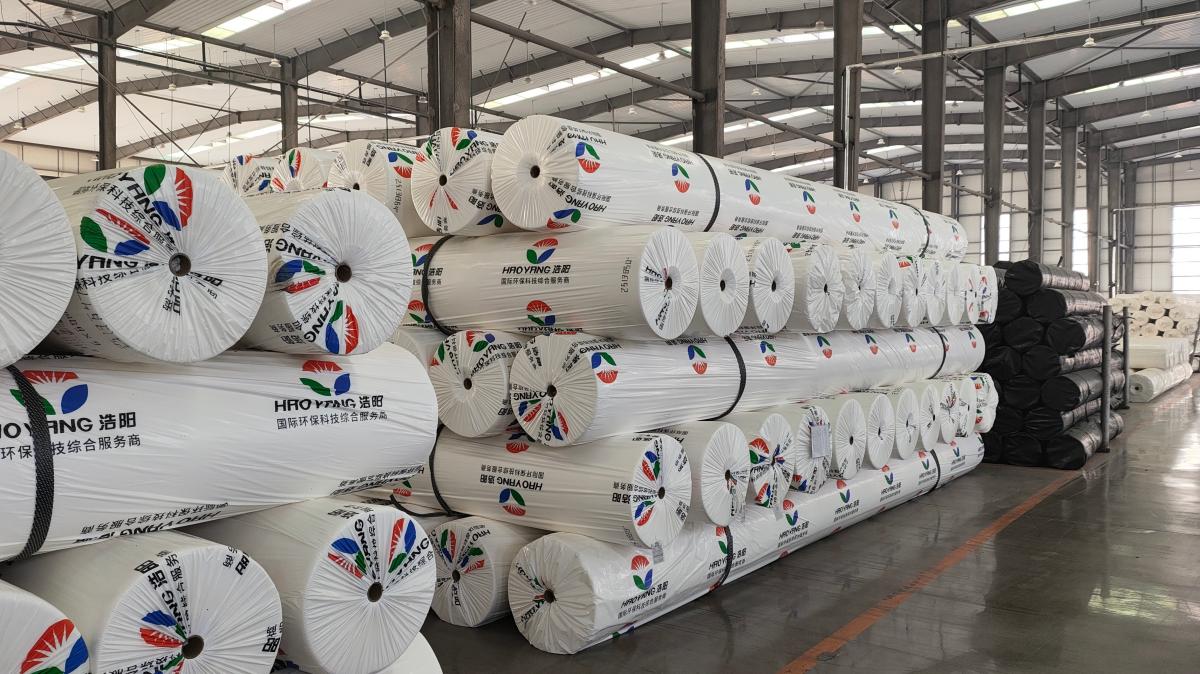
Roll Wrapping: Each roll winds onto heavy-duty cores with uniform tension to prevent telescoping during transit. Weather-resistant polyethylene film or woven polypropylene bags protect against moisture and mechanical damage. Multiple radial straps secure the wrapping and provide lifting points.
Standard Dimensions: Typical roll widths range from 1 meter to 6 meters, with 2-meter and 4-meter widths most common. Lengths vary from 50 meters to 200 meters depending on weight, with heavier fabrics in shorter rolls to maintain manageable handling weights .
Container Loading: For export shipments, rolls pack into containers with careful stowage to maximize space while preventing damage. A standard 20-foot container typically holds three to four tons of fabric, while 40-foot containers handle five to eight tons depending on roll dimensions.
Storage Recommendations: Rolls should store on elevated, level surfaces away from standing water. Protective wrapping remains intact until installation. Stacking limited to three rolls high prevents deformation. Extended outdoor storage benefits from additional opaque covering beyond the factory wrapping.
Company Strength and Manufacturing Capability
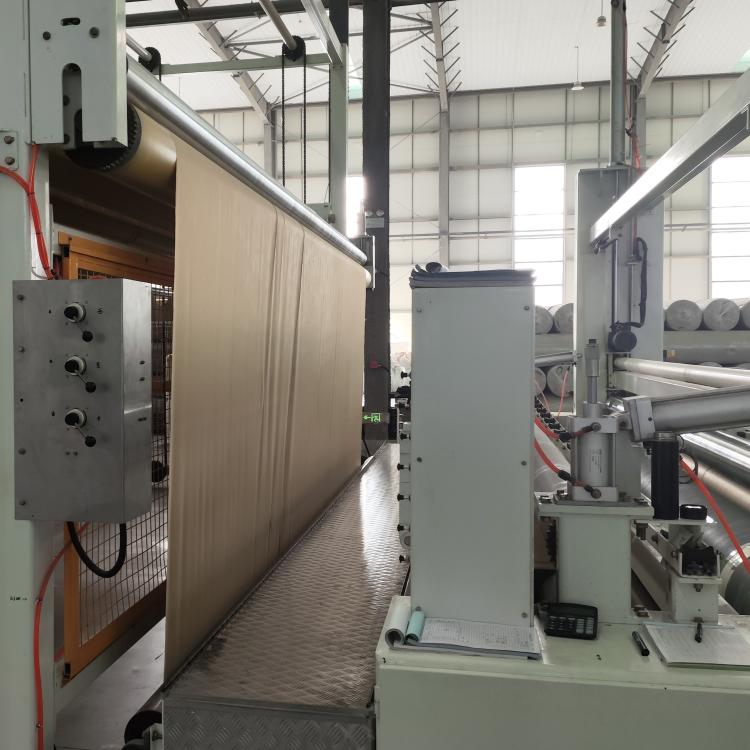
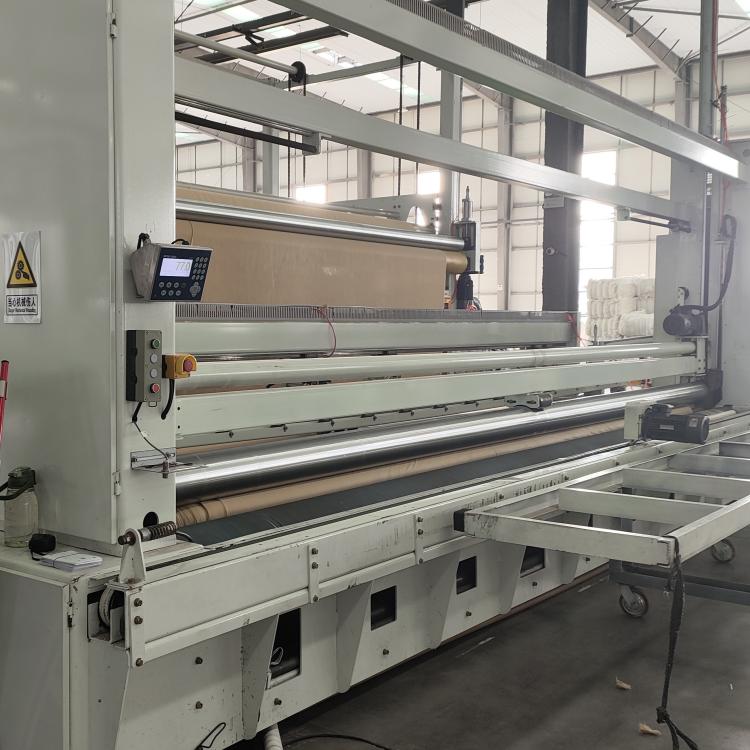
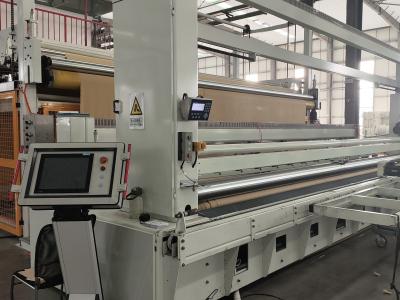
Production Facilities: Leading manufacturers operate across factory floors exceeding 40,000 square meters, with multiple production lines dedicated to nonwoven geotextiles . German and Italian needle punching equipment, automated fiber blending systems, and computer-controlled winding equipment ensure consistent quality.
Vertically Integrated Operations: Established manufacturers control quality from raw material procurement through finished product. In-house fiber production or strategic polymer supplier partnerships ensure traceability and consistent properties. This integration allows rapid response to custom specifications and stable pricing regardless of market fluctuations .
Quality Management: Reputable manufacturers maintain ISO 9001 certification and invest in in-house laboratories with accredited testing capabilities. Real-time quality monitoring during production catches deviations before material ships. Third-party certifications from organizations like SGS or BV provide additional verification for international projects .
Technical Support: Beyond manufacturing, established companies employ geotechnical engineers who assist specifiers with material selection, design calculations, and installation guidance. This support extends to on-site troubleshooting and performance verification, ensuring specified materials deliver as engineered.
Global Supply Capability: With production capacities reaching 93,500 tons annually and daily output of 28.5 tons or more, leading manufacturers supply projects worldwide . Export experience across multiple countries demonstrates logistical competence in navigating international shipping, customs clearance, and local delivery requirements.
Frequently Asked Questions
Q: How long does Nonwoven Geotextile Drainage Fabric 400g last underground?
A: Properly buried fabric from virgin polymers lasts decades in most soil conditions. The absence of UV, stable temperatures, and neutral pH minimize degradation. Manufacturers warranty periods run shorter, typically five to twenty years, but actual service life extends far beyond . Some manufacturers cite minimum durability of 25 years in soils with pH between 4 and 9 at temperatures below 25°C.
Q: Does weight alone determine quality?
A: No. Fiber quality, needle punching density, and uniformity matter as much as weight. Two rolls at the same 400 g/m² can perform very differently if one uses inconsistent fibers or manufacturing processes. Verify manufacturer reputation and request test reports .
Q: Can I use this for both separation and drainage?
A: Yes. That combination of functions is exactly what Nonwoven Geotextile Drainage Fabric 400g does well. It separates soil layers while allowing water movement between them. This dual capability makes it more versatile than materials designed for single functions .
Q: How do I know what opening size I need?
A: Soil testing provides the answer. Grain size distribution determines what opening size retains particles without clogging. Geotechnical reports typically include this data. Manufacturers help match fabric selection to soil conditions.
Q: What about chemical resistance?
A: Polypropylene and polyester resist acids, alkalis, and microbial attack common in soils. This chemical inertness means the fabric performs reliably in aggressive environments including industrial sites and landfills .
Q: Does UV exposure during installation matter?
A: Yes. While quality fabric includes stabilizers, most manufacturers recommend covering within 30 days. Extended exposure before cover placement degrades strength. Plan installation sequencing accordingly .
Q: Can roll dimensions be customized for specific projects?
A: Yes, established manufacturers accommodate custom widths and lengths with appropriate lead times and minimum order quantities. Standard ranges from 1-6 meters width and 50-200 meters length cover most project requirements, but non-standard dimensions are possible.
For your next project requiring reliable drainage and filtration, specify Nonwoven Geotextile Drainage Fabric 400g from manufacturers who understand field performance requirements. Contact our technical team for application-specific recommendations, certified test data, or quotations tailored to your project needs.