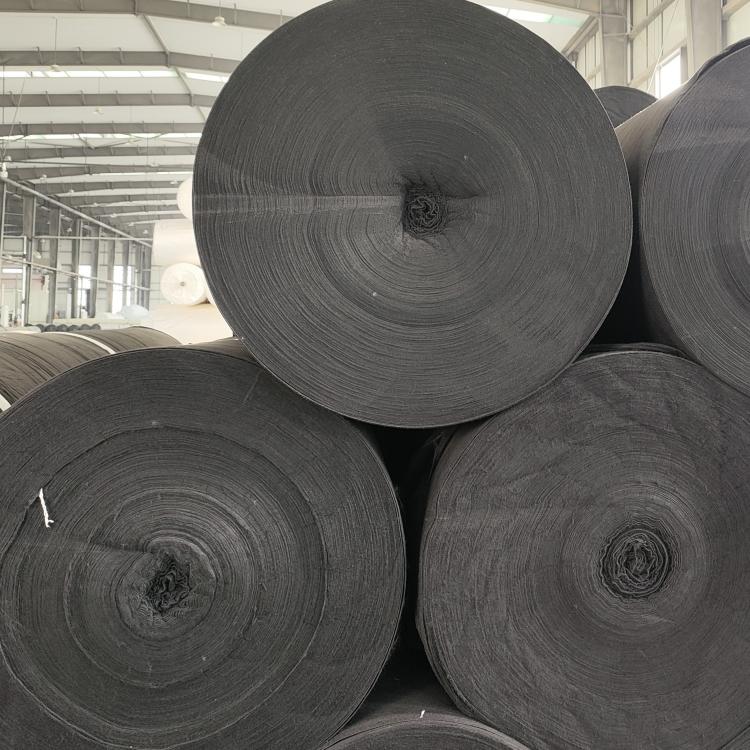
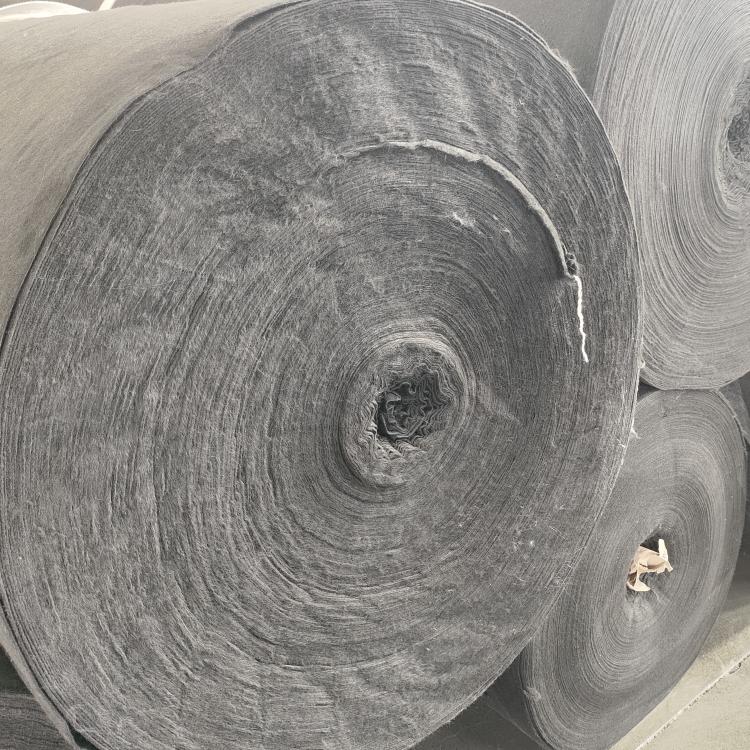
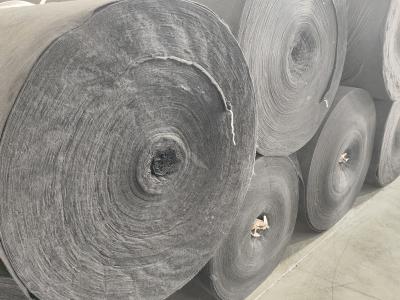
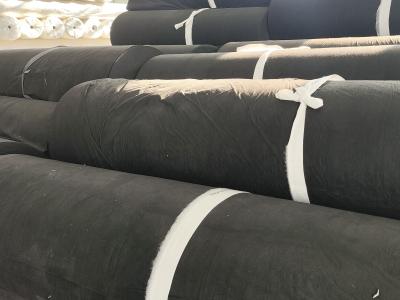
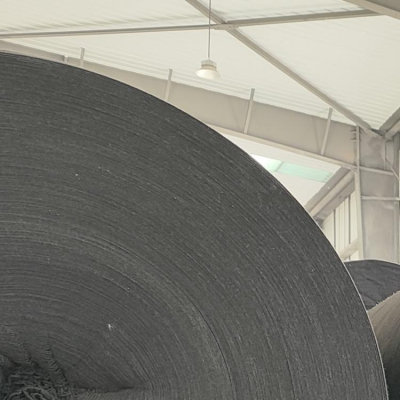
Walk past any road extension, new housing development, or commercial landscaping project and you will see it. Rolls of Black Non Woven Geotextile Fabric waiting to go into the ground. Contractors reach for this material constantly because it solves three problems at once: separation, filtration, and drainage. The black color is not just for looks. It comes from carbon black added during manufacturing, which protects the fabric from UV damage during the days or weeks between installation and cover.
The Black Non Woven Geotextile Fabric starts as polypropylene fibers fed into a needle punch machine. Thousands of barbed needles punch through the fiber web, mechanically tangling everything together into a stable, felt-like sheet. No glues. No chemical binders. Just physical entanglement that holds up underground for decades. The random fiber structure creates tiny pathways that let water through while stopping soil particles. Simple manufacturing that produces reliable fabric
What makes the Black Non Woven Geotextile so popular is how it handles on site. It unrolls smoothly. It conforms to uneven ground. A utility knife cuts it clean. One person can manage a full roll. For jobs that need filtration and separation without the high cost of heavy road fabrics, this weight class delivers.
Product Features
Needle Punched Construction: The mechanical entanglement gives the Black Non Woven Geotextile Fabric flexibility without sacrificing strength. It drapes into trenches and over rocks. Heat bonded fabrics can feel boardy. This one moves with the ground.
Depth Filtration: The random fiber matrix traps soil particles throughout the fabric thickness. Woven GeotextileFilter Fabric catches everything at the surface and blinds off. Nonwoven keeps flowing because clogging happens slower.
UV Protection from Carbon Black: The black color comes from carbon black mixed into the polymer. This gives the Black Non Woven Geotextile weeks of sun resistance during installation. Not forever, but enough for most project schedules.
Chemical Resistance: Polypropylene resists mold, mildew, and soil chemicals. The fabric buried under a driveway or behind a wall will not break down from biological activity or common soil acids.
High Water Flow: Permittivity ratings typically run 1.0 to 2.0 per second. Water moves through freely while soil stays put. For drainage applications, this matters more than tensile strength.
Product Advantages
Costs Less Than Heavy Fabrics: Not every job needs 400 gram material. The Black Non Woven Geotextile Fabric in 150 to 200 GSM weights covers large areas at a lower price point. For landscaping, drainage trenches, and under patios, lighter weight does the job for less money.
Handles Better on Site: Heavy Geotextile Road Fabric can be stiff and hard to maneuver. This fabric unrolls easily. One crew member moves a full roll without calling for help. Cuts clean with a utility knife. Shapes around trees and pipes without fraying.
Conforms to Irregular Ground: Heavy fabrics bridge over low spots. This one drops into every dip and depression. Full contact with soil means separation and filtration work right. Air gaps under fabric let soil wash through.
One Roll Does Multiple Jobs: Drainage, weed control, separation under pavers, erosion control on slopes. The same Black Non Woven Geotextile handles all of it. Keep a roll on the truck and you are ready for whatever comes up.
Lasts Decades Underground: Covered properly, this fabric stays intact for 25 years or more. No UV exposure. Stable temperatures. No biological breakdown. You pay once and it keeps working.
Product Parameters
Parameter
Test Method
Typical Value
Weight
ASTM D5261
100 - 300 g/m²
Thickness
ASTM D5199
1.0 - 2.5 mm
Tensile Strength
ASTM D4595
3.5 - 10.5 KN/m
Elongation
ASTM D4595
40 - 80%
CBR Puncture
ASTM D6241
0.5 - 1.8 KN
Apparent Opening Size
ASTM D4751
0.10 - 0.20 mm
Permittivity
ASTM D4491
1.0 - 2.0 sec⁻¹
UV Resistance
ASTM D4355
≥70% retained at 500 hrs
The Black Non Woven Geotextile Fabric comes in multiple weights. Lighter rolls around 100 GSM work for weed barriers and light separation. Mid weights at 150 to 200 GSM handle French drains and under patios. Heavier rolls up to 300 GSM take on retaining walls and erosion control.
Product Applications
French Drains and Trench Drains: Wrap perforated pipe and drainage stone with Black Non Woven Geotextile Fabric. It keeps silt out while letting water in. Drains wrapped with this fabric stay clear for years instead of clogging within months. The black color blends into the soil if any edges get exposed.
Under Patio Pavers and Walkways: Lay fabric between prepared subgrade and sand or stone dust base. It stops subgrade from mixing up into base material. Patios stay level longer when layers stay separate. The Geotextile Filter Fabric allows water to drain through while preventing soil migration.
Behind Retaining Walls: Short walls under 1.5 meters need drainage too. The Black Non Woven Geotextile placed against the wall face allows water to reach weep holes while holding soil back. Hydrostatic pressure never builds up when water can escape.
Landscape Weed Barrier: Under mulch, decorative stone, or gravel paths, this fabric stops weeds without trapping water. Black plastic kills plants by keeping moisture in the soil. Black Non Woven Geotextile breathes. Air and water reach plant roots while weeds stay blocked.
Erosion Control on Slopes: On gentle to moderate slopes, the fabric holds soil in place while grass establishes. Water goes through to the ground. Soil stays put. Vegetation roots through the fabric, anchoring it in place permanently.
Under Raised Garden Beds: Line the bottom of raised beds to separate native soil from imported growing media. The fabric prevents weed intrusion from below. Water drains out. Roots grow through. The black color looks clean if any edge shows above ground.
Agricultural Drainage: Field drains and orchard drainage systems use this fabric for collector pipes. It wraps the gravel envelope and keeps silt from reaching the pipe. Geotextile Road Fabric would be overkill here. This lighter weight works perfectly.
Packaging and Transportation
Roll Widths: The Black Non Woven Geotextile Fabric comes in 1 meter up to 6 meters wide. Two meter and four meter widths sell the most because they fit standard jobs. Narrower rolls work for trench drains. Wider rolls cover patios and slopes faster.
Roll Lengths: Lengths run from 50 to 200 meters depending on weight and width. A 2x50m roll gives 100 square meters. A 4x100m roll gives 400 square meters. Heavier rolls come shorter so one person can still move them.
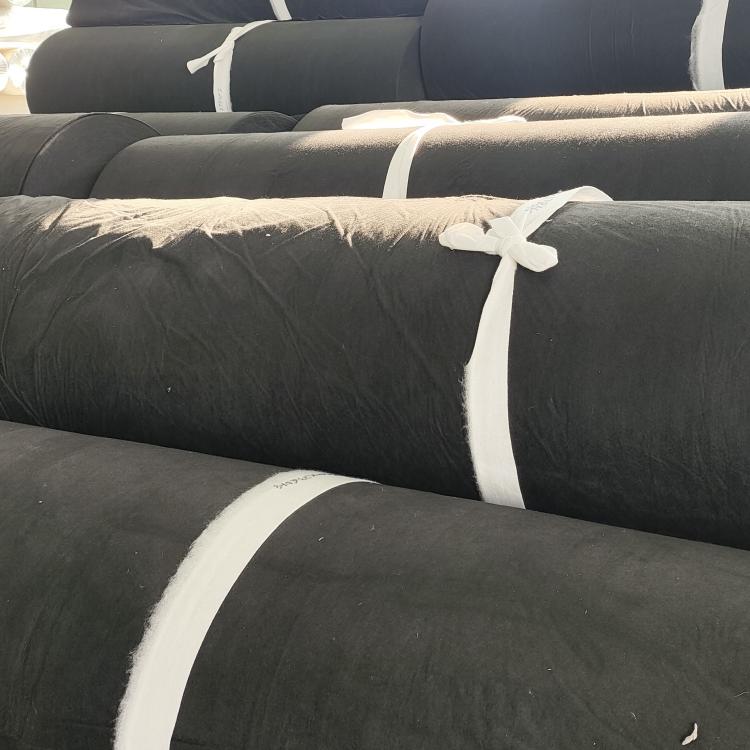
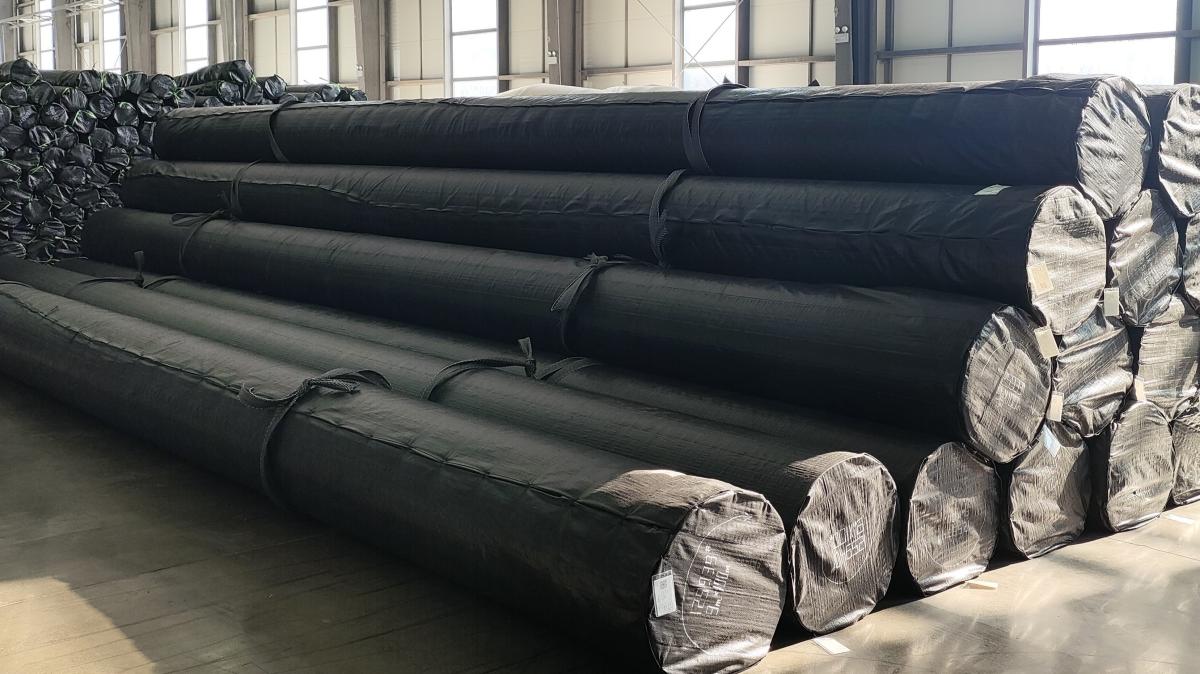
Packaging: Each roll winds onto a cardboard core and gets wrapped in black polyethylene film. Steel or plastic straps secure the wrap and give forklifts something to grab. The black wrap matches the fabric and looks professional on job sites.
Palletizing: Rolls stack on pallets for shipping. A typical pallet holds 500 to 1500 square meters depending on roll sizes. Pallets get stretch wrapped and labeled with lot numbers, weight, and dimensions.
Container Loading: Export shipments go into 20 or 40 foot containers. A 20 footer holds about 5000 to 8000 square meters. Load plans keep rolls from shifting during transit. The black color does not show dirt if pallets get dusty.
Storage: Keep rolls off the ground. Stack no more than three high. Leave wrapping on until installation. If they sit outside, throw a tarp over the pallet. The UV protection buys time but not forever.
Company Strength
Production Capacity: Major manufacturers run needle punch lines 24 hours a day. Daily output of Black Non Woven Geotextile Fabric can hit 50,000 square meters or more. Enough to cover a small airport runway every day.
Raw Materials: Top suppliers buy virgin polypropylene from major petrochemical companies. Consistent fibers mean consistent fabric. Some offer recycled content options for LEED and other green building certifications.
Quality Testing: In house labs test every batch. Weight, thickness, strength, puncture, opening size, flow rate. Nothing ships without passing. Third party audits from SGS, Intertek, or BV add another layer of verification.
Technical Support: Geotechnical engineers on staff help customers pick the right weight for their soil and site conditions. They have seen what works and what fails over decades of experience.
Global Shipping: Established suppliers ship worldwide. They handle export paperwork, container loading, and freight coordination. Delivery times are reliable because the logistics network is proven.
FAQ
Q: Why is the fabric black?
A: The black color comes from carbon black added to the polypropylene. It protects the Black Non Woven Geotextile Fabric from UV damage during installation. The carbon black absorbs UV radiation instead of letting it break down the polymer.
Q: What weight should I buy?
A: 100 to 150 GSM works for weed barriers and light separation. 150 to 200 GSM handles French drains, under patios, and behind short walls. 200 to 300 GSM takes on erosion control and heavier drainage jobs.
Q: Can I drive on it?
A: Light foot traffic only. If a machine needs to cross the Black Non Woven Geotextile, put down 150 mm of cover material first. For roads and parking areas, upgrade to Geotextile Road Fabric in heavier weights.
Q: How does nonwoven compare to woven?
A: Nonwoven excels at filtration and drainage. Woven excels at reinforcement. For separation under pavers and weed control, nonwoven wins. For holding up heavy aggregate under trucks, woven is stronger.
Q: Will roots grow through it?
A: Yes. The needle punched structure lets fine roots through. This is good for erosion control and raised beds where you want plants to establish. For stopping roots completely, you need a different product.
Q: How much overlap between rolls?
A: 300 to 500 mm. On slopes, put the upper roll over the lower roll so water runs over the lap instead of under it. For critical applications like pond liners, overlap 600 mm or more.
Q: How long can it sit in the sun?
A: About 30 days of normal sunlight. The carbon black helps. But cover the Black Non Woven Geotextile Fabric as soon as you can. Sun breaks down all geotextiles eventually.
Q: Is it safe for vegetable gardens?
A: Yes. Polypropylene is inert. It will not leach chemicals into the soil. Gardeners use Geotextile Filter Fabric under raised beds and in pathways all the time.
Q: How do I cut it?
A: Sharp utility knife against a straightedge. Scissors work for small cuts. The fabric cuts clean without fraying much.
Q: How long will it last underground?
A: 25 years or more. No UV exposure. Stable temperature. No biological breakdown. Decades of service is normal for properly installed Black Non Woven Geotextile.
For everyday jobs that need separation, filtration, and drainage without the cost of heavy road fabrics, Black Non Woven Geotextile Fabric delivers. Keep a roll on the truck. You will reach for it more often than you expect.