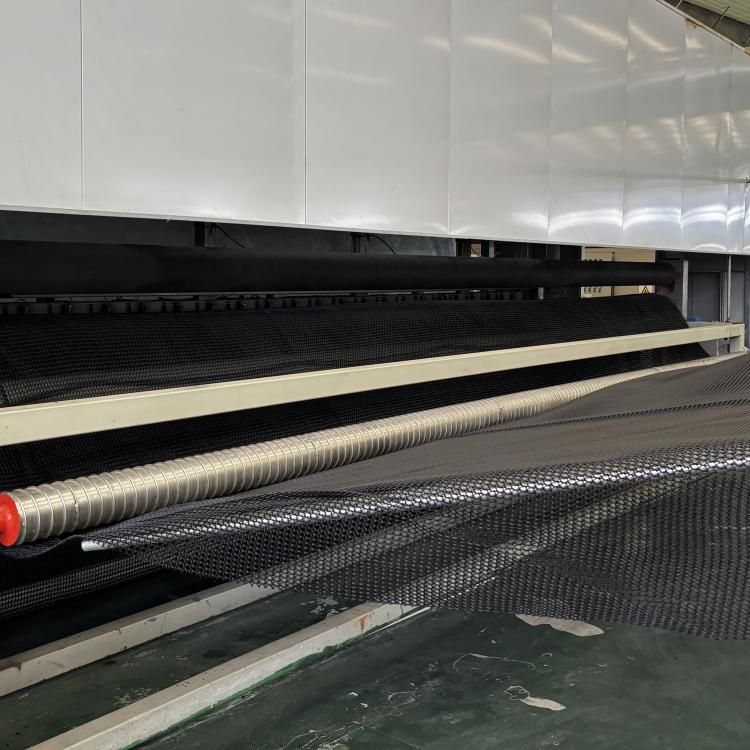
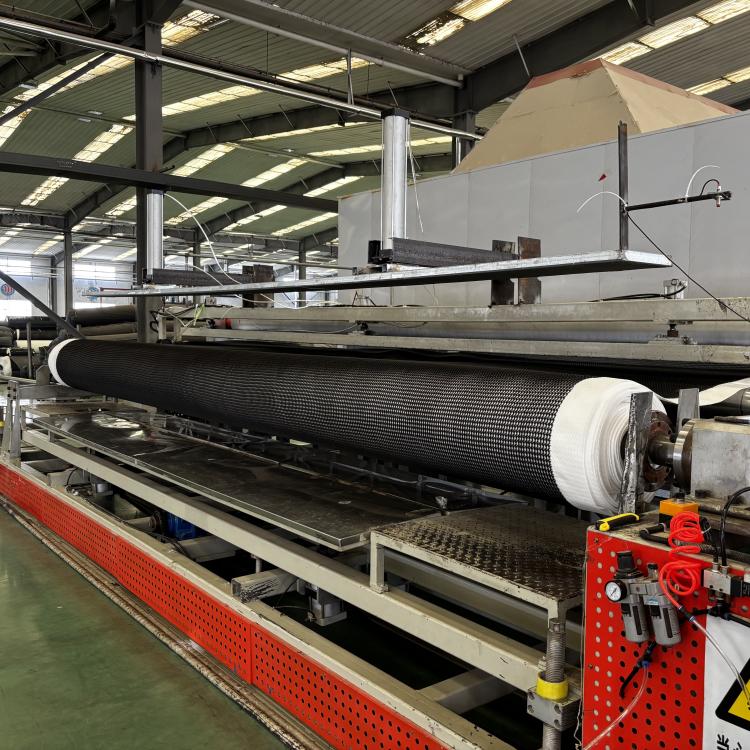
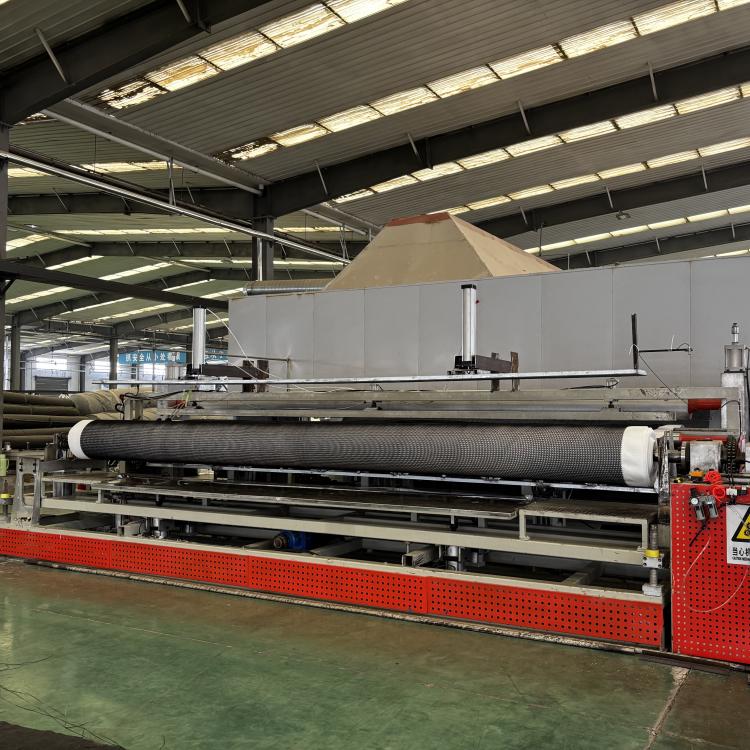
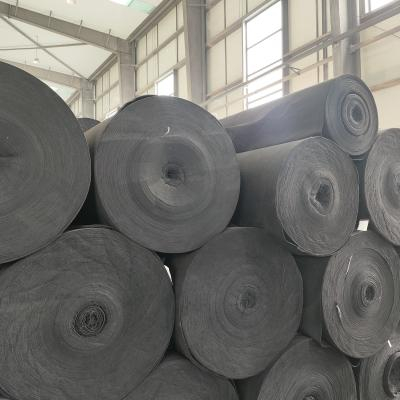
Modern mining operations face persistent challenges in water management. From heap leach pads processing copper ore with sulfuric acid solutions to tailings storage facilities holding millions of tons of fine waste, effective drainage is critical to operational efficiency, structural stability, and environmental compliance . Traditional approaches using crushed stone overliner layers of 300 to 1,500 millimeters demand significant space, require careful quality control, and raise concerns about side slope stability and geomembrane damage during installation . The Drainage Net for Mining Applications offers a fundamentally different approach—a high-performance geosynthetic drainage system engineered specifically for the demanding conditions of mine sites. Featuring a triplanar HDPE core that maintains open flow channels under extreme loads exceeding 2000 kPa, and bonded with nonwoven geotextiles that provide reliable filtration in chemically aggressive environments, this Composite Drainage Net replaces thick gravel layers with a product measuring just 5 to 9 millimeters thick . Engineers specifying the Drainage Net for Mining Applications gain predictable hydraulic performance, rapid installation even on steep slopes, and long-term reliability that aggregate systems cannot guarantee. The material has proven itself in heap leaching operations, tailings dam drainage, and mine slope protection worldwide, where it delivers consistent drainage capacity while reducing construction costs and improving safety outcomes .
Product Features
Triplanar Geonet Core Architecture
The foundation of the Drainage Net for Mining Applications lies in its three-dimensional geonet structure. Unlike biplanar nets where two layers of strands simply overlap, the triplanar configuration incorporates thick vertical central ribs that create wide, stable flow channels, with diagonally placed upper and lower strands that minimize geotextile intrusion into the drainage core . Laboratory testing confirms that triplanar geonets maintain structural stability even under very high normal pressure with no inflection point, while most biplanar geonets crush or roll over between 600 to 800 kPa . This compressive strength is critical in heap leach applications where ore stack heights can reach 50 to 135 meters, generating confining pressures that would collapse lesser drainage materials . The primary flow plane between the upper and lower geonet layers accommodates geotextile intrusion while maintaining uninterrupted drainage pathways .
High-Performance Filtration Integration
The Composite Drainage Net incorporates nonwoven geotextiles heat-laminated to one or both sides of the geonet core. In mining applications, these geotextiles serve an essential filtration function—they retain soil and ore particles while allowing leachate solutions to pass freely . Column leach tests conducted on gold-bearing ore leached with sodium cyanide solution and copper-bearing ore leached with sulfuric acid solution have demonstrated that the geotextile filter maintains an open and porous structure after extended leaching, with no significant difference in drainage characteristics compared to control columns . The geotextile prevents the migration of fines that would otherwise accumulate within the drainage channels, ensuring the Drainage Net maintains hydraulic performance throughout the project life.
Premium Material Composition
Manufactured from virgin high-density polyethylene (HDPE) or polypropylene, the Drainage Net for Mining Applications offers exceptional resistance to the aggressive chemical environments encountered in mining operations . The HDPE formulation incorporates carbon black for UV stabilization, ensuring the material withstands prolonged exposure during construction. The polymer resists attack from acids, alkalis, salts, and organic compounds commonly found in heap leach solutions and tailings slurries, providing durability that lesser materials cannot match .
Product Advantages
Superior Compressive Strength for Deep Heaps
The most significant advantage of the Drainage Net for Mining Applications lies in its ability to maintain drainage capacity under extreme loads. Triplanar geonets withstand confining pressures that crush biplanar alternatives, making them technically suitable as drainage media under deep leach pads where biplanar geonets would fail . The three-dimensional structure distributes vertical pressure evenly across the geonet ribs, preventing the collapse that would close flow channels and render the drainage system ineffective. This performance characteristic enables engineers to specify the Net For Drainage with confidence in the most demanding heap leach and tailings applications.
Space Efficiency and Cost Savings
Replacing 300 to 1,500 millimeters of crushed stone drainage with a 5 to 9 millimeter geocomposite delivers dramatic space savings . In heap leach pads, this translates to reduced heel thickness and, consequently, increased ore stacking capacity. The reduction in drainage pipe requirements—made possible by the higher in-plane flow capacity—further reduces capital costs . The lightweight rolls eliminate heavy equipment mobilization, reduce truck traffic to remote sites, and simplify logistics. Installation proceeds rapidly even on steep canyon slopes where gravel placement is difficult and risky .
Consistent, Verifiable Performance
Unlike aggregate drainage layers that depend on gradation, placement thickness, and freedom from contamination, the Composite Drainage Net delivers consistent, laboratory-verified performance. The transmissivity of the geonet is almost two orders of magnitude greater than that of a sand layer of equivalent thickness . This predictability enables engineers to design with confidence, knowing that field performance will match specifications.
Installation on Challenging Terrain
On steep slopes where aggregate placement proves difficult or impossible, the Drainage Net for Mining Applications can be anchored and installed with confidence . The material maintains intimate contact with the underlying geomembrane, providing immediate drainage functionality without the stability risks associated with gravel on inclines. This capability proves particularly valuable in valley fill leach pad systems and tailings dam embankments.
Environmental Compliance Support
Mining operations increasingly face stringent environmental regulations governing leachate containment and groundwater protection. The Drainage Net for Mining Applications contributes to regulatory compliance by ensuring reliable leachate collection and removal, preventing hydrostatic pressure buildup that could stress geomembrane liners . The geocomposite meets or exceeds requirements for leak detection systems and leachate collection layers, providing documented performance that supports permit applications and regulatory inspections.
Product Parameters
Technical Specifications
Parameter
Test Method
Standard Grade
Heavy Grade
Core Thickness
ASTM D5199
5.0 mm - 7.0 mm
8.0 mm - 9.0 mm
Density
ASTM D1505
≥0.94 g/cm³
≥0.94 g/cm³
Carbon Black Content
ASTM D1603
2.0% - 3.0%
2.0% - 3.0%
Hydraulic Transmissivity (100 kPa)
ASTM D4716
≥2.8×10⁻³ m²/s
≥5.0×10⁻³ m²/s
Tensile Strength (MD)
ASTM D5035
≥8.0 kN/m
≥16.0 kN/m
Compressive Resistance
ASTM D1621
>1000 kPa
>2000 kPa
Geotextile Unit Weight
ASTM D5261
200 g/m²
400 g/m²
Roll Width
-
2.0 m - 4.0 m
2.0 m - 6.0 m
Roll Length
-
30 m - 50 m
30 m - 50 m
Grade Selection by Application
Application
Recommended Thickness Key Requirements
Recommended Thickness Key Requirements
Heap Leach Pad Drainage
7.0 - 9.0 mm
High compressive strength, chemical resistance
Tailings Dam Internal Drainage
6.0 - 8.0 mm
Long-term load resistance, filtration
Mine Slope Protection
5.0 - 6.0 mm
Flexibility, UV resistance
Leachate Collection Systems
5.0 - 7.0 mm
High transmissivity, clog resistance
Leak Detection Systems
5.0 - 6.0 mm
Reliable flow under minimal head
Product Applications
Heap Leach Pad Drainage
Heap leaching is a mineral processing technology whereby large piles of crushed or run-of-mine rock are leached with chemical solutions to extract valuable minerals . Copper mines use weak sulfuric acid solution; gold operations use alkaline cyanide solution. The Drainage Net for Mining Applications installed at the base of the leach pad replaces conventional crushed stone overliners, collecting the "pregnant leach solution" (PLS) and conveying it to recovery systems . The triplanar structure maintains transmissivity under ore heap heights of 50 to 135 meters, while the geotextile filter prevents ore fines from entering the drainage core . In on-off (dynamic) pads where ore is leached for 2 to 12 months and then removed, the geocomposite withstands repeated loading cycles from stacking and unloading equipment .
Tailings Storage Facility Drainage
Efficient and reliable drainage is critical to ensuring the long-term safety, stability, and performance of tailings storage facilities (TSF) . The Drainage Net for Mining Applications installed in tailings dam bases and internal drainage systems reduces pore water pressure that could compromise dam stability . The material's resistance to chemically aggressive tailings slurries ensures long-term performance without degradation. When used in composite liner systems beneath geomembranes, the geocomposite provides rapid removal of seepage water while protecting the liner from puncture by overlying tailings materials .
Mine Slope and Cover Drainage
Mine slopes and final covers require effective drainage to prevent erosion, maintain stability, and control water infiltration. The Drainage Net for Mining Applications provides a thin, reliable drainage layer that can be installed on steep slopes where gravel placement is impractical . The geocomposite's lightweight construction simplifies installation, while the geotextile filtration prevents soil migration that could compromise drainage performance.
Leachate Collection and Leak Detection Systems
The Drainage Net for Mining Applications serves critical functions within composite liner systems. As a leachate collection and removal system (LCRS), it removes leachate from the lining system to maintain regulatory-required head limits . Drainage geocomposites used in this application require less subgrade preparation and occupy far less airspace than natural drainage soils (5 to 9 millimeters versus one or more feet of soil), providing excellent long-term hydraulic performance and creep resistance . In leak detection systems (LDS), the geonet between double geomembrane liners provides high transmissivity that limits head on the secondary liner to the thickness of the drainage geonet .
Packaging and Transportation
Roll Specifications
The Drainage Net for Mining Applications is wound onto heavy-duty cores with controlled tension that prevents telescoping or edge damage during transit . The outer wrap consists of woven polypropylene fabric or opaque polyethylene film, providing protection from moisture, UV exposure, and mechanical abrasion. Each roll is clearly labeled with product specifications, lot numbers, and installation orientation.
Standard roll dimensions accommodate project requirements: widths from 2.0 to 6.0 meters and lengths from 30 to 50 meters . Narrower rolls facilitate handling on steep slopes or confined areas; wider rolls accelerate deployment across large heap leach pads. Rolls are palletized for efficient shipping and handling .
Storage Recommendations
Upon arrival at the mine site, rolls should be stored on level, well-drained ground, elevated slightly to prevent standing water contact. If extended storage precedes installation, covering the rolls with opaque tarps prevents UV degradation. Most mining projects schedule delivery to coincide with installation, minimizing storage requirements .
Company Strength and Capabilities
Manufacturing Excellence
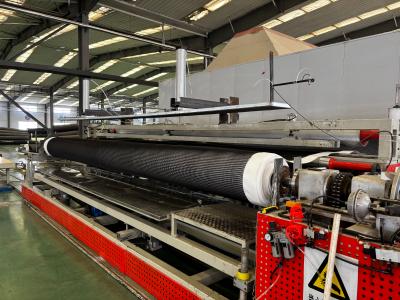
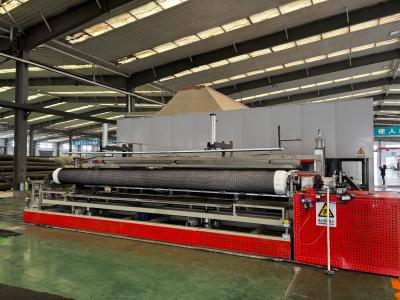
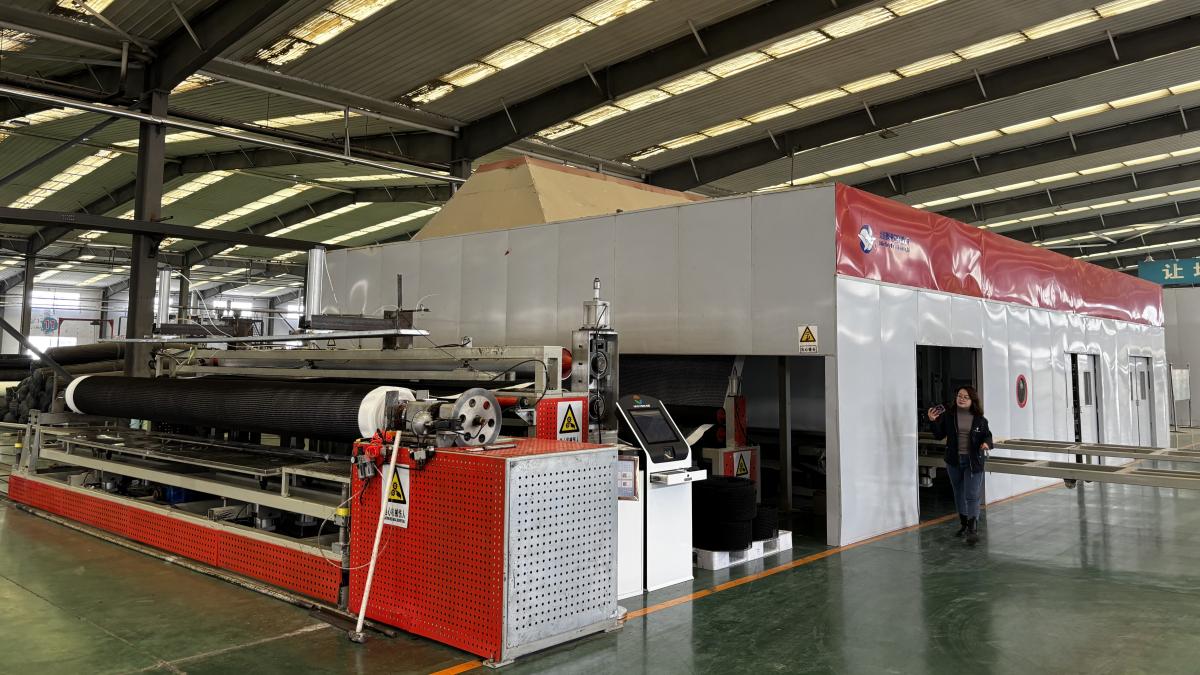
Established manufacturers of Composite Drainage Net products operate state-of-the-art production facilities with extensive manufacturing capabilities . Facilities covering over 230 acres with more than 40,000 square meters of standardized industrial workshops, equipped with over 26 modern production lines for geosynthetic materials . Total annual production capacity exceeding 93,500 tons ensures reliable supply for large-scale mining projects worldwide .
Quality Assurance
Comprehensive quality control laboratories verify every property that matters to project performance. Testing includes geonet thickness and density, tensile strength, hydraulic transmissivity under simulated service loads, and carbon black content. Reputable manufacturers maintain ISO 9001 quality management certification and ISO 14001 environmental management certification, with third-party auditors verifying quality system compliance .
Technical Support
Experienced engineering teams work with mining project designers during the specification phase, helping select appropriate product grades and develop installation details that ensure successful outcomes. Technical support includes design calculations, technical data sheets, and sample materials for project-specific evaluation. Field representatives are available for complex applications involving steep slopes, unusual ore conditions, or critical performance requirements .
Global Reach
Leading manufacturers serve mining projects worldwide, with export experience spanning North America, South America, Australia, and Southeast Asia. This global exposure provides insights into diverse regulatory requirements, ore types, and climatic conditions, informing product development and technical support capabilities .
Frequently Asked Questions
Q: How does the Drainage Net for Mining Applications compare to crushed stone overliners?
A: The geocomposite provides equivalent or superior drainage capacity in a 5-9mm thickness compared to 300-1,500mm of crushed stone . Installation completes faster, performance is laboratory-verified, and the bonded geotextile prevents the long-term clogging that affects aggregate systems. The triplanar structure also withstands higher compressive loads than biplanar geonets, making it suitable for deep heap leach pads where aggregate would compress and lose capacity .
Q: What loads can the material withstand without losing drainage capacity?
A: Triplanar geonets maintain structural stability under very high normal pressure with no inflection point, while biplanar alternatives crush or roll over between 600 to 800 kPa . Heavy-grade Drainage Net for Mining Applications withstands compression loads exceeding 2000 kPa, equivalent to over 100 meters of ore heap depth with appropriate safety factors applied . Laboratory testing under ASTM D4716 provides specific transmissivity data for each product grade under increasing confinement.
Q: How does the geocomposite perform in chemically aggressive mining environments?
A: HDPE provides excellent resistance to acids, alkalis, salts, and organic compounds commonly found in heap leach solutions and tailings slurries . Column leach tests on gold-bearing ore with sodium cyanide and copper-bearing ore with sulfuric acid demonstrate that the geotextile filter maintains an open and porous structure with no significant difference in drainage characteristics compared to control columns . The material resists chemical attack that would degrade lesser polymers.
Q: Can the Drainage Net be used on steep slopes at mine sites?
A: Yes. The geocomposite's lightweight construction and flexibility make it ideal for steep slope applications where gravel placement is difficult and risky . The material maintains intimate contact with the underlying surface, providing immediate drainage functionality without the stability risks associated with aggregate on inclines. This capability is particularly valuable in valley fill leach pad systems and tailings dam embankments .
Q: How is the geotextile attached to the geonet core?
A: Thermal bonding uses heat and pressure to fuse the nonwoven geotextile to the geonet ribs at thousands of contact points . This creates a permanent connection that survives installation dragging, backfilling operations, and decades of service without delamination. The bond prevents geotextile intrusion into the drainage core while maintaining filtration performance .
Q: What quality certifications should specifiers look for?
A: Reputable manufacturers maintain ISO 9001 quality management certification and ISO 14001 environmental management certification . Products should be tested to ASTM standards including D4716 for transmissivity, D5199 for thickness, D1505 for density, and D1603 for carbon black content. Third-party verification through organizations such as SGS or BV provides additional assurance .
Conclusion: Engineering Confidence for Mining Applications
The Drainage Net for Mining Applications represents a significant advancement in mine water management technology. By replacing thick, variable stone overliners with thin, manufactured geocomposites of verified performance, mining engineers gain predictable results that laboratory testing confirms and field experience validates. The triplanar geometry maintains open flow channels under the extreme loads of deep heap leach pads. The bonded geotextiles provide permanent filtration that prevents clogging in chemically aggressive environments. The HDPE construction resists chemical attack and environmental degradation for decades of reliable service.
From heap leach pad drainage to tailings storage facility systems, from mine slope protection to leachate collection networks, this technology has proven its value across the full spectrum of mining applications. For engineers seeking drainage solutions that eliminate variables, reduce construction time, and guarantee long-term performance in challenging mine environments, the evidence supports one conclusion: the Drainage Net for Mining Applications represents not merely an alternative to conventional methods, but a fundamental improvement in mining drainage engineering.
Professional Consultation and Technical Support
Our engineering team assists with product selection, specification development, and installation guidance for mining projects worldwide. We provide technical data sheets, design calculations, and sample materials for project-specific evaluation.
Contact our geosynthetics specialists:
Request product samples for laboratory testing
Obtain project-specific design recommendations
Schedule technical presentations for your engineering team
Receive installation support for critical mining applications
ISO 9001 certified manufacturing • Third-party tested performance • Global shipping capabilities • Technical support from qualified engineers