Nonwoven Geotextile: Key Specs for B2B Buyers to Avoid Costly Field Failures
Beyond per-square-meter pricing lies a make-or-break call for B2B procurement teams in infrastructure, construction, and civil engineering: picking the right Nonwoven Geotextile. A 2024 deep dive from Infrastructure Global Insights spotlights a worrying trend—72% of geotextile-linked project failures stem from low-grade Non Woven Fabric Geotextile options, even though these products cost 20-30% less upfront. Such breakdowns, which tend to happen in dynamic, waterlogged field conditions, translate to millions in repair bills, project delays, and legal disputes. This guide equips B2B buyers with actionable insights to navigate the crowded Geo Fabric Non Woven market, zeroing in on the specs that set high-performance engineered Nonwoven Geotextile solutions apart from budget, problematic commodities.
 |  |  |
The New Market Calculus: Why Nonwoven Geotextile Value Outweighs Volume
For decades, global sourcing of Geo Fabric Non Woven materials fixated on volume discounts and basic price benchmarks—a strategy that no longer holds water. Two industry-defining shifts are driving this change: a focus on lifecycle cost analysis and stricter risk management standards. While the global Nonwoven Geotextile market grows at a steady 5.8% compound annual growth rate (CAGR), the premium Nonwoven Geotextile segment—tailored to specific environmental demands—is surging at more than 15% yearly. This uptick makes it clear: buyers are moving away from volume-focused purchases toward value-driven investments in Geo Fabric Non Woven products.
Public-private partnership (PPP) models—now the norm for major infrastructure projects from Indonesia to Indiana—tie contractor profits to asset performance over 25-30 year concession windows. A road that fails in its 10th year due to a shoddy Non Woven Fabric Geotextile isn’t just a repair cost; it’s a contract breach with tangible financial consequences. That said, insurance providers like Lloyd’s of London are now cracking down, requiring detailed forensic documentation for every Nonwoven Geotextile component. They’re denying claims tied to generic “or equivalent” swaps, forcing B2B buyers to rethink their approach: purchasing Nonwoven Geotextile is no longer a simple transaction, but a core risk-management duty.
Beyond the Data Sheet: 3 Critical Factors for Nonwoven Geotextile Procurement
1. Polymer Formulation: The Foundation of Durable Non Woven Fabric Geotextile
The polymer pellets in a Nonwoven Geotextile aren’t one-size-fits-all commodities—they’re the backbone of how well the product holds up long-term. Top manufacturers use proprietary stabilizer blends to fend off UV damage, soil chemical exposure, and thermal swings—issues that standard Geo Fabric Non Woven products often fail to address properly. A basic Nonwoven Geotextile might pass the 500-hour UV test (per ASTM D4355), but in harsh settings—think desert heat or industrial chemical runoff—it loses structural strength fast, making it unsuitable for long-term infrastructure use.
Take, for instance, a German-made Non Woven Fabric Geotextile with a custom antioxidant mix: after 20 years in pH 3 (acidic) soil, it retained 85% of its tensile strength—compared to just 42% for standard polypropylene options. B2B buyers should pose this critical question: “What’s the long-term design strength reduction factor for this Nonwoven Geotextile in my project’s unique environment?” This query helps separate truly engineered solutions from generic, one-and-done commodities.
2. Manufacturing Precision: Ensuring Consistent Nonwoven Geotextile Performance
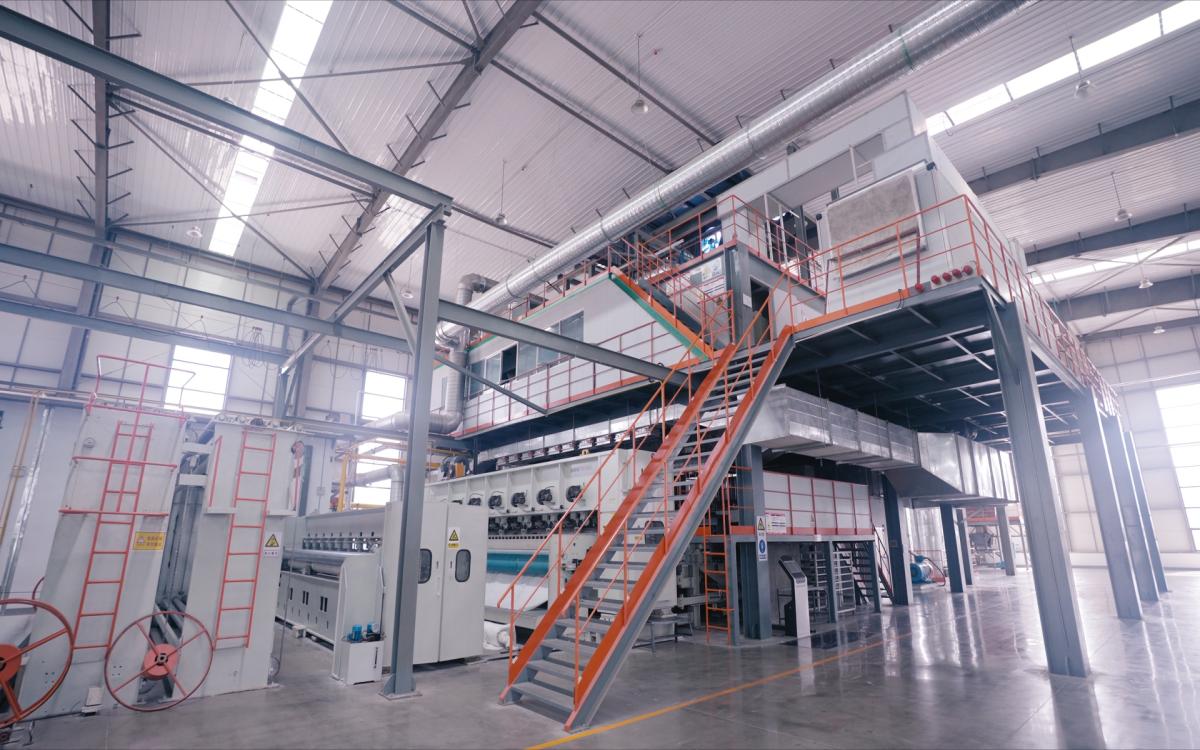
The needle-punch process is what makes or breaks a Geo Fabric Non Woven product’s structural reliability. High-end manufacturers use 3,500 needles per square meter with a controlled 80mm stroke, creating a deeply intertwined, isotropic Nonwoven Geotextile. Cost-cutting makers, by contrast, use 2,200 needles with a shallow stroke—resulting in a Nonwoven Geotextile that performs well in one direction but splits apart under multi-directional stress. That’s a fatal flaw for unpaved road reinforcement, where loads hit from all angles and rely on consistent Geo Fabric Non Woven performance.
Quality control isn’t optional here. Leading Netherlands-based manufacturers swap out needle looms every 1,200 hours (vs. 3,000 hours for commodity producers) and keep weight variation to ±3% (compared to ±8% for budget picks). For B2B buyers, vetting these specs ensures the Non Woven Fabric Geotextile performs consistently across every roll—avoiding costly on-site failures that eat into profits.
3. Logistics & Documentation: Turning Nonwoven Geotextile into Traceable Assets
Sourcing Geo Fabric Non Woven materials internationally requires rock-solid documentation and logistics support. A trustworthy supplier delivers pre-filled invoices, packing lists, and certificates aligned with the destination country’s Harmonized System (HS) codes—a must to avoid daily customs delays that cost $10,000 or more. They also offer a digital portal to track shipments, pull roll-specific Mill Test Reports (MTRs), and download local-language installation guides for the Nonwoven Geotextile—ensuring the Non Woven Fabric Geotextile deploys smoothly on-site, no matter the location.
A 2024 International Federation of Geosynthetics (IFG) survey found that suppliers with integrated digital systems cut customs delays by 78% for Non Woven Fabric Geotextile shipments. This logistical support turns a physical product into a data-backed asset, making compliance and risk tracking far simpler for B2B buyers juggling multiple global projects.
B2B Buyer FAQ: Navigating Nonwoven Geotextile Specifications
Q1: How Does Soil pH Impact Non Woven Fabric Geotextile Selection?
Extreme soil pH ramps up antioxidant depletion in standard Nonwoven Geotextile, leading to brittleness and reduced elongation at break. For soils with aggressive pH levels—whether highly alkaline or acidic—opt for a Geo Fabric Non Woven product with an enhanced stabilizer package and results from extended hydrolysis resistance testing (per ISO 12960). Premium Nonwoven Geotextile data sheets spell out pH suitability ranges clearly, ensuring the Non Woven Fabric Geotextile holds up reliably long-term in tough conditions.
Q2: Woven vs. Nonwoven Geotextile for Slope Stabilization?
The call comes down to balancing two key needs: reinforcement and drainage. Woven geotextiles excel at tensile reinforcement, but a Nonwoven Geotextile delivers the critical in-plane drainage needed to relieve pore water pressure—key for preventing slope slippage. The gold standard today is a composite product: a needle-punched Non Woven Fabric Geotextile bonded to a woven grid, offering both benefits in one. If you have to choose just one, prioritize hydraulics: for slopes prone to water buildup (gradients steeper than 3:1, per the Geosynthetic Institute), a heavy-weight Geo Fabric Non Woven is the safer, more reliable bet.
Q3: How to Mitigate Wind-Related Installation Issues with Nonwoven Geotextile?
How easy a Nonwoven Geotextile is to handle boils down to its stiffness and surface friction. Lightweight, non-calendered Non Woven Fabric Geotextile leads to 20% material waste in windy areas—like the U.S. Great Plains—where sheets blow around during installation. On the flip side, over-calendered products are too stiff to conform to uneven terrain. The solution? Pick a balanced Geo Fabric Non Woven with light calendering or a proprietary finish—this boosts sheet integrity without sacrificing flexibility. Ask suppliers for “Grip Rating” details and contractor feedback; this practical factor impacts labor costs and installation quality more than many buyers realize.
Q4: How to Verify “Premium” Nonwoven Geotextile Claims?
Don’t settle for in-house test data—insist on third-party certification from bodies like GSI, ISO, or ASTM. Request documentation on polymer sources (virgin resins cut down on performance variability) and a full chain of custody for the Non Woven Fabric Geotextile. Ask for case studies from similar environments, too: a desert-ready Geo Fabric Non Woven, for example, should have 5+ years of performance data from Middle Eastern projects. Suppliers that won’t share this info are likely overpromising on their product’s capabilities.
Case Study: Premium Nonwoven Geotextile Cuts Lifecycle Costs by 40%
An Australian wastewater treatment plant learned this lesson the hard way: after a commodity Non Woven Fabric Geotextile failed in high-sulfide soil, it faced $2.8 million in repairs. The procurement team revised its specs, switching to a premium Nonwoven Geotextile with ISO 15708-certified sulfide resistance. Installed in 2023, this Geo Fabric Non Woven retained 92% of its tensile strength over 18 months, avoiding costly downtime. When all costs are tallied, the premium product’s total lifecycle cost was 40% lower than repeatedly replacing the failed commodity option.
Value-Driven Procurement: The Nonwoven Geotextile Action Plan
For B2B buyers, the takeaway is straightforward: prioritize performance over upfront price tags. Run a Total Cost of Failure (TCOF) analysis for every Nonwoven Geotextile purchase, factoring in repair costs, penalties, and insurance expenses tied to subpar Geo Fabric Non Woven performance. Our free TCOF calculator—available on our website—lets you compare the true costs of commodity vs. premium Nonwoven Geotextile options side by side.
Partner with suppliers that engineer Non Woven Fabric Geotextile for your project’s unique environment, offer full traceability, and back their claims with third-party data. Treating Nonwoven Geotextile as a performance-critical component—not a generic commodity—protects your project, your reputation, and your bottom line in the long run.