Haoyang Environmental Technology: Leading the Way with Advanced GCL Clay Liner Solutions
In the field of environmental engineering, there's a daunting challenge: how to find an economical, practical, safe, and reliable anti-seepage material? Traditional concrete cracks easily, HDPE geomembranes have numerous seams and are prone to leakage, and natural clay layers are too thick and heavy. It wasn't until that day, on the Qinghai Salt Lake project, that I first witnessed the power of Haoyang Environmental Technology's GCL clay liner.
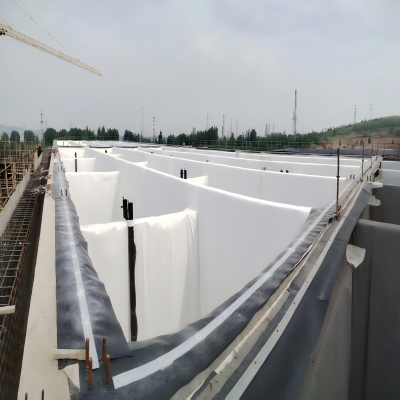
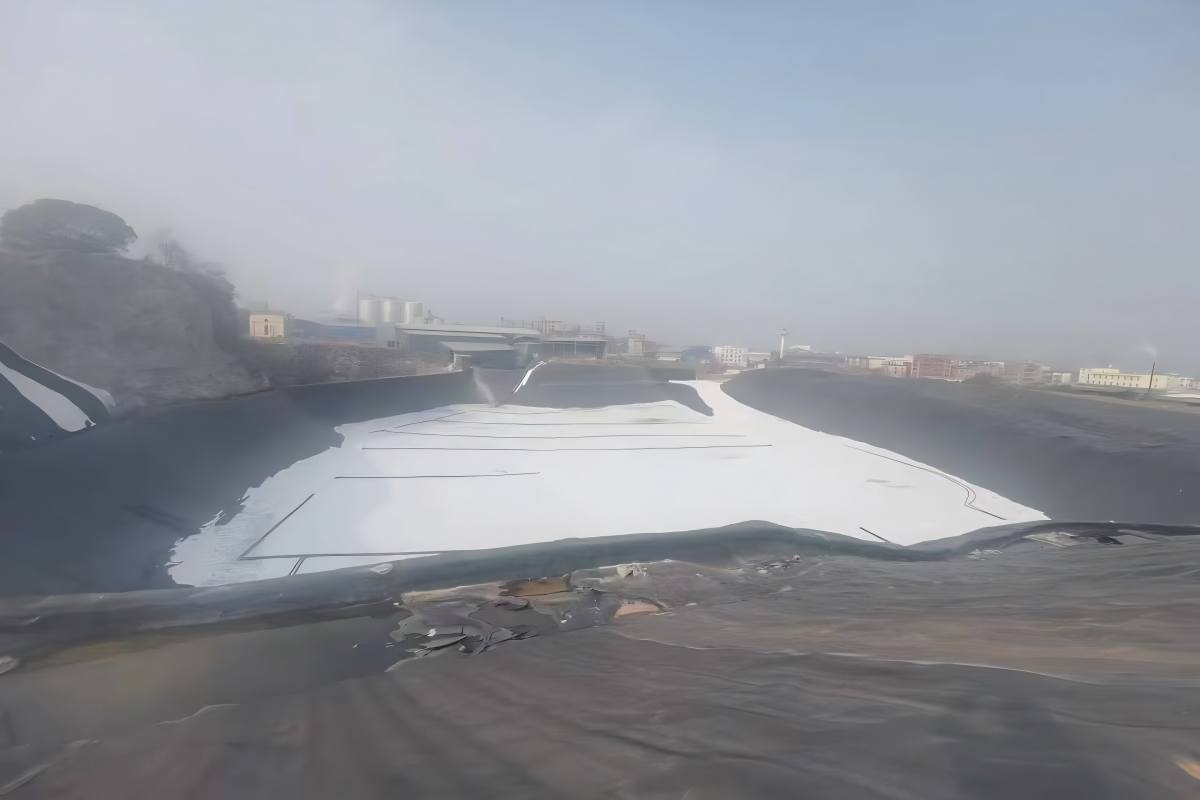
It was an urgent tailings dam rescue project. Relentless heavy rains had caused leakage in the traditional anti-seepage layer, so we deployed Haoyang's Geosynthetic Clay Liner overnight. Amazingly, this blanket-like material automatically expanded upon contact with water, forming a dense anti-seepage layer, perfectly resolving the leakage problem. From then on, I became deeply interested in this "breathing clay."
Why is this "sandwich" more effective than traditional materials?
Many people are surprised when they first see the GCL liner—isn't it just clay sandwiched between two layers of non-woven fabric? But this seemingly simple structure embodies the wisdom of materials science.
The sodium bentonite used by Haoyang has a unique property: it expands 13-16 times its original volume upon contact with water. This means that even minor defects during installation can self-heal under the action of water. I remember last year at a landfill in Chongqing, where construction accidentally caused a localized damage. Just as everyone was preparing to rework, they discovered that the bentonite had already automatically filled the damaged area.
Compared to traditional compacted clay liners, this Geotextile Clay Liner weighs only one-tenth the weight. This significantly reduces transportation costs and speeds up installation. On a project in the mountainous southwest, the narrow roads prevented heavy equipment from entering, so manual laying of the GCL liner ensured smooth progress.
More importantly, this material is extremely flexible. Whereas traditional rigid anti-seepage layers are prone to cracking when the foundation undergoes uneven settlement, the GCL liner can deform with it without losing its anti-seepage function. This is particularly important in areas with complex geological conditions.
Practical Testing: What Do These Project Cases Demonstrate?
In my 20 years of experience in the environmental engineering industry, I've witnessed numerous successful applications of Geosynthetic Clay Liner. Each case has deepened my understanding of this material.
A landfill project in a coastal city was particularly impressive. Due to the high groundwater level, conventional anti-seepage systems were ineffective. We employed Haoyang's GCL liner as a secondary anti-seepage layer. Its unique self-sealing properties effectively prevented leachate leakage. After three years of monitoring, the anti-seepage performance fully met the design requirements.
Geosynthetic Clay Liner has also performed exceptionally well in water conservancy projects in the arid northwest region. Water resources are precious there, and reservoir leakage can mean significant losses. After implementing GCL liner, leakage has been reduced by over 95%. The herders are delighted, saying, "Now we can store water, and our crops and livestock have water to drink."
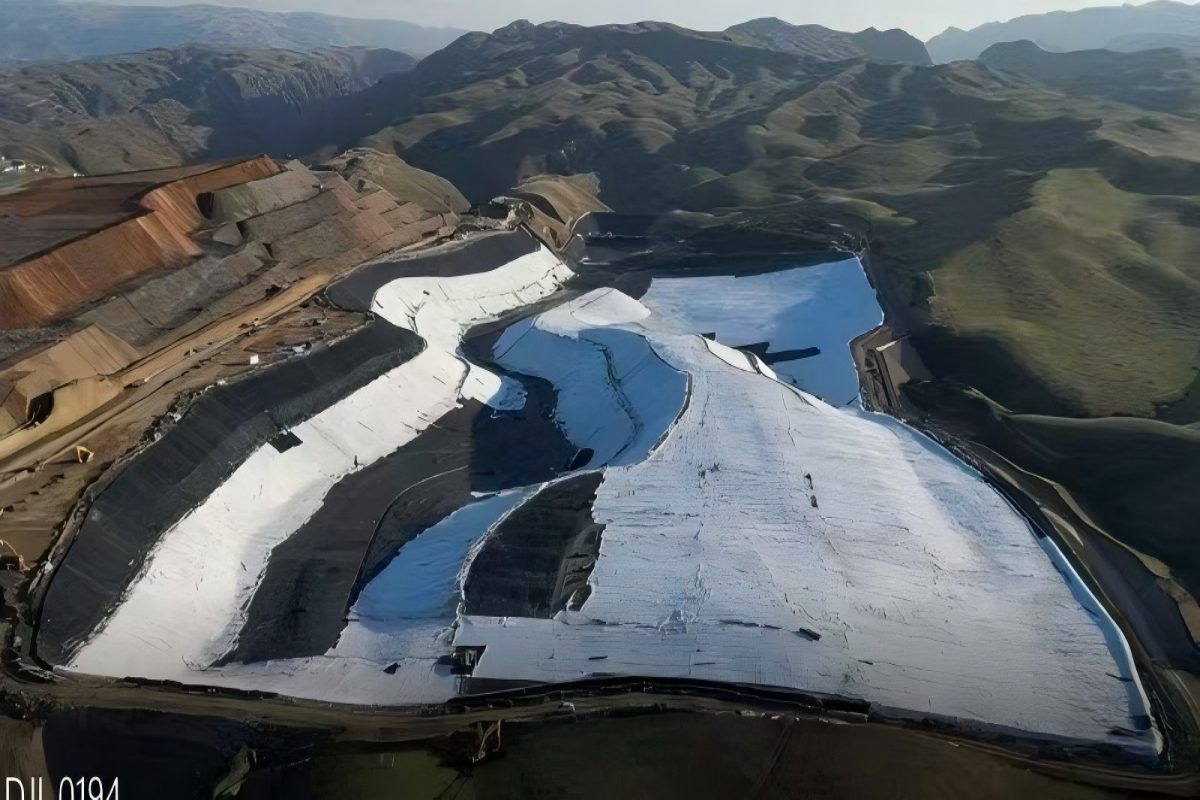
The anti-seepage requirements for mine tailings ponds are extremely stringent. Using Haoyang's Geosynthetic Liner in a metal mine's tailings pond not only achieved significant anti-seepage results but also significantly shortened the construction period. The project manager did the math: Traditional methods took six months, while using GCL liner took only 45 days, directly saving over 3 million yuan.
Choosing the Right Material? Let's take a look at a professional engineer's comparative analysis
Faced with the wide variety of anti-seepage materials on the market, many engineering companies face a dilemma. In my experience, selecting an anti-seepage material requires consideration of several factors.
First, anti-seepage performance. Haoyang's Geotextile Clay Liner boasts a permeability coefficient of 10-11 m/s, meaning its anti-seepage effect is equivalent to that of a meter-thick compacted clay. In most engineering applications, this fully meets the requirements.
Second, ease of installation. I recall a project that originally planned to use HDPE geomembrane, but due to tight construction schedules, GCL liner was used instead. The result was a three-fold increase in installation speed, and no specialized welding equipment was required; the installation could be completed manually.
Cost-effectiveness is also a key consideration. While GCL liner may not be the lowest unit price, it often offers the best overall economic benefits when considering transportation, installation, and maintenance costs. Especially for projects in remote areas, its lightweight nature significantly reduces transportation costs.
Durability is also crucial. Based on long-term monitoring across multiple projects, Haoyang's Geosynthetic Liner has a service life of over 50 years under normal use. This is primarily due to its unique structural design: the upper non-woven fabric protects the bentonite from erosion, while the lower non-woven fabric prevents loss.
Practical Advice from Industry Veterans
Through years of practical experience, I have summarized some experiences with GCL linings for your reference.
Pay attention to detail during installation. Although GCL linings are simple to install, they must still be strictly adhered to specifications. Ensure sufficient overlap width at joints; 15-20 cm is generally recommended. When working on slopes, lay the lining from the bottom to the top to prevent material slippage.
Waterproofing is crucial. During installation, avoid premature exposure of the GCL lining to water. We generally recommend working on sunny days and having tarpaulins available to prevent premature expansion of the lining due to sudden rainfall.
Quality inspections must be rigorous. After each batch of materials arrives on site, samples are taken for inspection. Testing focuses on indicators such as bentonite content, expansion index, and permeability coefficient. I've seen a project where incoming inspections were neglected, resulting in substandard materials and forced rework, resulting in significant losses.
Select the model based on local conditions. Haoyang offers a variety of GCL liners in various specifications. The appropriate model should be selected based on the specific project conditions. In chemically corrosive environments, modified bentonite liners should be selected; on steep slopes, models with higher shear strength should be chosen.
Future Outlook: Innovation in Anti-seepage Materials
With increasing environmental requirements and advancements in engineering technology, geosynthetic clay liner applications are evolving towards smarter and more environmentally friendly approaches.
Intelligent monitoring is a key trend. New-generation GCL liners are beginning to incorporate sensors that can monitor leakage in real time. This changes the traditional model that relies on manual inspections and significantly improves monitoring efficiency and accuracy.
Environmentally friendly bentonite is currently under development. By incorporating biodegradable materials such as natural plant fibers, environmental impact can be further reduced while maintaining anti-seepage performance. This aligns with the current development of green construction.
Customized solutions are becoming mainstream. Manufacturers are beginning to offer customized geosynthetic liner solutions tailored to the specific needs of different projects. These include low-temperature-resistant models for high-altitude cold regions and salt-corrosion-resistant models for saline-alkali lands.
Construction processes are continuously being optimized. With advances in machinery and equipment, dedicated GCL laying equipment is now available, further improving construction efficiency and quality consistency. The advantages of mechanized construction are particularly evident in large-scale projects.
Conclusion
Looking back on my years of engineering experience, I have come to deeply understand the importance of selecting the right anti-seepage material. Haoyang Environmental Technology's GCL clay liner, with its unique performance and reliable quality, has proven its value in numerous projects. Whether it's a landfill, tailings pond, or water conservancy project, this "breathing clay" silently protects our environment.
My advice to fellow engineers: When selecting anti-seepage materials, don't just focus on unit price; consider performance, construction, and long-term maintenance costs. Sometimes, investing a little more in materials can lead to better overall project benefits and a longer service life.
With the continuous advancement of technology, we believe that more innovative geosynthetic clay liner applications will emerge in the future, providing better solutions for environmental engineering construction. As engineers, we must maintain a learning attitude and keep abreast of new industry technologies so that we can make the best choices.